When purchasing industrial electrical equipment, many buyers focus mainly on the initial quotation. However, the lowest price does not always mean the lowest long-term investment. In reality, many companies underestimate the impact of transformer hidden costs, including energy losses, maintenance expenses, downtime risks, installation problems, and inefficient operation.
These hidden expenses can significantly increase the total transformer lifecycle cost over time. Whether for factories, solar power projects, commercial buildings, or utility substations, choosing the wrong transformer supplier may lead to higher operating costs and unexpected financial losses. Understanding transformer hidden costs is essential for improving reliability, reducing ownership cost, and achieving better long-term project performance.
Оглавление
- Введение
- Why Transformer Purchase Price Is Misleading
- Understanding Transformer Hidden Costs
- Cheap Transformer Risks Explained
- Transformer Lifecycle Cost vs Initial Price
- Copper vs Aluminum Transformer Cost Comparison
- Oil Immersed vs Dry Type Transformer Operating Costs
- How Transformer Efficiency Affects Long-Term Expenses
- How to Calculate Transformer Ownership Cost
- How to Choose a Reliable Transformer Supplier
- Real Project Example: When a Cheap Transformer Became Expensive
- Часто задаваемые вопросы
- Заключение
1.Введение
For many industrial buyers, the first question during transformer procurement is simple:
“How much does the transformer cost?”
While the purchase price is important, experienced engineers and project managers understand that the initial quotation is only a small part of the total investment. The real financial impact often appears later through hidden operating expenses, unexpected failures, energy losses, maintenance problems, and production downtime.
These transformer hidden costs can significantly increase the total ownership cost over the lifetime of the equipment.
In many projects, a low-cost transformer eventually becomes the most expensive option because of:
- High power losses
- Frequent repairs
- Short service life
- Poor energy efficiency
- Delayed technical support
- Installation complications
- Compliance failures
- Production interruptions
This is especially critical for:
- Производственные предприятия
- Solar power projects
- Коммерческие здания
- Utility substations
- Mining operations
- Дата-центры
- Инфраструктурные проекты
A transformer is not just electrical equipment. It is a long-term infrastructure asset that directly affects operational stability and profitability.
This article explains the most common transformer hidden costs that suppliers rarely discuss openly. It also provides practical guidance for reducing transformer lifecycle cost and selecting a reliable transformer supplier for long-term project success.
2.Why Transformer Purchase Price Is Misleading
Many buyers compare transformer quotations based only on initial price. However, this approach can create major long-term financial risks.
A transformer with a lower upfront cost may use:
- Lower-grade silicon steel
- Aluminum windings instead of copper
- Плохие изоляционные материалы
- Smaller cooling systems
- Lower-quality bushings
- Weak protective coatings
Although these design choices reduce manufacturing cost, they often increase:
- Energy consumption
- Failure probability
- Maintenance frequency
- Operating temperature
- Noise levels
- Downtime risk
A transformer typically operates for 20 to 30 years. During that period, electricity losses alone may exceed the original purchase price several times.
Therefore, smart buyers evaluate transformer lifecycle cost instead of focusing only on procurement price.
3.Understanding Transformer Hidden Costs
Transformer hidden costs usually appear after installation and commissioning. These costs are often ignored during procurement because they are not clearly listed in supplier quotations.
The most common hidden expenses include:
| Hidden Cost Category | Long-Term Impact |
|---|---|
| Energy Losses | Higher electricity bills |
| Обслуживание | Increased repair expenses |
| Downtime | Production losses |
| Poor Efficiency | Higher operating costs |
| Transportation | Extra logistics expenses |
| Установка | Additional labor and equipment |
| Compliance Issues | Project delays and penalties |
| Short Service Life | Early replacement investment |
Understanding these factors helps buyers make better investment decisions.
3.1Energy Loss Costs
Energy loss is one of the largest hidden transformer expenses.
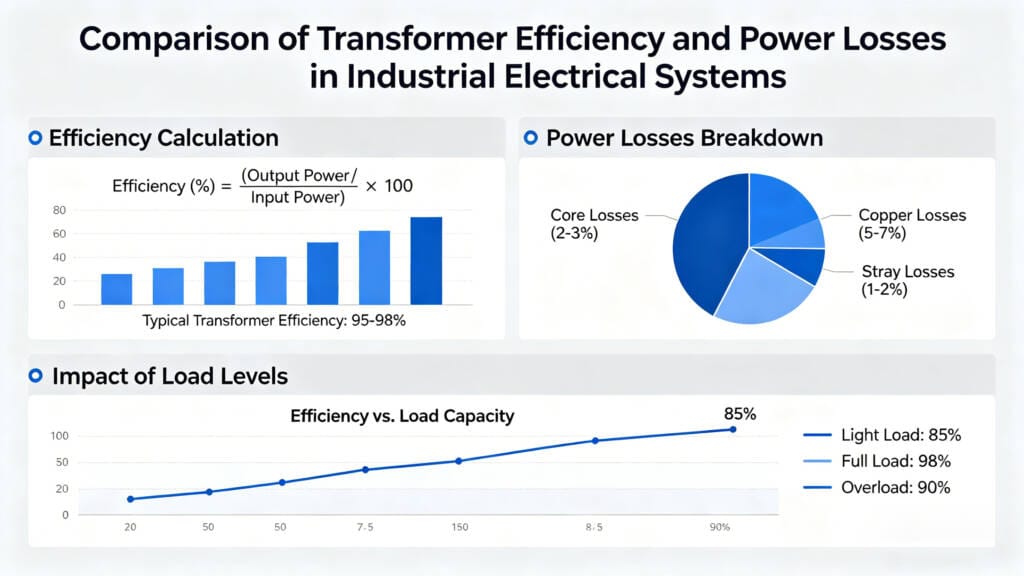
Every transformer experiences two main types of losses:
No-Load Losses
These occur continuously whenever the transformer is energized.
Causes include:
- Core magnetization
- Magnetic hysteresis
- Eddy currents
No-load losses operate 24/7 regardless of load conditions
Load Losses
These increase when the transformer supplies electricity.
Causes include:
- Winding resistance
- Heat generation
- Current flow
Low-quality transformers often have higher load losses because of poor conductor materials and inefficient designs.
Why Energy Efficiency Matters
A small difference in transformer efficiency can create enormous operating costs over time.
Например:
| Тип трансформатора | Эффективность | 20-Year Energy Cost |
|---|---|---|
| Standard Efficiency | 97% | Very High |
| High Efficiency | 99% | Much Lower |
A high-efficiency transformer may cost more initially but can save thousands of dollars annually in electricity expenses.
For solar farms, industrial factories, and utility substations, transformer energy efficiency directly affects project profitability.
3.2Maintenance Expenses
Maintenance cost is another major transformer hidden cost.
Cheap transformers often require more frequent servicing because of inferior materials and weak manufacturing quality.
Dry type transformers require less maintenance but still need proper inspection. Learn more about our
dry type transformer solutions for industrial projects.
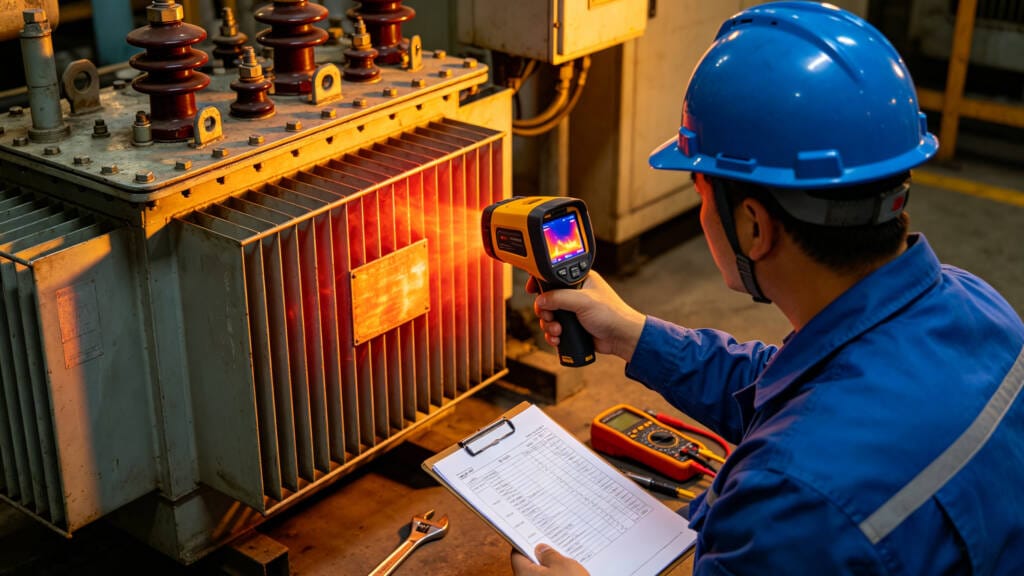
Common maintenance issues include:
- Oil leakage
- Insulation degradation
- Cooling fan failure
- Corrosion
- Moisture contamination
- Loose electrical connections
- Temperature rise problems
These issues increase labor costs and spare part expenses.
Oil Immersed Transformer Maintenance Cost
Oil immersed transformers require regular:
- Oil testing
- Анализ растворенных газов
- Leak inspection
- Moisture monitoring
- Cooling system checks
Poor-quality oil tanks and seals can significantly increase maintenance frequency.
Oil immersed transformers are widely used in power distribution systems. Explore our
oil immersed transformer product range for utility and industrial use.
Dry Type Transformer Maintenance Cost
Dry type transformers generally require less maintenance but still need:
- Dust cleaning
- Ventilation inspection
- Thermal scanning
- Insulation monitoring
Low-cost dry type transformers may suffer from insulation cracking and overheating.
3.3Downtime and Production Losses
Downtime is often the most expensive hidden transformer cost.
When a transformer fails, the financial impact extends far beyond repair expenses.
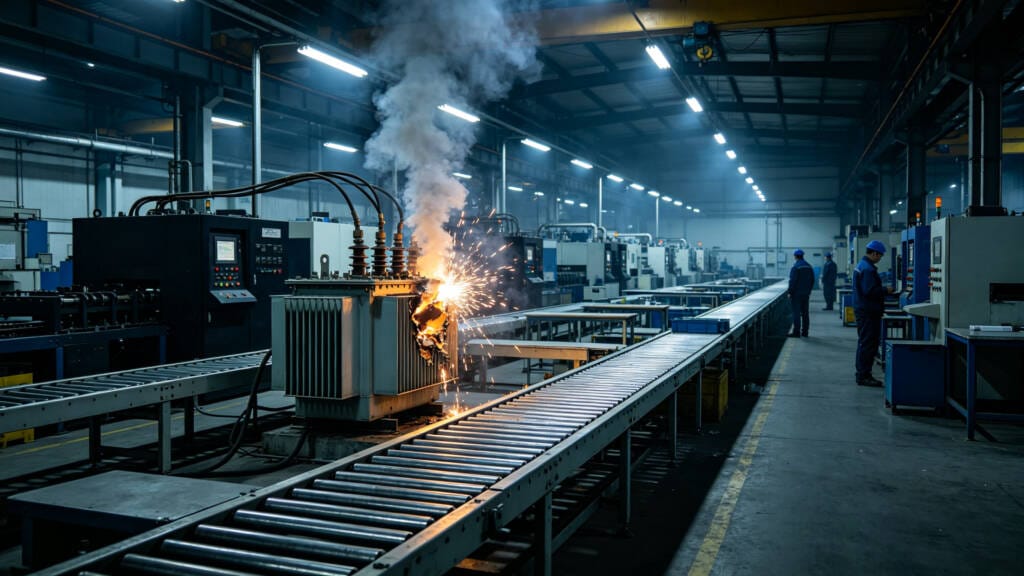
Operational losses may include:
- Factory shutdowns
- Задержка производства
- Data center interruptions
- Solar generation losses
- Equipment damage
- Contract penalties
For industrial facilities, even one hour of downtime can cost thousands of dollars.
Transformer Failure Cost in Manufacturing
In manufacturing plants, transformer failures can stop:
- Production lines
- CNC machines
- Conveyor systems
- Welding equipment
- Automation systems
The total economic loss may exceed the transformer value itself.
Transformer Downtime Loss in Solar Projects
In photovoltaic projects, transformer failures reduce energy export revenue.
This can affect:
- ROI calculations
- Investor confidence
- Grid compliance
- Project profitability
Reliable transformers are critical for stable renewable energy operation.
3.4Installation and Transportation Costs
Many buyers underestimate installation-related expenses. Large transformer installations often require complete substation solutions such as European box type substation integrated systems.
Large transformers may require:
- Special transportation permits
- Heavy lifting cranes
- Site preparation
- Concrete foundations
- Cable trench construction
- Oil containment systems
Improper transformer design can increase installation complexity and labor requirements.
Transportation Challenges
Transformer transportation costs depend on:
- Масса
- Size
- Voltage class
- Delivery distance
- Packaging quality
Poor packaging can lead to shipping damage and project delays.
Site Installation Risks
Improper installation planning may cause:
- Delayed commissioning
- Safety hazards
- Electrical faults
- Ventilation problems
Experienced transformer manufacturers usually provide installation guidance and technical documentation.
3.5Compliance and Certification Risks
Compliance problems can become serious hidden expenses. IEC standards are widely used in transformer manufacturing and testing according to International Electrotechnical Commission (IEC)
Many low-cost transformers fail to meet international standards such as:
- стандарты МЭК
- стандарты IEEE
- ANSI requirements
- Utility specifications
This may result in:
- Failed inspections
- Project rejection
- Rework costs
- Delayed energization
Importance of Certified Transformers
Reliable transformer suppliers should provide:
- Type test reports
- Routine test reports
- Factory acceptance testing
- Short-circuit testing documentation
- Energy efficiency certificates
Without proper certification, buyers face substantial project risks.
IEEE standards define electrical equipment performance and safety requirements set by IEEE Standards Association.
3.6Poor Supplier Support
Some suppliers focus only on sales volume rather than long-term customer support.
Common problems include:
- Slow response times
- Missing spare parts
- Weak technical support
- Poor documentation
- No after-sales service
These issues increase operational uncertainty.
Why Technical Support Matters
A professional transformer manufacturer should provide:
- Engineering consultation
- Installation support
- Maintenance guidance
- Troubleshooting assistance
- Spare part availability
Strong supplier support reduces long-term operational risks.
Transformer systems are often integrated with low voltage switchgear for safe power distribution control.
Need a Reliable Transformer Supplier?
👉 Contact our engineering team for a customized transformer solution and quotation today.
4.Cheap Transformer Risks Explained
Cheap transformers often appear attractive during procurement because of lower quotations.
However, low prices may indicate:
- Poor insulation systems
- Inferior core materials
- Weak cooling design
- Low-quality winding conductors
- Inadequate testing procedures
These weaknesses increase the probability of:
- Перегрев
- Flashover
- Oil leakage
- Short circuits
- Reduced lifespan
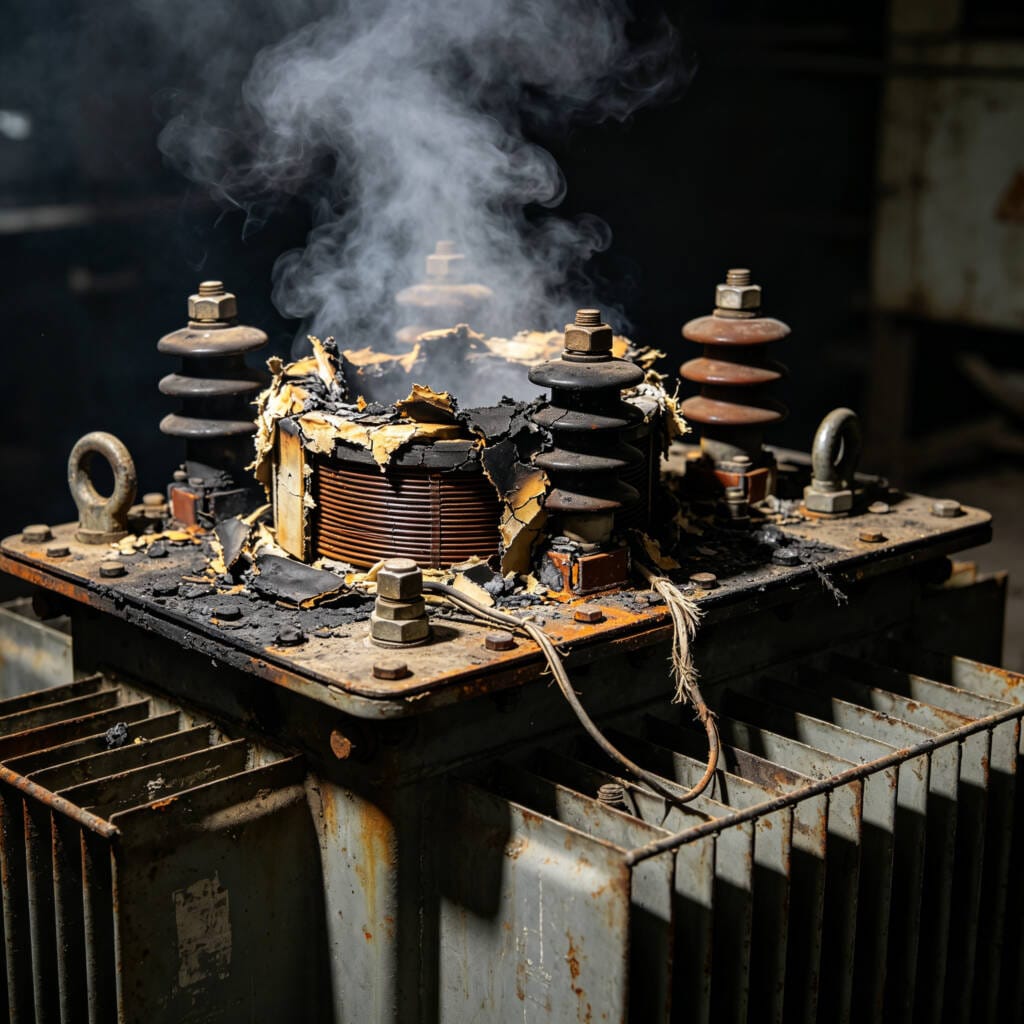
Warning Signs of Low-Quality Transformers
Buyers should carefully evaluate suppliers offering unusually low prices.
Common warning signs include:
| Risk Indicator | Possible Problem |
|---|---|
| Extremely Low Price | Material reduction |
| Missing Test Reports | Weak quality control |
| Short Warranty | Low supplier confidence |
| Slow Technical Replies | Limited engineering capability |
| No Export Experience | Compliance risk |
Choosing a reliable transformer supplier is often more important than obtaining the lowest quotation.
5.Transformer Lifecycle Cost vs Initial Price
Transformer lifecycle cost includes all expenses during the equipment lifetime.
These costs include:
- Цена покупки
- Энергетические потери
- Обслуживание
- Downtime
- Repairs
- Replacement parts
- Disposal costs
A low-cost transformer may eventually cost much more over 20 years.
Lifecycle Cost Comparison
| Cost Category | Cheap Transformer | High-Quality Transformer |
|---|---|---|
| Initial Investment | Низкий | Выше |
| Energy Loss Cost | Высокий | Низкий |
| Maintenance Cost | Frequent Repairs | Minimal Maintenance |
| Downtime Risk | High Risk of Failure | Stable Operation |
| Service Life | Shorter Lifespan | 20–30 Years |
| Total Lifecycle Cost | Much Higher | Lower Long-Term Cost |
This explains why many industrial buyers prioritize long-term reliability over short-term savings.
6.Copper vs Aluminum Transformer Cost Comparison
Winding material strongly affects transformer performance and ownership cost.
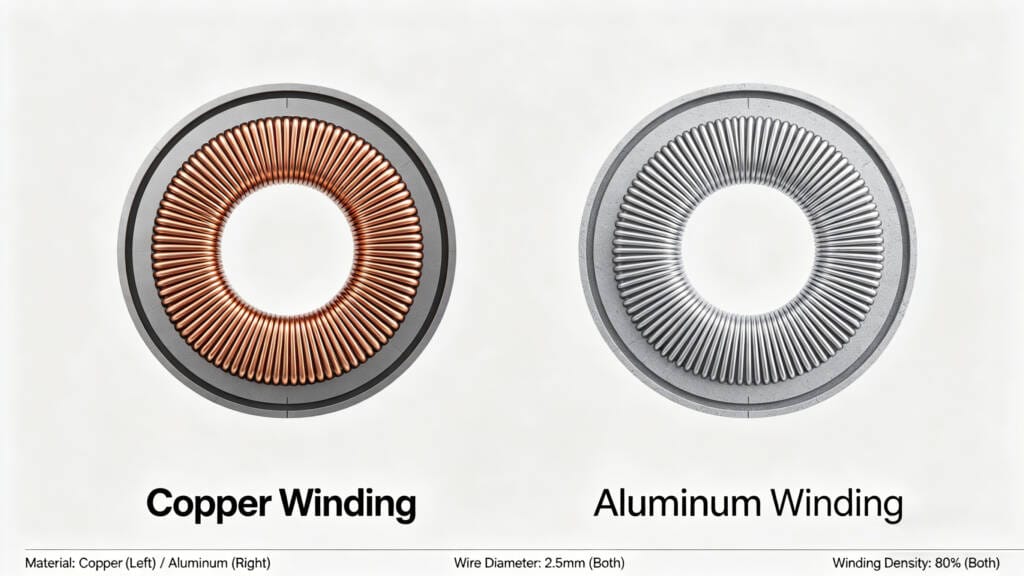
Copper Windings
Преимущества:
- Higher conductivity
- Lower energy losses
- Better mechanical strength
- Более длительный срок службы
- Improved overload performance
Disadvantages:
- Более высокая первоначальная стоимость
Aluminum Windings
Преимущества:
- Lower purchase price
- Reduced weight
Disadvantages:
- Higher resistance
- Increased heat generation
- Greater expansion under load
- Higher maintenance risk
Which Option Is Better?
For long-term industrial applications, copper winding transformers usually provide lower transformer lifecycle cost despite higher initial investment.
7.Oil Immersed vs Dry Type Transformer Operating Costs
Both transformer types have different hidden expenses.
Масляный трансформатор
Преимущества:
- Higher capacity
- Better cooling efficiency
- Lower purchase price per kVA
Hidden Costs:
- Oil maintenance
- Fire protection systems
- Environmental risks
- Leak management
Трансформатор сухого типа
Преимущества:
- Safer indoor installation
- Lower fire risk
- Reduced environmental concerns
Hidden Costs:
- Higher initial price
- Ventilation requirements
- Sensitive to dust and humidity
Cost Comparison Table
| Фактор | Масло погружено | Сухой тип |
|---|---|---|
| Первоначальная стоимость | Ниже | Выше |
| Обслуживание | Выше | Ниже |
| Пожарная безопасность | Ниже | Better |
| Indoor Use | Ограниченный | Excellent |
| Cooling Efficiency | Better | Умеренный |
Selecting the correct transformer depends on project environment and operational priorities.
8.How Transformer Efficiency Affects Long-Term Expenses
Transformer efficiency directly influences operating cost.
High-efficiency transformers reduce:
- Heat generation
- Energy waste
- Cooling demand
- Operating temperature
They also improve:
- System stability
- Equipment lifespan
- Sustainability performance
Importance for Modern Projects
Energy-efficient transformers are increasingly important because of:
- Rising electricity prices
- Carbon reduction policies
- ESG requirements
- Green building standards
Many industrial buyers now evaluate transformer efficiency before procurement.
9.How to Calculate Transformer Ownership Cost
Transformer ownership cost should include both direct and indirect expenses.
Main Calculation Factors
| Cost Element | Описание |
|---|---|
| Purchase Cost | Initial procurement price |
| Energy Loss Cost | Electricity losses over time |
| Maintenance Cost | Servicing and repairs |
| Downtime Cost | Production interruption |
| Installation Cost | Site preparation and commissioning |
| Replacement Cost | Future equipment renewal |
Simplified Ownership Formula
A simplified transformer ownership cost model can be expressed as:
Total Ownership Cost=Purchase Cost +Energy Loss Cost +Maintenance Cost + Downtime Cost
This approach helps buyers compare suppliers more accurately.
10.How to Choose a Reliable Transformer Supplier
Selecting the right transformer manufacturer is critical for reducing hidden costs.
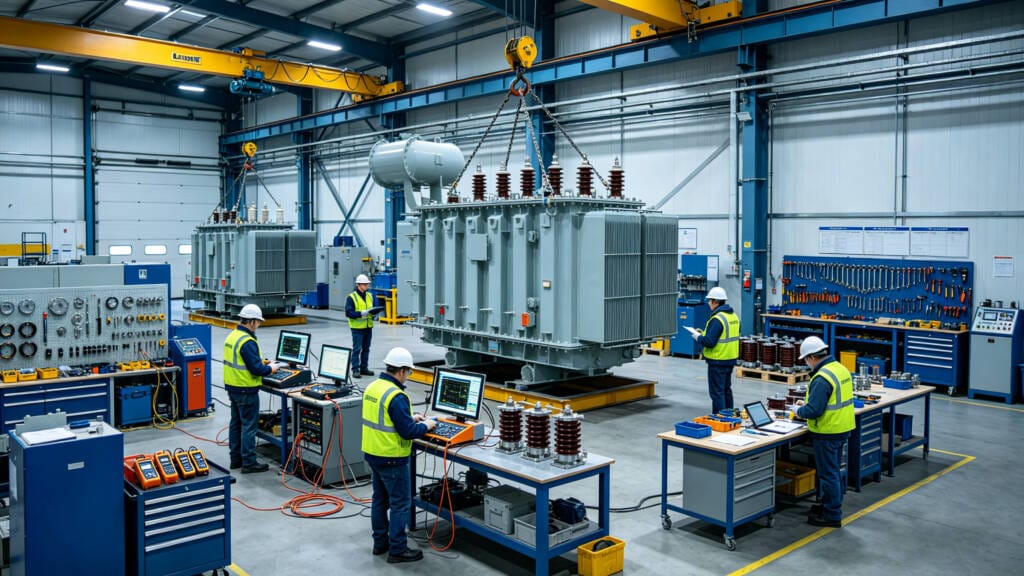
Evaluate Manufacturing Experience
Experienced suppliers usually provide:
- Better engineering capability
- Stable production quality
- Stronger project management
- Reliable testing procedures
Export experience is especially important for international projects.
Review Testing Capability
Professional transformer factories should perform:
- Плановое тестирование
- Типовое тестирование
- Temperature rise testing
- Insulation resistance testing
- Partial discharge testing
Testing ensures product reliability and compliance.
Verify Certifications
Reliable suppliers should comply with:
- стандарты МЭК
- стандарты IEEE
- ISO quality systems
Certification improves project acceptance probability.
Assess Technical Support
Good suppliers provide:
- Fast engineering response
- Руководство по установке
- Spare part supply
- Long-term maintenance support
Strong after-sales service reduces operational risks.
11.Real Project Example: When a Cheap Transformer Became Expensive
A manufacturing company once selected a low-cost transformer supplier to reduce initial investment.
The transformer price was approximately 20% lower than competing quotations.
However, within three years, the project experienced:
- Severe overheating
- Frequent oil leakage
- High energy consumption
- Multiple shutdowns
The company eventually replaced the transformer entirely.
The total losses included:
| Expense Type | Estimated Impact |
|---|---|
| Emergency Repairs | Высокий |
| Production Downtime | Very High |
| Energy Waste | Высокий |
| Replacement Transformer | Major Cost |
The final lifetime expense greatly exceeded the savings from the original low purchase price.
This case demonstrates why transformer hidden costs should never be ignored.
12.Часто задаваемые вопросы
What are transformer hidden costs?
Transformer hidden costs include energy losses, maintenance expenses, downtime losses, transportation costs, installation expenses, and compliance risks that occur after purchase.
Why are cheap transformers risky?
Cheap transformers may use inferior materials and weaker manufacturing processes, increasing the risk of overheating, failure, maintenance problems, and shorter service life.
What is transformer lifecycle cost?
Transformer lifecycle cost refers to the total expense of owning and operating a transformer during its entire service life, including purchase price, maintenance, energy loss, and downtime.
How long should an industrial transformer last?
A high-quality industrial transformer can typically operate for 20 to 30 years with proper maintenance and operating conditions.
Why is transformer efficiency important?
Higher transformer efficiency reduces electricity losses, lowers operating expenses, improves sustainability performance, and decreases heat generation.
How do I choose a reliable transformer supplier?
Buyers should evaluate supplier experience, testing capability, certifications, technical support, export history, and product quality rather than focusing only on price.
13. Заключение
Transformer procurement should never focus only on initial price.
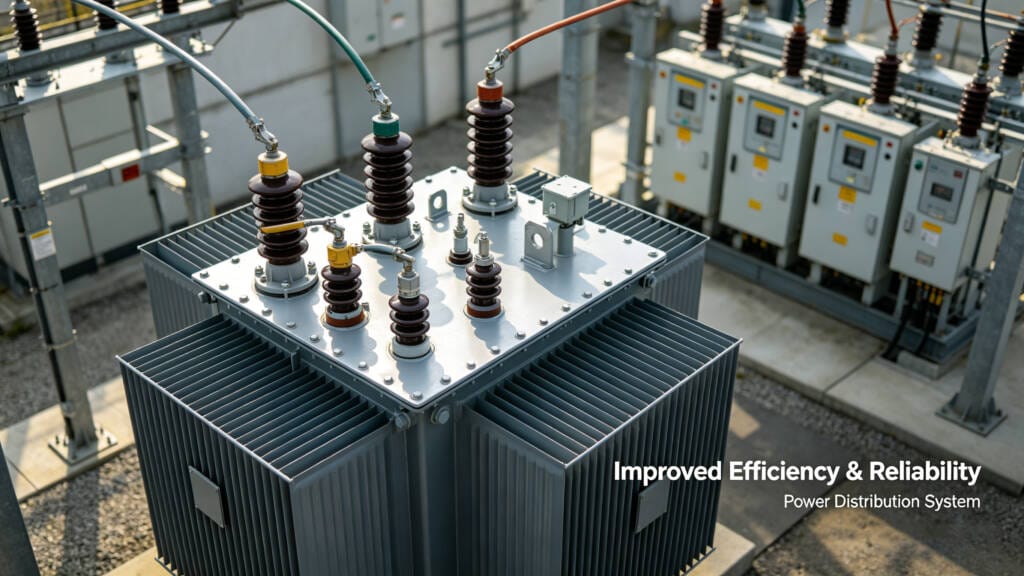
The true financial impact of a transformer appears over many years through:
- Energy consumption
- Maintenance expenses
- Downtime losses
- Reliability performance
- Service life
Understanding transformer hidden costs helps buyers avoid expensive mistakes and improve long-term operational efficiency.
A reliable transformer supplier provides more than equipment. They provide engineering expertise, technical support, compliance assurance, and long-term project reliability.
For industrial projects, solar power systems, substations, and commercial facilities, investing in quality transformers often delivers lower total ownership cost and higher operational stability over the entire equipment lifetime.
Get a Long-Term Cost-Effective Transformer Solution
👉 Request a technical quotation or project consultation now.