1.Introduction
In today’s industrial and commercial power distribution landscape, selecting the right dry type transformer is critical for safety, reliability, efficiency, and long-term operational success. Among the leading options, the Cast Resin Transformer и VPI Dry Type Transformer stand out as two of the most widely used technologies. Both eliminate the fire and environmental risks associated with oil-filled transformers, but they differ significantly in design, performance, and ideal use cases.
This comprehensive guide examines the Cast Resin VPI Transformer debate in detail. Whether you are planning a new facility, upgrading existing infrastructure, or specifying equipment for a challenging environment, understanding the strengths and limitations of each type will help you make an informed choice. With over two decades of collective industry experience in transformer engineering and application support, this article draws on established standards such as IEC 60076-11 and real-world project data to provide authoritative insights.
Cast Resin Transformer technology features fully encapsulated windings in solid epoxy resin, delivering exceptional protection against moisture, dust, and chemicals. In contrast, VPI Dry Type Transformer (Vacuum Pressure Impregnated) uses a vacuum-pressure process to impregnate windings with resin, offering excellent electrical insulation and superior heat dissipation in controlled settings.
By the end of this article, you will have a clear framework to determine which Cast Resin VPI Transformer solution best fits your project’s environmental conditions, budget, safety requirements, and performance needs. Let’s dive into the technical details.
According to the IEC 60076-11 standard, both Cast Resin Transformer and VPI Dry Type Transformer are widely recognized for their safety and environmental benefits in modern power systems.
Оглавление
- Введение
- What Is a Cast Resin Transformer?
- What Is a VPI Dry Type Transformer?
- Key Differences: Cast Resin VPI Transformer Comparison
- Application Scenarios: Choosing the Right Cast Resin VPI Transformer
- Cost Considerations and Lifecycle Analysis
- Other Important Factors in Selection
- Conclusion: Making the Best Decision for Your Project
2.What Is a Cast Resin Transformer?
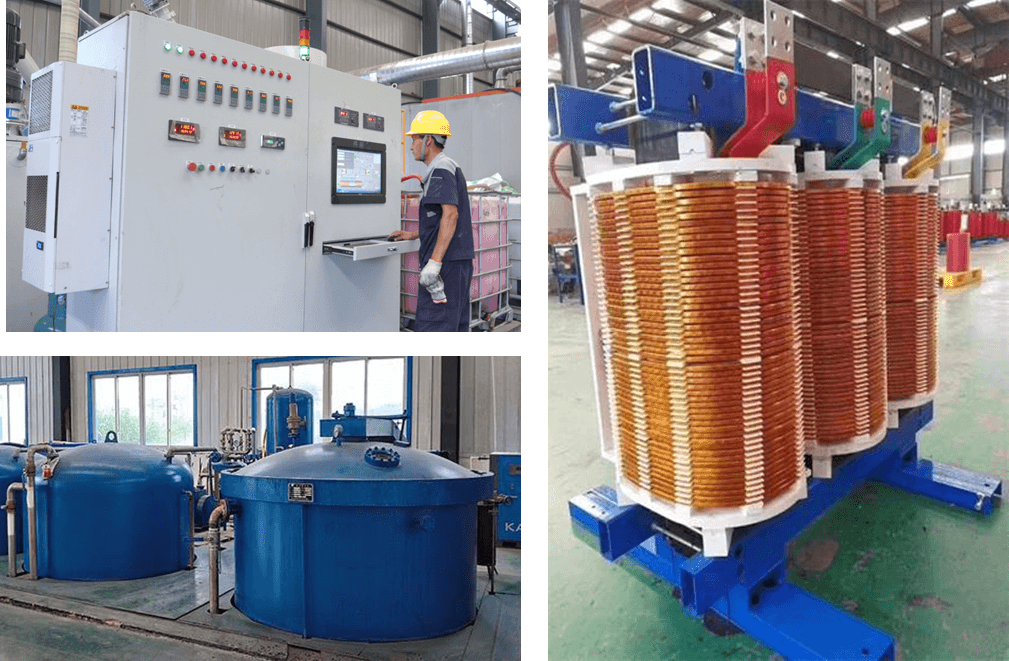
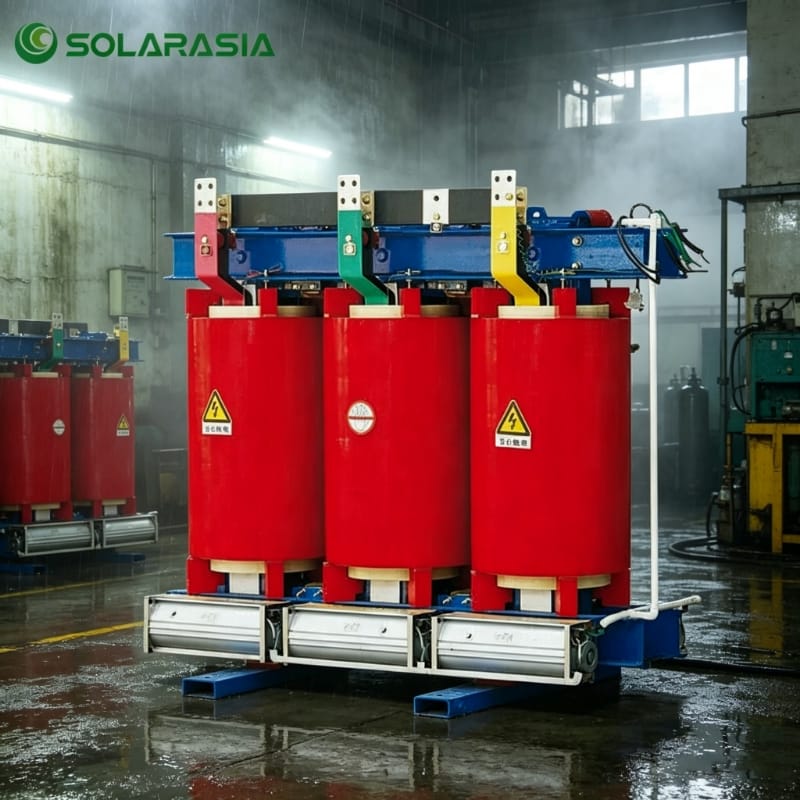
А Cast Resin Transformer, also known as a Cast Coil or Epoxy Resin Cast Transformer, is a type of dry type transformer where the high-voltage and low-voltage windings are completely encapsulated in a solid epoxy resin under vacuum conditions. This process creates a robust, monolithic insulation system that bonds the windings, core, and insulation materials into one solid unit.
Manufacturing Process Overview The windings are placed in molds, and high-quality epoxy resin mixed with fillers is poured under vacuum to eliminate air voids. After curing at controlled temperatures, the result is a fully sealed, solid-insulated coil. This encapsulation provides multiple layers of protection that standard impregnated designs cannot match.
The vacuum casting process used in Cast Resin Transformer production ensures minimal partial discharge, as detailed in various industry studies on epoxy resin insulation systems.
Key Characteristics of Cast Resin Transformers
- Superior Environmental Protection: The solid resin barrier offers outstanding resistance to moisture, humidity, dust, chemicals, and corrosive atmospheres.
- Пожарная безопасность: Typically rated F1 class (self-extinguishing with low smoke and toxicity), making them ideal for high-risk locations.
- Mechanical Strength: Excellent resistance to short-circuit forces, vibration, and mechanical stress.
- Low Maintenance: Near maintenance-free operation due to the sealed design.
- Compact and Robust: Suitable for both indoor and outdoor installations (with appropriate enclosures for extreme weather).
Преимущества Cast Resin Transformers excel in harsh or demanding environments. Their solid encapsulation prevents moisture ingress even in condensing humidity or coastal areas, reducing the risk of insulation degradation. They also demonstrate low partial discharge levels and quiet operation, which is beneficial in noise-sensitive areas like hospitals, schools, and data centers.
Limitations The full encapsulation can somewhat restrict heat dissipation compared to open-wound designs, potentially leading to slightly higher operating temperatures or the need for forced-air cooling (fans) in high-load scenarios. They are generally heavier and have a higher initial cost. Repairability is more complex because the resin must be carefully removed if rewinding is ever required.
Typical ratings range from a few kVA up to several MVA, with voltage classes commonly up to 36 kV, complying with international standards like IEC 60076-11.
3.What Is a VPI Dry Type Transformer?
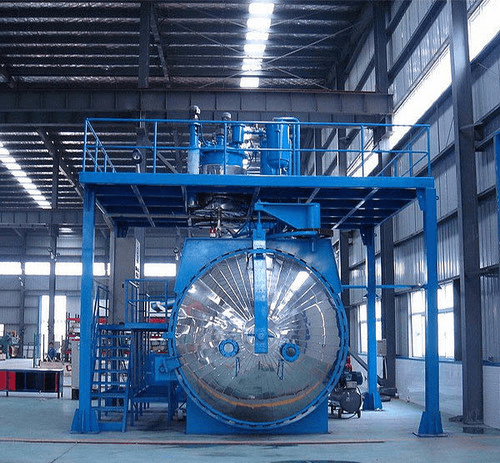
А VPI Dry Type Transformer (Vacuum Pressure Impregnated) features windings that are thoroughly impregnated with resin (often polyester or epoxy-based) using a vacuum-pressure cycle. The process removes air and moisture from the windings, then forces resin deep into the insulation gaps under pressure, followed by curing. This results in a void-free but not fully encapsulated insulation system.
Manufacturing Process Overview Coils are wound, dried, and placed in a vacuum chamber. Resin is introduced under pressure to penetrate every layer. Multiple cycles may be used for thicker insulation. The finished windings remain somewhat open, allowing better airflow around the coils.
Key Characteristics of VPI Dry Type Transformers
- Excellent Heat Dissipation: Open structure enables superior natural or forced-air cooling, supporting higher overload capacities.
- Cost-Effective: Lower material and manufacturing costs compared to full casting.
- Good Electrical Performance: High dielectric strength and reliable insulation in clean environments.
- Lighter Weight: Easier to transport and install in many cases.
- Flexibility: Easier inspection and potential repairs.
Преимущества VPI Dry Type Transformers are often preferred for their thermal performance and versatility in controlled indoor settings. They handle temperature Class F or H insulation well and can be designed with cooling ducts for efficient operation. Lower upfront costs make them attractive for large-scale projects where environmental conditions are moderate.
Limitations While resin-impregnated, the windings are not fully sealed, making them more susceptible to moisture, dust, and chemical contamination in harsh or outdoor environments without additional protection. Fire resistance is generally good but typically lower than Cast Resin’s F1 rating. Maintenance may involve more frequent cleaning and inspection.
Vacuum Pressure Impregnation technology in VPI Dry Type Transformer has been a proven method for improving dielectric strength, according to established transformer engineering practices.
4.Key Differences: Cast Resin VPI Transformer Comparison
When evaluating Cast Resin VPI Transformer options, the core distinction lies in the insulation system: solid encapsulation versus deep impregnation. This fundamental difference drives variations in nearly every performance metric.
Cast Resin Transformers provide a complete physical barrier, while VPI Dry Type Transformers rely on impregnated resin within a more open structure. Understanding these nuances is essential for project success.
Performance Comparison Table
| Особенность | Cast Resin Transformer | VPI Dry Type Transformer | Winner / Notes |
|---|---|---|---|
| Insulation Method | Full Epoxy Encapsulation | Vacuum Pressure Impregnation | Cast Resin for protection |
| Moisture Resistance | Excellent (sealed against humidity/condensation) | Moderate (better in dry conditions) | Cast Resin |
| Dust & Chemical Resistance | Excellent | Умеренный | Cast Resin |
| Fire Resistance | Excellent (F1 self-extinguishing) | Good (typically E2/F0-F1) | Cast Resin |
| Cooling / Heat Dissipation | Moderate (may need fans for high loads) | Excellent (superior airflow) | VPI |
| Overload Capacity | Good (with proper cooling) | Higher in continuous operation | VPI |
| Mechanical Strength / Short-Circuit | Very High | Хороший | Cast Resin |
| Noise Level | Низкий | Low to Moderate | Similar |
| Maintenance Requirements | Very Low | Moderate (cleaning/inspection) | Cast Resin |
| Первоначальная стоимость | Выше | Ниже | VPI |
| Lifecycle Cost (TCO) | Often lower in harsh environments | Lower in clean indoor settings | Depends on application |
| Масса | Heavier | Lighter | VPI |
| Repairability | More difficult | Easier | VPI |
| Outdoor Suitability | Excellent (with enclosure) | Limited (requires protection) | Cast Resin |
This table highlights why there is no universal “better” Cast Resin VPI Transformer — selection depends on your specific project priorities.

Not sure how these differences apply to your site conditions?
👉Download our Dry Type Transformer Selection Guide and get instant clarity.
5.Application Scenarios: Choosing the Right Cast Resin VPI Transformer
Cast Resin Transformers are the preferred choice in demanding environments:
- High-humidity or tropical climates
- Chemical plants, mining operations, and coastal/marine facilities
- Hospitals, schools, data centers, and public buildings (fire safety priority)
- Outdoor or semi-outdoor installations
- Areas with dust, vibration, or corrosive atmospheres
VPI Dry Type Transformers shine in:
- Clean, climate-controlled industrial facilities
- Commercial buildings and office complexes
- Indoor power distribution with stable environmental conditions
- Cost-sensitive projects with moderate loads
- Applications where easy access for maintenance is important
For mixed or borderline conditions, a detailed site assessment (humidity levels, pollution class, temperature swings, etc.) is recommended. Many engineers combine both types within the same facility — using Cast Resin for critical or exposed feeders and VPI for standard indoor distribution.
6.Cost Considerations and Lifecycle Analysis
Initial purchase price often favors VPI Dry Type Transformers by 20-50% depending on ratings. However, total cost of ownership (TCO) tells a more nuanced story. In harsh environments, the higher reliability and lower maintenance of Cast Resin Transformers can deliver significant savings over 20-30 years through reduced downtime and repair costs.
Factors influencing costs include:
- Energy losses (VPI often slightly better)
- Installation complexity and civil works
- Cooling system requirements
- Expected lifespan and failure probability
Always request detailed TCO calculations from suppliers, including efficiency data at various load levels.
7.Other Important Factors in Selection
- Efficiency and Energy Losses: Modern designs of both types achieve high efficiency, but VPI may have a slight edge due to better cooling.
- Standards Compliance: Look for IEC 60076-11, IEEE C57, UL certifications, and environmental class ratings (E2, C2, F1).
- Параметры настройки: Fans for increased capacity, enclosures, monitoring systems (temperature, partial discharge), and smart sensors.
- Supplier Expertise: Choose manufacturers with proven track records in both technologies and strong after-sales support.
- Future-Proofing: Consider trends toward higher efficiency, digital monitoring, and sustainability. Both types are eco-friendly alternatives to oil-filled units.
8.Conclusion: Making the Best Decision for Your Project
There is no one-size-fits-all answer in the Cast Resin vs VPI Dry Type Transformer discussion. Cast Resin Transformers offer unmatched protection and durability for challenging conditions, while VPI Dry Type Transformers provide excellent performance and value in controlled environments.
The right choice depends on a thorough evaluation of your site conditions, safety requirements, budget, and long-term operational goals. We strongly recommend consulting with experienced transformer specialists who can perform a detailed application analysis.
Ready to select the optimal Cast Resin VPI Transformer for your project?