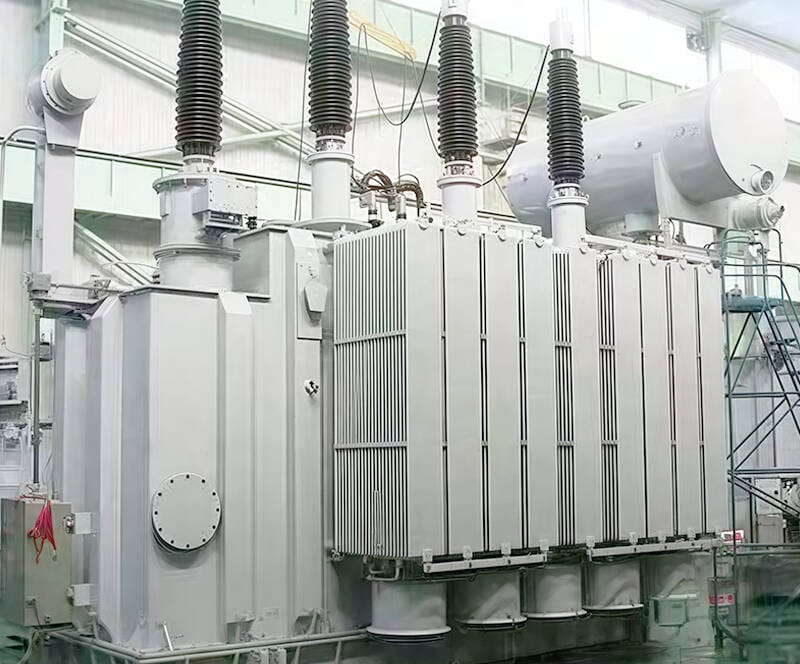
In high-stakes electrical engineering, the stakes are never higher than in fire-sensitive environments such as data centers, hospitals, and high-rise commercial complexes. Ensuring dry transformer fire safety is no longer just a technical preference—it is a critical requirement for infrastructure resilience and life safety.
Dry-type transformers are a safe and reliable choice for electrical power distribution in both industrial and commercial settings. Unlike oil-filled transformers, fire safety transformers use non-flammable insulation and self-extinguishing materials, significantly reducing the risk of fire. Proper safe transformer installation, routine transformer maintenance, and temperature monitoring are essential to maximize safety and compliance with international fire protection standards. These industrial transformers and commercial transformers provide efficient energy distribution while ensuring long-term fire-safe operation, making them ideal for modern power systems.
Unlike their oil-filled counterparts, dry-type units mitigate the catastrophic risks of flammable liquid leaks and explosive pool fires. However, achieving true protection requires more than just selecting a unit; it demands a deep understanding of NFPA 70 codes, insulation thermal limits, and strategic enclosure design. In this comprehensive guide, we explore how to master dry transformer fire safety to protect your assets and maintain 100% site compliance.
Table of Contents
- Introduction: The Critical Role of Dry-Type Transformers
- Common Risks of Dry Transformer Fire Safety in Sensitive Areas
- Essential Dry Transformer Fire Safety Codes and Standards
- Comparison: Dry-Type vs. Oil-Filled Transformer Safety
- Expert Design Tips for Dry Transformer Fire Safety
- Real-World Applications: Dry Transformer Fire Safety in Action
- Maintenance Practices to Prevent Fire Hazards
- Fire-Safe Design & Layout Strategies for Dry-Type Transformers
- Detailed Technical Specifications Table
- Step-by-Step Selection Guide for Dry Transformer Fire Safety
- FAQ — Dry-Type Transformer Fire Safety
- Conclusion
Introduction: The Critical Role of Dry-Type Transformers
In modern electrical engineering, safety is not just a requirement; it is a priority. For engineers and facility managers, ensuring dry transformer fire safety in fire-sensitive locations like hospitals, data centers, and high-rise buildings is a top concern. Unlike oil-filled units, dry-type transformers eliminate the risk of oil leaks and pool fires, making them the preferred choice for indoor applications.
However, choosing a dry-type unit is only the first step. You must understand the specific codes, inherent risks, and design nuances to ensure a truly secure installation. This guide provides actionable insights into mastering dry transformer fire safety.
Common Risks of Dry Transformer Fire Safety in Sensitive Areas
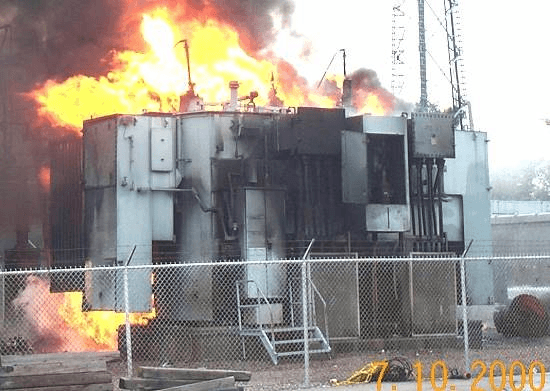
Even though dry-type transformers are safer than oil-filled ones, they are not risk-free. In fire-sensitive locations, several factors can compromise dry transformer fire safety.
1. Dust and Contaminant Accumulation
In industrial environments, dust settles on the transformer coils. This buildup acts as an insulator, trapping heat and potentially leading to a flashover. Regular cleaning is essential to maintain dry transformer fire safety.
2. Overloading and Insulation Breakdown
Running a transformer beyond its rated capacity generates excessive heat. If the insulation class does not match the load, the material can degrade, leading to short circuits—the primary cause of electrical fires.
3. Poor Ventilation
Fire-sensitive locations are often enclosed. Without proper airflow, the ambient temperature rises, forcing the transformer to operate under stress. This significantly lowers the dry transformer fire safety margin.
Essential Dry Transformer Fire Safety Codes and Standards
To achieve high-level compliance, you must follow international standards. These codes act as the foundation for dry transformer fire safety.
NFPA 70 (National Electrical Code)
The NEC, specifically Section 450.21, dictates the installation requirements for dry-type transformers. For units located indoors, the code specifies fire-resistant room construction and clearance distances to ensure Solid dielectric transformer safety.
IEC 60076-11
This international standard defines the “Fire Behavior Classes” for dry-type units. For fire-sensitive locations, always look for the F1 rating. This rating proves the transformer is self-extinguishing and produces minimal toxic smoke.
Comparison: Dry-Type vs. Oil-Filled Transformer Safety
Understanding the differences helps in justifying the investment in dry transformer fire safety.
| Fonctionnalité | Transformateur de type sec | Oil-Filled Transformer |
| Cooling Medium | Air / Resin | Mineral Oil (Flammable) |
| Fire Risk | Extremely Low (Self-extinguishing) | High (Oil spill/Explosion) |
| Indoor Installation | Easy (No vault required) | Difficult (Requires fire vaults) |
| Maintenance | Low (No oil testing) | High (Regular oil sampling) |
| Environmental Impact | Eco-friendly | Risk of soil/water pollution |
Expert Design Tips for Dry Transformer Fire Safety
When sourcing or specifying equipment, focus on these design elements to maximize dry transformer fire safety.
1. Choose High-Grade Insulation Classes
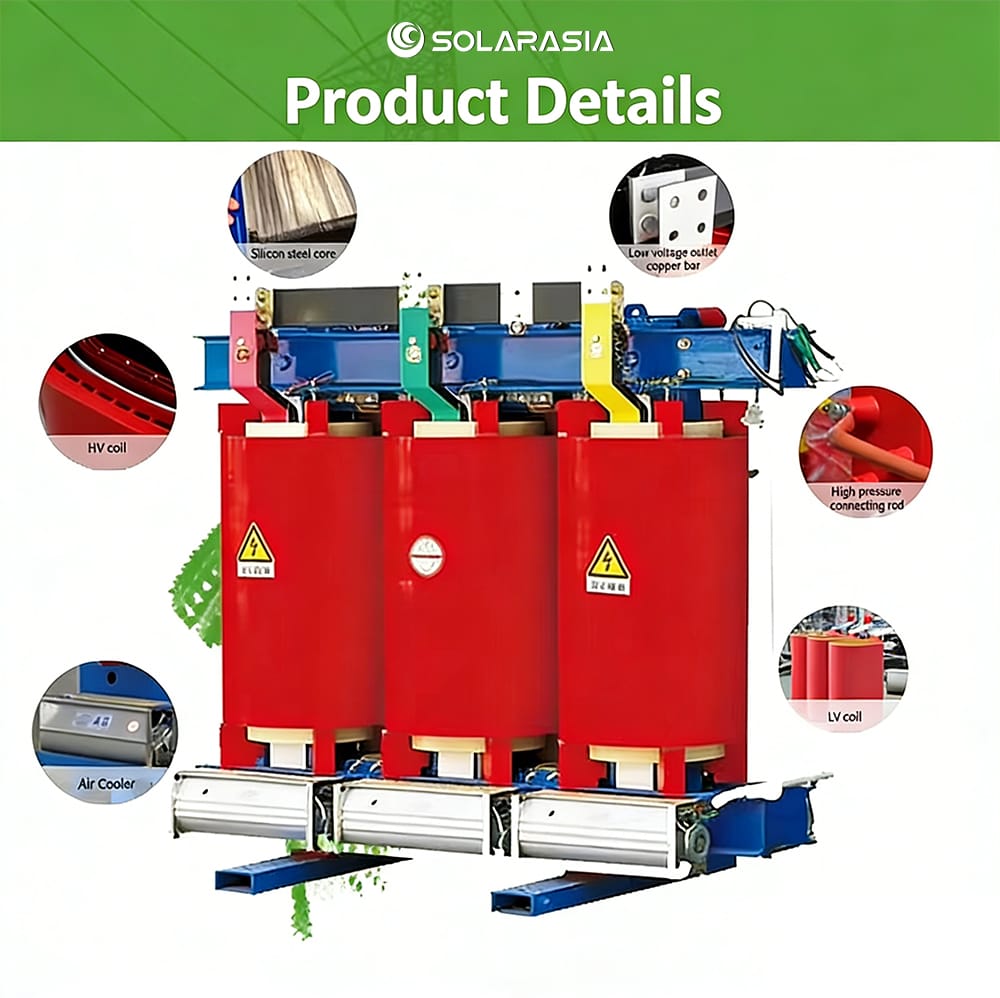
Select materials with high thermal endurance. Class H (180°C) ou Class R (220°C) insulation provides a robust buffer against overheating. You can browse our range of high-temperature dry-type transformers to find the right fit for your project.
2. Vacuum Pressure Impregnation (VPI) vs. Cast Resin
- VPI Transformers: These use polyester resin and offer excellent moisture resistance.
- Cast Resin Transformers: These encapsulate the coils in epoxy, providing the highest level of dry transformer fire safety due to their non-flammable nature.
3. Implement Advanced Thermal Monitoring
Don’t rely on visual inspections alone. Use PT100 sensors and digital temperature controllers. These systems can trigger alarms or automatically trip the circuit breaker if temperatures exceed safety limits, ensuring proactive Cast resin transformer fire protection.
4. Optimize Enclosure Selection
For fire-sensitive sites, the enclosure (NEMA or IP rating) must balance protection and airflow. A NEMA 3R or IP23 enclosure prevents the entry of falling dirt and water while allowing the unit to “breathe.” If you are unsure about the right casing, contact our engineering team for a custom consultation.
Maintenance Practices to Prevent Fire Hazards
Consistency is the secret to long-term Cast resin transformer fire protection.
- Annual Infrared Thermography: Use thermal imaging to detect “hot spots” in connections before they fail.
- Tightening Connections: Vibration can loosen bolts over time, increasing resistance and heat.
- Cleaning the Air Ducts: Ensure the cooling channels between the coils are free of debris.
Fire-Safe Design & Layout Strategies for Dry-Type Transformers
Compliance With Fire Protection Standards
Dry-type transformers must comply with fire safety codes such as NFPA 70 and IEC 60076‑11, ensuring safe spacing, protective barriers, and smoke control.
- Proper distance and ventilation reduce heat accumulation.
- Suitable for indoor and high fire-risk environments.
Overload Control and Thermal Monitoring
- Overcurrent protection and temperature sensors prevent overheating.
- Integration with building control systems allows early warnings and rapid intervention.
Real-World Applications: Dry Transformer Fire Safety in Action
To understand the practical necessity of Cast resin transformer fire protection, let’s examine three high-stakes environments where these units are non-negotiable.
Case Study 1: Tier III Data Center Resilience
In a leading Silicon Valley data center, engineers faced a dilemma: installing a high-capacity power hub in a basement with limited ventilation.
- The Challenge: An oil-filled transformer would require an expensive fire suppression system and thick concrete containment vaults due to the high fire load of mineral oil.
- The Solution: The team opted for a Cast Resin Dry-Type Transformer with an F1 fire behavior rating.
- The Result: By prioritizing Cast resin transformer fire protection, the facility saved 30% on construction costs. The self-extinguishing nature of the cast resin meant that even in an internal arc fault, the fire would not spread to adjacent server racks.
Learn more about our data center power solutions to see how we protect uptime.
Case Study 2: High-Rise Hospital Safety (Class R Insulation)
A metropolitan hospital expansion required a 2500kVA transformer on the 10th floor, directly beneath the Intensive Care Unit (ICU).
- The Risk: In high-rise buildings, smoke is often more deadly than fire. Traditional insulation materials can release toxic fumes during a thermal event.
- The Design Choice: The project specified a VPI (Vacuum Pressure Impregnation) transformer using Class R (220°C) Nomex insulation. Nomex is inherently flame-resistant and does not produce toxic smoke.
- The Outcome: This design ensured maximum VPI transformer fire resistance, meeting stringent city building codes and providing peace of mind for patient safety.
Case Study 3: Underground Subway Systems and Tunneling
Underground transport hubs are perhaps the most sensitive fire locations due to limited evacuation routes.
- The Requirement: Transformers must be compact yet extremely fire-resistant.
- The Execution: Engineers implemented VPI transformer fire resistance by using stainless steel, IP33-rated enclosures to prevent metallic dust from causing short circuits, combined with specialized temperature sensors.
- The Advantage: These units operate reliably in humid, dusty tunnels without the risk of oil-leakage-induced fires that could paralyze a city’s transit line.
Detailed Technical Specifications Table
Adding technical data is an excellent way to capture “Featured Snippets” in Google search results.
| Property | Cast Resin (CR) | Vacuum Pressure Impregnated (VPI) |
| Fire Behavior Class | F1 (Self-extinguishing) | F0/F1 (Dependent on Resin) |
| Environmental Class | E2 (High pollution/condensation) | E1 (Controlled environment) |
| Thermal Shock Class | C2 (Down to -25°C) | C1 (Moderate thermal shock) |
| Smoke Emission | Negligible / Non-toxic | Low smoke |
| Best For | High-humidity/Public buildings | General industrial/Dry indoor |
Step-by-Step Selection Guide for Dry Transformer Fire Safety
When you are ready to specify a unit, follow this checklist to ensure you don’t miss any critical safety features:
- Identify the Fire Hazard Level: Is the area a confined space? Are there flammable gases nearby?
- Verify the K-Factor: In data centers, non-linear loads cause extra heat. Ensure your Cast resin transformer fire protection plan includes a K-rated transformer to handle harmonics.
- Check the BIL (Basic Impulse Level): High-voltage surges can lead to insulation failure. Make sure your BIL rating matches your site’s lightning and surge profile.
- Confirm the Enclosure Clearance: NFPA 70 requires specific distances from walls. If you are tight on space, consult our space-saving transformer designs.
FAQ — Dry-Type Transformer Fire Safety
Do dry-type transformers need a dedicated fire suppression system?
Dry-type transformers generally do not require fixed fire suppression systems, unlike oil-filled types. Smoke and temperature monitoring is recommended in sensitive environments to detect anomalies early.
What can cause a dry-type transformer fire?
Typical causes include overload, insulation aging, poor ventilation, and excessive dust, all leading to localized overheating.
Which safety standards apply to dry-type transformer installation?
Comply with NFPA 70 National Electrical Code, IEC 60076‑11, and local fire codes to ensure safe operation and minimal fire risk.
Conclusion
Prioritizing Cast resin transformer fire protection is essential for any high-stakes infrastructure project. By adhering to NFPA codes, selecting the right insulation class, and implementing a rigorous maintenance schedule, you can eliminate the threat of electrical fires.
Ready to secure your facility?
Request a quote for our fire-rated dry-type transformers today and let our experts help you design a compliant, safe, and efficient power system.