1.Introduction
In coastal and marine environments, selecting the right transformer is critical for ensuring long-term reliability, safety, and operational efficiency. Coastal transformer selection demands specialized knowledge because standard inland transformers often fail prematurely when exposed to salt spray, high humidity, and corrosive atmospheres.
Coastal areas, including ports, offshore wind farms, desalination plants, and seaside industrial facilities, present unique challenges. Salt-laden air accelerates corrosion, moisture ingress degrades insulation, and extreme weather increases mechanical stress. Improper coastal transformer selection can lead to unexpected downtime, higher maintenance costs, and safety risks.
This comprehensive guide explores how coastal environments affect transformer performance and provides practical insights for effective coastal transformer selection. Drawing from industry standards like ISO 12944, IEC 60076, and marine certifications (ABS, DNV), it equips engineers, project managers, and procurement specialists with the expertise needed for harsh marine and offshore applications. According to the ISO 12944 standard for corrosion protection, coastal and marine atmospheres are classified as C5-M, one of the most aggressive environments for electrical equipment.
Proper transformers in coastal environments can extend service life significantly—often by 10–15 years or more—while reducing total ownership costs. Whether for a near-shore substation or a floating offshore platform, understanding these factors is essential for successful project outcomes.
جدول المحتويات
- مقدمة
- Understanding Coastal Environments and Their Impact on Transformers
- Key Challenges in Coastal Transformer Selection
- Critical Factors in Coastal Transformer Selection
- Comparison of Transformer Types for Coastal and Marine Use
- Standards, Certifications, and Testing for Coastal Duty
- Best Practices for Installation, Protection, and Maintenance
- Common Mistakes in Coastal Transformer Selection and How to Avoid Them
- خاتمة
2.Understanding Coastal Environments and Their Impact on Transformers
Coastal atmospheres are classified under ISO 12944 as highly corrosive, particularly C5-M (Marine) category. These environments feature high chloride concentrations from sea salt, combined with humidity levels often exceeding 80–90% and frequent temperature fluctuations.
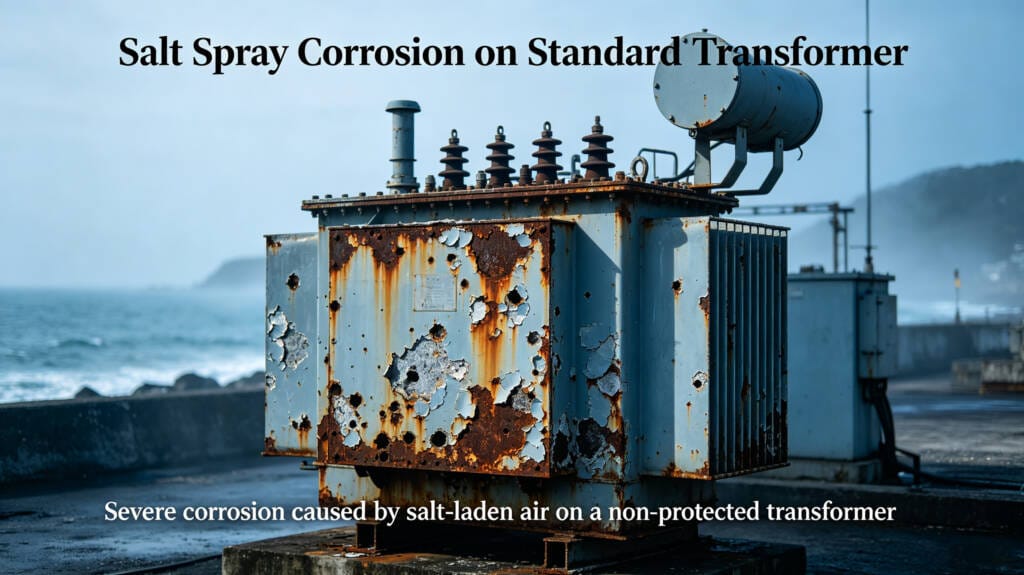
Salt spray (aerosol) deposits conductive and corrosive particles on transformer surfaces. Over time, this leads to pitting corrosion on carbon steel tanks, degradation of paint coatings, and increased risk of electrical tracking on bushings and insulators.
High humidity causes condensation inside enclosures, which can compromise insulation systems. In marine transformer applications, UV radiation, strong winds, and sand/dust further exacerbate wear.
Studies and field reports show that transformers in coastal zones without proper protection can experience corrosion-related failures within 3–5 years, compared to 20–30+ years in milder inland conditions.
For coastal transformer selection, it is vital to evaluate site-specific conditions: distance from shoreline, prevailing wind direction, salinity levels, and installation height. These directly influence material choices and design specifications.
3.Key Challenges in Coastal Transformer Selection
1. Salt Spray Corrosion
Salt particles accelerate oxidation of metals. Chloride ions penetrate coatings, causing rapid rusting of tanks, radiators, and mounting hardware. In severe cases, this leads to oil leaks in liquid-filled units or structural weakening.
The destructive effects of salt spray are well documented in IEC 60068-2-52, which defines salt mist testing procedures for marine-grade equipment.
2. High Humidity and Condensation
Moisture reduces dielectric strength of insulation materials. In dry-type transformers, it can cause tracking and partial discharges. In oil-immersed units, water contamination degrades oil quality and promotes cellulose insulation breakdown.
3. Creepage Distance and Bushing Contamination
Salt deposits lower surface resistance on bushings, requiring increased creepage distances (often 31–54 mm/kV or higher in marine atmospheres) to prevent flashovers.
4. Mechanical Stress from Wind and Vibration
Offshore and coastal sites experience higher wind loads and, in marine vessel applications, continuous vibration, demanding reinforced core-coil assemblies.
5. UV Degradation and Thermal Cycling
Prolonged sun exposure degrades polymer materials and coatings, while day-night temperature swings cause expansion/contraction that can crack seals.
These challenges make generic transformer selection inadequate. Specialized corrosion-resistant transformers are necessary for coastal duty.
4.Critical Factors in Coastal Transformer Selection
Effective coastal transformer selection involves evaluating multiple engineering parameters:
Enclosure and Corrosion Protection
For C5-M environments, use multi-layer coating systems (zinc-rich epoxy primer + high-build epoxy + polyurethane or polysiloxane topcoat) with minimum dry film thickness of 280–320 μm.
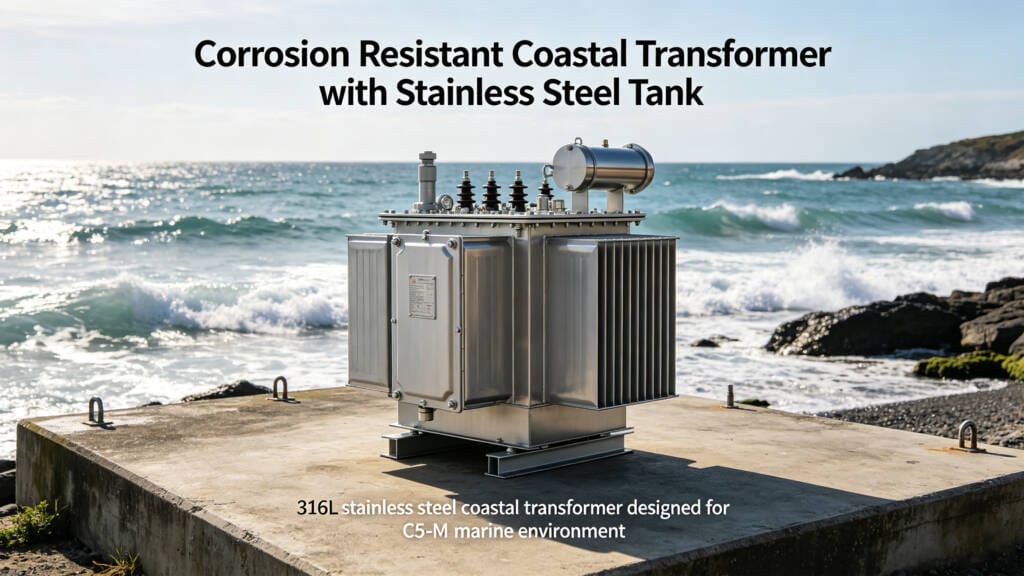
316L stainless steel enclosures or tanks offer superior resistance. Fiberglass-reinforced plastic (FRP) is another lightweight alternative for certain applications.
IP66 or IP67 ratings are recommended to prevent water and dust ingress.
For the highest level of protection, many engineers refer to the guidelines provided by DNV and ABS for marine and offshore applications.
Insulation and Sealing Systems
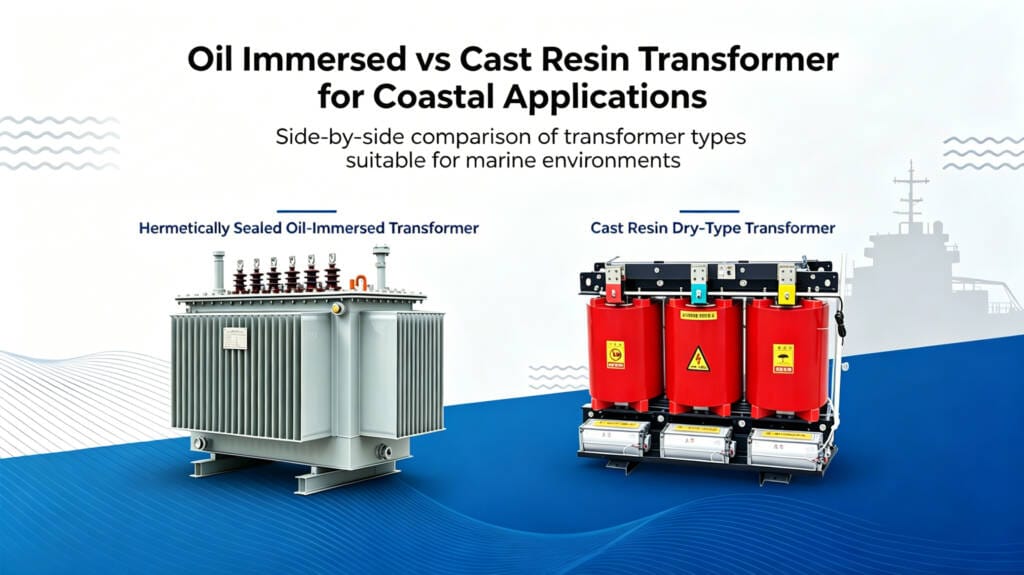
- Hermetically sealed oil-immersed transformers: Minimize moisture and oxygen ingress.
- Cast resin dry-type transformers: Excellent for indoor or protected outdoor use, with vacuum pressure impregnation (VPI) and epoxy encapsulation.
- Enhanced creepage and protected bushings.
Cooling and Thermal Design
Coastal units may require forced air (AF) cooling or specialized radiators with corrosion-resistant fins. Consider derating for high ambient temperatures.
Material Specifications
- Copper windings preferred over aluminum for better conductivity and corrosion resistance in humid conditions.
- High-grade insulation materials (Class F or H).
- Marine-grade hardware (stainless steel bolts, etc.).
Additional Features
- Anti-vibration mounts
- Breathers with desiccants or nitrogen blanketing
- Space heaters for dehumidification during standby
- Enhanced grounding and lightning protection
Table 1: Key Selection Criteria for Coastal Transformer Selection
| Factor | Standard Requirement | Coastal/Marine Recommendation | فائدة |
|---|---|---|---|
| Corrosion Category | C3/C4 | C5-M (ISO 12944) | Extended coating life |
| Enclosure Material | Mild steel | 316L Stainless Steel or Heavy Coating | Reduced rust and maintenance |
| Protection Rating | IP54 | IP66/IP67 | Prevents salt & moisture ingress |
| Creepage Distance | 25 mm/kV | 31–54 mm/kV | Lower flashover risk |
| Insulation Type | معيار | Cast Resin or Hermetically Sealed | Higher reliability in humidity |
| Certification | إيك 60076 | + ABS/DNV/IEC 60092 | Compliance for marine projects |
5.Comparison of Transformer Types for Coastal and Marine Use
Oil-Immersed vs. Dry-Type Transformers
Oil-immersed transformers (hermetically sealed) often perform well in coastal environments due to robust sealing and better heat dissipation. They are suitable for higher power ratings and outdoor exposure when properly coated.
Dry-type (cast resin) transformers offer advantages in fire safety and lower maintenance but require excellent enclosure protection against salt ingress. They excel in indoor or semi-protected marine installations.
Table 2: Transformer Type Comparison for Coastal Environments
| وجه | Oil-Immersed (Hermetic) | Cast Resin Dry-Type | Winner for Coastal Use |
|---|---|---|---|
| Corrosion Resistance | Excellent with proper tank/coating | Good (with IP67 enclosure) | Oil-Immersed |
| Humidity Performance | Superior sealing | Sensitive without protection | Oil-Immersed |
| Fire Safety | Moderate (with ester fluid) | Excellent | Dry-Type |
| صيانة | Oil testing required | الحد الأدنى | Dry-Type |
| Power Rating | Up to 25 MVA+ | Typically lower | Oil-Immersed |
| Cost (Long-term) | Lower in harsh conditions | Higher upfront for marine enclosures | Depends on application |
For offshore platforms and vessels, marine duty transformers certified to ABS, DNV, or IEC 60092 standards are preferred.
Detailed comparison and testing requirements for dry-type transformers in harsh environments can be found in the IEEE C57.12.01 standard.
6.Standards, Certifications, and Testing for Coastal Duty
موثوق coastal transformer selection requires compliance with:
- إيك 60076 series for power transformers
- ISO 12944 for corrosion protection (C5-M)
- IEC 60068-2-52 salt spray testing
- Marine classifications: ABS, DNV, Lloyd’s Register, Bureau Veritas
- IEEE C57.12.28 / C57.12.29 for enclosure integrity
Transformers should undergo accelerated salt fog testing to simulate years of exposure. Third-party certification builds trust and ensures performance.
ompliance with إيك 60076 series remains the fundamental requirement for power transformers worldwide, with additional marine certifications recommended for coastal transformer selection.
7.Best Practices for Installation, Protection, and Maintenance
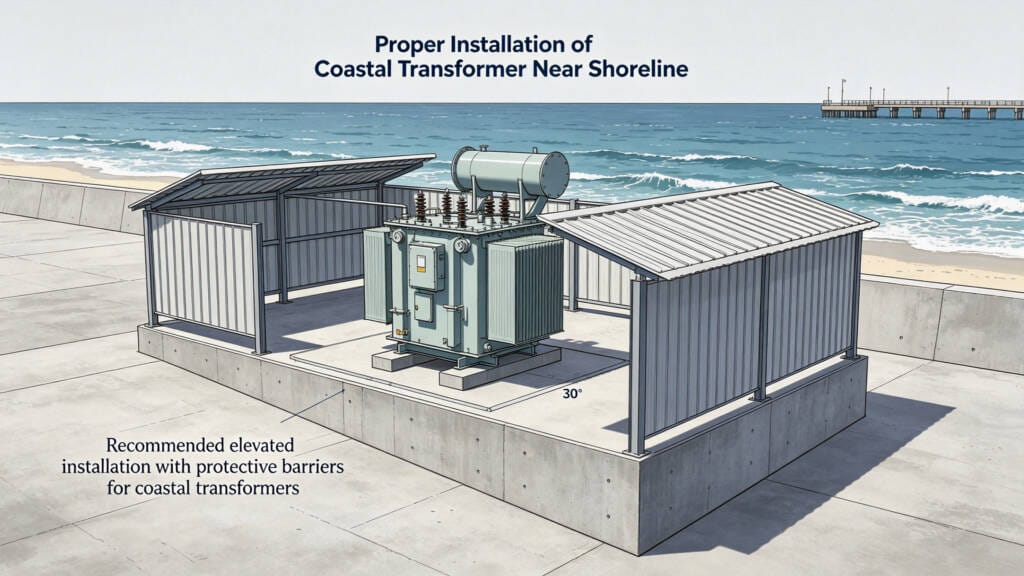
- Install transformers away from direct sea spray when possible (use barriers or elevated positions).
- Implement regular washing schedules to remove salt deposits.
- Monitor oil quality or insulation resistance periodically.
- Use remote monitoring systems for critical installations.
- Plan for coating inspections every 2–3 years in C5-M zones.
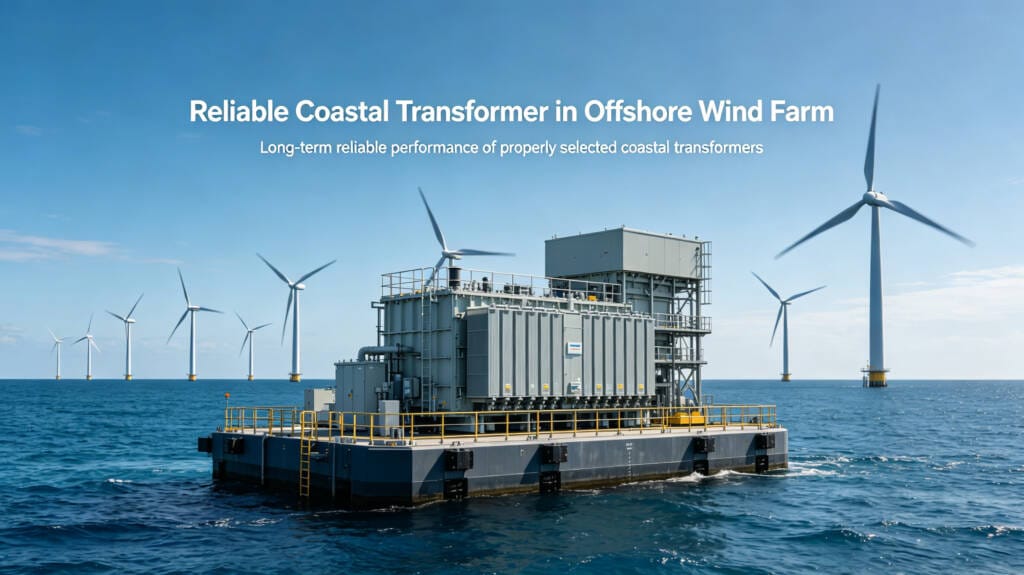
Successful projects in ports and offshore wind demonstrate that combining robust design with proactive maintenance yields the best ROI.
Regular maintenance guidelines for transformers in marine atmospheres are available from the NEMA Transformer Maintenance Guide.
8.Common Mistakes in Coastal Transformer Selection and How to Avoid Them
- Choosing standard inland transformers — Always specify C5-M protection.
- Ignoring site-specific salinity — Conduct environmental assessment.
- Underestimating long-term costs — Factor in maintenance and downtime.
- Neglecting certifications — Verify marine approvals for offshore work.
- Poor bushing and creepage design — Request enhanced designs early.
Avoiding these pitfalls through expert consultation significantly improves outcomes.
9.Conclusion
Coastal transformer selection is a specialized process that directly impacts project success, safety, and profitability. By understanding environmental challenges, applying rigorous criteria, and selecting appropriate marine و corrosion-resistant transformers, stakeholders can achieve reliable power distribution in the harshest conditions.
Investing in properly engineered solutions for coastal and offshore environments pays dividends through extended lifespan, reduced failures, and lower lifecycle costs. For complex projects, partnering with experienced manufacturers who understand transformers in coastal environments is highly recommended.
Ready to optimize your coastal transformer selection?