1.Introduction
Proper transformer packaging is one of the most important factors in ensuring safe and damage-free international transportation of electrical equipment. Whether shipping dry-type transformers, oil-filled transformers, or large power transformers, poor packaging can lead to costly mechanical damage, insulation failure, moisture ingress, and project delays. During export shipping, transformers are exposed to vibration, impact, humidity, and rough handling, making professional transformer packaging essential for protecting equipment performance and reliability.
As global demand for electrical infrastructure continues to grow, manufacturers and EPC contractors increasingly require reliable transformer packaging solutions that meet international shipping standards. Effective transformer export packaging not only protects equipment during transportation but also reduces maintenance costs, minimizes delivery risks, and improves customer confidence.
This guide explains the best practices for transformer packaging, including packaging materials, crating methods, moisture protection, shipping considerations, and common mistakes to avoid. By understanding how professional transformer packaging works, exporters can significantly reduce transportation risks and ensure transformers arrive safely and fully operational at their destination.
👉Contact our experts to ensure safe transformer packaging for your export shipments.
Table of Contents
- Introduction
- The Importance of Proper Transformer Packaging
- Key Principles for Export Transformer Packaging
- Common Packaging Methods and Materials
- Transformer Crating and Cushioning Techniques
- Export Shipping Considerations
- Common Mistakes and How to Avoid Them
- Professional Tips and Solutions
- Transformer Packaging Case Studies
- Conclusion
2.The Importance of Proper Transformer Packaging
Transformers, especially large power and distribution transformers, are expensive and heavy, and their transport poses significant risks. Proper packaging is critical for several reasons:
- Preventing Mechanical Damage
Transformers can suffer from shocks, vibration, and impact during handling, loading, and transit. Even minor mechanical stresses can affect windings, insulation, or bushings. - Protecting Against Environmental Hazards
Exposure to moisture, dust, and temperature fluctuations can damage transformer insulation and reduce lifespan. - Compliance with Export Standards
Many countries have strict packaging and labeling regulations for heavy electrical equipment. Non-compliance can lead to delays, fines, or cargo rejection. - Cost and Reputation Management
Damaged transformers lead to costly repairs or replacements, project delays, and a loss of client trust. Companies investing in proper transformer packaging solutions can prevent financial and reputational losses.
Statistics Highlighting Risks:
- Industry surveys indicate that up to 30-40% of transformer damages occur during transportation.
- Poor packaging is the leading cause of delays in international electrical projects.
3.Key Principles for Export Transformer Packaging
To ensure safe transport, the following principles must guide your transformer packaging strategy. A well-designed packaging system not only protects transformers from physical and environmental damage but also improves transportation efficiency and compliance with international shipping requirements.
1. Protection Against Physical Impact
Transformers should be secured with shock-absorbing materials like foam, rubber pads, or air cushions. During loading, unloading, and long-distance transportation, transformers are exposed to continuous vibration and sudden impacts that can damage internal windings, insulation systems, bushings, and external accessories.
The crate or frame should prevent any movement of the transformer inside the package. Heavy-duty fastening systems, reinforced support structures, and anti-vibration padding are commonly used in professional transformer packaging solutions. For large power transformers, steel supports and locking brackets are often added to improve structural stability during shipping.
In addition, transportation routes should also be considered. Rough road conditions, port handling operations, and crane lifting can all create mechanical stress, making strong export transformer packaging essential for safe delivery.
2. Moisture and Dust Protection
Apply shrink wrap, waterproof covers, or desiccants inside crates to protect transformers from environmental exposure. Moisture is one of the biggest threats during transformer shipping, especially for sea freight where humidity and salt air can lead to corrosion and insulation deterioration.
Ensure crates are airtight, particularly for international ocean transportation, to prevent moisture penetration. Vacuum-sealed packaging and vapor barrier films are often used for medium and large transformers shipped overseas.
Dust protection is equally important, especially for dry-type transformers and sensitive electrical components. Fine particles entering the transformer during transit or storage may affect cooling systems and insulation performance. Proper sealing and protective wrapping significantly reduce these risks.
3. Weight Distribution and Lifting Safety
Position transformers to evenly distribute weight and prevent tipping during transportation. Uneven loading can place excessive stress on the transformer structure and packaging frame, increasing the risk of deformation or shifting inside the container.
Use proper lifting lugs, brackets, or forklift points to reduce handling risks. All lifting locations should be clearly marked on the transformer packaging with handling instructions and orientation labels. For oversized transformers, exporters often use customized steel bases and reinforced pallets to support safe crane operations.
Additionally, the packaging design should consider container securing methods, including straps, wooden blocking, and anti-slip supports, to prevent cargo movement during sea or land transport.
4. Compliance With Standards
Follow IEC, ANSI, and ISO packaging standards to ensure international shipping compliance. Many countries have strict regulations regarding the packaging, labeling, and transportation of heavy electrical equipment.
Include labeling, orientation markers, weight information, and handling instructions to meet export requirements and improve transportation safety. Common markings such as “Fragile,” “Keep Dry,” “Center of Gravity,” and “This Side Up” help logistics operators handle transformers correctly throughout the shipping process.
Compliance with international transformer packaging standards also helps reduce customs clearance delays and demonstrates professionalism to overseas buyers.
5. Customization and Modularity
Customized crates should accommodate transformer dimensions, weight, and transportation conditions. Different transformer types require different transformer packaging methods depending on voltage level, insulation system, and shipping distance.
For example:
- Dry-type transformers typically require enhanced dust and moisture protection.
- Oil-filled transformers require leak prevention and reinforced structural support.
- Large power transformers often require modular steel frame packaging for easier transport and installation.
Modular packaging designs allow for easier disassembly, inspection, and reuse, reducing long-term logistics costs. Reusable export packaging systems are becoming increasingly popular among transformer manufacturers seeking sustainable and cost-effective shipping solutions.
A customized transformer packaging strategy ensures better protection, safer handling, and improved transportation efficiency for international projects.
Following transformer packaging standards ensures your equipment complies with international export requirements.
4.Common Packaging Methods and Materials
Proper selection of materials is key to successful transformer export packaging.
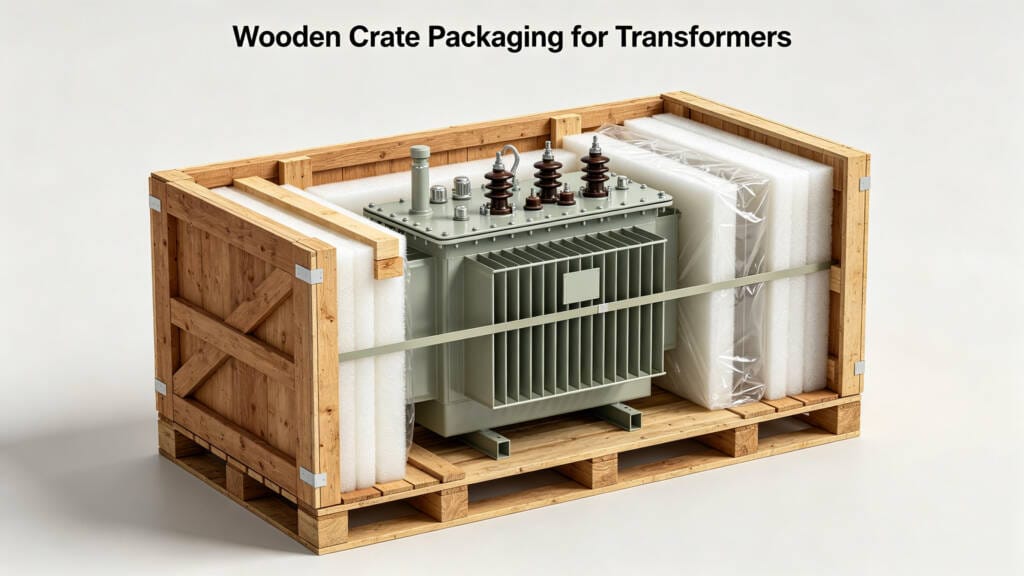
Wooden Crates
Wooden crates are the most widely used packaging solution for transformers due to their strength and flexibility.
Advantages:
- Customizable for different transformer sizes
- Provides strong mechanical protection
- Can incorporate shock absorbers and pallets
Disadvantages:
- Heavier than other solutions, increasing shipping costs
- Requires moisture treatment to prevent warping
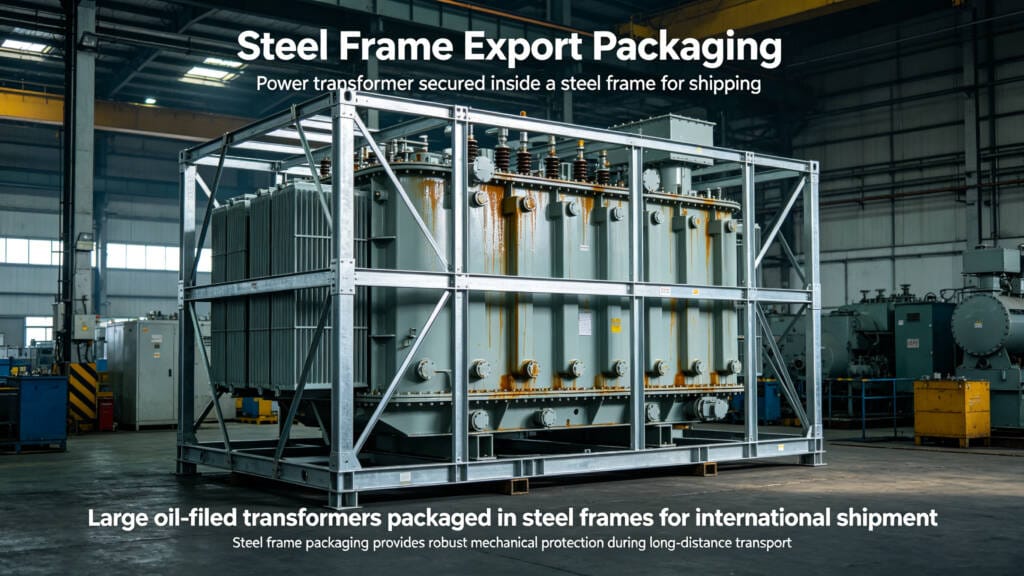
Steel Frames
Steel frames are preferred for large or high-value transformers, often combined with wooden panels or foam.
Advantages:
- High mechanical strength
- Reusable and durable
- Supports heavy transformers
Disadvantages:
- Higher cost
- Requires cranes or forklifts for handling
Cushioning Materials
- Foam Pads: Absorb vibrations during transit
- Rubber Blocks: Protect delicate components
- Shock-Absorbing Mats: Reduce mechanical stress
- Desiccant Packs: Prevent moisture buildup
Table 1: Recommended Packaging Materials by Transformer Type
| Transformer Type | Recommended Crate | Cushioning Material | Protection Notes |
|---|---|---|---|
| Dry-type Transformer | Wooden crate | Foam, rubber pads | Keep dry, avoid vibrations |
| Oil-filled Transformer | Steel frame | Shock-absorbing mats | Seal to prevent leaks |
| Power Distribution Unit | Wooden crate | Foam and desiccant packs | Ensure proper lifting points |
👉Request a free quote for customized transformer export crates today.
5.Transformer Crating and Cushioning Techniques
1. Crating Design
- Ensure rigid construction with corner reinforcements.
- Include ventilation holes for heat dissipation during transport.
- Crates should allow easy lifting and securing in shipping containers.
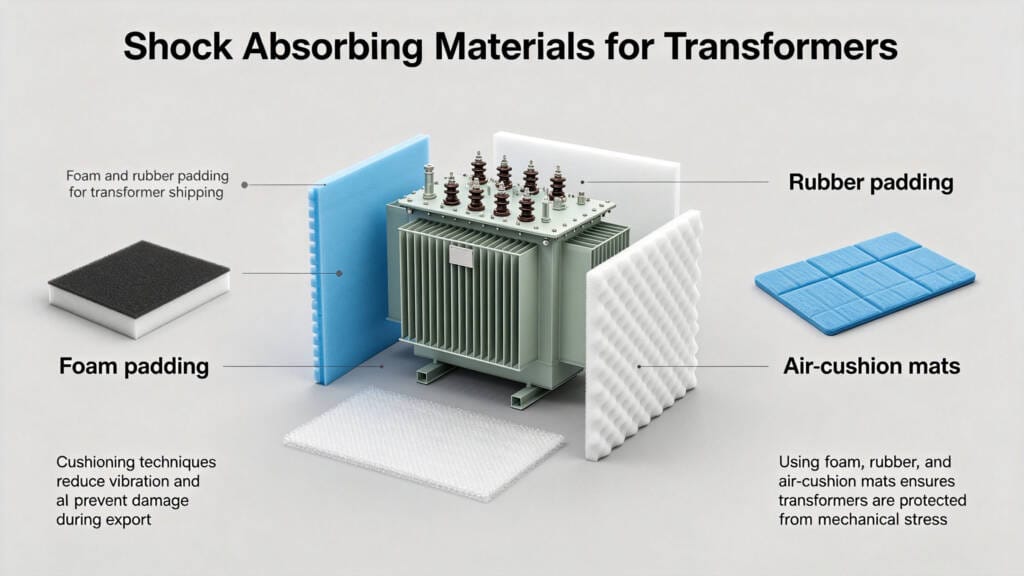
2. Internal Cushioning
- Transformers should be isolated from crate walls using rubber pads or foam.
- Use air cushions or inflatable bags for extra shock absorption in long-distance shipping.
3. Moisture Management
- Incorporate silica gel packets or other desiccants.
- Apply anti-corrosion coatings to metal components.
- Seal crates using waterproof membranes or shrink wrap.
4. Labeling and Handling Instructions
- Mark crates with “Fragile,” “Do Not Tilt,” and orientation arrows.
- Include instructions for crane or forklift operations.
6.Export Shipping Considerations
Even the best packaging can fail if shipping logistics are not properly managed.
1. Shipping Mode Selection
- Sea Freight: Economical, suitable for heavy transformers, but exposes cargo to long-duration environmental risks.
- Air Freight: Fast and secure, ideal for high-value or urgent shipments.
- Land Transport: Short-distance transport requires attention to road conditions and handling.
2. Insurance and Documentation
- Opt for full cargo insurance covering damage, theft, and delay.
- Include accurate shipping documents: weight, dimensions, and handling instructions.
- Follow international export regulations, including customs and safety standards.
3. Container Loading
- Ensure transformers are secured inside containers using straps, blocks, and braces.
- Avoid stacking heavy objects on top of transformers.
- Include vibration-damping materials if transporting by truck or rail.
7.Common Mistakes and How to Avoid Them

Mistake 1: Using Inadequate Materials
- Thin plywood or low-quality foam provides insufficient protection.
- Solution: Use industry-standard crates and certified cushioning materials.
Mistake 2: Ignoring Weight and Balance
- Uneven weight distribution causes deformation and stress.
- Solution: Calculate weight center and use reinforcement as needed.
Mistake 3: Neglecting Environmental Protection
- Exposure to moisture or dust can damage insulation and electrical components.
- Solution: Seal crates, use desiccants, and apply corrosion prevention.
Mistake 4: Non-Compliance With Standards
- Ignoring IEC, ANSI, or ISO standards may result in shipment rejection.
- Solution: Ensure all packaging, labeling, and handling meet international guidelines.
Avoid common pitfalls by following transformer shipping tips provided by industry experts.
8.Professional Tips and Solutions
- Custom Packaging: Tailor crate size, cushioning, and protective materials to transformer dimensions.
- Third-Party Inspection: Hire certified inspectors to verify packaging quality.
- Pre-Shipping Checklists: Verify structural integrity, weight balance, and environmental protection measures.
- Experienced Logistics Partners: Partner with carriers specializing in heavy electrical equipment.
Table 2: Recommended Shipping Best Practices
| Practice | Description |
|---|---|
| Custom Crate Design | Matches transformer size and weight, prevents movement |
| Shock Absorption | Foam, rubber pads, and inflatable air cushions to minimize vibration |
| Moisture Prevention | Desiccants, shrink wrap, and waterproof covers |
| Proper Labeling | “Fragile,” “This Side Up,” handling instructions |
| Insurance Coverage | Full cargo insurance covering damage, theft, and delays |
| Standard Compliance | Follow IEC, ANSI, or ISO packaging guidelines |
9.Transformer Packaging Case Studies
Case Study 1: Dry-Type Transformer Export to Africa
A manufacturer exporting dry-type transformers to Africa experienced repeated insulation issues after long-distance sea transportation. Although the transformers passed all factory tests before shipment, several units arrived with reduced insulation resistance values due to excessive vibration and moisture exposure during transit. This caused installation delays and additional inspection costs for the end customer.
Problem
The original transformer packaging method used standard wooden crates with limited internal cushioning. During loading, unloading, and rough road transportation from the port to the project site, constant vibration placed stress on the transformer windings and insulation system. In addition, high humidity levels during ocean shipping increased the risk of moisture penetration.
Solution
To improve transformer packaging reliability, the manufacturer redesigned the export packaging system with multiple protection layers:
- Heavy-duty wooden export crates with reinforced structural support
- High-density foam padding to absorb vibration and mechanical shock
- Moisture-proof shrink wrapping around the transformer body
- Additional corner reinforcement to reduce impact damage during handling
- Desiccant packs placed inside the crate to control humidity levels
- Clear “Fragile” and “Keep Dry” handling labels for logistics teams
The transformers were also secured to treated wooden pallets to prevent movement during container transport.
Result
After implementing the upgraded transformer packaging solution, all units arrived at the destination safely with zero insulation damage. Installation was completed without delays, and the customer reported improved confidence in the supplier’s export capabilities. The enhanced packaging method also reduced warranty claims and after-sales service costs.
Case Study 2: Oil-Filled Power Transformer Export to South America
A large oil-filled power transformer was shipped to South America for a utility infrastructure project. Due to the transformer’s heavy weight and oversized dimensions, transportation involved multiple handling stages, including truck transport, port lifting operations, and long-distance sea freight.
Problem
During previous shipments, transformers experienced internal shifting inside the steel frame packaging system. Excessive movement during transport created stress on bushings and external components, increasing the risk of oil leakage and structural deformation. The logistics company also reported difficulties handling the equipment safely because of unclear lifting instructions.
Solution
The engineering team developed a customized transformer packaging strategy specifically for heavy oil-filled transformers:
- Reinforced steel frame packaging with additional locking points
- Custom rubber support blocks installed beneath the transformer base
- Air-cushion shock absorption mats to reduce vibration during sea transport
- Heavy-duty fastening straps to eliminate internal movement
- Anti-slip supports to stabilize the transformer during crane lifting
- Waterproof wrapping to protect external surfaces from salt-air corrosion
- Clearly marked crane lifting points and multilingual handling instructions
The packaging design was tested before shipment to verify structural stability under simulated transportation conditions.
Result
The transformer arrived in South America without any mechanical damage, oil leakage, or structural issues. The customer successfully completed installation and commissioning on schedule. The improved transformer packaging design also reduced unloading time at the port and minimized handling risks during transportation.
This project demonstrated the importance of combining strong mechanical protection with proper logistics planning when shipping large power transformers internationally.
Case Study 3: Medium Voltage Transformer Export to Europe
A supplier exporting medium voltage transformers to Europe encountered corrosion problems during winter shipments. Although the transformers were mechanically protected, prolonged exposure to moisture and temperature fluctuations during sea freight created condensation inside the packaging.
Problem
When the shipment arrived, inspectors discovered signs of corrosion on metal components and surface oxidation around terminals and fasteners. The issue was traced to insufficient moisture protection inside the transformer packaging system. Condensation formed during temperature changes between ports and warehouse storage facilities.
Solution
To address the issue, the company upgraded its export transformer packaging process with advanced environmental protection measures:
- Fully sealed wooden export crates with waterproof barriers
- Industrial-grade desiccants installed inside every package
- Vacuum-sealed moisture-proof wrapping around critical transformer components
- Anti-corrosion protective coating applied to exposed metal surfaces
- Humidity indicators placed inside crates for monitoring during transit
- Ventilation control design to reduce condensation buildup
- Compliance with European shipping and packaging standards
In addition, the logistics provider introduced improved container inspection procedures before loading to ensure containers were dry and free from water intrusion.
Result
The upgraded transformer packaging solution completely eliminated moisture-related corrosion issues. All transformers arrived in Europe dry, clean, and fully operational. The customer praised the supplier’s attention to export packaging quality and awarded additional contracts for future transformer projects.
This case highlights how proper moisture control is essential for transformer shipping, especially in long-distance international transport involving changing climates and extended storage periods.
10.Conclusion
Proper transformer packaging for export is not optional—it is essential. Companies that invest in high-quality crates, cushioning materials, and compliance with international standards minimize the risk of damage, avoid costly repairs, and maintain client trust. By understanding common mistakes and implementing professional solutions, exporters can ensure that their transformers arrive safely, on time, and fully functional.