1.Introduction
Transformer protection systems play a critical role in ensuring the reliability, safety, and efficiency of modern power networks. Whether in industrial facilities, substations, renewable energy plants, or commercial buildings, transformers are essential components for voltage conversion and power distribution. However, transformers are also exposed to electrical faults, overloads, insulation failures, overheating, and external disturbances that can lead to severe operational damage.
Without proper transformer protection, a single fault can result in equipment destruction, expensive downtime, fire hazards, and significant financial losses. For this reason, utilities, EPC contractors, and industrial operators invest heavily in advanced transformer protection systems to maintain safe and stable electrical operation. Modern power networks rely heavily on reliable oil immersed transformers for efficient voltage transmission and industrial power distribution.
Modern power transformer protection solutions are no longer limited to basic relays and circuit breakers. Today’s electrical transformer protection systems integrate intelligent monitoring, digital relays, remote diagnostics, and predictive maintenance technologies. These systems help detect abnormal conditions early and isolate faults before catastrophic failures occur.
This article explains how transformer protection systems work, the most common transformer protection devices, major fault protection methods, international standards, and how businesses can select the right transformer safety solution for industrial and utility applications.
Looking for reliable transformer protection solutions for your power project?
İçindekiler
- Introduction
- What Are Transformer Protection Systems?
- Why Transformer Protection Is Important
- Common Transformer Faults and Risks
- Main Types of Transformer Protection Systems
- Transformer Protection Relays Explained
- Transformer Monitoring vs Transformer Protection
- Protection Systems for Different Transformer Types
- IEC and IEEE Transformer Protection Standards
- How to Choose the Right Transformer Protection System
- Smart Transformer Protection and Future Trends
- Çözüm
- SSS
2.What Are Transformer Protection Systems?
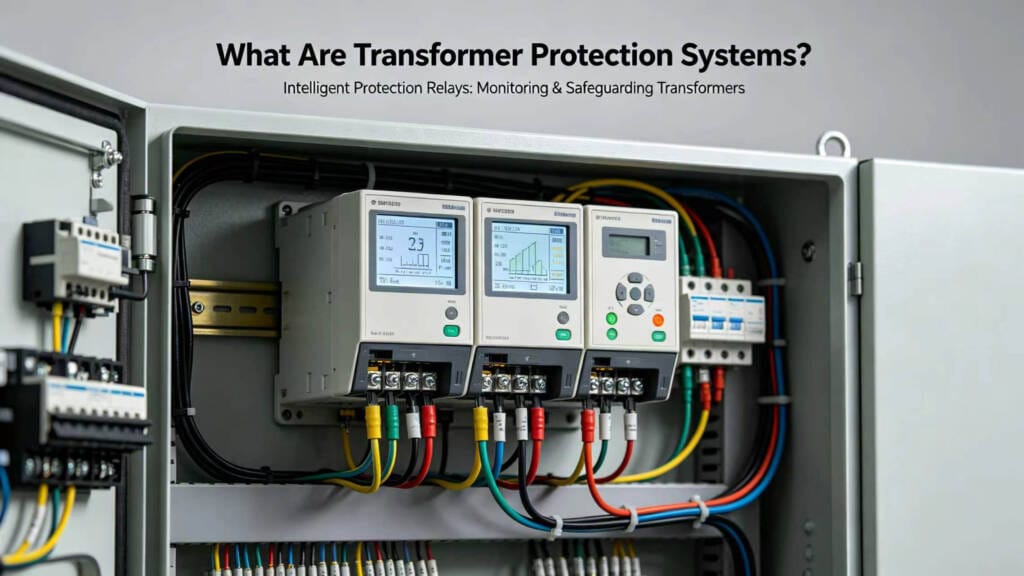
Transformer protection systems are specialized electrical protection solutions designed to detect abnormal operating conditions and disconnect transformers from the power network when dangerous faults occur.
The primary objective of transformer fault protection is to prevent:
- Internal transformer damage
- Electrical fires
- Power outages
- Equipment overheating
- Short circuits
- System instability
- Expensive downtime
A transformer safety system continuously monitors electrical parameters such as:
- Akım
- Gerilim
- Temperature
- Pressure
- Oil level
- Gas accumulation
- Insulation condition
When abnormal conditions exceed preset limits, transformer protection relays activate protective devices such as circuit breakers to isolate the transformer from the network.
Many commercial buildings and industrial facilities now prefer dry type transformers because of their improved fire safety and low maintenance requirements.
3.Why Transformer Protection Is Important
Transformer protection is one of the most important aspects of electrical power system safety. Transformers are high-value assets, and their failure can impact entire power distribution networks.
Preventing Equipment Damage
Transformers operate under high electrical and thermal stress. Without proper transformer protection systems, overloads and short circuits can severely damage windings, insulation, and core structures.
Reducing Downtime
Unexpected transformer failure can stop industrial production lines, disrupt utility operations, and shut down commercial facilities. Effective transformer fault protection minimizes outage duration and improves operational reliability.
Improving Fire Safety
Oil immersed transformers contain insulating oil that may ignite under severe fault conditions. Transformer protection devices such as Buchholz relays, pressure relief devices, and temperature protection systems help reduce fire risks.
Extending Transformer Lifespan
Continuous monitoring and protective operation reduce electrical and thermal stress, helping transformers achieve longer service life and lower maintenance costs.
Supporting Grid Stability
Large power transformers are critical to transmission and distribution networks. Reliable power transformer protection helps maintain stable voltage and uninterrupted energy supply.
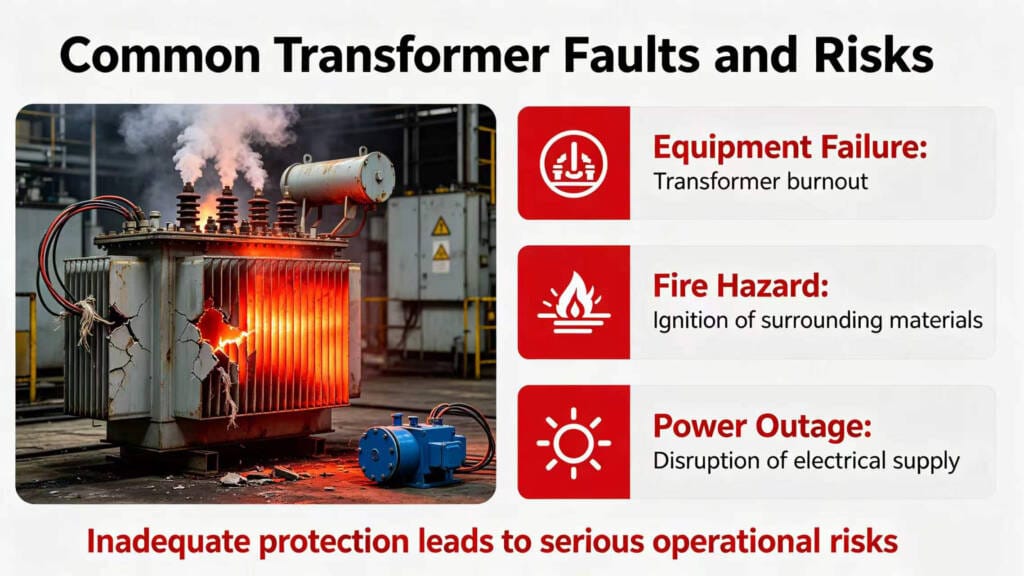
4.Common Transformer Faults and Risks
Understanding transformer faults is essential for selecting the right transformer protection solution. Proper cooling systems are essential for preventing transformer overheating and extending transformer lifespan.
Transformer Overload
Transformer overload occurs when electrical demand exceeds rated capacity for extended periods.
Common causes include:
- Excessive load growth
- Improper transformer sizing
- Harmonik bozulma
- Unbalanced load conditions
Consequences may include overheating, insulation aging, and winding deformation.
Short Circuit Faults
Short circuits are among the most dangerous transformer failures. These faults create extremely high current levels that can destroy windings within seconds.
Types include:
| Short Circuit Type | Tanım |
|---|---|
| Phase-to-phase fault | Contact between conductors |
| Phase-to-ground fault | Conductor touches ground |
| Inter-turn fault | Internal winding insulation failure |
| External short circuit | Fault outside transformer |
Transformer differential protection is commonly used to detect these conditions.
Overheating
Transformer overheating is often caused by:
- Overloading
- Poor cooling
- Yüksek ortam sıcaklığı
- Ventilation failure
- Fan malfunction
Excessive temperature accelerates insulation degradation and reduces transformer life expectancy.
Insulation Failure
Insulation failure is a major cause of transformer breakdown.
Common factors include:
- Moisture contamination
- Thermal aging
- Voltage surges
- Partial discharge
- Poor manufacturing quality
Electrical transformer protection systems monitor insulation performance to prevent catastrophic failure.
Overvoltage and Lightning Surges
Voltage spikes from lightning strikes or switching operations can damage transformer insulation and connected equipment.
Surge protection devices and lightning arresters are essential transformer protection components for outdoor installations.
Internal Transformer Faults
Internal transformer faults may include:
- Core faults
- Winding faults
- Tap changer failures
- Oil decomposition
- Internal arcing
These faults are especially dangerous because they can escalate rapidly.
5.Main Types of Transformer Protection Systems
Different transformer protection methods are used depending on transformer size, application, and operating conditions.
Large industrial projects often require customized power transformer solutions with advanced differential protection systems.
Differential Protection
Transformer differential protection is considered the most important protection method for power transformers.
I primary−I secondary=0
The system compares current entering and leaving the transformer.
Under normal conditions:
- Input current equals output current after ratio compensation
- Differential current remains near zero
When internal faults occur:
- Current imbalance increases
- Protection relay trips the circuit breaker
Advantages
| Advantage | Benefit |
|---|---|
| Fast fault detection | Minimizes damage |
| High sensitivity | Detects internal faults |
| Reliable operation | Suitable for large transformers |
Differential protection is widely used in industrial transformer protection and utility substations.
Overcurrent Protection
Overcurrent protection detects excessive current caused by overloads or external faults.
This method is commonly used for:
- Distribution transformer protection
- Small industrial transformers
- Backup protection systems
Overcurrent relays operate when current exceeds preset values for a specific duration.
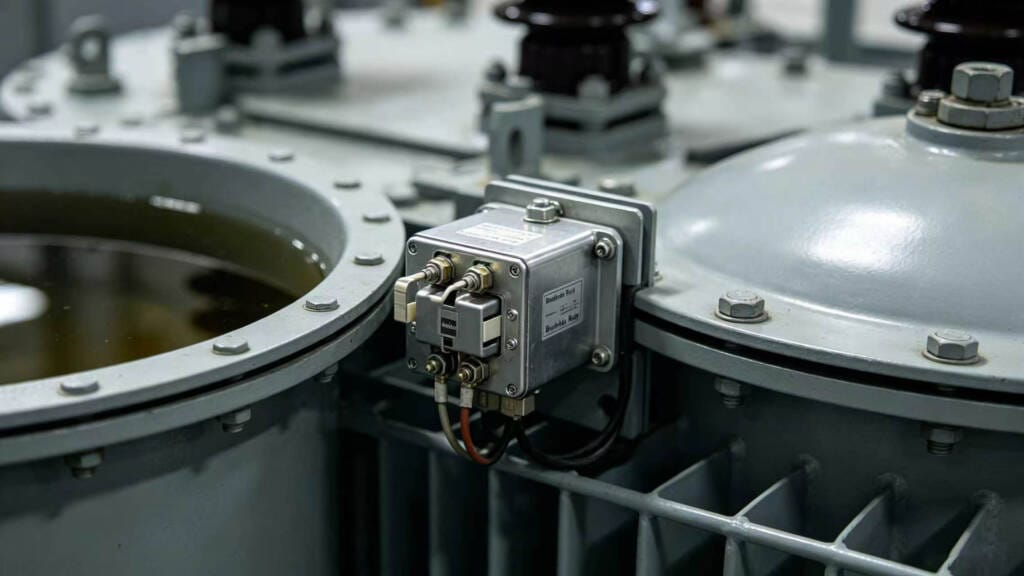
Buchholz Relay Protection
Buchholz relay protection is used primarily in oil immersed transformers equipped with conservator tanks.
The relay detects:
- Gas accumulation
- Oil movement
- Internal arcing
- Minor insulation faults
Benefits of Buchholz Relays
- Early fault detection
- Reliable internal fault monitoring
- Reduced transformer fire risk
Buchholz relays are essential transformer protective devices for medium and large oil transformers.
Temperature Protection
Transformer temperature protection monitors:
- Oil temperature
- Winding temperature
- Cooling system performance
Excessive temperature may trigger:
- Alarm signals
- Cooling fan activation
- Automatic shutdown
Modern transformer monitoring systems often use digital temperature sensors for real-time diagnostics.
Earth Fault Protection
Earth fault protection detects leakage current flowing to ground.
This protection method is important for:
- Personnel safety
- Equipment protection
- Fire prevention
Restricted earth fault protection provides higher sensitivity for internal grounding faults.
Surge Protection
Lightning strikes and switching surges can generate dangerous transient voltages.
Surge protection systems include:
- Parafudrlar
- Lightning protection devices
- Insulation coordination systems
These components are especially important in renewable energy and outdoor substation projects.
Pressure Relief Protection
Internal transformer faults may generate excessive gas pressure.
Pressure relief devices protect transformers by:
- Releasing internal pressure
- Preventing tank rupture
- Reducing explosion risk
This protection is widely applied in power transformer protection systems.
6.Transformer Protection Relays Explained
Transformer protection relays are intelligent devices that detect abnormal electrical conditions and initiate protective actions.
Traditional electromechanical relays have largely been replaced by digital protection relays offering:
- Higher accuracy
- Faster response
- Remote communication
- Data recording
- Fault diagnostics
Main Types of Transformer Protection Relays
| Relay Type | Main Function |
|---|---|
| Differential relay | Internal fault detection |
| Overcurrent relay | Aşırı yük koruması |
| Distance relay | Transmission fault protection |
| Thermal relay | Temperature monitoring |
| Gas relay | Oil transformer protection |
| Voltage relay | Overvoltage protection |
Advantages of Digital Transformer Protection Relays
Modern transformer relay protection systems provide several advantages:
- Real-time monitoring
- Event recording
- Remote control
- SCADA integration
- Predictive maintenance capability
These intelligent transformer protection systems are increasingly used in smart grid applications.
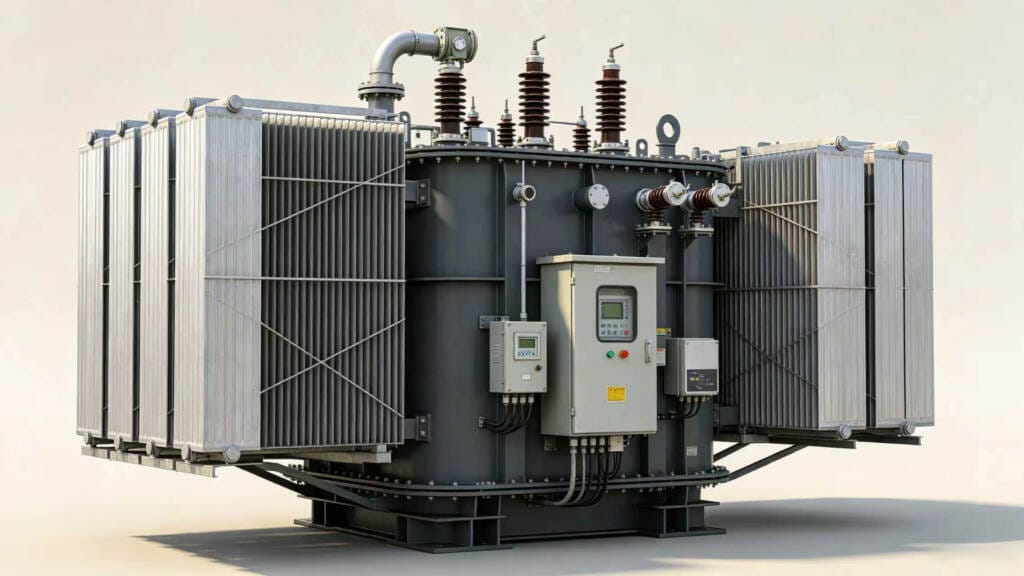
7.Transformer Monitoring vs Transformer Protection
Although often used together, transformer monitoring and transformer protection serve different functions.
| Transformer Monitoring | Transformer Protection |
|---|---|
| Tracks operating conditions | Disconnects faults |
| Collects performance data | Prevents equipment damage |
| Supports predictive maintenance | Provides emergency response |
| Continuous operation | Fast isolation action |
| Data analysis focused | Safety focused |
Transformer monitoring systems typically observe:
- Oil condition
- Dissolved gas analysis
- Temperature
- Humidity
- Load profile
Transformer protection systems focus on rapid fault detection and isolation.
Modern substations combine both functions into integrated transformer protection solutions.
8.Protection Systems for Different Transformer Types
Different transformer designs require different transformer safety protection methods.
Oil Immersed Transformer Protection
Oil immersed transformers require multiple protection layers because insulating oil introduces additional fire and pressure risks.
Typical protection devices include:
- Buchholz relay
- Oil temperature indicator
- Pressure relief device
- Oil level monitoring
- Differential protection
- Overcurrent protection
Oil transformer protection is widely used in:
- Utility substations
- Industrial plants
- Renewable energy facilities
Dry Type Transformer Protection
Dry type transformers do not use oil insulation, reducing fire risk.
However, dry type transformer protection still requires:
- Sıcaklık sensörleri
- Aşırı yük koruması
- Ventilation monitoring
- Ground fault protection
Cast resin dry type transformers commonly use intelligent thermal monitoring systems.
Power Transformer Protection
Large power transformers are critical grid assets and require advanced protection systems.
Typical Protection Configuration
| Protection Method | Başvuru |
|---|---|
| Differential protection | Internal faults |
| REF protection | Ground faults |
| Overfluxing protection | Magnetic overexcitation |
| Gas protection | Oil fault detection |
| Backup overcurrent | External faults |
Power transformer protection systems are usually integrated into utility SCADA platforms.
Distribution Transformer Protection
Distribution transformer protection focuses on cost-effective reliability.
Common protection methods include:
- Fuse protection
- Overcurrent relays
- Parafudrlar
- Thermal protection
Distribution transformers are widely used in urban power distribution systems.
Solar Power Transformer Protection
Renewable energy projects require specialized transformer protection solutions because of variable load and environmental exposure.
Solar project transformer protection typically includes:
- Surge protection
- Harmonic monitoring
- Remote monitoring systems
- Smart relays
- Temperature protection
Transformer protection for solar projects is increasingly important as global renewable energy capacity expands.
9.IEC and IEEE Transformer Protection Standards
International transformer protection standards ensure system reliability, interoperability, and safety.
The two most common standards are:
- IEC transformer protection standards
- IEEE transformer protection standards
IEC Transformer Protection Standards
IEC standards are widely used in Europe, Asia, the Middle East, and Africa.
Common IEC standards include:
| IEC Standard | Tanım |
|---|---|
| IEC 60076 | Güç transformatörleri |
| IEC 60255 | Koruma röleleri |
| IEC 60529 | Enclosure protection |
| IEC 61850 | Substation communication |
IEC transformer protection systems emphasize international compatibility and standardized testing.
IEEE Transformer Protection Standards
IEEE standards are commonly used in North America and utility projects.
Key standards include:
| IEEE Standard | Tanım |
|---|---|
| IEEE C37 series | Koruma röleleri |
| IEEE C57 series | Transformer standards |
| IEEE 242 | Industrial power protection |
IEEE transformer protection focuses heavily on utility system performance and reliability.
10.How to Choose the Right Transformer Protection System
Selecting the proper transformer protection system depends on several technical and operational factors.
Transformer Capacity
Larger transformers require more advanced protection systems.
| Transformer Size | Typical Protection Level |
|---|---|
| Small distribution transformer | Basic overcurrent protection |
| Medium industrial transformer | Differential + thermal protection |
| Large power transformer | Full intelligent protection system |
Installation Environment
Environmental conditions strongly influence transformer protection design.
Outdoor Installation
Requires:
- Surge protection
- Weather-resistant enclosures
- Moisture monitoring
Indoor Installation
Requires:
- Ventilation monitoring
- Fire safety systems
- Temperature control
Load Characteristics
Variable industrial loads may require:
- Harmonic monitoring
- Aşırı yük koruması
- Smart relay coordination
Renewable energy applications often require additional surge and transient protection.
Compliance Requirements
Projects should comply with:
- IEC standards
- IEEE standards
- Local utility requirements
- Industrial safety regulations
Working with an experienced transformer manufacturer helps ensure proper compliance and protection coordination.
11.Smart Transformer Protection and Future Trends
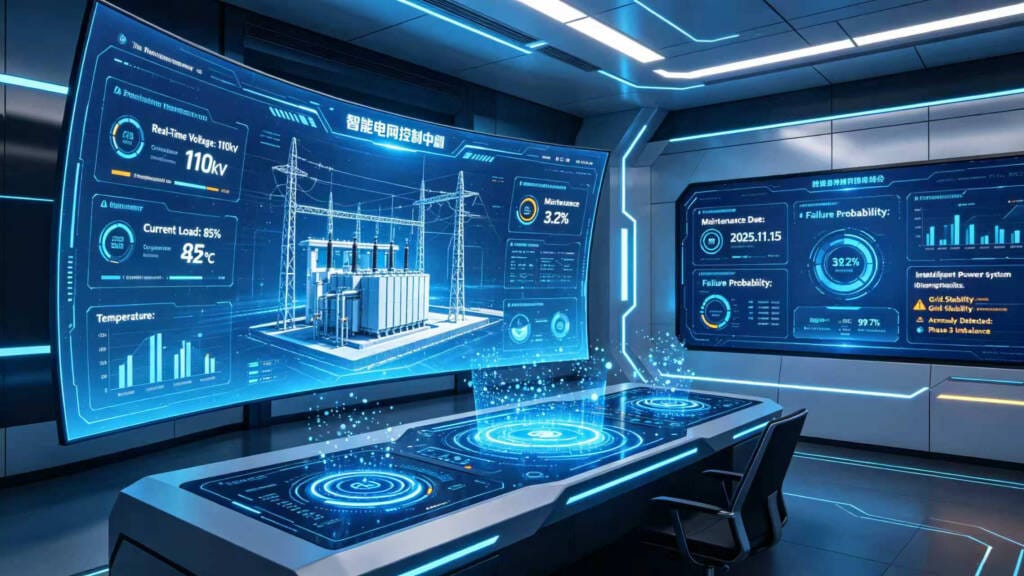
Modern transformer protection systems are becoming increasingly intelligent and automated.
Smart Grid Integration
Smart grids require transformer protection systems capable of:
- Remote communication
- Real-time diagnostics
- Self-healing operation
- Automated fault isolation
Digital substations increasingly use IEC 61850 communication protocols.
IoT-Based Monitoring
IoT transformer monitoring systems provide:
- Cloud-based diagnostics
- Mobile alerts
- Predictive maintenance
- Remote asset management
These systems reduce maintenance cost and improve reliability.
AI Fault Detection
Artificial intelligence is transforming transformer fault protection by analyzing:
- Temperature trends
- Vibration patterns
- Gas analysis data
- Electrical anomalies
AI-based transformer protection solutions can identify potential failures before traditional alarms activate.
Predictive Maintenance
Predictive transformer maintenance uses real-time data to schedule service before faults occur.
Benefits include:
- Reduced downtime
- Lower maintenance cost
- Extended equipment lifespan
- Improved operational efficiency
This trend is becoming increasingly important for utility-scale power transformer protection.
12.Conclusion
Transformer protection systems are essential for maintaining safe, reliable, and efficient electrical power networks. From industrial plants and substations to renewable energy projects and commercial facilities, transformer protection helps prevent catastrophic equipment failure, reduce downtime, and improve operational safety.
Modern transformer protection solutions combine traditional protection relays with intelligent monitoring, digital diagnostics, and smart automation technologies. Whether using differential protection, Buchholz relays, thermal protection, or advanced digital relay systems, selecting the correct transformer safety protection strategy is critical for long-term reliability.
As global energy infrastructure continues to modernize, demand for advanced transformer protection systems, transformer monitoring solutions, and intelligent power transformer protection technologies will continue to grow.
Companies investing in reliable transformer protection not only improve equipment safety but also reduce lifecycle cost, increase energy reliability, and strengthen operational performance across industrial and utility applications.
Looking for reliable transformer protection systems for your industrial or utility project?
👉Contact our team today for customized transformer solutions and technical support.
13.FAQ
What is the most important transformer protection system?
Transformer differential protection is considered one of the most important protection methods because it detects internal transformer faults quickly and accurately.
What causes transformer failure?
Common causes include overload, short circuit, overheating, insulation failure, moisture contamination, and lightning surges.
What is a Buchholz relay?
A Buchholz relay is a gas-actuated protection device used in oil immersed transformers to detect internal faults and gas accumulation.
Why is transformer protection important?
Transformer protection prevents equipment damage, reduces downtime, improves fire safety, and increases system reliability.
What protection is used for dry type transformers?
Dry type transformers commonly use temperature monitoring, overload protection, ventilation monitoring, and ground fault protection.
What is the difference between transformer monitoring and protection?
Transformer monitoring collects operational data for maintenance analysis, while transformer protection isolates faults to prevent equipment damage.
Which standard is better for transformer protection, IEC or IEEE?
Both IEC and IEEE transformer protection standards are widely accepted. The appropriate standard depends on project location, utility requirements, and customer specifications.