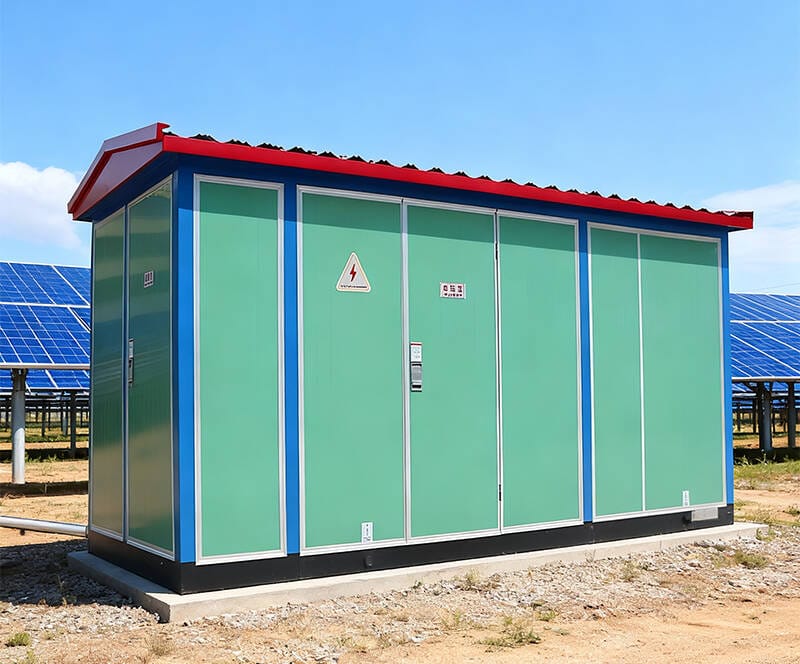
1. Introduction
As an EPC contractor, you know that transformer installation cost directly impacts project budgets, timelines, and profitability. The purchase price of a power transformer is only the tip of the iceberg. Additional expenses for transportation, civil works, rigging, electrical connections, testing, and commissioning can add 10%–32% or more to the equipment cost, depending on project complexity and location.
In 2026, factors such as raw material volatility (copper and silicon steel), extended lead times for large units, and surging demand from renewable energy integration (solar, wind, and data centers) continue to influence transformer erection and commissioning costs. Accurate budgeting at the bidding stage is critical to avoid change orders that erode margins.
This comprehensive guide provides EPC contractors with a clear breakdown of transformer installation costs, key influencing factors, a step-by-step installation process aligned with IEC 60076 standards, Total Cost of Ownership (TCO) considerations, and practical optimization strategies. Whether your project involves industrial substations, renewable energy tie-ins, or commercial power distribution, the insights here will help you deliver more competitive bids and smoother executions.
All cost figures in this article are indicative ranges based on 2025–2026 market data from global suppliers and EPC projects. Actual costs vary significantly by region, specifications, site conditions, and local labor rates. Always obtain multiple vendor quotations and perform site-specific assessments before final budgeting.
Are you preparing an EPC bid and worried about accurate transformer installation cost estimation?
İçindekiler
- Introduction
- Understanding Transformer Installation Costs
- Key Factors Affecting Transformer Installation Cost
- Detailed Cost Breakdown for EPC Projects
- Step-by-Step Transformer Installation Process for EPC Contractors
- Total Cost of Ownership (TCO): Beyond Initial Installation
- Tips to Optimize and Reduce Transformer Installation Costs
- Common Challenges in EPC Transformer Projects and How to Avoid Them
- Çözüm
2. Understanding Transformer Installation Costs
EPC contractors often confuse the transformer purchase price with the full installed cost. The purchase price covers only the equipment itself, while installation costs encompass everything required to make the transformer operational and compliant on site.
Typical distinctions by transformer type include:
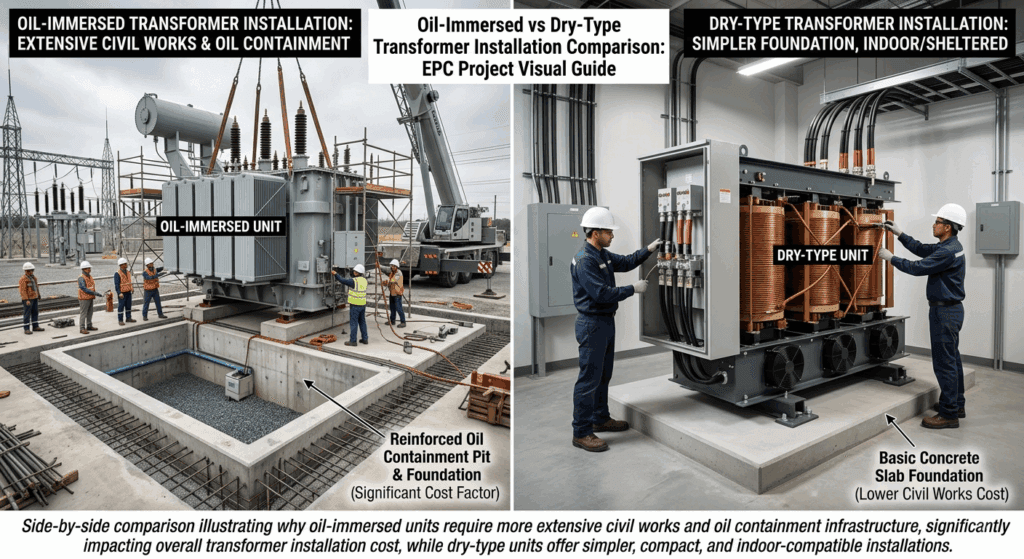
- Oil-immersed transformers: Lower upfront purchase price but higher installation expenses due to requirements for oil containment pits, fire suppression, grounding, and environmental safeguards.
- Kuru tip transformatörler: Higher purchase price (often 20–40% more) but simpler and faster installation, especially indoors, as they eliminate oil-related civil works and safety measures.
- Pad-mounted or pole-mounted units: Common for distribution applications; installation costs are generally lower but capacity is more limited.
For example, a 1000 kVA oil-immersed distribution transformer might have a purchase price of $12,000–$30,000, with installation adding $5,000–$20,000. A 10 MVA power transformer can see purchase prices from $90,000–$300,000+, with installation-related costs pushing the total project impact even higher.
The choice between oil-immersed and dry-type units significantly affects overall expenses. For a detailed comparison of specifications and applications, refer to our dry-type vs oil-immersed transformer selection guide.
Industry observations show that installation, civil, and commissioning expenses typically represent 10–25% of the purchase price in standard projects, rising to 30%+ in remote, high-altitude, or urban constrained sites. Understanding this full picture early in the EPC planning phase prevents underbidding and downstream disputes.
Different types also affect long-term compliance. Oil-immersed units require strict adherence to spill prevention and fire codes, while dry-type units prioritize ventilation, noise control, and space allocation.
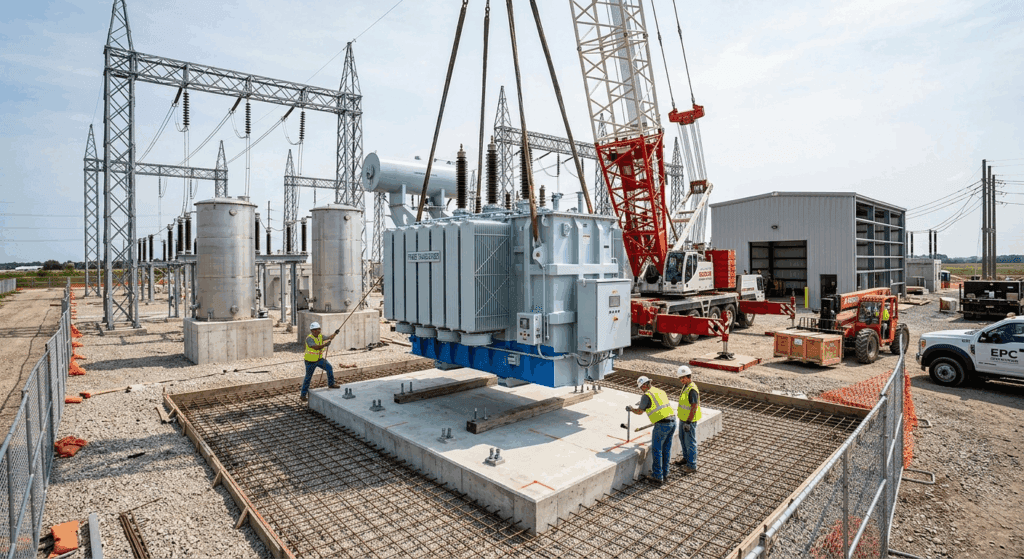
3. Key Factors Affecting Transformer Installation Cost
Transformer installation cost (also referred to as transformer erection cost) is highly variable. Experienced EPC teams evaluate the following factors during feasibility and detailed design:
- Transformer Specifications: Capacity (kVA/MVA), voltage class (e.g., 11 kV, 33 kV, 110 kV), cooling method (ONAN, ONAF), and efficiency level (low-loss vs standard). Larger, heavier units increase rigging and foundation expenses significantly.
- Site Conditions: Indoor versus outdoor placement, soil type (requiring piling in soft ground), topography, seismic zone, and environmental exposure (coastal corrosion or extreme temperatures). Remote locations can inflate logistics by 20% or more.
- Transportation and Logistics: Heavy-haul requirements, road permits, escorts, and international shipping (sea freight, customs, insurance). Units over 20–30 tons often need specialized cranes and route surveys.
- Labor and Regional Variations: Skilled electrician and rigging crew rates differ widely. In 2026, supply chain constraints and labor shortages in certain markets continue to drive up costs.
- Regulatory and Compliance Requirements: Compliance with IEC 60076 series (covering general requirements, temperature rise, testing, and loading guides) is essential. Additional local codes for oil containment (environmental protection), noise limits, and safety audits add civil and documentation expenses.
- External Economic Factors: Material price fluctuations, currency exchange rates, inflation, and project schedule pressure.
For renewable energy projects, harmonic considerations and grid integration testing may introduce further specialized costs. Early geotechnical surveys and regulatory pre-approvals help EPC contractors mitigate these variables and refine accurate cost models.
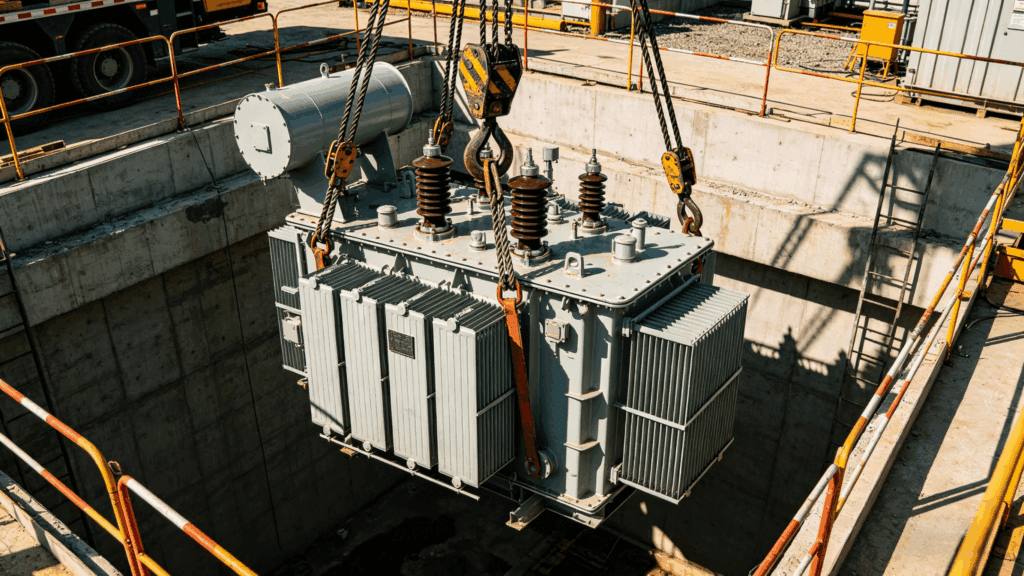
4. Detailed Cost Breakdown for EPC Projects
A transparent cost breakdown is essential for accurate EPC bidding and risk management. Below are representative 2025–2026 ranges in USD. These are averages drawn from global supplier data and typical substation projects—treat them as planning benchmarks only.
Table 1: Typical Cost Breakdown for a 10 MVA Oil-Immersed Power Transformer (Example)
| Cost Component | Estimated Range (USD) | % of Installation Cost | Önemli Notlar |
|---|---|---|---|
| Equipment Purchase Price | 150,000 – 250,000 | – | Base ex-works price |
| Transportation & Rigging | 20,000 – 40,000 | 25–35% | Heavy haul, cranes, permits |
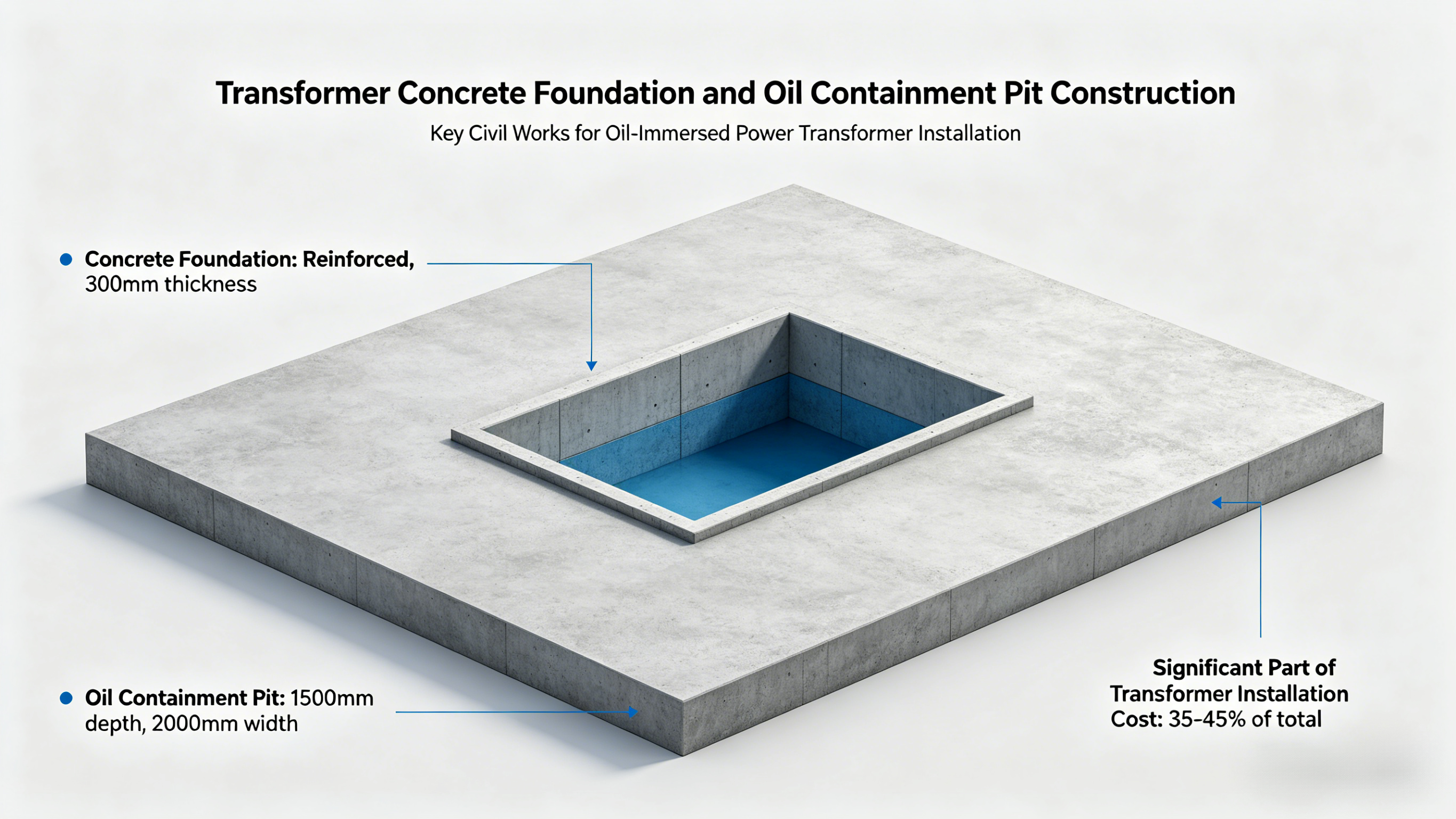
| Civil Works & Foundation | 15,000 – 30,000 | 20–25% | Concrete pad, oil pit, grounding |
| Mechanical & Electrical Installation | 15,000 – 25,000 | 15–20% | Bushings, cabling, busbar connections |
| Testing & Commissioning | 5,000 – 10,000 | 8–12% | Insulation, ratio, oil analysis, energization |
| Ancillary (Insurance, Spares, Permits) | 5,000 – 15,000 | 10–15% | Contingency recommended at 10–15% |
| Total Installation-Related Costs | 60,000 – 120,000 | 25–32% of purchase | Varies by complexity |
For smaller 1000–2500 kVA distribution transformers, total installation costs often fall between $8,000 and $25,000, with civil and rigging forming a larger relative share.
Table 2: Oil-Immersed vs Dry-Type Installation Cost Comparison (2500 kVA Example)
| Cost Item | Oil-Immersed (USD) | Dry-Type (USD) | Main Difference |
|---|---|---|---|
| Purchase Price | 15,000 – 25,000 | 22,000 – 35,000 | Dry-type 20–40% higher |
| Civil/Foundation Works | 8,000 – 12,000 | 3,000 – 6,000 | Oil containment pit required for oil type |
| Fire/Environmental Measures | 4,000 – 8,000 | 1,000 – 2,000 | Dry-type advantage in indoor settings |
| Total Installation Cost | 18,000 – 30,000 | 10,000 – 18,000 | Dry-type often lower overall for indoor projects |
EPC contractors should build contingency reserves of 10–15% into bids, especially for international or site-constrained projects. Using digital tools like BIM for clash detection can reduce field rework and associated extra costs.
5. Step-by-Step Transformer Installation Process for EPC Contractors
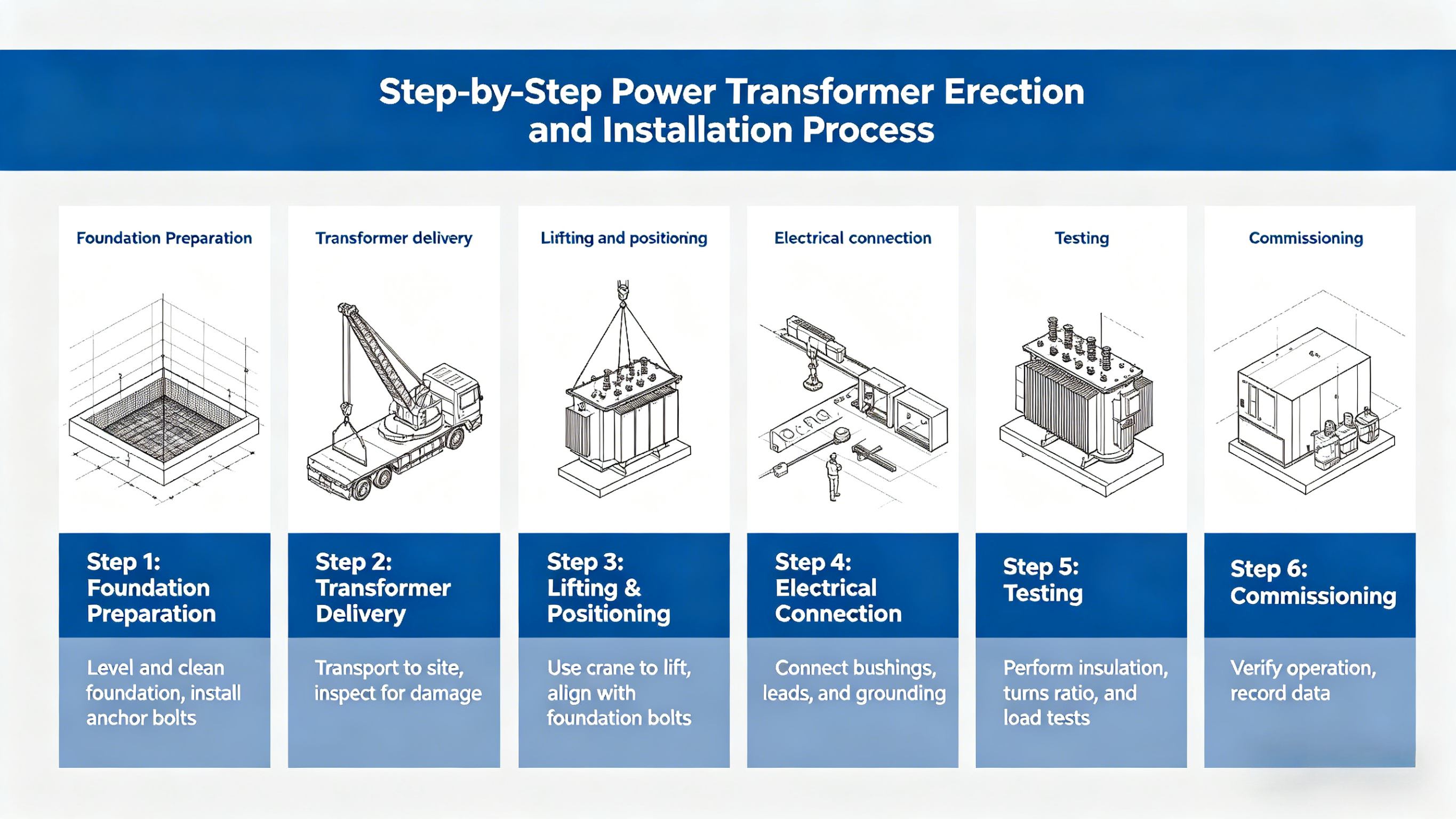
Following a standardized, IEC 60076-compliant process minimizes risks, delays, and cost overruns. Here is the typical sequence for EPC execution:
- Planning and Site Preparation: Conduct geotechnical surveys, design and pour foundations (ensuring levelness and load-bearing capacity), install cable trenches, and establish grounding grids. Secure all permits and heavy-lift equipment reservations early.
- Transportation and Unloading: Arrange specialized heavy-haul transport. Upon arrival, perform visual inspections for transit damage. Oil-immersed units may ship with oil drained and require on-site filling under vacuum.
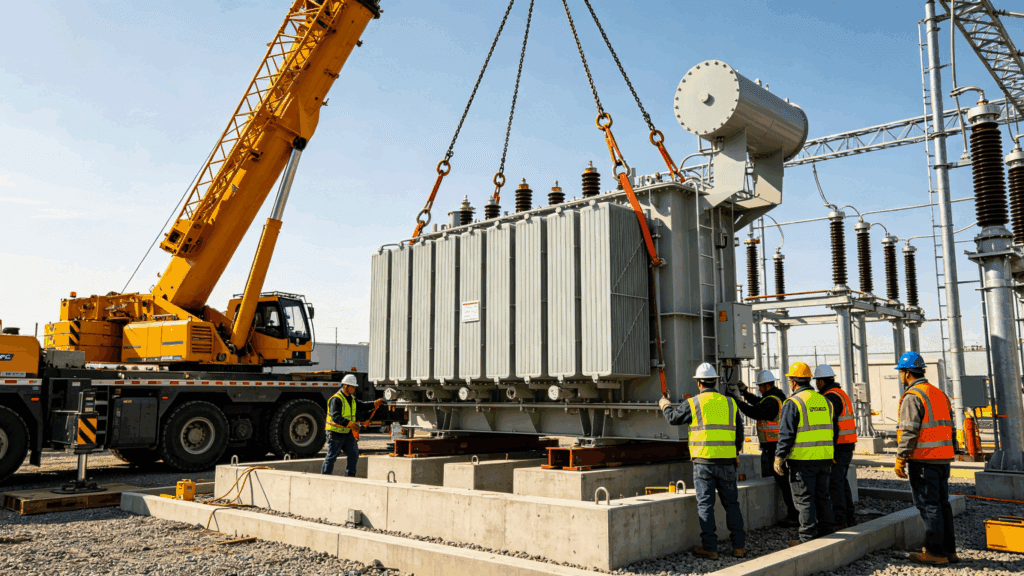
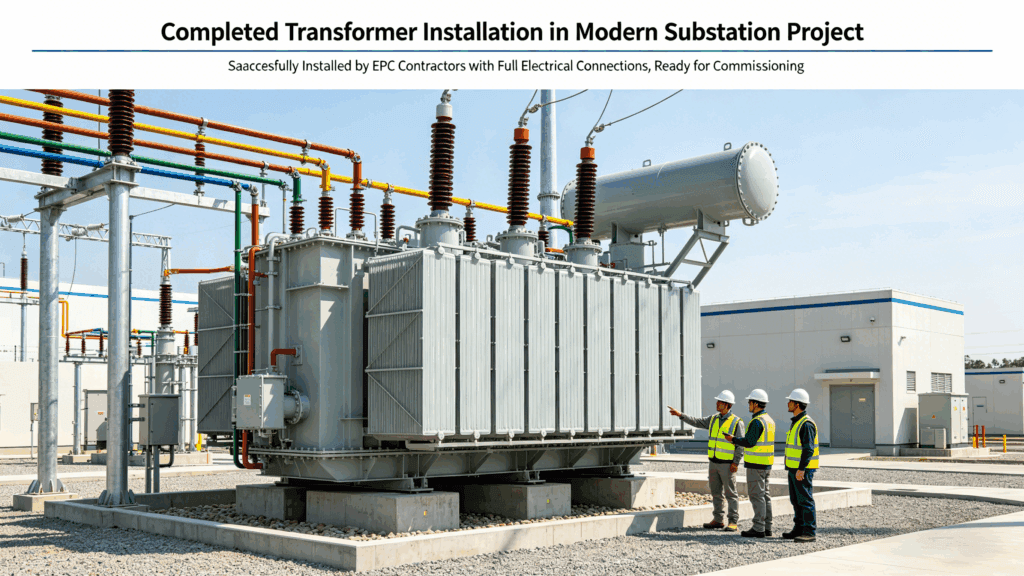
- Positioning and Erection: Use cranes or hydraulic jacks to place the transformer precisely on the foundation. Align connections for bushings and radiators. Verify levelness with precision instruments. Precise alignment during erection is critical. For a more technical reference on best practices, see this detailed erection procedure for power transformers from industry experts.
- Mechanical and Electrical Connections: Install cooling accessories, connect HV/LV bushings to cables or busbars, complete grounding, and wire control/protection circuits to the marshalling box. Torque all connections to manufacturer specifications.
- Pre-Commissioning Tests: Perform routine tests per IEC 60076, including insulation resistance (IR), polarization index (PI), turns ratio (TTR), winding resistance, and vector group verification. For oil units, conduct oil dielectric strength and moisture analysis, plus vacuum drying if needed.
- Commissioning and Handover: Execute no-load and load tests, protection relay validation, and grid synchronization. Document all results, compile as-built drawings, and prepare the handover package for the owner.
A typical 5 MVA, 33/11 kV installation may take 2–4 weeks from delivery to energization, longer for complex or remote sites. Clear responsibility matrices in the EPC contract (between civil, electrical, and commissioning teams) help prevent disputes.
6. Total Cost of Ownership (TCO): Beyond Initial Installation
Forward-thinking EPC contractors evaluate not just upfront transformer installation cost but the Toplam Sahip Olma Maliyeti (TCO) over the asset’s 25–30 year life.
The IEC-recommended TCO approach is:
TCO = Purchase Price + Capitalized No-Load Losses (A-factor) + Capitalized Load Losses (B-factor)
The most accurate way to calculate losses follows the IEC-recommended methodology. You can review the IEC-based TCO methodology guide for detailed formulas and examples.
Where A and B factors convert future energy losses into present-value costs based on electricity price, discount rate, lifetime, and loading profile.
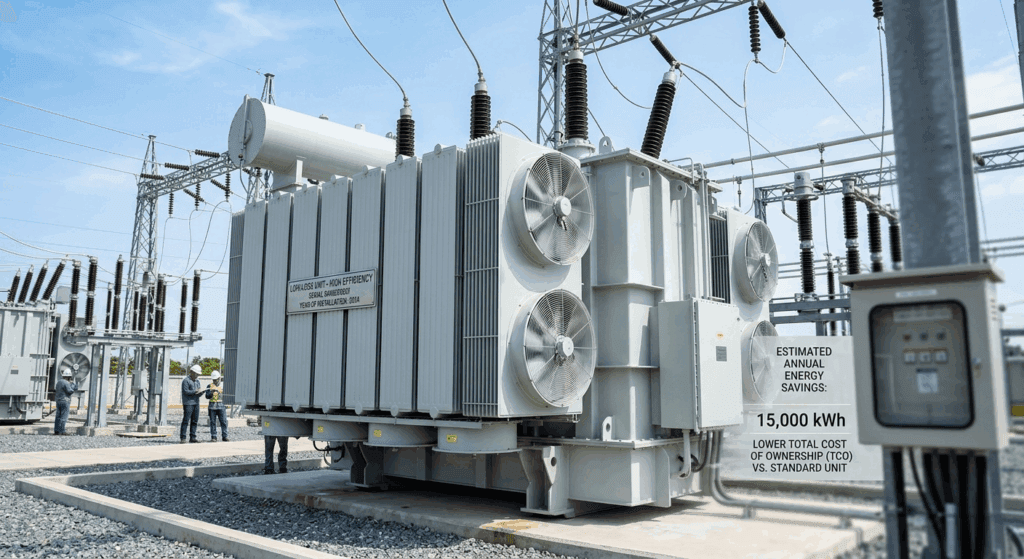
Low-loss transformers carry a higher initial price (typically 10–20% premium) but deliver substantial savings through reduced energy consumption. In high-utilization applications (e.g., industrial plants or data centers running 8000+ hours/year), the payback period can be 4–7 years, after which net savings accrue.
Table 3: Simplified TCO Comparison Example (2500 kVA Transformer, 25-Year Life)
| Item | Standard Efficiency | Low-Loss Efficiency | Notes |
|---|---|---|---|
| Purchase + Installation | $35,000 | $42,000 | Low-loss ~20% higher upfront |
| Capitalized Losses (25 years) | $85,000 | $55,000 | Significant energy savings |
| Total TCO | ~$120,000 | ~$97,000 | Low-loss superior long-term |
Recommending low-loss designs to project owners not only improves project sustainability credentials but also strengthens long-term client relationships through demonstrated value engineering.
7. Tips to Optimize and Reduce Transformer Installation Costs
Experienced EPC teams apply these proven strategies to control and reduce transformer-related expenses:
- Integrate civil and electrical design early to minimize change orders.
- Balance global sourcing (cost-effective high-quality units) with local supply chains to cut logistics.
- Choose technology wisely: oil-immersed for outdoor non-sensitive sites; dry-type for indoor/fire-restricted environments.
- Leverage BIM modeling and cost-estimation software for accurate simulations and clash avoidance.
- Negotiate contract clauses that clearly define price escalation mechanisms, contingency sharing, and variation procedures.
- Standardize installation practices across similar projects and invest in team training to improve productivity.
Projects that implement early value engineering and risk mitigation have reported installation cost reductions of 15–25% without compromising quality or safety.
8. Common Challenges in EPC Transformer Projects and How to Avoid Them
Frequent issues include:
- Budget Overruns: Caused by material volatility or unforeseen site conditions. Mitigation: Build realistic contingencies and use adjustable-price mechanisms where appropriate.
- Schedule Delays: From late permits, transport issues, or test failures. Mitigation: Front-load approvals and maintain backup testing resources.
- Compliance Risks: Non-conformance with IEC 60076 or local environmental rules. Mitigation: Engage third-party inspectors during design review.
- Supply Chain and Labor Shortages: Still relevant in 2026 for specialized skills. Mitigation: Diversify vendors and cultivate long-term partnerships.
Setting clear milestones, regular progress audits, and proactive communication with all stakeholders significantly reduces these risks.
9. Conclusion
Transformer installation cost remains one of the most influential variables in successful EPC project delivery. By thoroughly understanding cost components, influencing factors, standardized installation processes aligned with IEC 60076, and TCO principles, contractors can produce more accurate bids, control execution risks, and deliver greater value to clients.
As grid modernization and renewable energy deployment accelerate in 2026 and beyond, demand for reliable, efficient transformer installations will only grow. EPC firms that build internal cost databases, maintain strong supplier relationships, and adopt digital planning tools will gain a clear competitive edge.
If your team is preparing an upcoming transformer-related EPC bid or project and would like customized cost modeling, installation methodology support, or a project-specific assessment, feel free to reach out. Our experienced team is ready to assist with practical solutions that protect margins and enhance project outcomes.
Share your own experiences or specific capacity/voltage questions in the comments below. We aim to respond promptly and help the EPC community raise standards together.
Ready to optimize your next transformer project?
If you’re planning an upcoming EPC project and need accurate transformer installation cost estimates, customized budgeting support, or professional installation guidance, our team is here to help.
Get a Free Project-Specific Cost Assessment – Simply share your transformer specifications (capacity, voltage, location), and we’ll provide a tailored breakdown with optimization recommendations within 48 hours.