1.Introduction
In modern electrical power distribution systems, choosing the right transformer is critical for efficiency, safety, reliability, and long-term cost savings. Two of the most common types used in utility and commercial applications are the pad mounted transformer ve pole mounted transformer. As urbanization accelerates and underground distribution networks expand, understanding the differences between these options has never been more important.
A pad mounted transformer is a ground-level, enclosed distribution transformer designed primarily for underground power lines. It offers enhanced safety, better aesthetics, and greater flexibility in high-density areas. In contrast, a pole mounted transformer is installed overhead on utility poles, traditionally favored for its lower upfront cost and suitability in rural or overhead line environments.
This comprehensive guide provides an in-depth pad mounted transformer vs pole mounted transformer comparison. We will explore definitions, technical specifications, installation methods, costs, safety features, advantages, disadvantages, and real-world applications. Whether you are a utility engineer, project developer, facility manager, or electrical contractor, this article will equip you with expert insights to make informed decisions.
Drawing from industry standards, manufacturer data, and field experience, this guide emphasizes practical considerations for various environments—from bustling urban residential neighborhoods to remote rural grids. By the end, you will clearly understand when a pad mounted transformer is the superior choice and when a pole mounted transformer remains more practical.
Why This Comparison Matters in 2026
With growing emphasis on grid modernization, public safety, and aesthetic urban planning, many municipalities and developers are shifting toward underground systems. Pad mounted transformers align perfectly with these trends, offering tamper-resistant designs and minimal visual impact. However, pole mounted transformers continue to dominate in cost-sensitive or rapidly deployable scenarios.
For detailed technical standards on distribution transformers, refer to the IEEE Standards for Pad-Mounted Transformers.
Need help selecting the right transformer for your project?
👉Contact our experts for a free consultation and quote on Pad Mounted Transformers.
İçindekiler
- giriiş
- What is a Pad Mounted Transformer?
- What is a Pole Mounted Transformer?
- Key Differences: Pad Mounted Transformer vs Pole Mounted Transformer
- Installation and Setup Comparison
- Cost Analysis: Initial, Operational, and Lifecycle Costs
- Safety, Reliability, and Maintenance
- Aesthetics, Environmental Impact, and Urban Suitability
- Performance, Capacity, and Technical Specifications
- Pros and Cons Summary
- Real-World Applications and Case Studies
- How to Choose Between Pad Mounted and Pole Mounted Transformers
- Sıkça Sorulan Sorular (SSS)
- Çözüm
2.What is a Pad Mounted Transformer?
A pad mounted transformer, often called a padmount transformer, is a type of distribution transformer installed at ground level on a concrete foundation or pad. It is fully enclosed in a tamper-resistant steel cabinet, making it safe for placement in public or accessible areas without additional fencing in many cases.

Key Features of Pad Mounted Transformers:
- Enclosure: Robust, locked, weatherproof metal housing that protects internal components from tampering, animals, and environmental damage.
- Cooling and Insulation: Typically oil-immersed (mineral oil or less-flammable fluids) with natural convection cooling.
- Connections: Designed for underground cables, with primary and secondary bushings or elbows.
- Capacity Range: Commonly available from 15 kVA up to 5000 kVA or more, including single-phase and three-phase models.
- Voltage Ratings: Suitable for medium-voltage primary (e.g., 4.16 kV to 34.5 kV) stepping down to utilization voltages (120/240V, 277/480V, etc.).
Pad mounted transformers excel in underground residential distribution (URD) systems. Their compact, low-profile design allows integration into landscaping, parking lots, or commercial sites with minimal disruption.
Common Applications:
- Urban and suburban residential developments
- Commercial complexes and office parks
- Schools, hospitals, and public facilities
- Industrial sites requiring three-phase power
These units incorporate advanced protection features such as bayonet fuses, load-break switches, and pressure relief devices, enhancing operational safety and reliability.
These units are built to comply with ANSI/IEEE C57.12.34 standards for pad-mounted transformers.
3.What is a Pole Mounted Transformer?
A pole mounted transformer (also known as an overhead or polemount transformer) is mounted on utility poles, elevated above ground level. These are the traditional cylindrical or rectangular units visible on power poles in many neighborhoods.
Key Features of Pole Mounted Transformers:
- Mounting: Attached to wooden, concrete, or steel poles using brackets or platforms.
- Tasarım: Simpler construction with exposed bushings, lightning arresters, and fuses often mounted externally.
- Soğutma: Oil-immersed with natural air cooling.
- Capacity Range: Typically 5 kVA to 500 kVA for single-phase models, with three-phase units up to around 1000 kVA in some configurations, though smaller ratings are more common.
- Gerilim: Similar range to pad mounted units but optimized for overhead line connections.
Pole mounted transformers are cost-effective for areas with existing overhead infrastructure. They allow quick installation and easy visual inspection from the ground in some cases, though maintenance often requires bucket trucks.
Ortak Uygulamalar:
- Rural and suburban areas with overhead lines
- Residential neighborhoods with traditional grids
- Temporary or expandable power setups
- Regions where underground cabling is prohibitively expensive
4.Key Differences: Pad Mounted Transformer vs Pole Mounted Transformer
The core distinctions between pad mounted transformers Ve pole mounted transformers stem from their installation methods, protection levels, and intended environments. Here is a detailed side-by-side comparison:
| Aspect | Pad Mounted Transformer | Pole Mounted Transformer |
|---|---|---|
| Installation Location | Ground level on concrete pad | Elevated on utility poles |
| Enclosure | Tamper-resistant locked steel cabinet | Minimal or open with exposed components |
| Primary Connection | Underground cables | Overhead lines |
| Typical kVA Range | 15–5000+ kVA (strong in three-phase) | 5–500 kVA (mostly single-phase) |
| Visual Impact | Low, blends with surroundings | High, visible on skyline |
| Emniyet | High (enclosed live parts) | Moderate (exposed at height) |
| Maintenance Access | Ground-level, easier and safer | Requires climbing or bucket truck |
| Cost (Initial) | Higher due to pad and enclosure | Lower, simpler installation |
| Noise Level | Generally lower | Can be higher due to exposure |
| Ideal Environment | Urban, commercial, high-density | Rural, overhead line areas |
This table highlights why modern developments increasingly prefer pad mounted transformers, while legacy or budget-driven projects retain strong advantages in pole mounted transformers.
Proper installation is critical — learn more about concrete pad requirements in this transformer pad design guide for engineers.
5.Installation and Setup Comparison
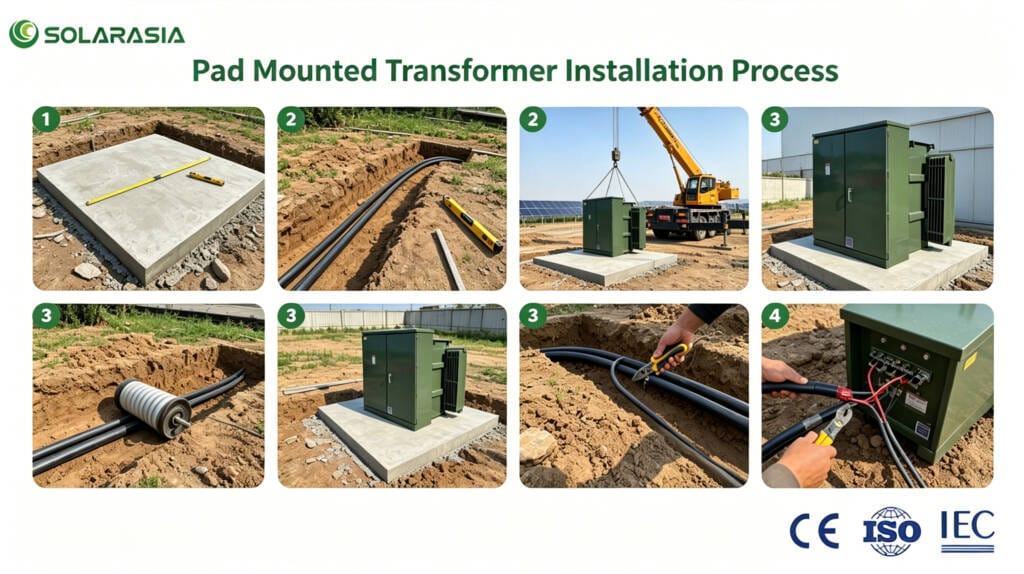
Pad Mounted Transformer Installation involves preparing a concrete pad (typically 6 inches larger than the unit base), trenching for underground cables, and securing the enclosure. While this requires more civil work upfront, it results in faster ongoing access. Professional crews can complete installations with minimal disruption to traffic or residents.
Pole Mounted Transformer Installation is faster and cheaper in areas with existing poles. It involves hoisting the unit, making overhead connections, and testing. However, it depends on pole availability and structural integrity, and future expansions may require new poles.
Pad mounted transformers often integrate better with smart grid technologies and underground systems, supporting long-term infrastructure resilience against storms and extreme weather.
6.Cost Analysis: Initial, Operational, and Lifecycle Costs
Initial costs for pole mounted transformers are generally 20-40% lower due to simpler setups. However, pad mounted transformers often deliver better lifecycle value.
Breakdown:
- Initial Installation: Pole-mounted wins on speed and material costs. Pad-mounted requires concrete work and underground cabling.
- Bakım: Pad-mounted units reduce labor costs (no bucket trucks) and downtime. Studies show up to 30% lower lifetime maintenance.
- Energy Efficiency and Losses: Both types can achieve high efficiency, but enclosed designs in pad-mounted models may offer better thermal management.
- Lifecycle (20-30 years): In urban settings, pad mounted transformers frequently prove more economical due to reduced outages, vandalism, and safety incidents.
Factors like local labor rates, material prices, and project scale heavily influence the final numbers. Always request detailed quotes tailored to your voltage, load, and site conditions.
Want accurate pricing for your specific requirements?
👉Get a customized quote for Pad Mounted Transformer today and compare total lifecycle costs.
7.Safety, Reliability, and Maintenance
Safety remains one of the most critical factors when choosing between a Pad Mounted Transformer and a Pole Mounted Transformer.
Pad Mounted Transformers provide superior safety through their fully enclosed, tamper-resistant steel cabinets. All live components are grounded and locked away from public access, greatly reducing the risk of accidental contact, electrocution, and unauthorized tampering. Advanced features such as bayonet fuses, load-break switches, pressure relief valves, and fault indicators further enhance protection. These designs are especially valuable in urban residential areas, schools, and commercial sites where children and pedestrians are nearby. Many models also comply with strict ANSI/IEEE safety standards, minimizing risks from oil leaks or fire hazards.
Reliability is excellent for both types when properly manufactured and maintained. Pad Mounted Transformers generally demonstrate higher reliability in harsh urban environments due to better protection from weather, dust, and physical damage. Their sealed enclosures help maintain stable oil quality and insulation performance over decades. Industry data shows that well-maintained pad-mounted units often achieve lower failure rates in high-density areas. Pole Mounted Transformers perform reliably in rural and open settings but are more susceptible to lightning strikes, corrosion, and mechanical stress from wind or ice.
Pole Mounted Transformers require more complex maintenance procedures. Workers must use specialized equipment to access units at height, making inspections more time-consuming, weather-dependent, and costly. This often results in higher long-term operational expenses.
| Aspect | Pad Mounted Transformer | Pole Mounted Transformer |
|---|---|---|
| Safety Level | High (fully enclosed) | Moderate (height-dependent) |
| Failure Risk | Lower in urban settings | Higher exposure to weather & wildlife |
| Maintenance Access | Ground level, easy & safe | Requires elevated equipment |
| Typical Lifespan | 25–40 years | 20–35 years |
In summary, while both transformer types are robust, Pad Mounted Transformers offer clear advantages in safety and maintenance efficiency, making them the preferred choice for modern, safety-conscious installations.
Pad mounted transformers offer superior safety due to their tamper-resistant design. For more on EMF safety, see this detailed engineering analysis on pad-mounted transformer safety
8.Aesthetics, Environmental Impact, and Urban Suitability
Modern communities prioritize appearance. Pad mounted transformers have minimal visual impact and can be painted or landscaped to blend seamlessly. They support underground distribution, eliminating overhead clutter and improving property values.
Pole mounted transformers contribute to visual pollution and may face regulatory pushback in scenic or residential zones. Environmentally, both use similar insulating oils, but pad-mounted units reduce exposure risks in case of leaks.

9.Performance, Capacity, and Technical Specifications
Pad mounted transformers support higher capacities and three-phase configurations more readily, making them ideal for commercial loads. They offer excellent cooling and can handle varying loads efficiently.
Pole mounted transformers optimize for lighter, single-phase residential demands but you can gang them for larger needs.
Both comply with standards such as IEEE, ANSI, and DOE efficiency requirements. When selecting, consider impedance, temperature rise, BIL ratings, and sound levels.
10.Pros and Cons Summary
Pad Mounted Transformer Pros:
- Superior safety and tamper resistance
- Better aesthetics and urban integration
- Easier maintenance
- Higher capacity flexibility
- Reduced long-term operational risks
Cons:
- Higher initial cost
- Requires suitable ground space and civil works
Pole Mounted Transformer Pros:
- Lower cost and faster deployment
- Proven in rural/overhead systems
- Minimal ground footprint
Cons:
- Higher safety and maintenance risks
- Visual and environmental drawbacks
- Limited scalability in dense areas
11.Real-World Applications and Case Studies
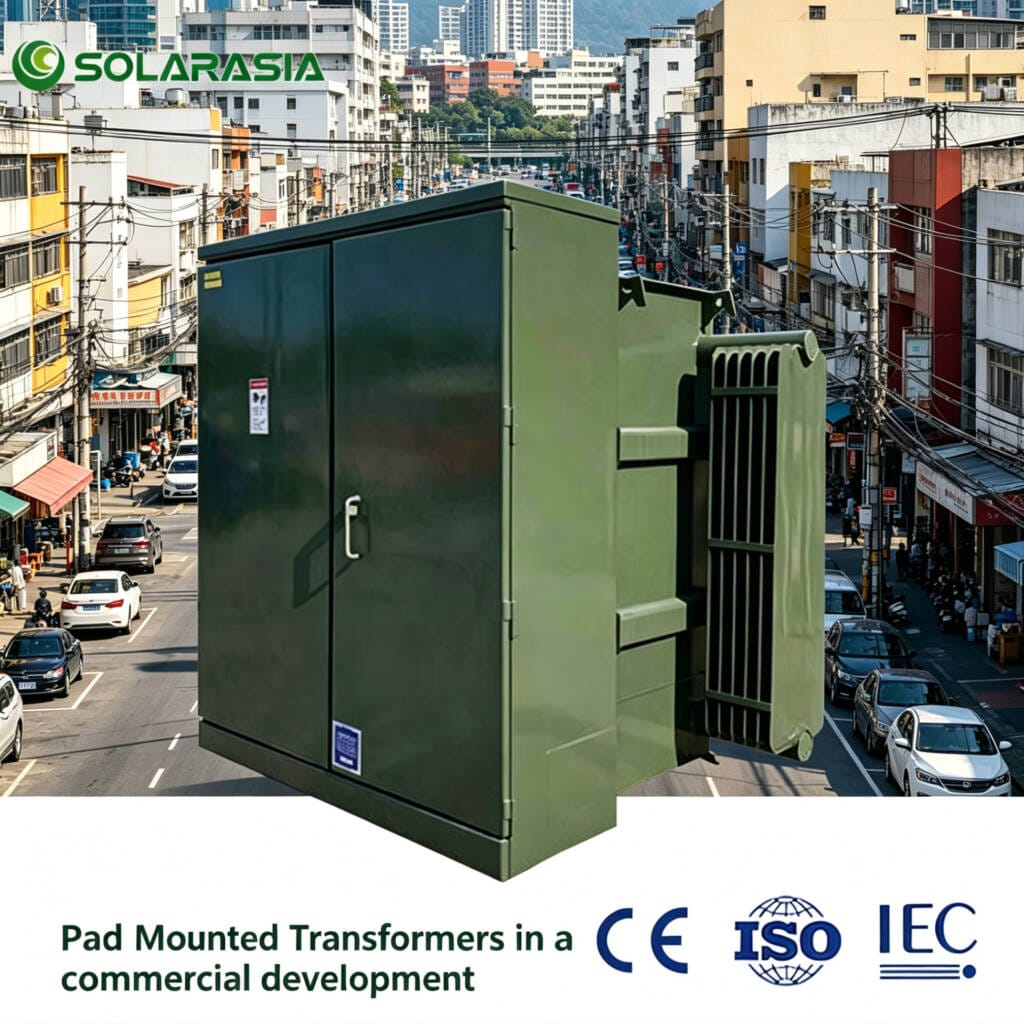
Pad Mounted Transformers have become the preferred choice in modern suburban and urban housing developments. Their low-profile, tamper-resistant design blends seamlessly into landscaping, significantly reducing resident complaints about visual impact and aesthetics. For example, several large-scale residential communities in the United States reported over 60% fewer public complaints after switching from overhead to underground systems using Pad Mounted Transformers. One major utility also noted a measurable decrease in outage hours and improved safety records following the conversion of multiple neighborhoods to pad-mounted units.
In contrast, Pole Mounted Transformers continue to play a vital role in rural electrification projects. Their simpler installation and lower upfront costs make them ideal for remote villages and expansive agricultural areas where overhead lines are already in place. In many developing regions and rural parts of Asia and Africa, utilities have successfully deployed thousands of Pole Mounted Transformers to rapidly extend power access to off-grid communities while keeping project budgets under control.
Hybrid approaches that combine both types within the same grid are increasingly common. For instance, city centers and commercial parks often use Pad Mounted Transformers for high-density zones, while connecting suburbs and outskirts with Pole Mounted Transformers. This strategy maximizes the strengths of each: superior safety and aesthetics from pad-mounted units in populated areas, and cost-effective scalability from pole-mounted units in less dense regions.
These real-world examples demonstrate that the decision between Pad Mounted Transformer Ve Pole Mounted Transformer should always align with site-specific needs, local infrastructure, and long-term goals.
12.How to Choose Between Pad Mounted and Pole Mounted Transformers
Consider these factors:
- Site location and existing infrastructure (overhead vs underground)
- Budget and total cost of ownership
- Load requirements and future growth
- Local regulations and aesthetic guidelines
- Safety and maintenance capabilities
Consult with certified manufacturers or engineers for load calculations and site assessments. Prioritizing pad mounted transformers in new urban projects often yields the best long-term results.
Still unsure which type is best for your site?
13.Frequently Asked Questions (FAQ)
What is the main difference between pad mounted and pole mounted transformers?
The primary difference is installation: pad mounted at ground level in enclosures versus pole mounted overhead on poles.
Which is cheaper: pad mounted or pole mounted?
Pole mounted transformers usually have lower initial costs, but pad mounted may save money over time.
Are pad mounted transformers safer?
Yes, due to their fully enclosed, tamper-proof design.
Can pad mounted transformers be used in rural areas?
Yes, especially where underground lines are planned or aesthetics matter.
What is the typical lifespan?
Both types last 25-40 years with proper maintenance.
14.Conclusion
The choice between a pad mounted transformer and a pole mounted transformer depends on your specific project needs, location, and priorities. Pad mounted transformers represent the modern standard for safety, aesthetics, and urban reliability, while pole mounted transformers remain a practical, economical solution for traditional overhead applications.
For expert guidance, custom specifications, or competitive quotes on high-quality pad mounted transformers, contact a trusted manufacturer today. Investing in the right transformer ensures reliable power, regulatory compliance, and peace of mind for decades to come.