Electrical transformers can hold residual electrical energy even when power is cut off. Using the Transformer Discharge Procedure properly is key to getting rid of residual voltage. This keeps the equipment safe to work with. Engineers and maintenance workers must learn the right steps, grounding techniques, and safety rules before handling power transformers.
In this article, we explain how to safely discharge a transformer, the tools required, and the standard safety practices used in electrical maintenance. If you want to learn more about the principles of stored energy and discharge risks, you can also read our detailed guide on Transformer Discharge Guide.
As a professional transformer manufacturer, we supply oil immersed transformers, dry type transformers, and prefabricated substations for industrial and utility power systems.
👉 Contact us today to get expert advice or request a quotation.
Table of Contents (TOC)
- Why a Transformer Discharge Procedure Is Required Before Maintenance
- Tools Required for a Safe Transformer Discharge
- Step-by-Step Transformer Discharge Procedure
- Transformer Grounding Procedure During Discharge
- Safety Precautions During the Transformer Discharge Process
- Common Mistakes When Performing a Transformer Discharge Procedure
- How Long Does It Take for a Transformer to Discharge?
- Conclusion: Follow the Correct Transformer Discharge Procedure
1.Why a Transformer Discharge Procedure Is Required Before Maintenance
Transformers can hold residual voltage after being switched off. This happens because of electrical capacitance in their windings and insulation systems. Many people assume the transformer is safe once power is cut. In reality, that is not always true.
Even after disconnection from the power grid, electrical energy may remain stored in components such as:
- transformer windings
- bushings
- capacitors connected to the transformer
- cable systems connected to the transformer
This stored electrical energy is commonly referred to as transformer residual charge.
Residual voltage in transformers can pose serious risks. For a deeper understanding of discharge risks and principles, check our complete Transformer Discharge Guide
If the transformer is touched or serviced without proper discharge, several risks may occur:
Electrical Shock Risk
Residual voltage can cause severe electrical shock to technicians performing maintenance.
Equipment Damage
Uncontrolled discharge can damage connected electrical devices or monitoring systems.
Safety Hazards During Maintenance
Transformer discharge safety procedure is required before inspection, repair, or transportation because maintenance teams may unknowingly work on energized components without proper discharge procedures.
For a deeper explanation of why transformers store electrical energy and how discharge works, refer to our complete Transformer Discharge Guide
2.Tools Required for a Safe Transformer Discharge Procedure
Technicians must prepare the right tools before starting a transformer discharge procedure. They also need proper safety equipment. When technicians use the correct gear, they release residual energy safely.

Insulated Discharge Rod
A transformer discharge rod is a common tool for this job. It safely releases stored electrical energy. The rod has insulated materials. This allows technicians to connect the transformer to ground without risk.
Grounding Cable
A grounding cable connects the transformer to a proper grounding system. This gives the electrical energy a safe path into the ground.
Voltage Tester or Multimeter
A voltage tester is essential for this work. It checks whether residual voltage remains in the transformer. Technicians use it to confirm the transformer is fully discharged.
Personal Protective Equipment (PPE)
Proper PPE must be worn during the discharge process, including:
- insulated gloves
- protective clothing
- safety helmets
- safety boots
These tools form the foundation of a safe transformer discharge method used in power systems and electrical maintenance operations.
3.Step-by-Step Transformer Discharge Procedure
Knowing the correct transformer discharge steps is critical. It keeps you safe during maintenance. Below is a step-by-step procedure. Electrical professionals use this method.
| Tool | Purpose | Notes |
|---|---|---|
| Insulated Discharge Rod | Safely release residual energy | Must be fully insulated |
| Grounding Cable | Directs energy to ground | Connect to reliable earth point |
| Voltage Tester / Multimeter | Verify residual voltage | Test all windings and terminals |
| Personal Protective Equipment (PPE) | Protect technicians | Gloves, helmet, boots, clothing |
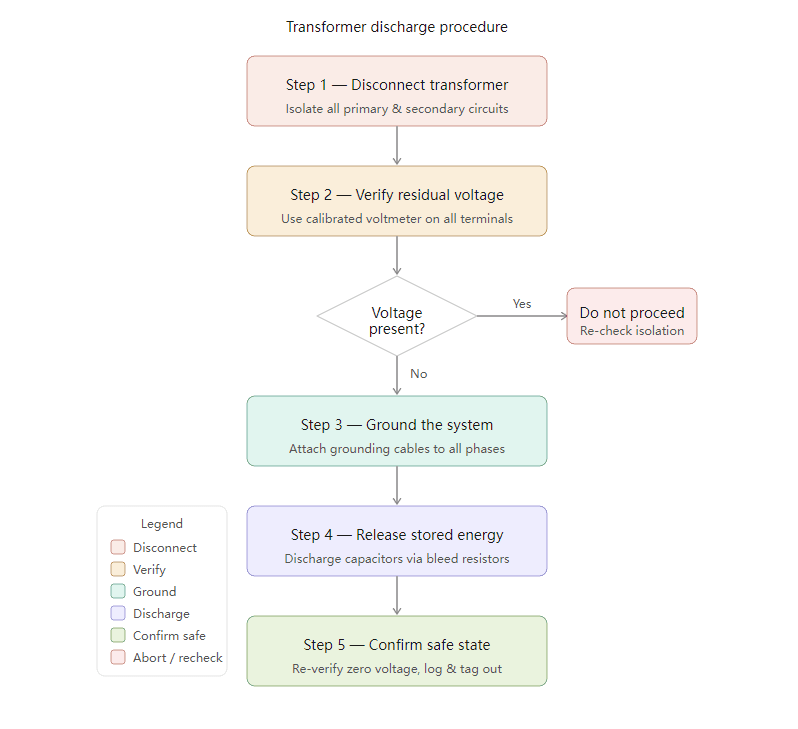
Step 1 – Disconnect the Transformer from the Power Source
Start by completely isolating the transformer from the power supply. This is the first step in the discharge procedure.
This includes:
- opening circuit breakers
- disconnecting switches
- isolating incoming power lines
Once the transformer is isolated, technicians must apply lockout/tagout procedures. This prevents anyone from accidentally turning the power back on.
Isolation serves one purpose: it blocks external current. No electricity can enter the transformer during discharge.
Step 2 – Verify Residual Voltage in the Transformer
After isolation, technicians must check for residual voltage using a voltage tester or multimeter.
Testing should be performed at several points, including:
- primary winding terminals
- secondary winding terminals
- transformer bushings
If the tester shows voltage, stop. The transformer still has stored electrical energy. You must discharge it before doing any further work.
Every transformer discharge safety procedure includes this step. It is essential for a reason: it keeps people alive.
Step 3 – Ground the Transformer Before Discharge
Grounding the transformer matters. It is one of the most important parts of the whole discharge process.
Here is what good transformer grounding before discharge does: it sends electrical energy into the earth. The technician stays out of the path.
Grounding typically includes:
- connecting grounding cables to transformer terminals
- grounding the transformer tank
- ensuring a reliable earth connection
This grounding system creates a safe path for electrical energy to dissipate.
Step 4 – Use a Discharge Rod to Release Stored Energy
Grounding comes first. Then an insulated discharge rod does the real work. It safely releases the stored energy.
Technicians use the insulated discharge rod to link the terminals to ground. That’s how the energy finds its way out.
During this step:
- electrical energy flows from the transformer
- residual charge is safely released
- voltage levels gradually decrease
This process eliminates transformer residual charge and prepares the equipment for maintenance.
Step 5 – Confirm the Transformer Is Fully Discharged
Technicians have finished the discharge operation. But the job isn’t over yet. Technicians must verify complete discharge of the transformer.
Grab a multimeter or voltage tester. Test the voltage again. That’s how you confirm it’s safe.
If the measured voltage is zero or near zero, the transformer is considered safe for maintenance.
Verification is a critical final step in the transformer discharge procedure.
Looking for Industrial Power Transformers?
Proper maintenance starts with high-quality equipment. We supply durable oil immersed transformers and power transformers designed for safe operation and long service life.
👉 Explore our transformer solutions today.
4.Transformer Grounding Procedure During Discharge
Grounding matters. Skip it, and the electrical energy stays trapped. It cannot safely dissipate on its own.
A typical transformer grounding procedure includes several steps.
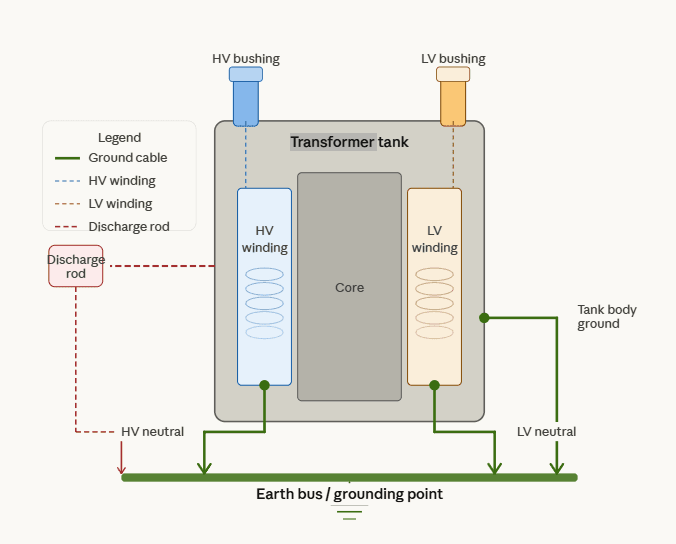
Grounding the Transformer Tank
Technicians should always connect the metal tank of the transformer to the grounding system. This prevents dangerous voltage buildup on the equipment surface.
Grounding the Neutral Point
If the transformer has a neutral point, connect it to the grounding system. This stabilizes voltage levels.
Grounding the Windings
Want to be sure all energy is gone? Ground the windings too. That’s what technicians do during discharge.
Good grounding pays off in two ways: better electrical safety and higher equipment reliability. Both matter during maintenance.
5.Safety Precautions During the Transformer Discharge Procedure
Technicians work with high voltage equipment. They must always follow safety precautions.
Key transformer discharge safety precautions include:
Follow Lockout/Tagout Procedures
Lockout/tagout systems prevent accidental reconnection of power while maintenance work is in progress.
Use Insulated Tools
Technicians should always use insulated discharge rods and insulated hand tools.
Wear Proper PPE
Protective equipment helps reduce the risk of electrical shock or injury.
Always Verify Voltage
Never assume the transformer is fully discharged. Always test the voltage before you touch any equipment.
Maintain Safe Distance
Personnel should maintain a safe distance during the discharge process to avoid potential arc flash hazards.
Technicians who follow these safety guidelines perform the transformer discharge procedure safely and effectively.
To ensure proper safety practices, always refer to IEEE Transformer Safety Standards when performing a transformer discharge procedure.
6.Common Mistakes When Performing a Transformer Discharge Procedure
Improper discharge procedures can create serious safety hazards. Technicians should always avoid several common mistakes.
Skipping Voltage Testing
Some technicians may assume the transformer is safe after isolation, but residual voltage may still remain.
Improper Grounding
A poorly connected grounding system may fail to dissipate electrical energy safely.
Using Non-Insulated Tools
Using non-insulated tools can expose technicians to electrical shock.
Ignoring Safety Procedures
Failure to follow standard safety procedures can increase the risk of accidents during maintenance.
Avoiding these mistakes helps ensure a reliable transformer discharge process.
7.How Long Does It Take for a Transformer Discharge Procedure?
The time required for a transformer to discharge depends on several factors.
Transformer Size
Large power transformers may store more electrical energy than smaller distribution transformers.
Capacitance of the System
The capacitance of windings, cables, and connected components affects how long residual charge remains.
Grounding Quality
A proper grounding system allows energy to dissipate faster.
In most cases, the discharge process takes only a short time once proper grounding and discharge tools are used.
However, technicians should always verify voltage before assuming the transformer is fully discharged.
8.Conclusion: Follow the Correct Transformer Discharge Procedure
A transformer discharge procedure protects you during maintenance. Without it, residual energy in a disconnected transformer can be a deadly hazard.
Technicians follow a structured discharge process. This includes isolation, voltage verification, grounding, and controlled discharge. These steps safely eliminate stored electrical energy.
Understanding these procedures helps reduce electrical hazards. It also helps protect personnel and equipment.
For a more detailed explanation of transformer discharge principles, risks, and electrical behavior, you can read our complete Transformer Discharge Guide:
This guide provides additional technical insights into transformer residual energy, discharge mechanisms, and electrical safety practices used in modern power systems.
Need Reliable Power Transformers for Your Project?
If you are looking for high-quality power transformers, oil immersed transformers, or custom transformer solutions, our factory provides reliable equipment for industrial and utility applications worldwide.
👉 Contact our team today to get technical support or request a quotation.