Introduction
A transformer bushing is a critical component used in power transformers. It allows electrical current to pass safely through the grounded transformer tank. At the same time, it provides insulation between the high-voltage conductor and the metal enclosure.
In simple terms, a transformer bushing connects the internal windings of a transformer to external power lines while maintaining electrical insulation.
Transformer bushings are used in many types of transformers, including:
Without a properly designed transformer bushing, electricity could leak to the grounded transformer tank. This could cause electrical faults, equipment damage, or even transformer failure.
In this guide, we will explain:
- what a transformer bushing is
- the function of transformer bushings
- transformer bushing types
- transformer bushing parts and materials
- common failures and maintenance methods
Understanding these topics helps engineers, buyers, and maintenance teams choose reliable transformer components.
Transformer bushings are widely used in high-voltage equipment to safely guide electrical conductors through grounded enclosures. Detailed technical explanations can also be found in the electrical engineering encyclopedia on electrical bushings.
Looking for reliable transformers or transformer components for your project?
→Contact our engineering team to get professional recommendations and competitive factory prices.
Table of Contents
- What Is a Transformer Bushing
- Transformer Bushing Function and Working Principle
- Main Parts of a Transformer Bushing
- Types of Transformer Bushings
- Dead Front vs Live Front Transformer Bushings
- Common Transformer Bushing Materials
- Why Transformer Bushings Are Critical for Power Systems
- Common Transformer Bushing Failures
- Transformer Bushing Maintenance and Testing
- How to Choose the Right Transformer Bushing
- Transformer Bushing Applications in Power Transformers
- FAQ About Transformer Bushings
1.What Is a Transformer Bushing
A transformer bushing is an insulated device that allows an electrical conductor to pass safely through the grounded transformer tank.
In power transformers, high voltage conductors must enter or leave the transformer enclosure. The transformer tank is usually made of metal and connected to ground. If a conductor passes through the tank without insulation, it will cause a short circuit.
The transformer bushing solves this problem.
It creates an insulated pathway for electrical current.
Key functions of a transformer bushing include
- providing electrical insulation
- guiding the current between transformer windings and external circuits
- preventing electrical discharge to the grounded tank
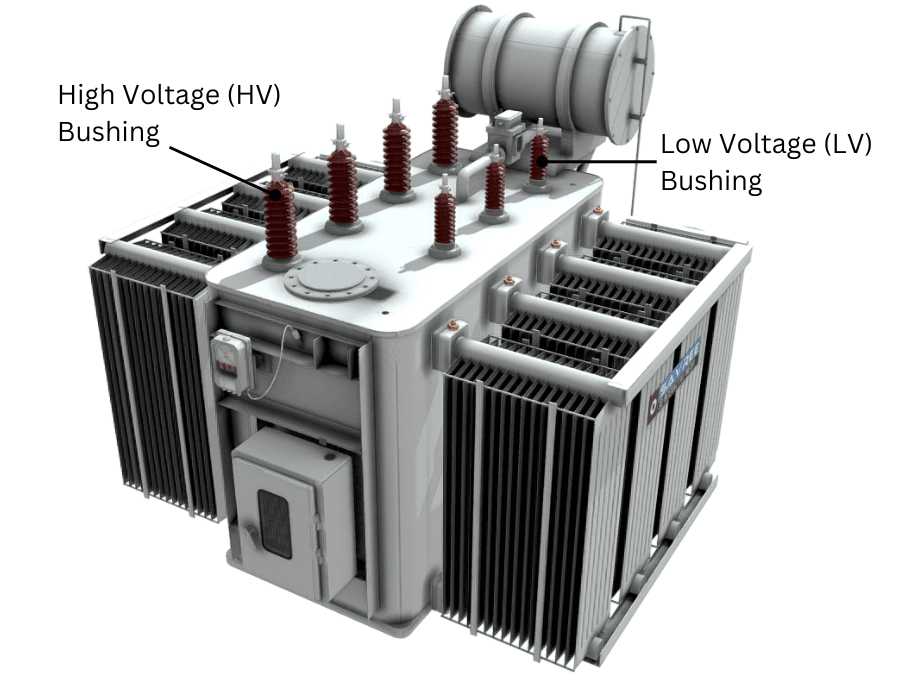
Transformer bushings are commonly installed on the top or side of the transformer tank. They connect internal transformer windings to external power lines or cables.
2.Transformer Bushing Function and Working Principle
The main function of a transformer bushing is to safely conduct electrical current through the transformer tank while maintaining insulation.
Three main electrical functions are involved.
Electrical insulation
The bushing prevents the conductor from contacting the grounded metal tank.
High-voltage transformers may operate at:
- 11kV
- 33kV
- 66kV
- 110kV or higher
Without insulation, this voltage could easily cause electrical discharge.
Transformer insulation design and electric field control are usually based on international guidelines and engineering practices defined in transformer insulation standards.
Current transmission
The central conductor inside the bushing carries current between the transformer winding and the external power network.
This conductor is usually made of copper or aluminum.
Electric field control
High voltage creates strong electric fields. If the electric field is not evenly distributed, insulation failure may occur.
Many modern transformer bushings use capacitive grading to distribute voltage evenly along the insulation layers.
This design greatly improves reliability.
3.Main Parts of a Transformer Bushing
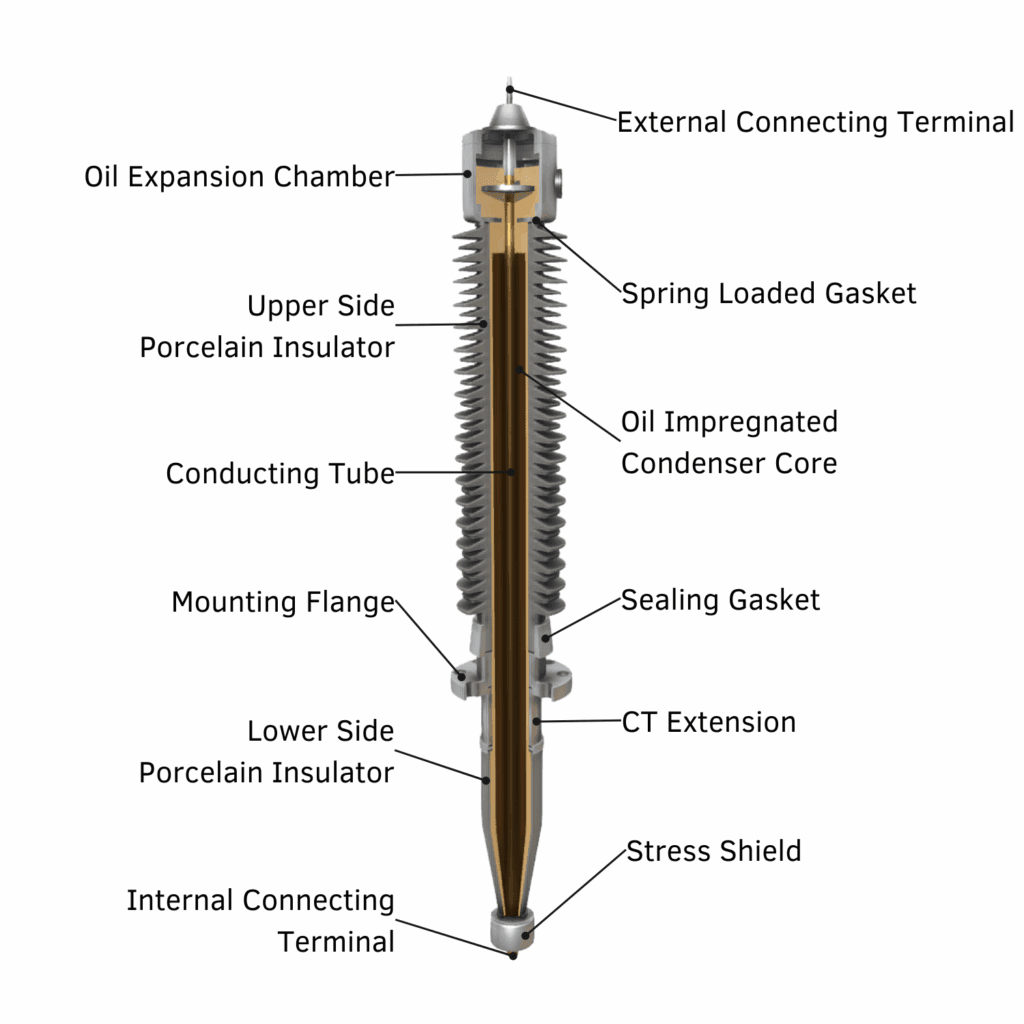
A typical electrical bushing consists of several key components.
Below is a simplified structure.
| Component | Function |
|---|---|
| Central conductor | Carries electrical current |
| Insulation layers | Prevent electrical leakage |
| External housing | Protects the internal insulation |
| Mounting flange | Fixes the bushing to the transformer tank |
| Sealing system | Prevents moisture and oil leakage |
Central conductor
The conductor runs through the center of the bushing. It carries current between the transformer winding and external power lines.
Copper is the most common material because it has excellent electrical conductivity.
Insulation system
The insulation system is the most important part of the transformer bushing.
Common insulation types include:
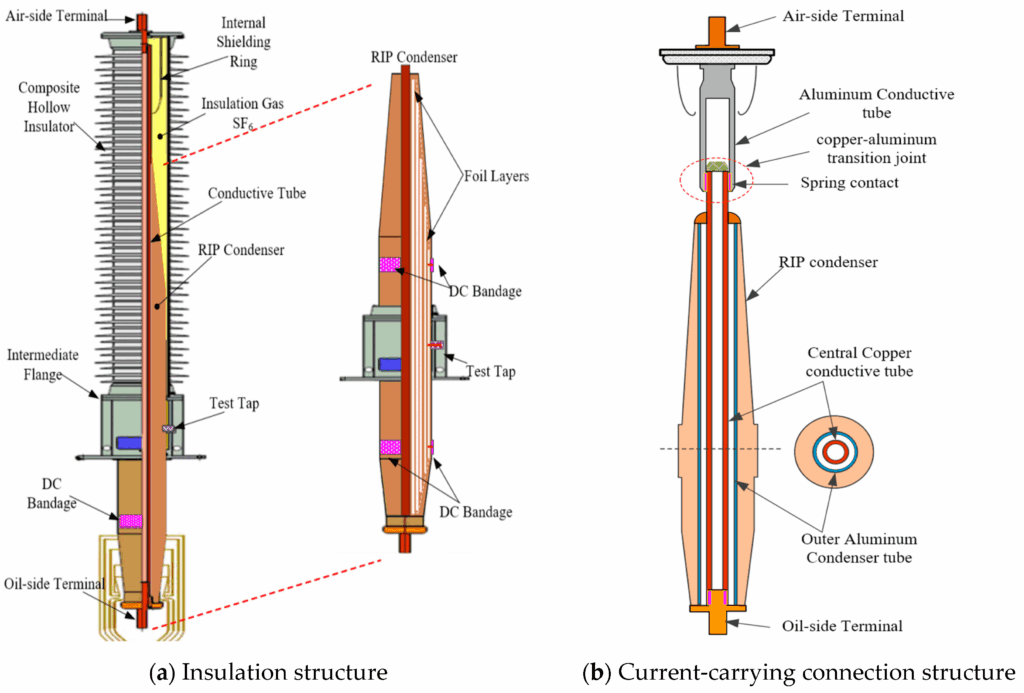
- oil impregnated paper (OIP)
- resin impregnated paper (RIP)
- epoxy resin
These materials provide high dielectric strength.
External housing
The outer housing protects the internal insulation from environmental conditions.
Common materials include:
- porcelain
- polymer
- composite silicone rubber
These materials offer good weather resistance.
4.Types of Transformer Bushing
There are several electrical bushing types, depending on voltage level, insulation design, and construction method.
Solid type bushings
Solid bushings are the simplest design.
They use solid insulation materials such as porcelain or epoxy.
Features:
- simple structure
- low cost
- suitable for low voltage transformers
Applications:
- distribution transformers
- small industrial transformers
Condenser type bushings
Condenser bushings are used in high voltage transformers.
They include multiple insulation layers and conductive foils. These layers control the electric field and reduce stress on insulation.
Advantages:
- improved voltage distribution
- higher voltage capability
- longer service life
Applications:
- high voltage power transformers
- transmission substations
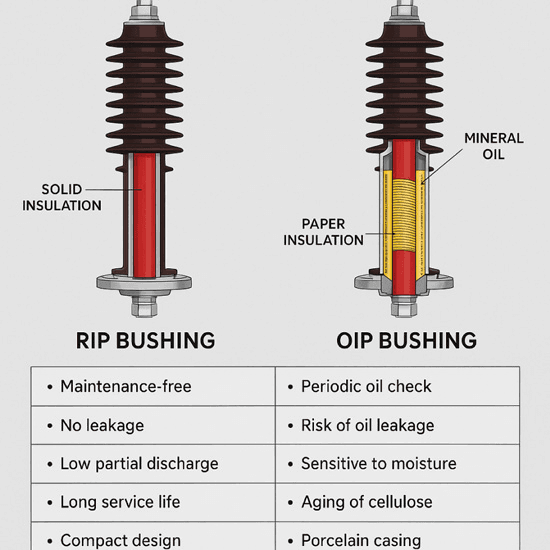
Oil impregnated paper (OIP) bushings
OIP bushings are traditional transformer bushings used in many power systems.
Features:
- paper insulation impregnated with transformer oil
- reliable performance
- widely used in utility transformers
Resin impregnated paper (RIP) bushings
RIP bushings use resin instead of oil.
Advantages:
- oil-free design
- low maintenance
- environmentally friendly
These bushings are increasingly used in modern substations.
Choosing the right transformer bushing type is important for transformer safety and long-term performance.
5.Dead Front vs Live Front Electrical Bushing
Transformer bushings can also be classified as dead front or live front.
| Type | Description | Typical Use |
|---|---|---|
| Dead front bushing | Fully insulated connector | pad mounted transformers |
| Live front bushing | exposed conductor connection | substations |
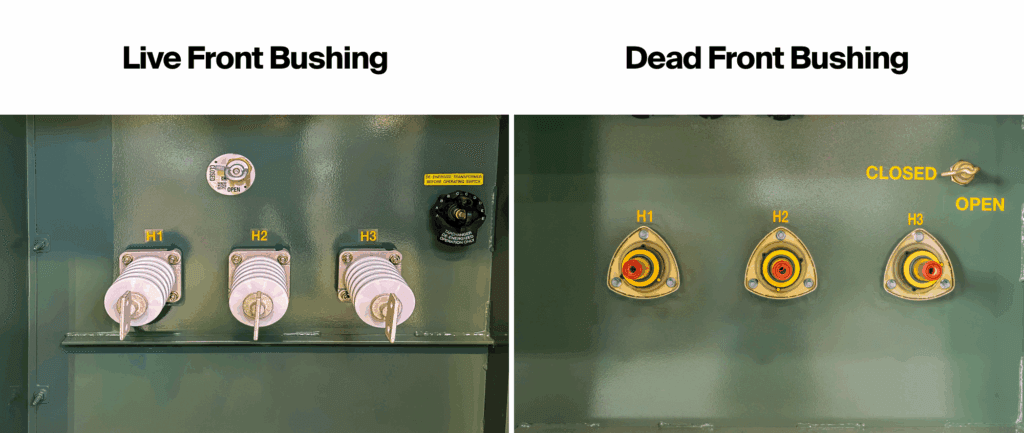
Dead front bushings
Dead front bushings are completely insulated.
The conductive parts are not exposed.
Advantages:
- improved safety
- reduced risk of accidental contact
They are commonly used in underground distribution systems.
Live front bushings
Live front bushings expose the conductor.
They are easier to install and maintain.
However, proper safety procedures must be followed.
6.Common Electrical Bushing Materials
The material of a electrical bushing affects its performance and reliability.
Common materials include:
| Material | Advantages |
|---|---|
| Porcelain | high mechanical strength |
| Epoxy resin | excellent insulation |
| Composite polymer | lightweight and pollution resistant |
Composite bushings are becoming popular in modern transformers because they resist contamination and harsh environments.
According to industry maintenance experts, insulation aging and moisture contamination are among the most common causes of transformer failures. Detailed case studies are available in this transformer bushing failure analysis.
7.Why Transformer Bushings Are Critical for Power Systems
Transformer bushings play a vital role in electrical power systems.
Electrical safety
They prevent electrical discharge between high voltage conductors and the grounded transformer tank.
Transformer reliability
A faulty bushing can cause transformer failure.
In fact, industry studies show that bushing failures are one of the leading causes of transformer outages.
Power grid stability
Reliable bushings help maintain continuous power supply in transmission and distribution networks.
8.Common Electrical Bushing Failures
Like any electrical component, electrical bushing may fail over time.
Understanding these failures helps prevent costly outages.
Insulation aging
Insulation materials gradually degrade due to heat and electrical stress.
Moisture ingress
Moisture entering the insulation system can reduce dielectric strength.
Partial discharge
Partial discharge is a localized electrical breakdown that damages insulation.
Overheating
Excessive current or poor cooling may cause overheating.
Regular monitoring can detect these issues early.
9.Electrical Bushing Maintenance and Testing
Proper maintenance extends the service life of electrical bushing. Many diagnostic tests used for transformer bushings follow internationally recognized guidelines such as those described in power transformer testing standards.
Common inspection and testing methods include:
Visual inspection
Check for:
- cracks in porcelain
- oil leakage
- contamination on the surface
Capacitance and power factor test
This test evaluates the condition of insulation.
Dissolved gas analysis
For oil filled bushings, oil samples can reveal internal faults.
Infrared thermography
Thermal cameras detect abnormal heating.
10.How to Choose the Right Transformer Bushing
Choosing the right electrical bushing requires several considerations.
Voltage rating
The bushing must match the transformer voltage level.
Current rating
It must carry the required load current safely.
Environmental conditions
Outdoor installations may require weather-resistant materials.
Insulation type
Oil impregnated paper and resin impregnated paper are the most common options.
11.Transformer Bushing Applications in Power Transformers
Transformer bushings are widely used in many types of transformers.
These include:
- power transformers
- distribution transformers
- substation transformers
- pad mounted transformers
High quality bushings are essential for reliable transformer operation.
For example, industrial power systems often use oil immersed transformers for stable power distribution. Properly designed bushings ensure safe electrical connections between the transformer and the power grid.
Internal link suggestion
You can link to your transformer product pages here, such as:
Oil Immersed Transformer
Dry Type Transformer
Prefabricated Substation
Example anchor sentence:
Reliable power transformers and transformer components are essential for modern industrial power systems.
External reference suggestion
You can reference technical resources such as:
IEEE transformer standards
IEC transformer insulation guidelines
Example sentence:
Transformer insulation design is often based on international standards from organizations such as IEEE and IEC.
12.FAQ About Transformer Bushing
What is the purpose of a transformer bushing?
A electrical bushing provides an insulated path for electrical current to pass through the transformer tank.
What are the different types of transformer bushings?
Common types include solid bushings, condenser bushings, OIP bushings, and RIP bushings.
What causes electrical bushing failure?
Typical causes include insulation aging, moisture ingress, overheating, and partial discharge.
How long do transformer bushings last?
Most transformer bushings have a service life of 20 to 30 years with proper maintenance.
What is the difference between OIP and RIP bushings?
OIP bushings use oil impregnated paper insulation, while RIP bushings use resin impregnated paper and do not contain oil.
Conclusion
A transformer bushing is a critical component in modern power transformers. It provides insulation, supports electrical conductors, and ensures safe connection between transformer windings and external power systems.
Different electrical bushing types are designed for different voltage levels and applications. Understanding their structure, materials, and maintenance requirements helps improve transformer reliability and power system safety.
As power networks continue to expand, high-quality transformer bushings will remain essential for stable and efficient electricity transmission.
Choosing the right transformer components is essential for safe and efficient power distribution.
If you need high-quality transformers or customized power solutions, feel free to contact our team for technical support and quotations.