
Оглавление
- Introduction: Project Background and Industry Challenge
- Overview of the Industrial Facility and Power Requirements
- Challenges with Traditional Industrial Substation Solutions
- Why a Box-Type Substation Was Selected
- Role of Medium Voltage Switchgear in the System
- Integration of Box-Type Substation and Medium Voltage Switchgear
- Installation Process and On-Site Advantages
- Operational Performance and Results
- Why This Solution Works for Medium-Voltage Industrial Facilities
- Key Takeaways from This Case Study
- Conclusion: Choosing the Right Medium Voltage Power Solution
- Customized Box-Type Substation and Switchgear Solutions
1. Introduction: Project Background and Industry Challenge
Medium-voltage industrial facilities face increasing pressure to ensure power reliability, safety, and scalability while controlling capital expenditure and construction timelines. As manufacturing processes become more automated and energy-intensive, traditional power distribution solutions often struggle to meet modern industrial requirements.
This case study examines how a box-type substation combined with medium voltage switchgear was successfully implemented to support a medium-voltage industrial facility, providing a compact, reliable, and future-ready power distribution system.
The project involved an industrial plant operating continuous production lines, where power interruptions, long installation cycles, and safety risks could result in significant financial losses. The facility required a power solution that could:
- Handle medium-voltage power distribution reliably
- Be deployed within a limited construction window
- Minimize on-site civil engineering work
- Comply with international electrical standards
- Allow for future capacity expansion
Rather than adopting a conventional indoor substation with extensive on-site construction, the project team selected an integrated box-type substation with dedicated medium voltage switchgear, enabling faster deployment and improved operational control.
From an industry perspective, this approach reflects a growing trend: industrial power users are shifting toward prefabricated, modular, and standardized medium-voltage solutions to reduce project risk and improve lifecycle performance.
2. Overview of the Industrial Facility and Power Requirements
2.1 Facility Profile
The industrial facility covered in this case study is representative of many medium-scale industrial plants, such as:
- Manufacturing factories
- Industrial processing facilities
- Logistics and warehousing centers
- Infrastructure-related industrial projects
The site operated multiple electrically driven systems, including production machinery, motor control centers, auxiliary systems, and facility services. These systems required stable medium-voltage power distribution with high operational uptime.
2.2 Power Demand Characteristics
Unlike commercial buildings, industrial facilities present unique power challenges:
- High load density within limited space
- Frequent load fluctuations due to machinery startup and shutdown
- Strict power quality requirements
- Low tolerance for downtime
The facility required a medium-voltage distribution system capable of handling these conditions while ensuring safe operation and straightforward maintenance.
Key Electrical Requirements
| Параметр | Requirement |
|---|---|
| Voltage Level | Medium Voltage (customizable range) |
| Load Type | Mixed inductive and resistive industrial loads |
| Reliability | Continuous operation with minimal downtime |
| Protection | Full fault protection and isolation |
| Expansion Capability | Reserved space for future feeders |
These requirements directly influenced the selection of both the box-type substation and the medium voltage switchgear configuration.
3. Challenges with Traditional Industrial Substation Solutions
Before selecting the final solution, the project team evaluated traditional substation designs, including indoor substations with separate switchgear rooms and transformer rooms.
3.1 Limitations of Conventional Indoor Substations
Traditional industrial substations often require:
- Dedicated buildings or rooms
- Extensive civil construction
- Long on-site installation periods
- Coordination between multiple contractors
For this project, these factors introduced several challenges:
- Extended Construction Timeline
Civil works and equipment installation would significantly delay power availability. - Higher Project Risk
On-site wiring, assembly, and testing increased the risk of installation errors. - Space Constraints
The facility had limited space available for electrical infrastructure. - Increased Total Cost
While individual components may appear cost-effective, total project cost increased due to construction and labor.
3.2 Operational and Maintenance Concerns
From an operational perspective, traditional substations can present long-term challenges:
- Complex maintenance procedures
- Higher exposure of live components
- Inconsistent quality due to on-site assembly
These risks are particularly critical in medium-voltage industrial environments, where safety and reliability are non-negotiable.
4. Why a Box-Type Substation Was Selected
4.1 What Is a Box-Type Substation?
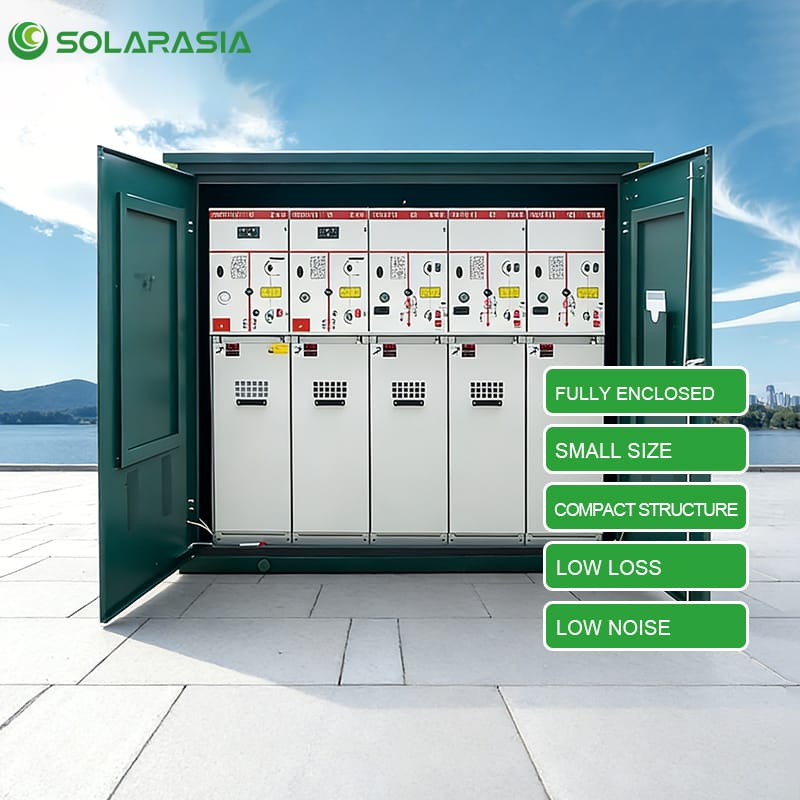
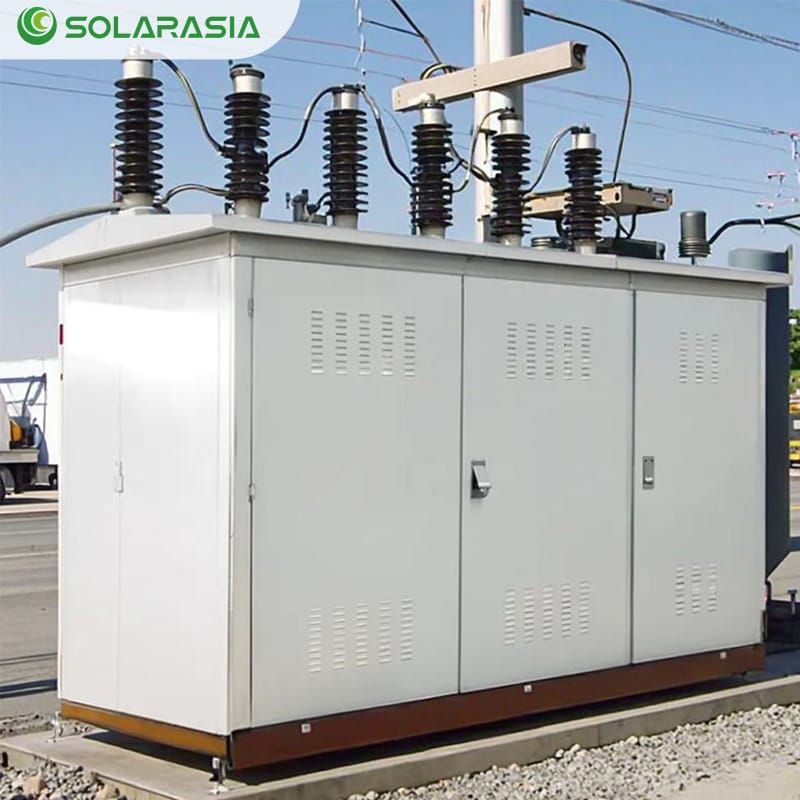
A box-type substation is a prefabricated, enclosed power distribution unit that integrates:
- Medium voltage switchgear
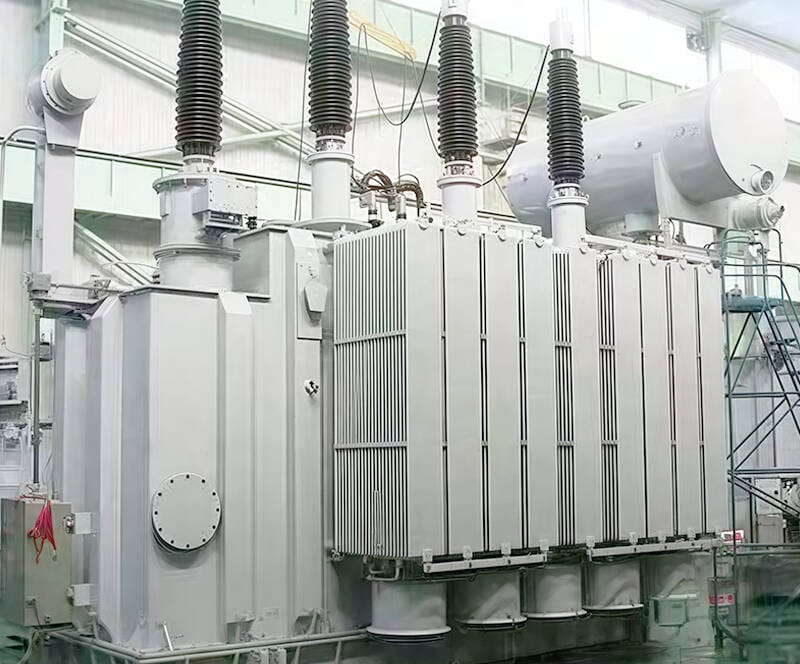
- Power transformer
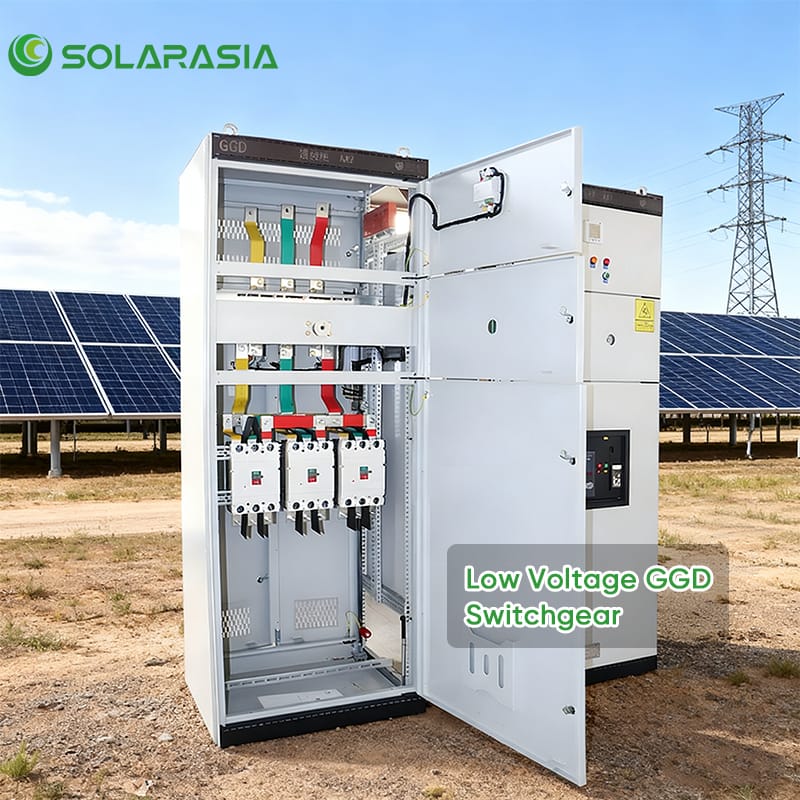
- Low voltage distribution equipment
All components are assembled, wired, and tested at the factory before delivery. The unit is designed for outdoor installation and requires minimal on-site work.
This design approach aligns perfectly with industrial facilities seeking fast deployment and standardized performance.
4.2 Key Reasons for Selecting a Box-Type Substation
The decision to use a box-type substation was driven by both technical and operational considerations.
Primary Selection Factors
| Factor | Benefit |
|---|---|
| Compact Design | Saves valuable industrial space |
| Factory Prefabrication | Reduces on-site installation risk |
| Fast Deployment | Shortens project schedule |
| Enclosed Structure | Improves safety and environmental protection |
| Modular Design | Allows future expansion |
4.3 Comparison with Traditional Substation Solutions
| Aspect | Подстанция коробчатого типа | Traditional Indoor Substation |
|---|---|---|
| Installation Time | Short | Long |
| Civil Construction | Minimal | Extensive |
| Quality Control | Factory-tested | Site-dependent |
| Space Requirement | Compact | Large |
| Expansion Flexibility | Modular | Complex |
This comparison clearly demonstrated that a box-type substation offered superior value for this industrial project, particularly in terms of time-to-operation and long-term reliability.

5. Role of Medium Voltage Switchgear in the System
5.1 Importance of Medium Voltage Switchgear in Industrial Power Distribution
Середина voltage switchgear plays a critical role in any industrial power system. It is responsible for:
- Power switching and distribution
- Fault protection and isolation
- System control and monitoring
In this case study, the medium voltage switchgear formed the operational backbone of the entire power distribution system.
5.2 Switchgear Configuration Used in This Project
The switchgear was integrated directly into the box-type substation, ensuring seamless coordination between switching, protection, and transformation.
Typical Switchgear Components
| Component | Function |
|---|---|
| Incoming Feeder | Receives utility or upstream power |
| Circuit Breakers | Interrupt faults and overloads |
| Protection Relays | Monitor and protect system health |
| Busbar System | Distributes power to outgoing feeders |
| Earthing System | Ensures operational safety |
This configuration ensured high system reliability while maintaining flexibility for future system upgrades.
5.3 Safety and Protection Advantages
Medium voltage switchgear significantly enhances safety by:
- Limiting fault propagation
- Providing clear isolation points
- Reducing exposure to live components
For industrial operators, these features translate into lower operational risk and safer maintenance procedures.
6. Integration of Box-Type Substation and Medium Voltage Switchgear
The true strength of this solution lies in the integrated design of the box-type substation and medium voltage switchgear.
6.1 System-Level Integration
Instead of treating each component as a standalone unit, the system was designed as a fully integrated medium-voltage power solution.
Key integration benefits included:
- Optimized internal layout
- Reduced cable lengths
- Improved thermal management
- Simplified control logic
This level of integration is difficult to achieve with on-site-built substations.
6.2 Standardization and Compliance
The complete system was designed and tested to comply with relevant international standards, ensuring consistent quality and global applicability.
| Area | Compliance Focus |
|---|---|
| Electrical Safety | IEC / ANSI standards |
| Mechanical Protection | Enclosure and ingress ratings |
| Thermal Performance | Heat dissipation and airflow |
| Operational Safety | Interlocking and grounding |
Standardization also simplified documentation, inspection, and long-term operation.
7. Installation Process and On-Site Advantages
7.1 Prefabricated Delivery and Site Preparation
One of the most significant advantages of using a box-type substation combined with medium voltage switchgear is the simplified installation process. For this project, the entire power solution was prefabricated, factory-assembled, and fully tested before shipment.
Instead of coordinating multiple contractors for civil construction, equipment installation, wiring, and testing, the industrial facility only needed to prepare a simple foundation and cable trenches prior to delivery.
This approach drastically reduced uncertainties during the installation phase and allowed the project team to maintain a predictable timeline.
7.2 On-Site Installation Workflow
The installation process followed a streamlined sequence:
- Foundation preparation
- Box-type substation positioning
- Medium-voltage cable termination
- Low-voltage outgoing connections
- Grounding and earthing verification
- Final commissioning and energization
Because the medium voltage switchgear was already integrated and wired inside the enclosure, on-site work was limited mainly to external cable connections.
Installation Comparison
| Item | Box-Type Substation Solution | Traditional Indoor Substation |
|---|---|---|
| On-site Assembly | Minimal | Extensive |
| Installation Time | Short | Long |
| Skilled Labor Requirement | Ниже | Higher |
| Commissioning Complexity | Низкий | Высокий |
| Project Risk | Reduced | Elevated |
This simplified installation model is particularly valuable for industrial facilities operating under tight construction schedules or those located in remote or labor-constrained areas.
7.3 Reduced Impact on Industrial Operations
Another key benefit was the minimal disruption to surrounding operations. Since the substation was installed outdoors and required limited on-site construction, the facility avoided prolonged shutdowns or interference with ongoing industrial activities.
For many medium-voltage industrial facilities, this advantage alone justifies the adoption of prefabricated box-type substation solutions.
8. Operational Performance and Results
8.1 System Stability and Power Reliability
Following commissioning, the power system demonstrated stable and reliable performance under varying load conditions. The integration of medium voltage switchgear ensured precise control and rapid fault isolation, preventing disturbances from spreading across the system.
Key performance outcomes included:
- Stable voltage levels under fluctuating loads
- Reliable switching operations
- Effective fault detection and isolation
- Smooth coordination between feeders
For industrial operators, this translated into higher production uptime and reduced operational risk.
8.2 Safety Improvements in Daily Operation
Safety is a critical concern in any medium-voltage industrial environment. The enclosed design of the box-type substation, combined with properly interlocked medium voltage switchgear, significantly improved overall safety.
Safety Enhancements Achieved
| Safety Aspect | Improvement |
|---|---|
| Live Part Exposure | Fully enclosed |
| Fault Containment | Enhanced |
| Operator Access Control | Improved |
| Maintenance Safety | Higher |
Maintenance personnel benefited from clearly defined isolation points and standardized operating procedures, reducing the likelihood of human error.
8.3 Maintenance and Lifecycle Benefits
From a long-term perspective, the integrated solution offered several maintenance advantages:
- Reduced inspection time
- Simplified spare parts management
- Standardized components
- Easier documentation and record keeping
These factors contribute directly to lower total cost of ownership (TCO) over the lifecycle of the power system.
9. Why This Solution Works for Medium-Voltage Industrial Facilities
9.1 Suitability Across Industrial Sectors
While this case study focuses on a single industrial facility, the solution is widely applicable across multiple industries, including:
- Manufacturing and processing plants
- Mining and resource extraction facilities
- Oil and gas infrastructure
- Data centers and energy-intensive facilities
- Logistics and transportation hubs
Each of these environments benefits from the compactness, reliability, and modularity offered by a box-type substation with integrated medium voltage switchgear.
9.2 Scalability and Future Expansion
Industrial facilities rarely remain static. Load growth, new production lines, or expanded operations often require additional power capacity.
The modular nature of this solution allows for:
- Additional outgoing feeders
- Future transformer upgrades
- Expansion without major reconstruction
This flexibility ensures that the power system can grow alongside the facility, protecting the initial investment.
Expansion Capability Comparison
| Особенность | Подстанция коробчатого типа | Conventional Substation |
|---|---|---|
| Modular Expansion | Yes | Limited |
| Downtime During Expansion | Minimal | Significant |
| Cost Predictability | Высокий | Variable |
| Engineering Complexity | Ниже | Higher |
9.3 Alignment with Modern Industrial Power Trends
Globally, industrial power distribution is moving toward:
- Standardized solutions
- Prefabricated equipment
- Shorter project timelines
- Higher safety standards
This case study reflects that shift and demonstrates how box-type substations and medium voltage switchgear align with modern industrial power strategies.
10. Key Takeaways from This Case Study
This project highlights several important lessons for industrial power system planning:
- Integrated solutions reduce project risk
- Prefabrication improves quality and consistency
- Medium voltage switchgear is central to system reliability
- Compact designs optimize industrial space utilization
- Standardization simplifies operation and maintenance
These takeaways are directly applicable to other medium-voltage industrial facilities seeking reliable and scalable power distribution solutions.
11. Conclusion: Choosing the Right Medium Voltage Power Solution
Selecting the right power distribution system is a strategic decision for any industrial facility. This case study demonstrates that combining a box-type substation with medium voltage switchgear offers a balanced solution that addresses technical, operational, and economic requirements.
By leveraging factory-prefabricated equipment, integrated design, and standardized components, industrial operators can achieve:
- Faster project delivery
- Higher operational safety
- Improved power reliability
- Lower lifecycle costs
As industrial energy demands continue to evolve, modular and integrated medium-voltage solutions will play an increasingly important role in supporting efficient and resilient operations.
12.Customized Solutions for Industrial Facilities
If you are planning a medium-voltage power distribution system for an industrial facility, a customized box-type substation and switchgear solution can help you achieve reliable performance with minimal project risk.
Contact our engineering team to discuss your project requirements and receive a tailored medium-voltage solution designed for safety, reliability, and long-term value.

1 Comment