Table of Contents
- Introduction: Why Transformer Testing Inspection Matters
- Understanding Transformer Testing Inspection
- Core Factory Tests Buyers Should Confirm
- International Standards Governing Transformer Testing Inspection
- Pre Shipment Transformer Inspection Checklist
- Test Reports and Technical Documents Buyers Should Review
- Common Gaps and Risks in Transformer Testing Inspection
- The Role of Third Party Inspection in Transformer Testing Inspection
- Key Questions Buyers Should Ask Suppliers Before Shipment
- Final Buyer Checklist for Shipment Approval
- Conclusion: Transformer Testing Inspection as Risk Management
1. Introduction: Why Transformer Testing Inspection Matters
Transformer testing inspection is one of the most critical quality assurance steps in the procurement of power and distribution transformers. For utilities, EPC contractors, renewable energy developers, and industrial buyers, a transformer is a long-term infrastructure asset designed to operate reliably for 20 to 30 years under continuous electrical, thermal, and environmental stress.
Despite this, many transformer failures that occur after installation can be traced back to inadequate factory testing, incomplete inspection before shipment, or insufficient verification of technical documentation. These problems are rarely visible at the time of delivery. Instead, they surface during commissioning or early operation, when corrective action is expensive and project schedules are already under pressure.
Transformer testing inspection before shipment allows buyers to verify that the transformer has been manufactured according to specification, tested under recognized standards, and prepared correctly for transport. It also provides objective evidence of quality that supports warranty enforcement, insurance coverage, and final project acceptance.
For commonly specified products such as a 33kV oil immersed transformer used in utility substations, or capacity ranges like 1000kVA, 200kVA, 50kVA, and 30kVA oil immersed transformers used in industrial and renewable applications, proper testing and inspection is not optional. It is a fundamental risk management tool.
This guide explains in detail how transformer testing inspection works, what buyers should confirm at each stage, and how to structure inspection requirements to protect both technical performance and commercial interests.

2. Understanding Transformer Testing Inspection
Transformer testing inspection combines two complementary processes that serve different but equally important purposes. Understanding the distinction helps buyers avoid common misunderstandings.
Transformer testing refers to a series of electrical, thermal, and mechanical tests carried out in the factory. These tests are designed to confirm that the transformer meets its rated performance parameters, including voltage, current, losses, insulation strength, and temperature limits. Testing focuses on measurable performance characteristics.
Transformer inspection, by contrast, focuses on physical condition, assembly quality, completeness, documentation accuracy, and shipment readiness. Inspection ensures that the transformer delivered is the same unit that was tested, with no damage, missing components, or configuration deviations.
When combined into a structured transformer testing inspection process, these activities provide a complete quality picture. Testing confirms that the transformer can perform as designed. Inspection confirms that it is delivered in a condition suitable for installation and long-term operation.
For oil immersed transformers across different voltage and capacity classes, from compact 30kVA units to large 1000kVA or 33kV systems, the same principle applies: performance verification must be supported by physical inspection and documentation review.
3. Core Factory Tests Buyers Should Confirm
Factory testing is the technical foundation of transformer testing inspection. Buyers should clearly understand which tests are mandatory, which are conditional, and which may be required based on project specifications, voltage class, capacity, and operating environment. A clear understanding of factory testing helps buyers evaluate quotations accurately and avoid disputes during acceptance.
3.1 Routine Tests
Routine tests are performed on every transformer prior to shipment. Their purpose is to verify manufacturing quality and confirm that basic electrical characteristics meet design requirements. These tests form the minimum acceptance baseline and are required regardless of transformer size or application.
Key routine tests include winding resistance measurement, voltage ratio and vector group verification, insulation resistance testing, and measurement of no load loss and load loss. Each test targets a specific risk area.
Winding resistance testing helps identify poor joints, incorrect conductor cross section, or connection errors. Voltage ratio and vector group tests ensure compatibility with the intended power system and prevent phase mismatch during installation. Insulation resistance testing provides an early indication of insulation dryness and cleanliness. Loss measurements verify efficiency and confirm that thermal performance will remain within design limits.
For smaller oil-immersed transformers, such as 30 kVA and 50 kVA units typically deployed in rural distribution networks or small renewable energy systems, routine tests serve as the main form of technical verification.
In the case of mid-range capacities around 200 kVA, buyers often rely on routine test results as reference benchmarks for long-term condition monitoring and performance evaluation.
When it comes to large-capacity equipment like 1000 kVA oil-immersed transformers, routine testing plays a critical role in establishing baseline parameters, which can later be compared against site commissioning data and ongoing maintenance results.
3.2 Type Tests
Type tests validate the transformer design rather than each individual unit. They are typically required for new designs, higher voltage ratings, or utility grid applications where long term reliability and system stability are critical.
Common type tests include temperature rise testing to confirm cooling performance, short circuit withstand testing to verify mechanical strength, lightning impulse testing to assess insulation coordination, and noise level measurement for environmental compliance.
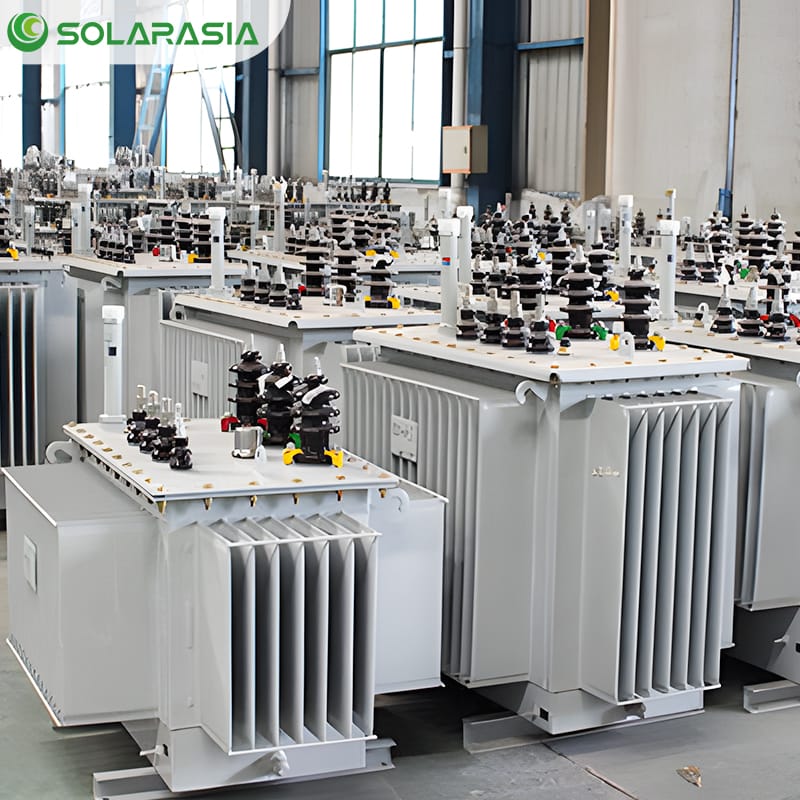
In projects involving a 33kV oil immersed transformer, type tests play a particularly important role. At this voltage level, insulation coordination, impulse withstand capability, and thermal margins are closely scrutinized by utilities and regulators. Buyers should confirm whether existing type test reports are applicable to the supplied design, including core material, winding arrangement, cooling method, and oil type.
If a supplier cannot provide relevant type test reports, buyers may need to consider additional testing, design validation, or independent technical review before approving production.
3.3 Special Tests
Special tests are performed when required by contract specifications, operating conditions, or risk assessment. These tests provide deeper insight into transformer condition and long term reliability.
Partial discharge testing is used to detect insulation defects that may not cause immediate failure but can lead to premature aging. Oil dielectric strength testing verifies that insulating oil provides sufficient margin against electrical breakdown. Frequency response analysis assesses winding integrity and is especially useful for detecting mechanical movement caused by transport or short circuit forces.
| Test Type | Purpose | Typical Application |
|---|---|---|
| Partial discharge | Detect insulation defects | High voltage oil immersed transformers such as 33kV |
| Oil dielectric test | Verify oil quality | All oil immersed transformers |
| SFRA | Detect winding movement | Large capacity units such as 1000kVA |
4. International Standards Governing Transformer Testing Inspection
International and national standards define the technical framework for transformer testing inspection. For buyers, standards are more than references in specifications. They determine which tests are mandatory, how results are evaluated, and whether a transformer will be accepted by utilities, insurers, and regulators.
4.1 Why Standards Matter to Buyers
Standards provide a common technical language between buyers and manufacturers. Without clearly defined standards, test results can become subjective, leading to disputes during acceptance. For overseas procurement, standards are often the only objective benchmark available to verify quality before shipment.
From a buyer perspective, aligning transformer testing inspection with recognized standards reduces several risks. It ensures that testing methods are repeatable, acceptance criteria are transparent, and documentation can be independently reviewed. This is particularly important for oil immersed transformers, where insulation performance and thermal behavior directly affect service life.
4.2 IEC 60076 and Its Practical Impact
IEC 60076 is the most widely applied international standard for power and distribution transformers. It covers design requirements, routine tests, type tests, special tests, and test report formats.
For buyers specifying oil immersed transformers in the range of 30kVA to 200kVA, IEC 60076 provides clear guidance on routine tests and loss measurements. These clauses help buyers verify that efficiency and thermal limits are within acceptable ranges for continuous operation.
For higher voltage and capacity equipment, such as a 33kV oil immersed transformer or a 1000kVA oil immersed transformer, IEC 60076 becomes even more critical. At this level, the standard defines impulse test levels, temperature rise limits, and insulation coordination requirements that directly influence long term reliability.
Buyers should confirm not only that IEC 60076 is referenced, but also which parts and editions are applied. Differences between editions can affect test methods and acceptance limits.
4.3 IEEE and ANSI Standards in Export Projects
In North America and some international projects, IEEE and ANSI standards are commonly specified. These standards differ in structure and test philosophy from IEC, particularly in areas such as loss evaluation and temperature rise testing.
When exporting oil immersed transformers to IEEE based markets, buyers should ensure that factory testing inspection procedures are aligned with the specified standard. Mixing IEC test methods with IEEE acceptance criteria can lead to confusion and rejection during project approval.
4.4 Utility and Project Specific Requirements
Beyond international standards, many utilities impose their own technical requirements. These may include additional tests, stricter acceptance criteria, or enhanced documentation.
For example, utilities often require additional verification for 33kV oil immersed transformers used in primary substations, including witnessed testing or third party inspection. Even for smaller units such as 50kVA or 200kVA transformers used in distributed networks, project specifications may require supplementary inspection steps.
Buyers should review these requirements early and incorporate them into the transformer testing inspection plan before production begins.
4.5 Standards and Documentation Alignment
Standards also influence how test results are reported. A compliant test report should clearly reference the applicable standard, test method, and acceptance criteria.
For larger transformers, including 1000kVA units, detailed reporting is especially important. These reports often serve as baseline documents for commissioning, warranty evaluation, and future maintenance.
| Standard Type | Typical Application | Buyer Consideration |
| IEC 60076 | Global projects | Broad international acceptance |
| IEEE ANSI | North America | Market specific compliance |
| Utility specs | Grid connection | Additional testing or inspection |
5. Pre Shipment Transformer Inspection Checklist
Pre shipment inspection is the final step to ensure that a transformer tested in the factory will perform reliably once installed. It bridges the gap between testing verification and actual operational readiness. For buyers, understanding this phase can prevent costly failures, shipment delays, and disputes.
5.1 Visual and Mechanical Inspection
Visual inspection focuses on the physical condition and workmanship of the transformer. This includes:
- Tank fabrication quality, welding appearance, and surface treatment
- Paint thickness and corrosion protection, particularly for outdoor units such as 33kV oil immersed transformers
- Bushings, radiators, valves, and accessories for correct type, alignment, and installation
- Nameplate accuracy, including serial number, voltage rating, and manufacturer information
Smaller oil immersed transformers such as 30kVA and 50kVA units require special attention to compact assembly areas, where tight spacing can hide minor defects. Mid-sized units like 200kVA transformers must be checked for lifting points and handling integrity, while 1000kVA transformers require extensive inspection of structural supports, radiator attachments, and heavy components.
5.2 Electrical and Assembly Inspection
Electrical inspection ensures that internal connections, grounding, and accessories are correctly installed. Critical checks include:
- Verification of internal winding connections and busbar arrangements
- Grounding system inspection and continuity verification
- Oil filling level, dielectric strength, and sealing integrity
- Functionality of tap changers, cooling fans, and protection devices
For higher voltage transformers such as a 33kV oil immersed transformer, correct bushings, grounding, and insulation clearances are crucial to prevent early operational failures. For distribution level units like 50kVA or 200kVA, attention to oil level, bushing tightness, and minor leaks is often more practical but equally important.
5.3 Packing and Transport Inspection
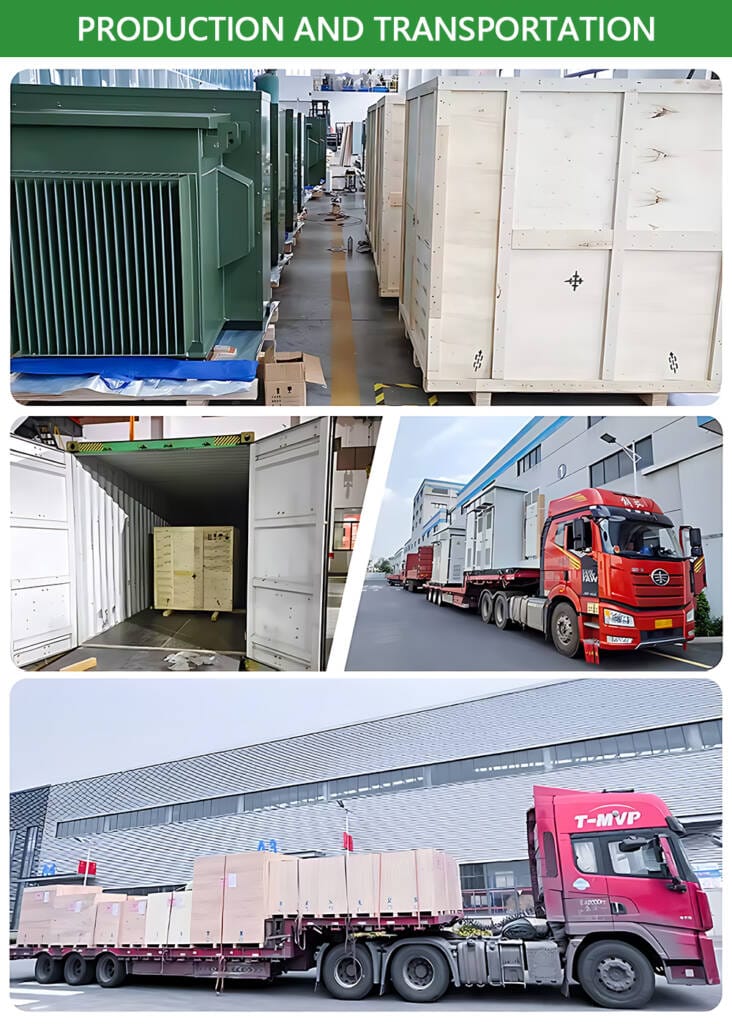
Proper packing ensures the transformer arrives at the site undamaged and ready for installation. Key aspects include:
| Packing Item | Inspection Focus | Notes |
|---|---|---|
| Wooden case or steel frame | Structural strength and stability | Ensure frame can handle lifting and transport vibrations |
| Moisture protection | Seal integrity and desiccants | Especially critical for oil immersed transformers shipped overseas |
| Lifting points | Correct marking and accessibility | Applies to all sizes, from 30kVA to 1000kVA units |
| Protective barriers | Radiators, fans, and bushings | Prevent mechanical damage during handling |
Buyers should verify that all protective measures are in place. For 1000kVA oil immersed transformers, this often includes reinforced frames and crane attachment points. For smaller units, it might include protective pads and sealed crates.
5.4 Witnessing Pre Shipment Tests
When possible, buyers should witness pre shipment tests in the factory. This includes routine tests, oil sampling, and visual inspections. For critical units such as 33kV or 1000kVA transformers, witnessing these tests provides additional assurance of compliance with specifications.
Even for smaller transformers, witnessing tests for the first few units in a batch can help verify that manufacturing processes are consistent.
5.5 Integration of Inspection with Documentation
Inspection results should be documented and linked to the corresponding test reports. This ensures traceability from factory testing through to delivery and commissioning.
- Each transformer serial number should have a complete file of routine, type, and special test results
- Inspection checklists should be signed by both factory QA and buyer representatives or third party inspectors
- Packing and loading photos provide evidence of transport readiness
By integrating inspection findings with technical documentation, buyers create a robust record that supports warranty claims and regulatory compliance.
5.6 Special Considerations for Different Capacities
- 30kVA / 50kVA transformers: Check compact assembly, oil filling levels, and minor handling damages. Focus on small leaks or paint defects.
- 200kVA transformers: Review lifting points, heavy component mounting, and oil sampling records.
- 1000kVA transformers: Verify structural reinforcement, cooling system integrity, and documentation of type tests. Witness critical tests if possible.
- 33kV transformers: Ensure clearances, bushings, and insulation coordination meet high voltage safety standards. Confirm third party inspection or witnessed testing for high risk installations.
Pre shipment inspection is a critical step for all transformers, regardless of size. While larger transformers carry higher financial and operational risk, smaller transformers can fail due to overlooked details. Structured inspection ensures consistency, reduces risk, and builds confidence in the equipment’s performance post-delivery.
6. Test Reports and Technical Documents Buyers Should Review
Test reports and technical documentation are critical components of transformer testing inspection. For buyers, they provide the evidence needed to verify that the transformer meets specifications and is ready for operation. Without these documents, even a fully tested transformer could be considered non-compliant by utilities or insurers.
6.1 Essential Test Reports
Buyers should ensure that each transformer is accompanied by complete test reports, including:
- Routine Test Reports: Cover every unit, verifying winding resistance, voltage ratio, insulation resistance, and loss measurements.
- Type Test Reports: Provide evidence that the transformer design has passed temperature rise, short-circuit, impulse, and other type tests. Especially important for high voltage units like 33kV oil immersed transformers.
- Special Test Reports: Include partial discharge, oil dielectric strength, and frequency response analysis. Critical for larger transformers, including 1000kVA oil immersed transformers, to detect potential hidden defects.
For smaller units like 30kVA or 50kVA transformers, the routine test report is often sufficient. Mid-sized transformers such as 200kVA units may also benefit from selective special tests to ensure oil quality and insulation integrity.
In most international projects, transformer testing and inspection are expected to follow recognized standards such as IEC 60076, which defines routine, type, and special testing requirements for oil immersed transformers.
6.2 Inspection Checklists and QA Reports
Pre shipment inspection checklists and QA reports are equally important. They document physical verification of the transformer, including:
- Visual and mechanical condition
- Assembly accuracy
- Grounding verification
- Oil filling and sealing
- Packing and transport readiness
These documents should be signed and dated by both factory QA personnel and buyer representatives or third party inspectors when available.
6.3 Material Certificates and Component Documentation
Buyers should request material certificates for critical components such as core laminations, conductor materials, insulation, and bushings. Component documentation allows verification that the transformer is built with specified materials and meets design and safety standards.
For large transformers like 1000kVA units or high voltage 33kV oil immersed transformers, this documentation is especially critical because material variations can significantly impact performance and safety margins.
6.4 Traceability and Serial Numbers
All reports and certificates should reference the specific serial number of the transformer. This traceability ensures that test results are tied to the delivered unit. For batch orders with multiple 50kVA or 200kVA transformers, individual serial number documentation is essential to avoid confusion or misattribution of test results.
6.5 Integration of Documentation with Acceptance
Buyers should cross-check test reports against inspection findings and packing documentation. Integration of all documents helps in:
- Approving shipment release
- Supporting warranty claims
- Ensuring compliance with standards and utility requirements
For 33kV transformers, detailed documentation may also include witnessed test reports and third party inspection certifications. For smaller distribution transformers, photo documentation of packing and inspection may suffice.
6.6 Common Documentation Issues to Watch For
Buyers should be aware of typical documentation pitfalls, including:
- Missing or incomplete test data
- Reports not referencing the correct standard (IEC, IEEE, ANSI)
- Typographical errors in serial numbers or specifications
- Lack of signatures or approval stamps
Addressing these issues before shipment ensures smoother commissioning and reduces risk of rejection by utilities or project owners.
6.7 Recommended Best Practices
- Verify that all test reports, checklists, and certificates are complete and accurate
- Confirm serial number traceability for all transformers, including 30kVA, 50kVA, 200kVA, 1000kVA, and 33kV units
- Cross-reference inspection checklists with factory test reports
- Request third party verification for high value or high voltage transformers
Proper review and integration of test reports and technical documents not only confirms compliance but also strengthens buyer confidence and provides evidence for warranty and insurance claims.
7. Common Gaps and Risks in Transformer Testing Inspection
Despite thorough testing and pre shipment inspection, gaps and risks can still arise in transformer delivery. Understanding these pitfalls helps buyers proactively manage risk and avoid costly failures or project delays.
7.1 Misinterpretation of Test Results
A common issue is assuming that passing routine tests guarantees long-term reliability. Buyers often misinterpret test results without understanding the context or limitations of each test. For example, a 33kV oil immersed transformer may pass insulation resistance and voltage ratio tests, but partial discharge issues could remain undetected if special tests are not conducted.
Similarly, small transformers like 30kVA or 50kVA units may have less comprehensive testing, increasing the importance of visual inspection and oil quality checks. Buyers must consider both the test outcomes and the scope of testing performed.
For utilities and EPC contractors, compliance with IEEE transformer testing guidelines is often a prerequisite for acceptance and commissioning approval.
7.2 Incomplete Documentation
Documentation gaps are another risk. Missing or incomplete test reports, inspection checklists, or material certificates can create uncertainty about compliance. This is particularly critical for mid-sized and large transformers such as 200kVA or 1000kVA units, where design complexity increases the potential for undocumented deviations.
Buyers should ensure that every report references the correct serial number, test standard (IEC, IEEE, ANSI), and includes signatures from QA personnel or third party inspectors. Absence of this information may invalidate warranty claims or regulatory approval.
7.3 Packing and Transport Deficiencies
Even a perfectly tested transformer can be damaged during transport if packing is inadequate. Common issues include:
- Insecure lifting points causing mechanical stress
- Insufficient moisture protection leading to oil contamination
- Damaged bushings or radiators due to inadequate padding
These risks are higher for larger transformers such as 1000kVA or 33kV oil immersed transformers due to weight and handling complexity. Smaller units can also be affected if crates are improperly sealed or stacked.
7.4 Overlooking Third Party Inspection
Many buyers rely solely on factory QA reports, assuming all testing is valid. Skipping third party inspection can be risky, especially for high-value or high-voltage units. An independent inspector can verify that the factory has followed procedures correctly, witness critical tests, and validate packing before shipment.
7.5 Inconsistent Manufacturing Practices
When multiple transformers are produced in a batch, inconsistencies can occur between units. Even if the first unit passes all tests, subsequent units may have deviations in assembly quality, oil filling, or core alignment. This is particularly relevant for distribution transformers like 50kVA or 200kVA units produced in large quantities.
7.6 Regulatory and Utility Compliance Gaps
Failure to align with local utility or regulatory requirements can create issues at commissioning. For example, a 33kV oil immersed transformer that meets IEC 60076 but lacks utility-specific approval may be rejected during connection. Buyers must verify that the transformer satisfies both international standards and project-specific regulations.
7.7 Best Practices to Mitigate Gaps
- Cross-check all test results and inspection reports for consistency and completeness
- Witness critical tests for large or high voltage transformers whenever possible
- Ensure packing meets handling and transport requirements
- Utilize third party inspection for high-risk units
- Verify compliance with both international standards and local utility specifications
- Document all observations and corrective actions to maintain traceability
By proactively addressing these common gaps and risks, buyers can reduce the likelihood of delays, failures, or unexpected costs. Structured risk management ensures that transformers, whether small 30kVA units or large 1000kVA and 33kV systems, arrive at the site ready for reliable operation.
8. The Role of Third Party Inspection in Transformer Testing Inspection
Third party inspection provides an independent verification layer in the transformer testing inspection process. Buyers increasingly rely on independent inspectors to validate factory testing, witness critical tests, and ensure the transformer is ready for shipment. This is especially important for high-value and high-voltage units such as 1000kVA oil immersed transformers and 33kV transformers.
8.1 Benefits of Third Party Inspection
- Objectivity: Independent inspectors provide unbiased verification of factory test results, reducing risk of false or incomplete reporting.
- Compliance Verification: They ensure that testing and inspection comply with applicable standards (IEC, IEEE, ANSI) and project-specific requirements.
- Documentation Accuracy: Inspectors cross-check reports, material certificates, and QA documentation, confirming that all information matches the delivered unit.
- Early Risk Identification: Potential issues with assembly, oil filling, or packing can be identified before shipment, reducing the risk of damage or operational failures.
8.2 When to Use Third Party Inspection
- High Voltage or High Capacity Units: Transformers such as 33kV or 1000kVA units should almost always have third party oversight due to the high financial and operational stakes.
- First Time Suppliers: When sourcing from a new manufacturer, independent inspection ensures that the supplier follows agreed procedures.
- Large Batch Orders: For multiple units, third party inspection ensures consistency across the batch, particularly for 50kVA, 200kVA, and other mid-sized oil immersed transformers.
- Critical Project Deadlines: Projects with tight commissioning schedules benefit from third party inspection, as it reduces delays caused by non-compliance or missing documentation.
8.3 Scope of Third Party Inspection
A typical third party inspection covers:
- Witnessing Factory Tests: Routine, type, and special tests are observed to confirm proper execution.
- Visual and Mechanical Checks: Inspectors verify tank fabrication, paint coating, bushing installation, radiator attachment, and lifting points.
- Electrical Verification: Includes internal connections, grounding, tap changers, and functional tests.
- Packing and Transport Readiness: Inspectors check crates, frames, desiccants, and lifting points to ensure safe shipment.
- Documentation Review: All reports, certificates, and checklists are reviewed for accuracy, completeness, and traceability to serial numbers.
8.4 Integration with Buyer Requirements
Third party inspection reports should align with buyer-specific requirements. This includes references to project specifications, local utility regulations, and any additional acceptance criteria requested. For instance, a 33kV oil immersed transformer may require witnessed impulse testing, while a 50kVA distribution transformer may only require documentation review and visual inspection.
8.5 Choosing the Right Third Party Inspector
Buyers should consider:
- Experience in Transformer Testing: Inspectors with experience in oil immersed transformers of various capacities (30kVA to 1000kVA) provide more reliable insights.
- Familiarity with Applicable Standards: IEC 60076, IEEE, ANSI, and local utility standards.
- Independence and Credibility: The inspector must have no conflicts of interest and be recognized by utilities or certification bodies.
8.6 Value for Buyers
- Enhances confidence in transformer quality
- Reduces risk of non-compliance, shipment delays, and operational failures
- Supports warranty claims and insurance coverage
- Provides a documented audit trail for all critical decisions and approvals
Third party inspection is not an optional luxury; for critical projects and high-capacity transformers, it is a strategic risk management tool that ensures reliable operation, compliance, and project success.
9. Key Questions Buyers Should Ask Suppliers Before Shipment
Before accepting a transformer for shipment, buyers should proactively ask suppliers specific questions to confirm testing, inspection, and compliance. These questions reduce the risk of surprises, ensure full documentation, and clarify responsibilities.
9.1 Questions About Testing
- Which routine tests have been performed on this unit?
- Are type test reports available for the transformer design, and do they match the supplied specifications?
- Have any special tests such as partial discharge or SFRA been performed?
- Were the tests witnessed by your QA personnel or a third party?
For high-voltage units like 33kV oil immersed transformers and large capacity units such as 1000kVA, it is critical to confirm type and special tests. Smaller units (30kVA, 50kVA, 200kVA) may have fewer mandatory tests but buyers should still verify routine tests and oil dielectric strength.
9.2 Questions About Documentation
- Are all test reports, inspection checklists, and certificates available and complete?
- Do reports reference the correct serial number for this unit?
- Are all documents signed by QA personnel or third party inspectors?
- Do the reports reference applicable standards (IEC, IEEE, ANSI, or project-specific)?
9.3 Questions About Visual and Mechanical Inspection
- Has the transformer been visually inspected for welding quality, paint finish, and component installation?
- Are bushings, radiators, valves, and accessories correctly installed?
- Has the oil level and sealing been verified?
- Have lifting points and handling provisions been checked for shipment?
For smaller distribution units like 50kVA or 30kVA transformers, the focus may be on compact assembly and oil sealing, while larger transformers like 1000kVA units require full structural verification.
9.4 Questions About Packing and Transport
- Is the transformer properly packed for transport?
- Are lifting points, frames, and crates designed to prevent damage during shipping?
- Are moisture protection measures such as desiccants and sealing correctly applied?
- Has packing been verified against project requirements?
For 33kV or 1000kVA oil immersed transformers, reinforced frames and precise lifting arrangements are critical, while smaller units still require adequate protection and sealing.
9.5 Questions About Compliance and Third Party Inspection
- Has a third party inspection been performed or can one be arranged?
- Does the transformer comply with local utility requirements and international standards?
- Are there any deviations from agreed specifications or special project requirements?
- What is the procedure for addressing non-compliance or findings during inspection?
9.6 Questions About Post Shipment Support
- What documentation will be provided to support installation and commissioning?
- Are warranty terms and conditions clearly defined?
- What is the procedure for claiming warranty if defects are found post shipment?
- Are maintenance and service manuals included?
By systematically asking these questions, buyers ensure that all aspects of transformer testing inspection are verified and documented. This approach minimizes risk, reinforces quality assurance, and establishes a clear basis for project approval, whether for small 30kVA units, mid-size 200kVA transformers, large 1000kVA units, or high-voltage 33kV oil immersed transformers.
10. Post Delivery Verification and Commissioning Tips
After a transformer arrives on site, post delivery verification and proper commissioning are critical to ensure it operates safely and reliably. Buyers should follow structured procedures to confirm that the transformer matches documentation and maintains its integrity during transport.
10.1 Initial Visual Inspection
Immediately upon arrival, perform a thorough visual inspection:
- Check for external damage to tank, bushings, radiators, and accessories
- Verify that lifting points, valves, and protective covers are intact
- Confirm that paint, coatings, and corrosion protection are undisturbed
Even small transformers like 30kVA and 50kVA units can suffer minor damage if crates were mishandled. Larger transformers such as 200kVA, 1000kVA, or 33kV oil immersed transformers require careful inspection of structural components, radiators, and lifting arrangements.
10.2 Oil and Insulation Checks
- Measure oil levels and dielectric strength to ensure no contamination during transport
- Verify insulation resistance using standard methods
- For high-voltage units, conduct additional partial discharge testing if required
Proper verification at this stage helps prevent early insulation failures and ensures safe energization.
10.3 Mechanical Verification
- Check tightness of bolted connections and the integrity of tap changers
- Ensure cooling fans, pumps, and radiators are correctly mounted and operational
- For large transformers, verify that foundation alignment and mounting pads match site requirements
10.4 Cross-Referencing Documentation
- Match each unit against test reports, inspection checklists, and material certificates
- Confirm that the delivered serial number corresponds to the documentation
- Review any observations noted by third party inspectors and ensure corrective actions are completed
10.5 Functional Commissioning Tests
- Perform no-load energization tests to check for correct vector group and voltage ratio
- Conduct load tests according to project requirements, particularly for 200kVA, 1000kVA, and 33kV units
- Monitor temperature, oil levels, and cooling system performance during initial operation
Commissioning should follow manufacturer and project-specific guidelines, ensuring that both small and large oil immersed transformers are integrated safely into the network.
10.6 Best Practices
- Maintain detailed records of post delivery inspections
- Involve qualified personnel for high-voltage or high-capacity units
- Address any discrepancies immediately with the supplier before energization
- Retain all commissioning data for warranty and maintenance purposes
Proper post delivery verification ensures that transformers, whether a compact 30kVA distribution unit, a mid-size 200kVA transformer, a large 1000kVA unit, or a high-voltage 33kV system, are ready for safe, reliable operation and provide the long-term performance expected from prior testing and inspection.
11. FAQ for Transformer Testing & Inspection
This section addresses common questions that buyers ask about transformer testing and inspection. Covering both technical and procedural aspects, these FAQs help buyers make informed decisions and ensure reliable transformer delivery.
11.1 What is included in routine testing?
Routine testing includes checks that are performed on every transformer unit, such as:
- Winding resistance measurements
- Voltage ratio and vector group verification
- Insulation resistance tests
- Load and no-load loss measurements These tests verify basic electrical and mechanical compliance, applicable to 30kVA, 50kVA, 200kVA, 1000kVA, and 33kV oil immersed transformers.
11.2 Why are type tests important?
Type tests validate the transformer design rather than individual units. They typically include:
- Temperature rise testing
- Short circuit withstand tests
- Lightning impulse testing
- Noise level measurement Buyers should review type test reports for high voltage units like 33kV and large capacity transformers such as 1000kVA to ensure long-term reliability.
11.3 What are special tests?
Special tests go beyond routine and type tests, assessing potential hidden risks. These may include:
- Partial discharge measurements
- Oil dielectric tests
- Frequency response analysis (SFRA) Such tests are critical for large transformers and high-voltage applications to detect issues not revealed by standard testing.
11.4 How do I verify pre shipment inspection?
Buyers should ensure that pre shipment inspection covers:
- Visual and mechanical checks
- Electrical and assembly verification
- Packing and transport readiness
- Witnessing of critical tests when possible Documentation should be cross-referenced with test reports and signed by factory QA or third party inspectors.
11.5 When should I request third party inspection?
Third party inspection is recommended for:
- High voltage units (33kV)
- Large capacity transformers (1000kVA)
- First-time suppliers
- Critical or high-stakes projects The third party ensures objectivity, compliance with standards, and accurate documentation.
11.6 What documentation should be provided?
- Complete routine, type, and special test reports
- Inspection checklists and QA reports
- Material certificates for core, windings, bushings, and insulation
- Packing and transport verification documents
- Signatures and approvals from QA or third party inspectors
11.7 How should post delivery verification be conducted?
- Perform initial visual inspection for damage and integrity
- Check oil levels, insulation resistance, and mechanical components
- Cross-reference all documentation against serial numbers
- Conduct functional commissioning tests, including no-load and load testing
- Maintain detailed records for warranty and maintenance purposes
11.8 What are common risks buyers should watch?
- Misinterpretation of test results
- Incomplete documentation
- Inadequate packing and transport
- Lack of third party inspection
- Inconsistent manufacturing practices
- Regulatory or utility compliance gaps
11.9 Are there differences in testing requirements based on transformer size?
Yes, testing scope varies by capacity and voltage:
- 30kVA and 50kVA: Focus on routine tests, oil quality, and visual inspection
- 200kVA: Include selective special tests and structural checks
- 1000kVA and 33kV: Comprehensive routine, type, and special tests, witnessed by buyers or third party inspectors
By addressing these FAQs, buyers gain a clearer understanding of transformer testing inspection requirements, ensuring that units, from small distribution transformers to large high-voltage systems, are properly verified, documented, and ready for safe operation.