When exporting transformers to international markets, understanding transformer standards is crucial for ensuring product quality, safety, and regulatory compliance. Overseas buyers often require detailed export certification and proof of compliance with global standards such as IEC, ANSI, and IEEE. Without meeting these standards, shipments may face delays, rejection, or costly rework. This guide explains the key transformer standards for export, outlines mandatory certifications, testing requirements, and documentation checklists, and provides practical tips for buyers to evaluate suppliers effectively. By following these guidelines, international buyers can ensure smooth and compliant transformer procurement.
Table of Contents
- Why Transformer Standards Matter for Export
- Overview of Global Transformer Standards
- Key International Transformer Standards (IEC, ANSI, IEEE)
- Mandatory Export Certifications for Transformer
- Testing Requirements for Export Transformers
- Transformer Export Documentation Checklist
- How Buyers Evaluate a Transformer Standards & Certification Supplier
- Common Transformer Compliance Issues & Solutions
- Case Studies: Export Transformers Meeting Standards
- Final Transformer Compliance Checklist for Buyers
I. Why Transformer Standards & Compliance Matter for Export
Transformers are the backbone of every modern power system. Whether in utility distribution networks, industrial plants, data centers, or renewable energy installations like solar farms, they are essential for voltage conversion, safe distribution, and efficient energy flow. For overseas buyers, understanding and adhering to globaltransformer standardsis not merely a technical formality—it is a critical business strategy that ensures safety, operational reliability, long-term value, and seamless regulatory acceptance across different markets.
A key aspect of this compliance involves adhering to internationally recognizedstandard sets, particularly those established by theInternational Electrotechnical Commission (IEC). These standards provide a unified framework for design, safety, and testing, creating a common language between manufacturers and global purchasers. Beyond general standards, specific regulations, such astransformer efficiency standardsmandated by bodies like theDepartment of Energy (DOE)in the U.S., directly impact lifecycle costs and environmental footprint. Compliance ensures that equipment, from distribution units to specializedtransformers rectifier transformers, meets stringent performance benchmarks.
The scope of compliance extends across various transformer technologies. For instance,liquid immersedtransformers, common in outdoor and high-capacity applications, have strict safety and environmental protocols. Similarly, components likevoltage regulatorsandgrounding transformers, which are vital for system stability and safety, must also conform to regional electrical codes. Ultimately, a compliant transformer is a reliable asset that secures yourpower supply, minimizes downtime risks, and facilitates smoother importation and grid integration, turning regulatory diligence into a competitive advantage for your operations.
1. Compliance Ensures System Safety and Stability
Electricity systems differ significantly by country. Voltage levels, grid frequency, grounding methods, fault levels, and protection philosophies vary. A transformer designed for one region may be unsafe or incompatible in another. Certified equipment ensures compliance with standardized safety requirements such as dielectric strength, short-circuit performance, temperature rise limits, and insulation coordination.
For example, high voltage transformers in a GIS substation require extremely strict dielectric testing, while a medium voltage transformer used in a manufacturing facility prioritizes thermal performance and overload endurance. Compliance ensures these needs are met.
2. Preventing Equipment Failures and Overheating
Many overseas buyers ask: “What causes transformers to blow?”
Common causes include:
- Overvoltage or undervoltage from improper transformer sizing
- Poor insulation quality
- Incorrect winding design (understanding what are windings is essential)
- Faulty protection, such as a missing or malfunctioning Buchholz relay
- Improper grounding (e.g., incorrect neutral grounded configuration)
- Poor cooling or hermetically sealed tank defects
Certified transformers follow strict manufacturing processes and pass standardized tests to minimize these risks.
3. Reducing Project Delays and Compliance Rejections
Utilities and EPC contractors often reject equipment that lacks proper certifications, test reports, or compliance documents. For instance:
- A transformer without CE certification may be detained by EU customs.
- A unit without UL certification may be refused in a commercial U.S. project.
- Missing type tests or routine tests may delay commissioning in a power substation.
For large equipment such as a GSU transformer, pad mounted transformers, or a 750 kVA transformer, non-compliance can lead to losses in the hundreds of thousands.
4. Ensuring Compatibility with Grid Standards
Different regions use different transformer configurations:
- Delta–Wye (Delta–Star)
- Delta–Delta
- Open Delta
- Single phase vs 3 phase transformers
- Three phase to one phase transformer applications
A buyer must understand:
- the difference between 1 phase and 3 phase
- the difference between single phase and three phase supply
- when delta to wye transformer configuration is required
- how a delta wye transformer diagram affects grounding and fault levels
Compliance ensures guaranteed compatibility with the target grid.
5. Long-Term Reliability and Operational Savings
Certified transformers reduce:
- failure rates
- dielectric breakdown
- overheating
- maintenance cost
- energy losses
Choosing a compliant transformer—especially for long-life assets like dry type transformers, high tension transformer, or mobile substation—directly reduces lifetime cost.
Want to make sure your transformers meet all global standards?
👉Download our free exporter checklist now to avoid costly delays!
II. Overview of Global Transformer Standards
Global transformer standards exist to unify performance, safety, and testing expectations across countries. Understanding these standards helps overseas buyers avoid confusion and select the right product for their grid, whether it’s a utility transformer, pad-mounted transformer, or custom transformer.
1. Purpose of Transformer Standards
Transformer standards define:
- Dielectric test procedures
- Temperature rise limits
- Insulation class
- Short-circuit withstand capability
- Efficiency rating
- Material requirements (copper wire or aluminum options)
- Sound level limits
- Impedance requirements (e.g., transformer impedance %)
These ensure transformers operate safely within electrical switchyards, industrial facilities, substations, and renewable power systems.
2. Global Differences in Design Philosophy
Countries adopt different philosophies due to climate, load patterns, and protection strategies. Examples:
- North America favors ANSI/IEEE standards with higher short-circuit strength.
- Europe uses IEC standards with a strong focus on energy efficiency.
- The Middle East often requires increased cooling capacity due to high ambient temperatures.
- Australia/New Zealand follow specific bushfire-resistant specifications.
Understanding these differences is key when selecting 150 kVA transformer, 15 kVA transformer, 150kVA transformer, or 1 phase transformer.
3. Impact on Real-World Applications
A transformer designed for an electrical switchyard in Germany (IEC) may not suit a U.S. distribution pole transformer (ANSI).
Similarly:
- UN delta y transformer may not be compatible with a system expecting a neutral grounded wye configuration.
- UN pot transformer (also known as a pole-mounted transformer) must follow strict mechanical load requirements.
Recognizing these variations helps avoid costly installation errors.
III. Key International Transformer Standards (IEC, ANSI, IEEE)
A. IEC Standards (Europe, Middle East, Africa, Asia)
Le IEC 60076 series is the global benchmark for transformers. It covers:
- Power transformers
- Distribution transformers
- Dry type transformers
- High voltage transformers
- Medium voltage transformer
- Special transformers
IEC defines:
- Dielectric tests
- Short-circuit withstand
- Cooling classes (ONAN, ONAF, etc.)
- Temperature rise limits
- Partial discharge limits
- Transformer impedance
- Efficiency classes (Tier 1, Tier 2, Eco-design)
IEC standards also apply to:
- GIS substation transformers
- Solar/wind farm transformers
- Mobile substations
- GSU transformer applications
B. IEEE/ANSI Standards (United States & Canada)
Le IEEE C57 standard covers:
- Liquid-filled transformers
- Dry-type transformers
- Network transformers
- Pad mounted transformers
- Substation & distribution transformers
ANSI transformers differ from IEC transformers in:
- Thermal class safety margins
- Short-circuit performance
- Tap changer expectations
- Nameplate requirements
- Dielectric test levels
Many U.S. clients require:
- UL or CSA certification
- IEEE C57 dielectric testing
- Specific grounding configurations (e.g., solid or impedance grounding)
C. EN & UK Standards
EN 50541 specifies energy efficiency and eco-design for distribution transformers.
The UK prioritizes:
- Loss performance
- Fire safety
- Environmental protection
- Proper transformer pad design for pad-mounted units
D. Regional Standards
- GOST / EAC — Russia & CIS
- SASO / SEC — Middle East
- IS Standards — India
- AS/NZS — Oceania
Each requires specific tests and documentation for acceptance.
Transformer Standards Comparison Table
| Standard / Certification | Region or Market | What It Covers | Applies To | Why It Matters for Buyers |
|---|---|---|---|---|
| IEC 60076 | Europe, Asia, Middle East, Africa | Design, testing, temperature rise, insulation levels | Power transformers, distribution transformers | Global benchmark for safe design and performance |
| IEEE / ANSI C57 | North America | Electrical performance, dielectric tests, loss measurement | Medium & high-voltage transformers | Required for US utility, industrial, and commercial projects |
| CE Marking | EU | Safety, EMC, Low Voltage Directive | LV equipment, pad-mounted transformers | Mandatory for import into EU markets |
| UL Listed / CSA | US & Canada | Product safety, fire resistance | Dry-type transformers, control transformers | Required for building inspections and local compliance |
| ISO 9001 | Mondial | Quality management system | Transformer manufacturers | Ensures consistent production quality |
| ISO 14001 | Mondial | Environmental management | Factories producing power equipment | Important for EPC contractors with ESG requirements |
| ISO 45001 | Mondial | Occupational health & safety | Power equipment manufacturers | Reduces risk in transformer production |
| GOST / EAC | Russia, CIS regions | Electrical safety, operational safety | Power transformers, substations | Required for deliveries to Russia/CIS |
| SASO / GCC | Saudi Arabia / Gulf region | Energy efficiency, safety | Distribution transformers | Mandatory for entering the Gulf power sector |
| BIS | India | Energy efficiency, safety | Distribution & power transformers | Required for public tender projects |
Check if your supplier meets these standards
👉get our detailed standards comparison table he re.
IV. Mandatory Export Certifications for Transformer
Exporting transformers requires strict adherence to international certification systems. These certifications validate transformer quality, electrical safety, environmental responsibility, and compliance with the importing country’s regulations. Whether a buyer is sourcing a 150 kVA transformer, a high voltage transformer, or a specialized mobile substation, certifications help guarantee the unit will be accepted by customs, utilities, inspectors, and project owners.
A. CE Certification (European Union)
Le CE mark is mandatory for most transformers shipped into the European Union. It shows that the product meets EU directives such as:
- LVD (Low Voltage Directive)
- EMC (Electromagnetic Compatibility Directive)
- RoHS (Restriction of Hazardous Substances)
1. Why CE Matters for Transformers
Transformers used in:
- electrical switchyards
- industrial facilities
- commercial buildings
- renewable power plants
must pass CE conformity requirements to ensure safe operation.
2. Required CE Documentation Includes:
- Technical file
- Safety and EMC test reports
- Nameplate information
- Declaration of Conformity (DoC)
- Risk assessment report
Transformers such as dry type transformers, transformador electrico, delta–wye substation units, and pad-mounted transformers all require CE marking when entering the EU.
B. UL / CSA Certification (United States & Canada)
The North American market has one of the most stringent approval systems. UL and CSA standards ensure transformer safety and compliance with electrical codes.
1. UL Listed vs UL Recognized
- UL Listed: The entire transformer is tested and approved.
- UL Recognized: Only specific components (e.g., insulation, conductor) are recognized.
Industrial and commercial projects in North America often mandate UL certification for equipment such as:
- 1 phase transformer
- 3 phase transformers
- GSU transformer
- Pad mounted transformers
- Pot transformer
2. Key UL/CSA Requirements
- High dielectric withstand
- Fire safety tests
- Thermal heat-run validation
- Nameplate visibility
- Conductor insulation verification (copper wire or aluminum)
UL is especially critical for transformers used in:
- Utility distribution networks
- Large commercial buildings
- Renewable energy installations
- Industrial automation systems
- Hospitals and safety-critical buildings
C. CB Scheme Certification
Le CB Scheme is a global system that simplifies multi-country approval through one unified test report.
1. How CB Helps Overseas Buyers
Instead of performing separate tests for each country, manufacturers perform aligned tests once under:
- IEC 60076
- IEC 62271 (switchgear & VCB)
A CB certification is frequently accepted in:
- Middle East
- Southeast Asia
- Latin America
- Africa
- European-associated markets
CB is widely used for:
- High voltage transformers
- Medium voltage transformer
- Vacuum circuit breaker
- Electrical switchyard equipment
- Custom transformer equipment
D. ISO Factory Management Certifications
Beyond product approval, overseas buyers evaluate a factory’s management system.
1. ISO 9001 — Quality Management
Ensures manufacturing process consistency, traceability, and repeatability.
Essential for utility transformers and mobile substations.
2. ISO 14001 — Environmental Management
Ensures sustainable production and waste handling, especially for:
- transformer oil disposal
- core steel cutting waste
- insulation materials
3. ISO 45001 — Occupational Safety
Regulates safe factory operation, handling of heavy cores, coil windings, and oil tanks.
Buyers often require suppliers with full ISO certification to avoid risks during large procurement contracts.
Ensure all certifications are valid
👉See our certification verification guide for buyers.
International Voltage Levels by Country / Region
| Country / Region | Fréquence | Common LV (Low Voltage) | Common MV (Medium Voltage) | Common HV (High Voltage) | Typical Use Cases |
|---|---|---|---|---|---|
| United States | 60 Hz | 120/240V (1 phase), 208/120V, 480/277V (3 phase) | 4.16kV, 13.2kV, 13.8kV | 69kV, 115kV, 138kV, 230kV | Utilities, industrial, commercial |
| Canada | 60 Hz | 120/240V, 347/600V | 4.16kV, 12.47kV | 69kV, 138kV, 230kV | Grid, mining, industrial |
| European Union | 50 Hz | 230/400V | 10kV, 11kV, 20kV | 110kV, 220kV, 400kV | Distribution & transmission |
| United Kingdom | 50 Hz | 230/400V | 11kV, 33kV | 66kV, 132kV, 275kV | Utility and industrial |
| Germany | 50 Hz | 230/400V | 10kV, 20kV | 110kV, 220kV, 380kV | Renewable & industrial |
| France | 50 Hz | 230/400V | 20kV | 63kV, 90kV, 225kV, 400kV | National grid projects |
| Middle East (GCC) | 50 Hz | 230/400V | 11kV, 13.8kV, 33kV | 66kV, 110kV, 220kV, 380kV | Oil & gas, utilities |
| Saudi Arabia | 60 / 50 Hz | 127/220V, 230/400V | 13.8kV, 33kV | 110kV, 132kV, 380kV | Utility-scale projects |
| UAE | 50 Hz | 230/400V | 11kV, 33kV | 132kV, 220kV, 400kV | Infrastructure, solar |
| India | 50 Hz | 230/415V | 11kV, 22kV, 33kV | 66kV, 132kV, 220kV | EPC contractors, OEM |
| Chine | 50 Hz | 220/380V | 10kV, 35kV | 110kV, 220kV, 500kV | Industrial & utility |
| Australia | 50 Hz | 230/400V | 11kV, 22kV | 66kV, 132kV, 220kV | Mining & utilities |
| Japan | 50/60 Hz | 100/200V | 6.6kV | 66kV, 110kV | Special voltage systems |
| South Korea | 60 Hz | 220/380V | 22.9kV | 154kV, 345kV | Heavy industry & grid |
| Mexico | 60 Hz | 127/220V, 220/480V | 13.2kV | 115kV, 230kV | Utility & manufacturing |
| Brazil | 60 Hz | 127/220V, 220/380V | 13.8kV, 23kV | 69kV, 138kV, 230kV | Industrial & solar |
| South Africa | 50 Hz | 230/400V | 11kV, 22kV | 132kV, 275kV | Mining & infrastructure |
V. Testing Requirements for Export Transformers
Transformer testing is one of the most important aspects of global compliance. Testing validates safety, durability, insulation performance, and technical accuracy before shipping.
Whether it’s a 15 kVA transformer, a 750 kVA transformer, or a large transformer for a GIS substation, every unit undergoes rigorous testing.
A. Routine Tests (Mandatory for Every Transformer)
Routine tests verify that each manufactured transformer meets design requirements.
1. Ratio Test
Measures the accuracy of voltage transformation.
Essential for verifying winding integrity (what are windings is directly relevant).
2. Winding Resistance Test
Ensures copper or aluminum conductors are properly connected.
3. Insulation Resistance Test
Assesses dielectric strength between:
- windings
- windings and core
- windings and tank
4. Oil Tests (Liquid-Type Only)
Oil dielectric strength, moisture content, acidity, color, and breakdown voltage.
5. No-Load & Load Loss Tests
Critical for energy efficiency, especially under:
- EN 50541
- EU Eco-design
- U.S. DOE standards
6. Short-Circuit Test (Verification Only)
Ensures the unit can withstand fault current stresses.
B. Type Tests (Required for Model Approval)
Type tests validate an entire transformer design (e.g., 150 kVA transformer series).
1. Temperature Rise Test
Verifies safe thermal operation under rated load.
Key for:
- Dry type transformers
- High tension transformer
- Transformers montés sur pad
2. Lightning Impulse Test
Simulates overvoltage surges from lightning or switching operations.
Essential for high voltage transformers in electrical switchyards.
3. Short-Circuit Withstand Test
Demonstrates mechanical and thermal strength under extreme fault current.
C. Special Tests (Often Required by EPCs / Utilities)
These tests depend on project specifications.
1. Partial Discharge Test
Verifies insulation quality—critical for medium voltage transformer and GIS substations.
2. Noise Level Test
Important for urban installations.
3. Zero-Sequence Impedance Test
Critical for grounding designs in delta–wye ou neutral grounded systems.
4. Harmonic Performance Test
For data centers, solar plants, and industrial loads.
D. Third-Party Testing (SGS, TÜV, BV)
Independent verification ensures transparency and reduces buyer risk.
Third-party inspection is common for:
- OEM custom transformer orders
- Utility transformer procurement
- Mobile substation
- GSU transformer
- High voltage GIS-transformer integration
VI. Transformer Export Documentation Checklist
Before shipping, buyers must verify transformer documentation. Missing documents often cause:
- customs delays
- insurance claim issues
- commissioning failures
- compliance rejection by utilities
Below is a complete checklist.
1. Technical Data Sheet
Must include:
- Voltage rating
- Fréquence
- Cooling mode
- Impedance
- Tap changer range
- Winding material (copper wire or aluminum)
- Diagram (delta transformer diagram / delta wye transformer diagram)
2. General Arrangement Drawings
Including the transformer pad layout for pad-mounted units.
3. Routine & Type Test Reports
Mandatory for commissioning and utility approval.
4. Compliance Certificates
Such as:
- CE
- UL
- CB Scheme
- ISO 9001 & others
5. Material Certificates
For:
- Core steel
- HV/LV windings
- Isolation
- Transformer oil
6. Shipping Documents
- HS code
- Packing list
- Bill of lading
- Insurance
- Wooden case fumigation certification
7. Warranty & After-Sales Support
Buyers should confirm:
- Warranty period
- Response time
- On-site service options
- Spare parts availability
Especially important for:
- Custom transformer orders
- High tension transformer replacements
- Mobile substation deployments
VII. How Buyers Evaluate a Transformer Standards & Certification Supplier
Choosing the righttransformateurmanufacturer is as important as selecting the correct150 kVA transformer,GSU transformer,pad mounted transformer, ordry type transformermodel. Global buyers increasingly prioritize not only technical specifications but also strict compliance with internationaltransformer standards, along with overall supplier capability, certification, and long-term reliability—especially for critical projects in electrical switchyards, GIS substations, the thermal power industry, ormobile substationapplications.
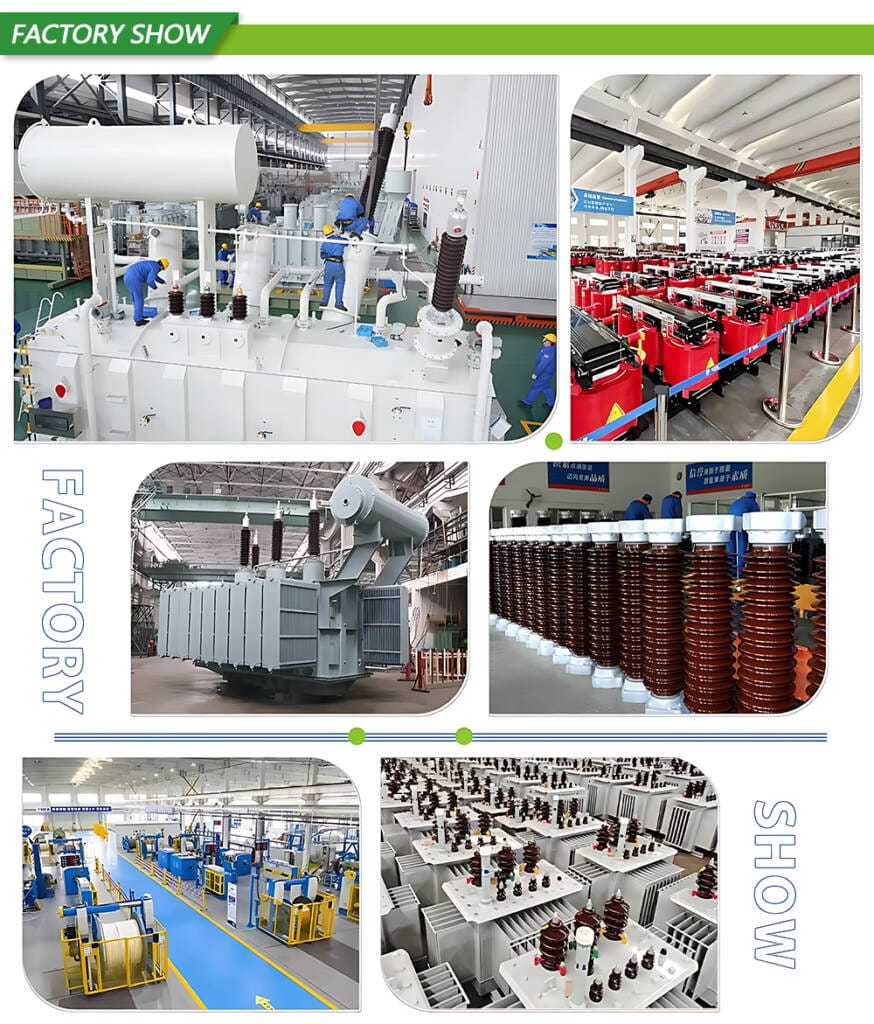
1. Production Capability and Equipment Quality
Experienced customers—especially utilities—evaluate whether a manufacturer has the capacity to produce high-standard equipment such as:
- High voltage transformers
- Medium voltage transformer
- 3 phase transformers
- 750 kVA transformer manufacturers grade distribution units
- Custom transformer solutions for non-standard voltages
Key factors include:
- Automated winding machines (relevant to SEO keyword “what are windings”)
- Vacuum drying equipment for coil insulation
- Automatic oil-filling systems for hermetically sealed transformers
- Metalworking precision for transformer pad structures
- Advanced test labs for impulse test, frequency response, and transformer impedance measurement
A strong production line reduces the risk of what causes transformers to blow, such as insulation weakness or incorrect winding tension.
2. Quality Control and Testing Process
Buyers expect manufacturers to demonstrate complete testing capabilities:
Routine Tests:
- Turns ratio test
- DC resistance of windings
- Insulation resistance
- Impedance voltage measurement
- Short-circuit withstand test
Type Tests (for custom and utility transformers):
- Lightning impulse test
- Temperature rise
- Partial discharge
- No-load and load loss measurement
Special Tests:
- Buchholz relay operation test (for oil-immersed units)
- CT vs PT calibration tests (instrument transformers)
- Sound-level test
- Core flux density analysis
- Parallel operation verification
Modern buyers want third-party inspection options (SGS/TÜV/BV).
These steps ensure the transformer meets utility-level reliability and avoids common failure mechanisms.
3. Material Selection and Traceability
For applications like open delta, delta wye, delta to wye transformer, open delta transformer, delta transformer diagram, or delta y transformer, material quality directly affects performance.
Most buyers verify:
- Copper wire or aluminum conductor grade
- Core steel brand (Baosteel / POSCO / Nippon Steel)
- High-temperature insulation class
- Oil type (for mineral oil or fire-resistant oil transformers)
- Sealing method (checking whether define hermetically sealed is met)
High-quality materials reduce risk of overheating, partial discharge, and failure under overload conditions.
4. Supplier Experience With International Standards
Exporting to different markets requires understanding diverse standards like:
- IEC for global markets
- IEEE / ANSI for the U.S.
- GOST / EAC for Russia
- SASO for Saudi Arabia
- EN / BS for the EU / UK
Buyers assess whether the manufacturer has delivered to:
- Utilities (utility transformer projects)
- Industrial zones
- Data centers
- Solar plants (linked to keyword automatic voltage control)
- Oil & gas facilities
- EPC turnkey projects
A supplier with cross-border experience is more likely to understand calculation transformer, transformer sizing table, and grid compatibility requirements.
5. Service Capability & After-Sales Support
Reliable after-sales service is especially critical in remote projects or mobile substation deployments.
Buyers evaluate:
- Remote technical support
- Failure analysis capability
- Installation and commissioning assistance
- Spare parts availability
- Response time
Fast support reduces risks in applications like high tension transformer, electric transformer box, and what is a power substation installations.
6. Corporate Certifications and Compliance Structure
Buyers often request factory-level certifications:
- ISO 9001 Quality
- ISO 14001 Environmental
- ISO 45001 Safety
These certifications prove process stability and reduce project risks.
For European projects, CE-marking capability is also a key indicator.
VIII. Common Transformer Compliance Issues & Solutions
Even experienced global buyers occasionally encounter compliance challenges, particularly with understanding and adhering to evolvingtransformer standards. These issues can delay shipments, increase costs, or lead to operational failures after installation. Below are the most frequent compliance pitfalls—and practical ways to prevent them.
1. Non-Matching Voltage or Frequency Configuration
One of the most common mistakes is ordering transformers without confirming local voltage requirements.
Examples include:
- Sending 1 phase transformer to a 3 phase transformers system
- Incorrect HV/LV combinations (e.g., 12 kV instead of 13.8 kV)
- Buying a 50 Hz transformer for a 60 Hz country
These mistakes lead to overheating, vibration, and in extreme cases—failure.
Avoidance Strategy:
Always provide full grid data, including:
- System voltage
- Short-circuit level
- Grounding type (e.g., neutral grounded)
- Fréquence
- Required delta wye transformer diagram or vector group
2. Missing Protection Components
Transformers may be delivered without essential protection devices that overseas utilities require.
Commonly missing items:
- Buchholz relay (mandatory for many countries on oil-immersed transformers)
- Pressure relief valve
- Oil-level gauge
- Temperature controller
- Surge arrester coordination
Without proper protection, utilities may reject acceptance or fail commissioning tests.
3. Incorrect Insulation Level or BIL Rating
Different markets require different Basic Insulation Levels (BIL).
For example:
- U.S. utility transformers typically require higher BIL than IEC designs.
Wrong insulation leads to partial discharge, dielectric breakdown, or sudden failure.
4. Incomplete Documentation Package
Missing or incorrect documents can delay customs clearance and project installation.
Buyers often forget to request:
- Type test report
- Routine test report
- Material certificates
- Vector group verification
- Factory inspection record
- Nameplate drawing
- Foundation and transformer pad design
Good documentation ensures smooth project approval.
5. Non-Compliance With Efficiency Regulations
Europe requires Eco-design Tier 2 transformers.
Some suppliers may provide older designs without updated loss values.
Low-efficiency transformers:
- Increase energy losses
- Raise operational cost
- Are illegal in many countries
6. Improper Cooling or Ventilation Specifications
Especially for dry type transformers, ventilation is critical.
Incorrect specification leads to:
- Overheating
- Noise
- Reduced lifespan
Airflow must match the transformer’s heat dissipation requirements.
7. Wrong or Incomplete Grounding Design
Incorrect grounding causes:
- Ferroresonance
- High neutral voltage
- Instrument transformer errors (affecting CT vs PT)
- Fault non-clearance
Grounding must match the local standard—whether TN, TT, IT, or multi-grounded neutral.
8. Failure to Consider Future Expansion
Many buyers only calculate the current load and overlook future growth.
This results in:
- Undersized transformer
- Early overload
- Higher operating temperature
Using transformer sizing table, calculation transformer, and spare capacity planning can avoid this issue.
IX. Case Studies: Export Transformers Meeting Standards
Real-world engineering projects provide the strongest proof that transformer standards, certifications, and correct technical specifications directly influence performance, reliability, and long-term operational cost.
Below are several high-impact case studies from global projects involving medium voltage transformers, GSU transformer, pad mounted transformers, dry type transformers, custom transformer, and mobile substation deployments.
Each case study illustrates how strict compliance with international standards prevents issues such as overloading, insulation breakdown, protection malfunction, or what causes transformers to blow.
Case Study 1: 1500 kVA Step-Up Transformer for a Solar Power Plant (GSU Transformer)
Project Background
A solar EPC contractor in Southeast Asia needed a GSU transformer to step up from inverter output (400 V) to the grid interface (22 kV).
The project required:
- High efficiency
- Low partial discharge
- Accurate vector group alignment
- Compliance with IEC 60076
- Automatic voltage control compatibility
Challenges Identified
Before procurement, the EPC had previously purchased a transformer from a non-compliant supplier, resulting in:
- Overheating after only 6 months
- Poor impedance matching
- Harmonic distortion due to incorrect winding configuration
- Protection faults attributed to CT ratio mismatch (CT vs PT relevance)
This raised questions such as:
- “What are windings and why do they fail?»
- “Why did the previous transformer overload even below rated current?”
- “Does vector group mismatch cause transformer blow?”
Our Compliance Solution
By applying correct standards and compliance rules, the redesigned transformer featured:
- Verified vector group: Dyn11 for utility compatibility
- Low-loss silicon steel core
- Correct transformer impedance to limit fault current
- Properly sized high-voltage bushings
- Certified routine and type tests
Outcome
- 99.5% operational uptime
- 1.2% reduction in energy loss
- Zero overheating issues
- Successful grid synchronization on first attempt
Case Study 2: Pad Mounted Transformers for a Commercial Industrial Park
Project Scope
A U.S.-based developer required pad mounted transformers ranging from 15 kVA transformer to 150 kVA transformer and 750 kVA transformer manufacturers–grade units.
Issues Found at Initial Design Review
Their previous supplier delivered units that could not pass:
- IEEE C57 insulation level
- BIL impulse tests
- NEC grounding requirements
- UL labeling standards
This caused multiple failures, including:
- Oil leakage
- Abnormal noise
- Grounding faults (related to neutral grounded configuration)
Compliance-Based Redesign
To meet U.S. standards, the new solution included:
- ANSI/IEEE C57.12-compliant insulating oil
- Sealed tank design with clear hermetically sealed meaning and documentation
- Proper electric transformer box dimensions
- Correct high/low voltage bushings for local utility transformer compatibility
- Tested switchgear integration with vacuum circuit breaker
Result After Deployment
- Zero oil leaks
- Lower total ownership cost (TCO)
- Higher grid acceptance rate
- Faster installation on pre-cast transformer pad
Case Study 3: Dry Type Transformer for a Data Center in the Middle East
Project Requirements
The data center required several dry type transformers with Class F insulation, high overload tolerance, and low partial discharge performance.
Problem Identified
Their original supplier underestimated cooling requirements and delivered a transformer that overheated during peak load.
The EPC urgently needed a replacement with:
- Correct cooling airflow
- Higher short-circuit withstand capability
- Better winding mechanical strength
This case is closely related to the typical confusion around:
- difference between single phase and three phase supply
- difference between 1 phase and 3 phase
- difference between 3 phase and single phase
Our Solution
We supplied a fully compliant IEC dry-type transformer with:
- Reinforced epoxy resin cast windings
- Enhanced air open delta ventilation
- Lower loss core material
- High-quality copper windings (copper wire or aluminum analysis provided)
Outcome
- Operating temperature reduced by 20–25°C
- System stability increased
- No failure across two consecutive summers (50°C ambient)
Case Study 4: Delta–Wye Transformer for a Manufacturing Plant Upgrade
Project Overview
The client needed a delta wye configuration transformer to connect old delta networks to a new wye-grounded utility supply.
They specifically asked for:
- Delta wye transformer diagram
- Delta transformer diagram
- Delta y transformer explanation
- Open delta transformer emergency design
Pre-Compliance Issues
The original design caused:
- High neutral voltage
- Circulating currents
- Overheating on the LV side
These issues stemmed from improper grounding and misaligned vector groups.
Compliance-Based Correction
- Provided full delta–wye diagrams
- Corrected vector group to Dyn11
- Confirmed neutral system compliance
- Verified automatic voltage control compatibility
Outcome
- Stable voltage
- Eliminated harmonics
- Improved machine performance
Case Study 5: Mobile Substation for Emergency Grid Restoration
Background
A utility in Africa required a mobile substation with a 2.5 MVA high tension transformer, housed inside a compact skid frame for disaster recovery.
Key Compliance Requirements
- Fast installation
- High short-circuit strength
- Integrated GIS substation compatibility
- High mobility shock resistance
Compliance-Centered Design
We built a trailer-based mobile substation with:
- Oil-submerged HV transformer
- Buchholz relay + PRV protection
- Onboard vacuum circuit breaker
- Pre-installed CT/PT units (related to CT vs PT)
- Reinforced tank meeting seismic standards
Outcome
- Deployment in under 3 hours
- Full utility acceptance
- Reduced outage time by 87%
X. Final Transformer Compliance Checklist for Buyers
Global transformer projects—whether they involve medium voltage transformer, high voltage transformer, GSU transformer, pad mounted transformer, utility transformer, or specialized custom transformer—all share one universal truth: they must be built on a foundation of internationally recognizedtransformer standards. Compliance with these specifications ensures not only safety and performance, but also global interoperability and long-term reliability.:
Strict compliance with international standards is the foundation of reliability, safety, and long-term performance.
Exporting or procuring transformers without thorough understanding of standards often leads to repeated failures, certification delays, overheating issues, and system-wide risks such as faults, flashovers, and even catastrophic events associated with what causes transformers to blow.
To help overseas buyers make smart, safe, and cost-effective procurement decisions, the following compliance checklist summarizes everything required for successful transformer export projects.
Global Buyer Compliance Checklist
Below is a comprehensive, ready-to-use checklist that overseas buyers should follow before placing orders, accepting delivery, or commissioning a transformer.
This list applies to all categories:
- 1 phase transformer, 3 phase transformers
- 150kVA transformer, 15kVA transformer, 750 kVA transformer manufacturers grade units
- Dry type transformers, oil-immersed transformers
- Pad mounted, open delta, delta wye, three phase to one phase transformer
- Transformador electrico for Latin markets
- Mobile substation, GIS substation, electrical switchyard, thermal power industry
1. Confirm the Basic Electrical Specification
Buyers must verify:
- Primary voltage / secondary voltage
- Frequency (50 Hz vs 60 Hz)
- Vector group (e.g., Dyn11, Yyn0, Delta wye, or open delta transformer)
- Difference between 1 phase and 3 phase based on application
- Load profile and future expansion capacity
- Short-circuit level of the grid
- Required neutral configuration (neutral grounded or isolated)
Failure to confirm these parameters is one of the most common reasons for operational issues and incompatible installations.
2. Verify Compliance with International Standards
Depending on the country and application:
- IEC 60076 series (global standard)
- IEEE / ANSI C57 (North America)
- EN & BS (Europe & UK)
- GOST / EAC (Russia and CIS)
- SASO / GCC regional standards
- Local safety codes for electric transformer box ou transformer pad installation
Confirm every required test is included to avoid delays in acceptance.
3. Review All Technical Drawings
Ensure the supplier provides:
- Wiring diagram & delta wye transformer diagram
- Delta transformer diagram ou open delta schematics if applicable
- Nameplate drawing with all ratings
- GA drawing (dimensions, lifting points, clearances)
- Foundation and transformer pad civil drawing
- Terminal marking diagram
- Cooling system layout (especially important for dry type transformers)
This prevents installation mismatches and on-site rework.
4. Confirm Material Specifications
Key materials must be guaranteed:
- Core steel (brand and loss grade)
- Conductor material: copper wire or aluminum
- Insulation class and resin (for dry types)
- Oil type (mineral, silicone, FR3, etc.)
- Tank coating and corrosion-resistance rating
- Verification that the tank is hermetically sealed (review define hermetically sealed)
Material traceability is essential for long-term reliability.
5. Validate Protection and Monitoring Features
For oil-immersed and MV/HV transformers:
- Buchholz relay
- Pressure relief device
- OLTC or automatic voltage control system
- WTI / OTI temperature indicators
- Oil-level indicator
- Surge arrester coordination
- Grounding terminals
For industrial plants or thermal power industry applications, enhanced protection is often mandatory.
6. Test Report Verification (Critical for Export Acceptance)
Ensure you receive complete documentation:
Routine Tests
- Insulation resistance
- Winding DC resistance
- Ratio test
- Polarity test
- Transformer impedance measurement
- No-load and load loss test
Type Tests
- Lightning impulse test
- Temperature rise test
- Short-circuit withstand test
Special Tests
(Especially useful for mobile substation, GIS substation, electrical switchyard projects)
- Partial discharge
- Sound level
- FRA test
- CT/PT test (CT vs PT)
All reports must be properly stamped and traceable.
7. Environmental & Efficiency Compliance
Confirm transformer meets relevant energy-efficiency or environmental standards:
- EU Ecodesign Tier 2
- DOE (U.S.) Transformer Efficiency Rules
- Low noise for urban or commercial zones
- Relevant fire safety rating (dry type or oil type)
This ensures the transformer can legally enter the target market.
8. Confirm Logistics and Packaging Requirements
Transformers for export must be shipped with:
- Sea-worthy packaging
- Moisture protection
- Impact protection
- Lifting point reinforcement
- Compliance with OSHA / CE lifting requirements
- Clear labeling in English and target market language (e.g. transformador electrico for Latin America)
Improper packaging is a common cause of concealed damage.
9. Installation Support & After-Sales Capability
Ask whether the supplier provides:
- Installation guidance
- Commissioning support
- Failure diagnostics
- Spare parts list
- Remote consultation
- On-site service (for large utility projects)
Fast after-sales response can prevent long outages and reduce operational cost.
10. Supplier Experience & Project References
A reliable transformer supplier should have:
- Export experience in your target country
- Project references for similar capacity (e.g., 15kVA, 150kVA, 750kVA, MVA class)
- Experience with mobile substation, delta y transformer, or three phase to one phase transformer systems
- Proven track record with utilities and EPC contractors
This significantly lowers development and approval risk.
Final Thoughts
Transformer compliance is no longer optional—it is a critical requirement for project success, grid stability, and long-term operational cost control. Whether you are sourcing a1 phase transformerfor a commercial building, aGSU transformerfor a solar plant, ahigh tension transformerfor industrial use, or apad mounted transformerfor utility distribution, every detail—from winding structure to BIL rating—must align with recognized internationaltransformer standardsto ensure seamless integration, compliance, and long-term operational safety.
This comprehensive guide equips overseas buyers with a full framework to evaluate transformer specifications, verify supplier capability, avoid compliance pitfalls, and ensure reliable long-term performance across all critical applications.
Ultimately, achieving global compliance is about more than checking boxes—it’s about building a resilient and efficientpower supplysystem. From general distribution units to specialized equipment likeliquid immersedtransformers andtransformers rectifier transformers, adherence tostandard setssuch as those from theInternational Electrotechnical Commission (IEC)ensures interoperability and safety worldwide. Moreover, meeting regional regulations—includingtransformer efficiency standardsset by entities like theDepartment of Energy (DOE)—directly impacts energy costs and sustainability goals. Paying equal attention to supporting components, such asvoltage regulatorsandgrounding transformers, further enhances system stability and protection. By prioritizing compliance in every procurement detail, you not only mitigate risks but also secure operational excellence and lasting value for your projects across the globe.
FAQ
Q1. What are the most important transformer standards for export?
A: IEC 60076, ANSI C57 series, IEEE standards are key. Depending on the destination country, additional standards like CE, UL, or CB may apply.
Q2. What export certifications do I need for transformers?
A: For Europe: CE marking and CB report. For the US: UL certification. ISO 9001 quality management certification is often required for all international buyers.
Q3. How do overseas buyers check transformer compliance?
A: Buyers typically review test reports, certification documents, and supplier audit records to ensure standards compliance.
Q4. What common compliance issues should buyers avoid?
A: Missing test reports, outdated certifications, incomplete documentation, or non-compliance with IEC/ANSI/UL standards.
👉Download the ultimate exporter checklist and simplify your transformer procurement today!