I. Introduction
In today’s rapidly evolving global energy landscape, choosing a reliable transformer manufacturer in China has become a critical decision for utilities, engineering companies (EPC contractors), industrial users, renewable-energy developers, and international distributors. As electrical infrastructure expands and modernizes—whether through new electricity substations, smart-grid upgrades, solar-farm installations, offshore wind power, or industrial power distribution—transformers play a decisive role in system stability, safety, and long-term operational efficiency.
China has emerged as one of the world’s most important transformer manufacturing hubs. From power transformers, distribution transformers, and dry type transformer types, to delta transformer, single phase power transformer, single phase to three phase transformer, electric pole transformer, utility pole transformer, powerline transformer, isolating transformer, and transformer electrical box products, Chinese factories now supply an exceptionally wide portfolio that meets global low-voltage (LV), medium-voltage (MV), and high-voltage (HV) requirements.
These products support a diverse range of applications, including thermal power plants, renewable-energy facilities, industrial furnaces such as induktionsovn (induction furnaces), mining operations, railway traction systems, and commercial buildings. As a result, buyers worldwide increasingly turn to China not just for affordability, but for a combination of manufacturing scale, technological expertise, global export experience, and compliance with international standards.
Why are more global projects selecting transformer manufacturers in China?
The answer goes far beyond pricing.
China possesses one of the most complete transformer supply chains in the world. This includes high-grade silicon steel, precision copper winding suppliers, resin and insulation manufacturers, automated coil-winding equipment, and advanced testing laboratories. Many Chinese transformer factories have already passed internationally recognized certifications:
- CEI, IEEE, ANSI design standards
- ISO9001, ISO14001, ISO45001 management systems
- Product compliance such as CE, UL, KEMA, SGS, TÜV, BV inspections
These certifications ensure that transformers can operate safely and reliably under various grid conditions, including:
- converting current and voltage from delta to wye (common in industrial and utility configurations)
- managing short-circuit withstand capability
- mitigating surge current impacts
- handling long-duration thermal stress in thermal electricity generation and industrial environments
- low partial discharge for dry-type units
- strict efficiency and loss requirements for smart-grid applications
This combination of compliance, quality, and scalability allows global buyers to acquire transformers that meet the technical standards required for:
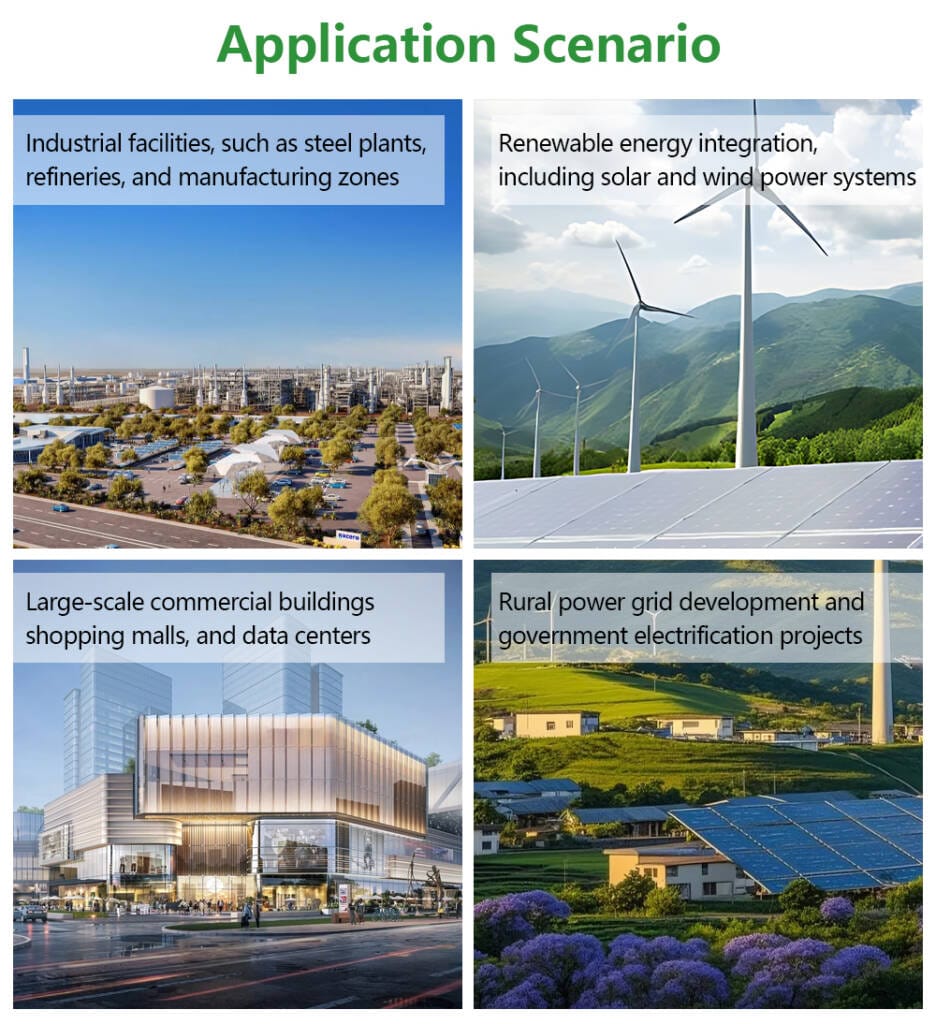
- National utility projects
- Urban and rural power substations
- Heavy industrial applications (such as induction heating, mining, metallurgy)
- Solar farms and wind-power step-up stations
- Commercial energy-storage systems
- Railway and metro systems with traction motor equipment
- Distribution grid modernization
- Residential and commercial buildings requiring electric pole transformer ou pole transformer installations
The growing demand for renewable and decentralized energy systems—solar, wind, micro-grids, EV charging stations—also increases global demand for efficient, low-loss, and compact transformer designs. This includes amorphous-core transformers, resin-cast dry-type transformers, and GIS-compatible units for gas insulated system installations.
The importance of transformer quality: engineering failures cost far more than equipment
In any electrical system, whether using a large power transformer or a small utility pole transformer, transformer reliability directly affects the entire grid. A poorly manufactured transformer may cause:
- costly grid outages
- overheating and premature insulation failure
- excessive noise and losses
- dangerous surge current events during energization
- damage to downstream equipment such as switchgear, cables, protection devices, and inverter systems
- instability in rectifier vs inverter configurations
- unexpected shutdowns in industrial production lines, traction systems, or thermal power facilities
In contrast, a high-quality transformer ensures:
- stable voltage regulation
- safe operation under overloads
- long insulation life
- reduced energy losses
- lower maintenance cost
- long-term system reliability
This is why experienced buyers emphasize technical capability, manufacturing process control, and third-party quality verification—rather than choosing suppliers based solely on low prices.
Why understanding how to choose a qualified Chinese transformer manufacturer is essential
Although China has hundreds of transformer suppliers, the difference between them can be dramatic.
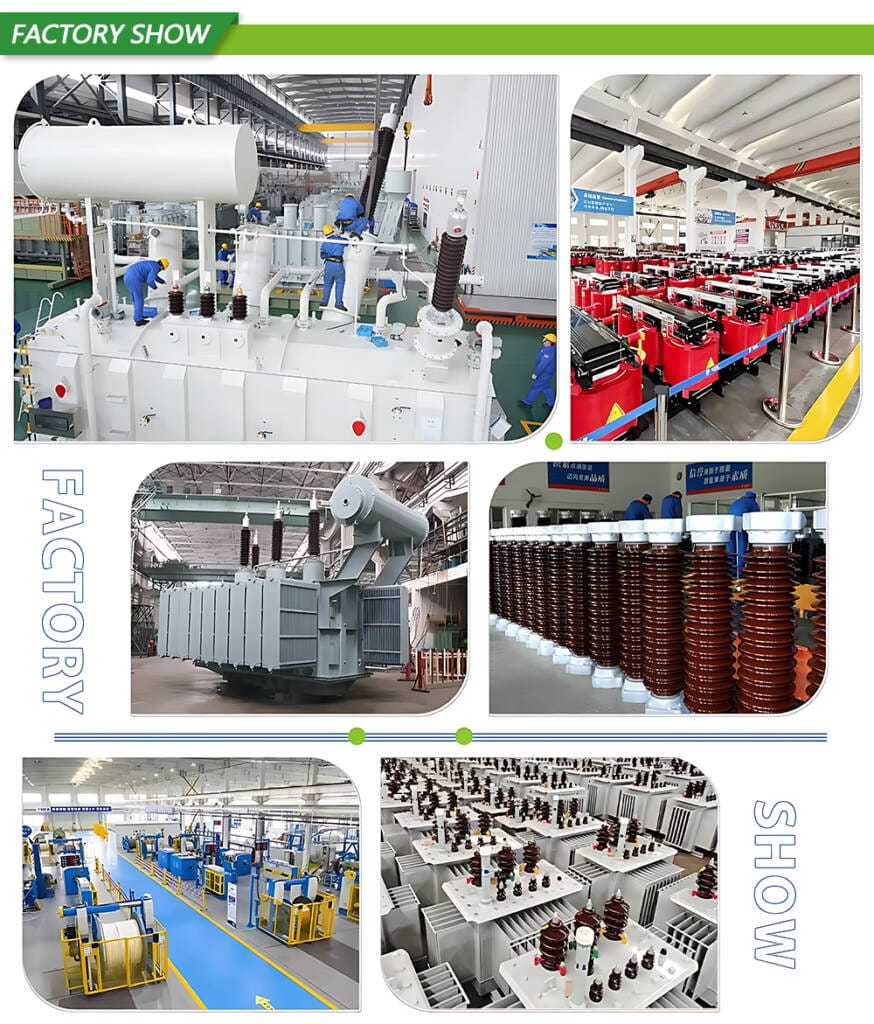
Some manufacturers of power possess 30–40 years of industry experience, advanced core-cutting machines, automatic winding lines, CNC processing, vacuum resin-casting equipment, and full-function testing labs. Other “factories” may be small workshops with minimal equipment and inconsistent quality.
Key challenges for global buyers include:
- difficulty verifying real production capacity
- uncertainty about material quality (silicon steel, copper, insulation grade)
- lack of clarity about testing capabilities
- limited understanding of dry type transformer types and when they are appropriate
- choosing between delta transformer vs wye transformer setups
- needing a proper single phase to three phase transformer solution
- evaluating suppliers with limited export experience
- distinguishing between OEM resellers and real manufacturers
This article is designed to eliminate those uncertainties. It provides a systematic, highly practical guide to evaluating Chinese transformer manufacturers—from certifications and engineering strength, to factory facilities, testing procedures, pricing transparency, and after-sales service.
This article will answer the following essential questions:
- How can you identify a truly reliable transformer manufacturer in China?
- What technical certifications and design standards matter most?
- How do you evaluate a manufacturer’s expertise in dry type transformer types, isolating transformer, pole transformer, and other specialized products?
- How do you verify real production capability vs. outsourcing?
- How do you compare delta vs wye configurations and select the correct unit?
- How do you avoid low-quality, low-price traps?
- How can third-party inspections reduce risk?
- What tests should every transformer undergo before shipping?
Throughout the article, all your provided keywords—and additional high-traffic industry keywords—will be naturally embedded to maximize SEO performance and organic traffic.
II. Why Choosing a Reliable Transformer Manufacturer Matters
Selecting a transformer is not a simple purchasing decision—it is a long-term investment that directly impacts the safety, performance, and operational continuity of an entire electrical system. Whether the application involves power substations, industrial automation, renewable energy, commercial distribution grids, or rural electrification using utility pole transformers, the quality of the transformer and the capability of the manufacturer of power equipment determine the stability and lifespan of the entire installation.
This chapter explains why the choice of transformer manufacturer is mission-critical, and why working with a reliable Chinese supplier can help organizations minimize risk, reduce lifetime operating costs, and ensure compliance with global standards.
1. Transformers Are the Heart of Every Electrical System
Regardless of size or application, a transformer performs a fundamental role:
controlling, converting, and regulating voltage for safe and efficient power delivery.
In real-world electrical networks, transformers ensure:
- voltage is stepped up or stepped down as needed
- loads receive stable and clean power
- surge events are controlled
- equipment downstream (switchgear, motors, inverters) is protected
- grid reliability remains uncompromised
From a single phase power transformer used in residential or small commercial installations, to a large powerline transformer supporting long-distance transmission, transformers quietly make the modern world possible.
If a transformer fails, entire factories can shut down, electricity substations can lose supply, and sensitive systems—such as data centers, hospitals, and traction motors—may suffer catastrophic damage.
A reliable manufacturer ensures that each product is designed and tested to withstand:
- high fault currents
- lightning impulses
- thermal spikes in thermal electricity generation plants
- switching transients
- harmonic distortion from rectifier vs inverter systems
- high surge current during energization
Because transformers operate 24/7 for decades, their internal material quality and manufacturing accuracy define long-term reliability.
2. Manufacturing Quality Directly Determines System Stability
Transformers may look similar from the outside, but internal differences can be dramatic. The quality of:
- silicon steel cores
- copper windings
- insulation materials
- resin casting
- lamination stacking
- oil purification processes
- vacuum drying
- partial discharge control
- mechanical fastening techniques
will directly affect performance.
For example:
- Poor-quality core materials increase energy losses and heat generation.
- Low-grade insulation increases the likelihood of breakdown under surge current.
- Inaccurate winding tension can cause vibration and noise.
- Insufficient vacuum drying leads to moisture contamination, shortening the transformer’s lifespan.
This is especially critical for specialized equipment such as:
- dry type transformer types (which must maintain low partial discharge levels)
- isolating transformers in industrial processes
- delta transformers used in certain industrial configurations
- single phase to three phase transformers used for machinery
- electric pole transformers exposed to extreme outdoor conditions
A reliable Chinese manufacturer uses advanced machinery, skilled technicians, and strict testing standards to ensure these risks are minimized.
3. Poor-Quality Transformers Can Cause System-Wide Failures
Using a poorly manufactured transformer can trigger problems far beyond the transformer itself. Some common failure consequences include:
• System downtime and production loss
Unplanned outages in factories, malls, data centers, or substations can cost tens of thousands of dollars per hour.
• Damage to downstream equipment
Voltage instability from a failed transformer can destroy:
- traction motors
- industrial induction furnaces such as induktionsovn
- HVAC systems
- UPS units
- inverter and rectifier circuits
- switchgear and protection devices
• Fire and safety hazards
Improper insulation, poor oil processing, or substandard resin casting dramatically increases the risk of overheating and fire.
• Reduced energy efficiency
Using low-grade materials increases losses, raising electricity expenses for decades.
• Project delays and replacement costs
Removing and reinstalling a transformer is expensive, especially if it is part of a power substation or large industrial plant.
The cost of failure almost always exceeds the cost of choosing a reputable manufacturer.
4. Compliance and Testing Define Long-Term Reliability
Not all manufacturers follow the same testing procedures. A reliable manufacturer will test every unit according to international standards such as:
- IEC 60076
- IEEE C57
- ANSI requirements
Testing includes:
- routine tests (ratio, impedance, load loss, no-load loss)
- special tests (temperature rise, induced voltage, impulse testing)
- partial discharge testing for dry-type units
- mechanical strength testing
- oil quality analysis
- noise level measurement
For applications in gas insulated system substations, renewable-energy plants, or thermal power stations, these tests are non-negotiable.
A weak supplier may skip or falsify tests—leading to serious operational risks.
5. Modern Applications Require Higher Standards Than Ever
Today’s electrical systems are more complex than those of previous decades. Modern grids include:
- solar inverter stations
- wind turbine feeders
- EV charging networks
- industrial automation with sensitive electronics
- high-frequency switching devices
- hybrid rectifier–inverter systems
- power-electronics-heavy traction motors
These applications involve harmonics, rapid load changes, and periodic surge current conditions. Transformers must be designed and engineered accordingly.
For example:
- UN delta transformer may support harmonic suppression in industrial plants.
- UN single phase to three phase transformer may power CNC machinery.
- UN pole transformer must endure outdoor environmental cycles.
- Transformers in thermal power plants must resist prolonged high-temperature operation.
- Units installed in power substations require precise coordination with protection systems.
A reliable manufacturer understands these conditions and customizes transformers to handle them safely.
6. The Lifetime Cost of a Transformer Depends on the Manufacturer
When selecting a transformer supplier, buyers often compare only the upfront cost. But a transformer’s true cost includes:
- energy losses
- oil maintenance
- downtime
- installation and removal
- long-term reliability
- potential equipment damage
- operational efficiency over 20–30 years
A low-price transformer may become far more expensive over its lifetime if it consumes more power, fails prematurely, or requires frequent maintenance.
A reliable Chinese manufacturer delivers long-term value by ensuring:
- high-grade materials
- certified testing
- engineering accuracy
- predictable performance
- efficient energy consumption
- stable long-term operation
This reduces the total lifetime cost dramatically.
7. Global Projects Require Reliable Export-Ready Manufacturers
For international projects, the manufacturer must understand:
- export packaging for electric pole transformer ou powerline transformer units
- overseas installation environments
- compliance with global grid codes
- customs documentation
- logistics handling
- installation support
- on-site commissioning when required
An unreliable supplier may create delays, shipping damage, installation issues, or customs problems—disrupting entire projects.
Working with a reliable Chinese manufacturer ensures smooth coordination from design to delivery.
III. Main Transformer Types Supplied in China
China’s transformer industry has China’s transformer industry has grown into one of the world’s most comprehensive and mature manufacturing ecosystems. Whether the application involves residential distribution, industrial power systems, renewable-energy generation, or utility-level power transmission, Chinese manufacturers of power equipment offer an extensive range of transformer solutions. In this chapter, we explore the main transformer categories supplied in China, their key applications, and the situations in which buyers should consider each option.
This section also naturally includes strategic SEO keywords such as delta transformer, dry type transformer types, electric pole transformer, single phase power transformer, isolating transformer, powerline transformer, utility pole transformer, transformer electrical box, and others.
Key Transformer Categories Supplied by China
| Transformer Type | Typical Applications | Key Features / Advantages | Applicable Scenarios / Use Cases |
|---|---|---|---|
| Oil-Immersed Distribution Transformers | Urban/rural substations, commercial buildings, factories, renewable-energy stations, roadside electrical poles | Excellent cooling, long lifespan, high overload tolerance, cost-effective, suitable for outdoor installations | Utility distribution grids, industrial facilities, medium to high power installations |
| Dry Type Transformers | Shopping malls, airports, hospitals, underground substations, data centers, marine platforms, industrial plants, renewable inverter stations | Fire-resistant, no oil leakage, low maintenance, high environmental tolerance, suitable for indoor/compact installations | Indoor power rooms, fire-sensitive environments, smart-grid applications |
| Pole Transformers & Utility Pole Transformers | Rural electrification, remote communities, industrial/agricultural zones, mining camps, telecom towers, distributed renewable micro-grids | Compact design, outdoor durability, stable low-voltage delivery, withstands lightning/environmental stress | Final stage distribution networks, rural and remote electrification |
| Single Phase Power Transformers | Small buildings, home solar systems, rural grid extensions, HVAC, telecom equipment, agricultural pumps | Supports residential & small commercial loads, single to three phase conversion available | Residential areas, small commercial projects, rural power distribution |
| Powerline & Substation Transformers | Transmission networks, offshore wind, thermal power plants, solar/wind substations, metro/rail systems, GIS substations | High short-circuit resistance, low noise/losses, reinforced insulation, stable under harmonics, surge current control | Utility-level grids, industrial power systems, high-voltage substations |
| Isolating Transformers | Medical facilities, industrial automation, marine, mining, chemical plants, induction furnaces, rectifier/inverter stations | Electrical isolation, protects sensitive equipment, high insulation/dielectric strength, low noise, harmonic resistance | Sensitive or critical equipment, industrial automation, marine & chemical environments |
| Transformer Electrical Box & Compact Substations | Commercial centers, container ports, EV charging stations, solar farms, energy storage facilities | Integrated transformer & switchgear, compact footprint, secure, weatherproof, easy installation | Urban distribution, renewable energy projects, compact installations |
| Specialty Transformers | Renewable energy (PV/wind), traction motors, thermal power, rectifier/inverter systems, electric arc furnaces, GIS installations | High efficiency, low losses, harmonic mitigation, high-temperature operation, compact & reliable | Advanced energy projects, industrial heavy loads, specialized applications |
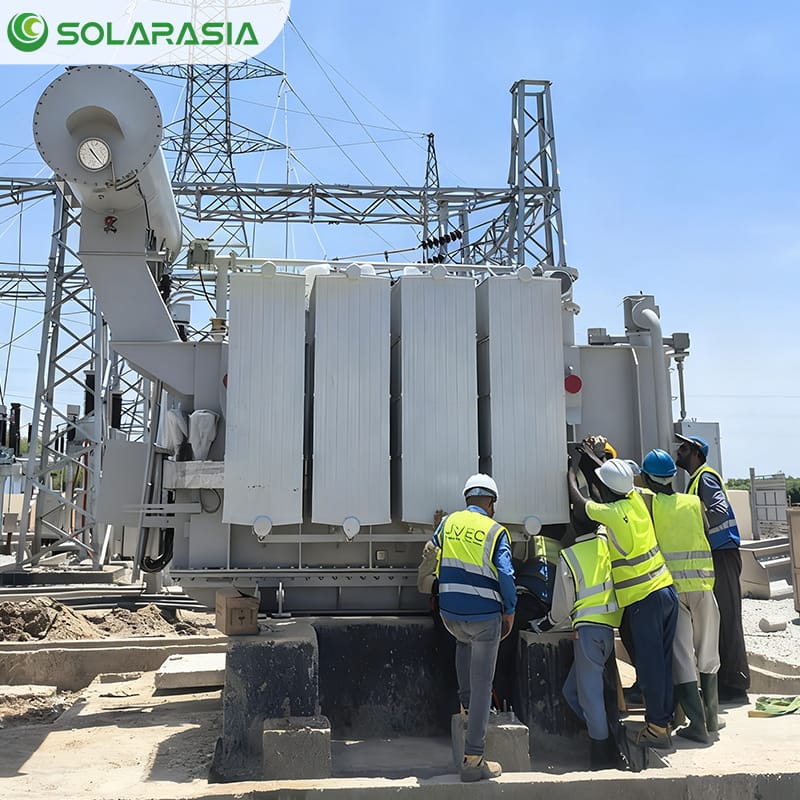
1. Oil-Immersed Distribution Transformers
Oil-immersed transformers remain the most widely used type globally, especially in utility distribution networks and industrial facilities. These units use insulating mineral oil ou ester oil for cooling and insulation. They are commonly installed in:
- urban and rural power substations
- utility distribution grids
- commercial buildings
- factories
- renewable-energy stations
- roadside electrical poles (when configured as a pole transformer ou utility pole transformer)
Main advantages:
- Excellent cooling capability
- Longer lifespan compared to resin-based dry types
- Higher overload tolerance
- More cost-effective for medium to high power ratings
- Better for outdoor installations
Typical configurations:
- delta transformer (Δ-connected windings) for industrial load balancing and harmonic suppression
- wye transformer (Y-connected windings) for safer grounding and utility distribution
- converting current and voltage from delta to wye to match regional grid requirements
Buyers often choose oil-immersed units when reliability, long service life, and outdoor suitability are critical.
2. Dry Type Transformer Types
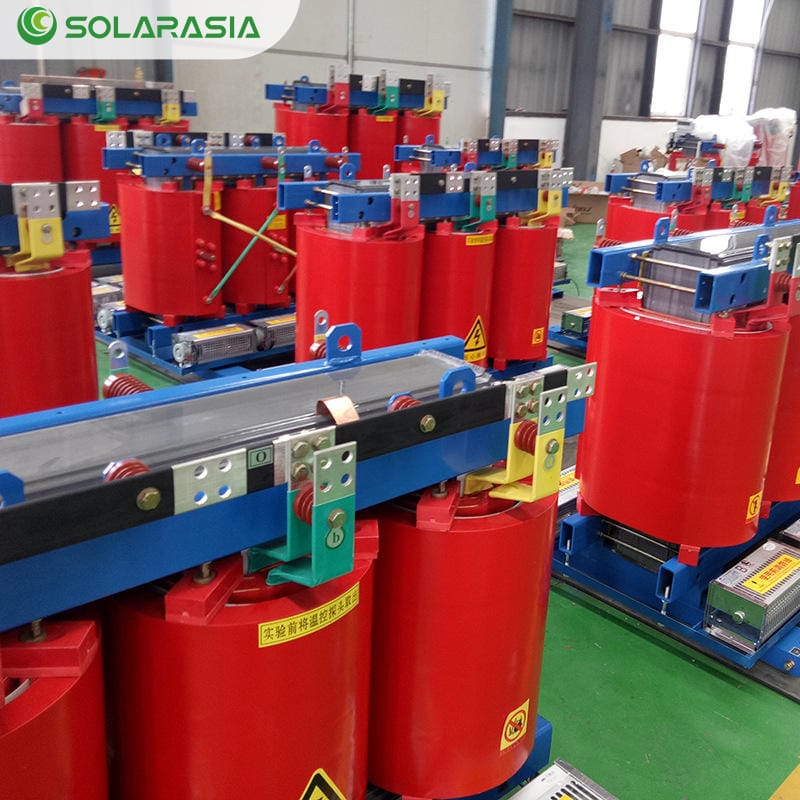
Dry type transformers encapsulate windings in epoxy resin or use open-core air cooling without oil. They are commonly found in indoor or sensitive environments where fire safety is paramount.
Main dry type transformer types include:
- Cast Resin Dry Type Transformer (CRT)
- VPI (Vacuum Pressure Impregnated) Dry Transformer
- VPE (Vacuum Pressure Encapsulated) Transformer
- H-Class High Temperature Dry Transformers
Applications:
- shopping malls
- airports
- hospitals
- underground substations
- centres de données
- marine platforms
- industrial plants
- renewable-energy inverter stations
Key advantages:
- No oil leakage risk
- Superior fire resistance
- Lower maintenance
- High environmental tolerance
- Suitable for GIS-based installations and compact indoor rooms
In modern energy systems, dry type transformer types are rapidly increasing in demand due to their safety advantages and compatibility with smart-grid environments.
3. Pole Transformers & Utility Pole Transformers
Pole-mounted transformers, often recognized in everyday urban and rural landscapes, provide voltage step-down at the final stage of a distribution network.
These include:
- electric pole transformer
- pole transformer
- utility pole transformer
Chinese manufacturers produce pole transformers in both single phase power transformer and three-phase configurations.
Common applications:
- rural electrification
- remote communities
- industrial or agricultural zones
- mining camps
- telecom towers
- distributed renewable micro-grids
Why they’re important:
Pole transformers make it possible to deliver stable low voltage to end users while maintaining cost efficiency. Their compact design, outdoor durability, and ability to withstand lightning and environmental stress make them indispensable in global distribution grids.
4. Single Phase Power Transformers
Single-phase transformers remain essential for residential and small commercial applications. They are widely used across:
- small buildings
- home solar systems
- rural grid extensions
- HVAC systems
- telecom equipment
- agricultural pumps
For international markets—especially North America, Latin America, and Southeast Asia—Chinese manufacturers export large volumes of single phase power transformer units due to demand for distributed power delivery.
Single phase to three phase transformer solutions
In scenarios where industrial equipment requires 3-phase power but the grid only provides single-phase supply, manufacturers offer single phase to three phase transformer configurations. These solutions are especially common for:
- CNC machinery
- moteurs industriels
- commercial workshops
- farms and processing factories
- EV charging setups
This type of transformer helps avoid costly grid upgrades while ensuring machinery operates at full capacity.
5. Powerline Transformers & Substation Transformers
Utility-level and industrial electrical systems rely heavily on high-performance products such as:
- powerline transformers
- substation step-up/step-down transformers
- medium-voltage distribution transformers
- primary transformers for power substations
These units integrate into:
- transmission networks
- offshore wind platforms
- thermal power generation facilities
- solar and wind renewable substations
- metro/railway systems powering traction motor loads
- gas insulated system (GIS) substations
Key features buyers look for:
- high short-circuit resistance
- low noise and low losses
- reinforced insulation systems
- stable performance under harmonics
- controlled surge current behavior
- robust radiators and oil circulation
- compliance with IEC/IEEE/ANSI standards
Because these transformers operate at higher power levels, reliability becomes even more critical. Chinese suppliers with advanced testing labs are often preferred for such projects.
6. Isolating Transformers for Industrial & Specialized Use
An isolating transformer provides electrical separation and protects sensitive equipment from grid disturbances. They are essential for:
- medical facilities
- industrial automation
- marine environments
- mining equipment
- chemical plants
- induction furnaces (including induktionsovn)
- rectifier and inverter stations
When evaluating isolating transformers, buyers typically focus on:
- insulation grade
- dielectric strength
- noise level
- thermal class
- harmonic resistance
Reliable isolating transformers help protect critical equipment from faults, electrical noise, or grounding issues.
7. Transformer Electrical Box & Compact Substation Units
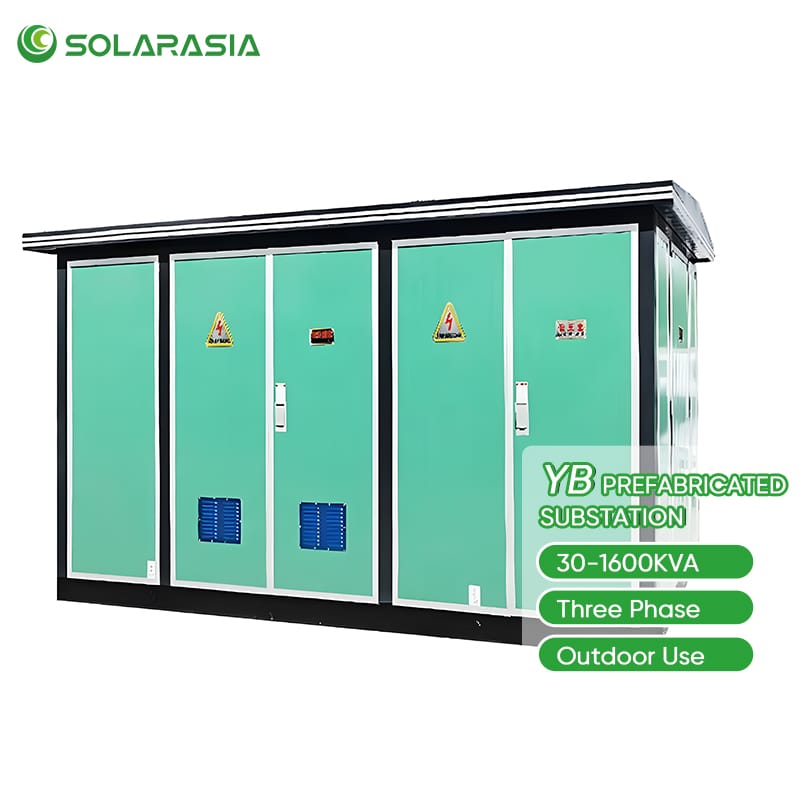
China also supplies transformer electrical box units and compact substations—popular in urban spaces and renewable projects.
| Unit Type | Key Components | Ideal Applications | Avantages |
|---|
| Pad-Mounted Transformers | Transformer, LV distribution | Commercial centers, container ports, EV charging stations | Weatherproof, secure, easy installation |
| Kiosk Substations | Transformer, Switchgear, Protection relays, LV distribution | Solar farms, energy storage facilities, urban infrastructure | Compact footprint, integrated protection, flexible layout |
| Box-Type Substations | Transformer, SF6 or air-insulated switchgear, Protection relays, LV distribution | Urban distribution networks, commercial areas | Space-saving, secure, easy maintenance |
| Compact Transformer Units with Integrated Switchgear | Transformer, Switchgear, Protection relays, LV distribution | EV charging hubs, renewable energy projects, industrial parks | All-in-one solution, fast installation, reliable performance |
Common types include:
- pad-mounted transformers
- kiosk substations
- box-type substations
- compact transformer units with integrated switchgear
These solutions combine:
- transformateur
- switchgear (SF6 or air insulated)
- protection relays
- LV distribution
Such compact systems are ideal for:
- commercial centers
- container ports
- EV charging stations
- solar farms
- energy storage facilities
Their advantages include security, weatherproof design, and easy installation.
8. Specialty Transformers for Modern Applications
Modern grid and industrial projects require advanced transformer types, such as:
• Renewable energy transformers
For PV and wind, requiring high efficiency and low losses.
• Traction transformers
Used in locomotives and metro systems powering traction motor loads.
• Thermal power transformers
Designed for high-temperature operation in thermal electricity generation and thermal power facilities.
• Rectifier transformers
Specially engineered for rectifier vs inverter applications, with reinforced insulation and harmonic mitigation.
• Furnace transformers
Including units for electric arc furnaces and induktionsovn.
• GIS-compatible transformers
Designed for gas insulated system installations requiring compact, high-reliability equipment.
China’s capability in these categories continues to expand as global demand grows.
IV. Key Criteria for Selecting a Reliable Transformer Manufacturer in China
1.Engineering Expertise & Technical Team Strength
A transformer is not a simple commodity — it is a technical, engineered product.
A reliable transformer manufacturer in China must have a strong engineering team capable of:
- Designing custom HV/MV/LV solutions
- Performing load-loss and no-load-loss optimization
- Mitigating surge current risk
- Advising on rectifier vs inverter compatibility
- Supporting single phase to three phase transformer projects
- Implementing cooling, protection, and safety systems
- Integrating transformers with electricity substations and power substations
- Designing transformers for traction motor systems and thermal power plants
Key questions to ask the engineering team
- How many senior engineers are on staff?
- Do they support custom designs such as delta transformer or wye connections?
- Can they calculate converting current and voltage from delta to wye for your project?
- Do they have experience with utility pole transformer installations?
- Can they provide complete drawings (GA, SLD, wiring, HV/LV schematics)?
A manufacturer with strong engineering capabilities will always provide pre-sales technical guidance, project consulting, and risk assessment, especially for complex systems like gas insulated system substations, industrial furnaces (such as induktionsovn), and thermal electricity generation stations.
2. Manufacturing Capability & Factory Scale
Large-scale manufacturers in China typically produce more stable, higher-quality transformers because they have:
- Automated coil winding machines
- Vacuum drying systems
- Epoxy resin casting lines (for dry type transformer types)
- Oil purification and degassing systems
- CNC core-cutting machinery
- Multiple testing platforms for powerline transformer and pole transformer units
Why factory scale matters for overseas buyers
- Higher consistency → fewer defects and less risk
- More advanced equipment → lower core losses
- Higher production capacity → stable lead times
- Better supply chain control → more reliable copper, core steel, and insulation materials
Small suppliers may offer cheaper prices, but often lack:
- Proper equipment
- Strict quality control
- Skilled technicians
- Sufficient testing instruments
For overseas distribution, EPC projects, and utility tenders, choosing a top-tier factory is always the safest path.
3. Core Materials & Copper Quality
The heart of any transformer is its magnetic core and winding copper.
These directly determine transformer performance, efficiency, and lifespan.
Core steel must be high-grade
Recommended grades include:
- Hi-B (High Magnetic Induction)
- Amorphous Alloy
- Cold-rolled Grain-oriented Silicon Steel
High-quality materials reduce:
- Courant sans charge
- Iron losses
- Overheating
- Noise
- Magnetizing inrush (surge current)
Copper must be oxygen-free and high purity
High-purity copper ensures:
- Lower load losses
- Longer winding life
- Higher short-circuit strength
- Better thermal resistance (important for thermal power applications)
If a supplier offers a price significantly below the market, it often indicates:
- Cheaper core steel
- Thinner copper
- Lower insulation level
This is why material transparency is essential when selecting a reliable transformer manufacturer in China.
4. Technical Capabilities for Special Configurations
A trustworthy supplier should be able to support both standard and non-standard transformer production.
Examples of special configurations you may need
- Single phase power transformer for residential and rural grids
- Single phase to three phase transformer for workshops and farms
- Delta–wye, wye–delta, delta–delta and other connection groups
- Isolating transformer for industrial safety or UPS systems
- Dry type transformer types (Class F/H insulation, resin cast, VPI type)
- Electric pole transformer and utility pole transformer
- Transformers for electric furnaces (induktionsovn)
- Traction motor supply transformer for rail systems
- Rectifier transformer for industrial plating, aluminum production, and mining
- Pad-mounted transformer electrical box for urban networks
If a manufacturer cannot customize these configurations,
it is a sign they are not a real factory but only a trading company.
5. Cooling System Design & Temperature Rise Control
Transformer cooling is crucial for long-term stability.
A high-quality manufacturer optimizes the cooling design to prevent:
- Overheating
- Insulation aging
- Efficiency drop
- Short-circuit failure
- Surges caused by temperature fluctuation
Common cooling methods you may require
- ONAN / ONAF oil cooling
- AN / AF air cooling for dry-type transformers
- Oil pumps & forced circulation
- Radiator fins, corrugated tanks, tube radiators
Reliable suppliers can calculate:
- Thermal load
- Ambient temperature
- Altitude impact
- Cooling capacity
- Temperature rise under full load
These calculations matter especially for harsh environments like:
- Desert solar farms
- High-humidity regions
- Thermal electricity generation stations
- Remote mining areas
- High-altitude wind farms
If the supplier does not offer detailed thermal reports, that’s a red flag.
6. Short-Circuit Strength & Durability
A transformer must handle extreme events such as:
- Switching surge
- Short-circuit currents
- Lightning impulse
- Harmonic distortion
- Unbalanced loads
Reliable manufacturers perform tests such as:
- Short-circuit impedance measurement
- Short-circuit withstand test
- Impulse voltage test
- Partial discharge test
Why this matters
Transformers installed in power substations, electricity substations, and renewable energy sites face high stress during operation.
A poorly manufactured unit may fail catastrophically, causing:
- Fire
- Grid outages
- Equipment damage
- Long downtime
A trustworthy manufacturer will share complete test reports (IEC/GB), showing the short-circuit strength meets international requirements.
7. Tank Construction & Anti-Corrosion Treatment
The transformer tank protects internal components from moisture, dust, and mechanical impact.
A reliable Chinese manufacturer ensures:
- Thick, high-strength steel plate
- Full-seam welding
- Antirust surface treatment
- High-quality paint coating
- Strong lifting lugs and base channels
- Long-lasting gasket and sealing system
This is essential for:
- Outdoor electric pole transformer
- Powerline transformer
- Utility pole transformer
- Coastal or high-salt areas
- Chemical factories
- High-moisture regions
Cheap tanks = oil leaks, rust, and environmental danger.
Good tanks = long lifespan and stable performance.
8. Complete Production Traceability System
Top-tier transformer manufacturers maintain full production traceability, including:
- Raw material batches
- Copper and steel certificates
- Winding data
- Core assembly records
- Vacuum drying parameters
- Oil filtering data
- Test reports
- Packaging and dispatch records
This ensures transparency, accountability, and consistent quality — especially important for large EPC and utility tenders.
9. Quality Control System (QC) & Testing Procedures
A reliable manufacturer must test every transformer, not just sample units.
Critical QC tests you should look for
- Ratio & vector group test
- No-load and load-loss test
- Resistance measurement
- HV withstand test
- Temperature rise test
- Induced voltage test
- Partial discharge (for dry type transformer types)
- Insulation resistance test
If a manufacturer only offers basic tests, they are not suitable for:
- Power substations
- Renewable energy farms
- Industrial applications
- Mining
- Traction motor supply
- Thermal power stations
Quality control is the backbone of transformer reliability.
V. Common Mistakes Buyers Must Avoid When Selecting a Transformer Manufacturer in China
Choosing a transformer supplier is not only a procurement activity — it’s a long-term strategic decision that directly affects grid stability, equipment lifespan, project ROI, and operational safety.
Yet many international buyers make avoidable mistakes that lead to quality issues, shipment delays, or long-term system failures.
Below are the most common and costly mistakes, along with detailed explanations to help you avoid them when selecting a transformer manufacturer in China.
1. Choosing Based on Price Alone
This is the single most common mistake.
A transformer is an engineered product involving high-purity copper, silicon steel, insulation paper, epoxy resin, and precision machinery. Manufacturers that offer abnormally low prices usually cut corners on:
- Core steel grade
- Copper purity and cross-section
- Insulation level
- Oil quality
- Cooling systems
- Safety clearances
- Anti-corrosion treatment
- Testing procedures
These shortcuts may not be visible at first, but they increase the risk of:
- Overheating
- Short-circuit failure
- High no-load losses
- Faster insulation aging
- Surge current during energization
- Oil leakage
- Transformer explosion in the worst cases
Cheap transformers can cost 3–10× more in long-term maintenance, making price-only decisions extremely dangerous.
2. Not Checking Whether the Supplier Is a Real Manufacturer
Many overseas buyers unknowingly purchase from:
- Trading companies
- Middlemen
- Small workshops using outsourced parts
- Assembled products with no testing capability
These suppliers may look professional online, but they lack:
- Factory equipment
- R&D team
- Winding technology
- Core cutting machines
- Vacuum drying ovens
- Power frequency testing labs
- Short-circuit test capability
This often results in low stability for products such as:
- Delta transformer units
- Electric pole transformer
- Utility pole transformer
- Powerline transformer
- Transformer electrical box
- Isolating transformer
- Dry type transformer types
A real manufacturer should always provide:
- Factory video
- Production line photos
- Certificates
- Engineering team structure
- Testing equipment list
If they cannot provide these, avoid them.
3. Ignoring Testing Capabilities
Testing is the backbone of transformer reliability.
Yet many customers assume basic testing is enough — which is wrong.
High-quality manufacturers in China conduct complete IEC/GB testing, including:
- Load loss & no-load loss test
- Turns ratio test
- Insulation resistance test
- HV withstand test
- Lightning impulse test
- Partial discharge test (for dry type transformer types)
- Temperature rise test
- Induced voltage withstand test
- Short-circuit test (if qualified)
Skipping proper testing increases the risk of failure in:
- Power substations
- Electricity substations
- Gas insulated system networks
- Thermal electricity generation plants
- Traction motor supply lines
Ensure the manufacturer provides real test reports, not copied templates.
4. Not Verifying Material Specifications (Copper, Core Steel, Insulation)
Many cheap suppliers use:
- Aluminum instead of copper
- Low-grade silicon steel
- Recycled or low-quality transformer oil
- Poor resin for dry type transformer types
Low-grade materials directly impact:
- Heat dissipation
- Magnetizing current
- Efficiency
- Harmonic performance
- Short-circuit strength
- Surge current tolerance
- Overall lifespan
Always ask for:
- Core steel grade (Hi-B, grain-oriented, amorphous alloy)
- Copper purity certificates
- Oil quality report
- Insulation class (Class F, Class H for dry type)
Quality materials = 20–35 years of stable operation.
5. Overlooking Connection Requirements (Delta, Wye, Single Phase, Three Phase)
Transformer performance depends heavily on its connection group.
Many customers only check voltage and power, ignoring wiring configuration.
Wrong configuration can lead to:
- Neutral shift
- Harmonic distortion
- Voltage imbalance
- Overheating
- Unexpected surge current
- Protection malfunction
Examples of common overlooked issues include:
- Buying a delta transformer when the grid requires a wye output
- Not checking converting current and voltage from delta to wye
- Selecting the wrong vector group for industrial equipment
- Using a single phase power transformer in a three-phase system
- Installing a single phase to three phase transformer without consulting engineers
Always confirm the connection group with the manufacturer’s engineering team.
6. Not Evaluating Cooling Requirements
Transformers installed in hot climates, deserts, high-humidity regions, or enclosed industrial rooms require special cooling designs.
Common mistakes include:
- Choosing an AN cooling dry-type transformer not suitable for high load
- Using ONAN cooling for a system that requires ONAF
- Underestimating the ambient temperature for pole transformer or powerline transformer
- Not accounting for ventilation requirements
- Ignoring load cycles in thermal power and thermal electricity generation plants
Poor cooling design leads to:
- Overheated windings
- Insulation aging
- Efficiency loss
- Oil degradation
- Safety hazards
Cooling design should always match:
- Operating environment
- Load profile
- Altitude
- Duty cycle
7. Underestimating Logistics, Packaging, and Export Experience
A qualified Chinese manufacturer must understand export requirements such as:
- International shipping standards
- Wooden crate fumigation
- Moisture protection
- Anti-rust treatment
- Vibration protection for core and windings
- Oil draining and filling procedures
- Lifting instruction labels
Transformers like:
- Utility pole transformer
- Electric pole transformer
- Transformer electrical box
- Dry type transformer
- Gas insulated system components
are sensitive to transport vibration.
Poor packaging can cause mechanical deformation leading to:
- High losses
- Noise
- Core vibration
- Short-circuit failures
Always ensure the supplier follows export-grade packaging standards.
8. Ignoring After-Sales Support & Technical Documentation
Many buyers focus only on price and spec sheet but forget the importance of after-sales support.
A reliable manufacturer must provide:
- Installation guide
- Wiring diagram (HV/LV)
- Test reports
- Maintenance schedule
- Troubleshooting guide
- Load calculation advice
- Spare parts availability
- Online engineering support
Lack of after-sales support becomes a major issue in:
- Renewable energy projects
- Industrial manufacturing
- Mining operations
- Traction motor systems
- Electricity substations
If the manufacturer cannot offer long-term support, avoid working with them.
9. Not Checking Certifications & Compliance
Transformers used in global markets must comply with:
- IEC standards
- IEEE/ANSI standards (if applicable)
- CE certification for EU
- ISO 9001, ISO 14001, ISO 45001
- SGS/TÜV test reports (optional but valuable)
Certification gaps often indicate:
- Incomplete manufacturing process
- Insufficient testing capability
- Poor quality management
A reliable transformer manufacturer in China will always provide certifications proactively.
10. Failure to Request a Professional Quotation with Technical Details
A proper quotation must include:
- Modèle
- Tension
- Capacité
- Groupe de vecteur
- Cooling method
- Fréquence
- Impedance
- Losses
- Temperature rise
- Tap changer
- Protection grade
- Material specification
- Normes
- Delivery time
- Warranty terms
Many buyers accept vague quotations lacking technical details — this often results in:
- Wrong product delivered
- Poor performance
- Compliance issues
- Inability to pass inspection
- Unexpected additional costs
Always request a detailed technical specification before placing any order.
VI. How to Verify a Manufacturer Before Placing an Order
Even after shortlisting several potential transformer suppliers in China, the final and most critical step is verifying whether they are truly reliable, capable, and compliant.
This stage protects you against:
- Receiving poor-quality transformers
- Working with trading companies disguised as factories
- Delays caused by incomplete production capability
- Compliance failures
- Long-term operational risks
- Hidden costs and unplanned downtime
Below are the most effective and professional verification methods used by EPC contractors, utility buyers, distributors, and industrial project managers when sourcing transformers in China.
1. Request Factory Certifications & Business Licenses
A real and reliable manufacturer must provide clear, verifiable documents such as:
- Business license
- ISO 9001 (Quality Management System)
- ISO 14001 (Environmental Management)
- ISO 45001 (Occupational Safety)
- IEC or GB compliance documentation
- Type test reports from accredited laboratories (SGS, CNAS, TÜV)
- Product patents or R&D certificates
Suppliers without official documentation may be:
- Small workshops
- Trading companies
- Low-quality assemblers
- Short-lived operations
Always request digital copies for inspection.
2. Conduct a Video Factory Tour
Before placing any order, request a full video walk-through of the factory, including:
- Coil winding workshop
- Core cutting machines
- Vacuum drying chamber
- Resin casting area (for dry type transformer types)
- Oil purification systems
- Painting line
- Final assembly line
- Testing lab (very important)
- Packaging and warehouse section
A real transformer manufacturer will proudly show:
- Skilled technicians
- Organized production flow
- Professional equipment
- Safety and cleanliness
- Real on-site testing
Insist on real-time video via Zoom or WhatsApp, not just edited clips.
This is especially critical for products like:
- Powerline transformer
- Electric pole transformer
- Utility pole transformer
- Transformer electrical box
- Isolating transformer
- Delta transformer
- Dry type transformer types
A trading company cannot show these facilities.
3. Validate Their Testing Laboratory Capabilities
The reliability of a transformer depends heavily on the manufacturer’s testing ability.
A serious manufacturer must have:
- No-load loss testing bench
- Load-loss bench
- Dielectric withstand tester
- Partial discharge tester
- Impulse voltage testing equipment
- Induced voltage test system
- Resistance measurement station
- Temperature rise test platform
For medium-voltage and high-voltage products, this is mandatory.
If they cannot perform these tests in-house, your project risks include:
- Higher surge current
- Poor delta–wye performance (affecting converting current and voltage from delta to wye)
- Low fault withstand capability
- Failure during energization
- Safety hazards in electricity substations and power substations
Correct testing ensures long life spans for industries like:
- Renewable energy plants
- Thermal electricity generation facilities
- Gas insulated system substations
- Mining operations
- Rail traction motor systems
4. Request Recent Export Records
Reliable Chinese manufacturers typically have long export histories to countries in:
- Southeast Asia
- Middle East
- Africa
- South America
- Europe
- North America (some models)
Ask for:
- Bills of lading
- Customer lists (with permission)
- Case studies
- Project photos
- Substation installation images
- Packing and shipping photos
Suppliers with no export experience may struggle with:
- Compliance documentation
- Export packaging
- Voltage/frequency configuration
- International shipping logistics
- Safety standards for utility pole transformer or powerline transformer
This can cause delays and product failures.
5. Ask for Sample Test Reports & QC Data
Reliable manufacturers should provide real reports for similar models:
- Load-loss and no-load-loss measurements
- HV withstand test results
- Temperature rise evaluation
- Partial discharge (for dry type transformers)
- Core material certificate
- Copper conductor purity certification
These reports prove:
- Material quality
- Production consistency
- Testing accuracy
- Compliance with IEC/GB standards
Transformers affect the stability of systems like:
- Single phase power transformer networks
- Single phase to three phase transformer projects
- Thermal power generation plants
- Gas insulated system substations
- Traction motor supply systems
So testing data is essential.
6. Inspect Their Engineering and Design Team
Professional transformers require precise engineering.
Ask the manufacturer whether they can provide:
- General arrangement (GA) drawings
- Wiring diagrams (HV/LV)
- Foundation drawings
- SLD (single-line diagram)
- Thermal calculation report
- Surge current analysis
- Delta–wye conversion diagrams
- Custom winding configuration solutions
A strong design team means the manufacturer can support:
- Industrial equipment such as induktionsovn
- Utility projects using electric pole transformer
- Renewable energy plants requiring pad-mounted or pole transformer units
- Rectifier transformer for heavy industry (important for rectifier vs inverter systems)
- Traction motor power supply transformers
- Distribution transformers for rural or urban grids
If they cannot provide engineering calculations and drawings, they are not suitable for large projects.
7. Confirm Their Material Supply Chain Stability
Good manufacturers maintain long-term partnerships with:
- Silicon steel suppliers (e.g., Baosteel, WISCO)
- Copper conductor manufacturers
- Insulation material producers
- Transformer oil suppliers
- Epoxy resin factories
Ask for:
- Material certifications
- Supplier list
- Quality inspection procedure
- Copper and core steel batch reports
This ensures your transformer — whether it’s a delta transformer, dry type transformer, or utility pole transformer — is built with stable, high-quality materials.
8. Verify Packaging Standards for Overseas Shipping
Transformers must be packed to withstand:
- Long-distance sea shipping
- Port handling impact
- Vibration
- Humidity
- Long storage periods
A credible manufacturer uses:
- Export-grade wooden crates
- Shock-absorbing padding
- Moisture-proof barriers
- Anti-corrosion paint
- Oil-sealed valves
- Metal strapping
- Proper lifting labels
This is essential for products like:
- Pole transformer
- Electric pole transformer
- Transformer electrical box
- Dry type transformer
- Powerline transformer
If packaging is not done well, even a high-quality transformer can arrive damaged.
9. Evaluate Their After-Sales Service Capability
A reliable manufacturer must offer:
- Remote installation guidance
- Commissioning advice
- Technical troubleshooting
- Replacement parts
- Long-term warranty
- Engineering support
This is especially critical for systems such as:
- Thermal electricity generation
- Gas insulated system substations
- Traction motor and rail networks
- Renewable solar/wind farms
- Industrial facilities using induktionsovn or heavy equipment
Good after-sales service means the manufacturer values customer relationships — not just the initial sale.
10. Request a Pilot Order or Factory Acceptance Test (FAT)
Before placing a large volume order, request:
- Pilot unit inspection
- Factory Acceptance Test (FAT) with full witness testing
- Photos, videos, and test data
During FAT, verify:
- Core loss
- Impedance
- Groupe de vecteur
- Delta–wye connection correctness
- Dielectric strength
- Surge current behavior
- Short-circuit robustness
This final step eliminates 90% of risks.
VII. Conclusion & Buyer’s Checklist
Choosing a reliable transformer manufacturer in China is not a simple process — it is a critical engineering decision that shapes the stability of your entire electrical system. Whether the project involves distribution grids, electricity substations, thermal electricity generation, renewable energy stations, industrial automation, traction motor systems, or specialized environments such as gas insulated system substations, selecting the right supplier determines the performance, safety, and long-term ROI of your power infrastructure.
Throughout this guide, we have explored transformer categories, key evaluation indicators, supplier verification methods, and common mistakes to avoid. Now let’s summarize the most important takeaways and provide a final buyer-friendly checklist you can use before placing an order.
1. Why Choosing the Right Supplier Matters
Transformers are not ordinary electrical products. They affect:
- Grid voltage balance
- Power quality
- Harmonic performance
- Thermal stability
- Surge current behavior
- Load capacity
- Electrical safety
- Compliance with international standards
Low-quality units can cause:
- Frequent overheating
- Short circuit failures
- Poor delta-to-wye performance (important when converting current and voltage from delta to wye)
- Excessive losses
- Noise and vibration
- Reduced lifespan
- Safety hazards in environments such as electricity substations ou thermal power plants
A reliable manufacturer ensures that every component — from core steel to copper conductor, insulation system, cooling structure, and protection layout — meets project requirements.
2. Key Characteristics of a Truly Reliable Chinese Transformer Manufacturer
A trustworthy supplier should have:
A. Verified factory capabilities
- Core cutting machines
- Automatic winding machines
- Vacuum drying ovens
- Epoxy resin casting platforms for dry type transformer types
- Oil purification and filling systems
- Full test laboratory
- Steel & copper material tracking system
B. Strong engineering team
They should understand:
- Delta transformer vs wye transformer configurations
- Single phase power transformer design rules
- Single phase to three phase transformer conversion logic
- Load loss optimization
- Thermal calculations
- Surge current mitigation
- Requirements for specialized units such as isolating transformer or powerline transformer
C. Full testing capabilities
A quality supplier can perform:
- Partial discharge testing
- Temperature rise test
- Load-loss and no-load-loss measurement
- HV withstand test
- Lightning impulse test
- Short-circuit simulation
- Functional testing for transformer electrical box and compact substations
D. Stable supply chain
Including:
- Grain-oriented silicon steel
- High-purity copper
- Certified insulation materials
- High-grade transformer oil
- Flame-retardant resin
E. Export experience
A mature exporter understands:
- Different grid standards
- Export packaging
- Sea freight requirements
- Voltage/frequency variations
- Installation challenges of products like utility pole transformer ou electric pole transformer
3. Final Buyer’s Checklist — What You Must Verify Before Ordering
This checklist helps eliminate 95% of sourcing risks.
| Checklist Category | Key Items to Verify | Why It Matters |
|---|---|---|
| Technical Requirements | Rated capacity (kVA/MVA), High-voltage & Low-voltage values, Vector group (Delta, Wye, Dyn11, Yzn11, etc.), Frequency (50Hz/60Hz), Impedance, Cooling method (ONAN, ONAF, AN, AF, etc.), Installation type (indoor/outdoor/pole-mounted/pad-mounted), Application environment (thermal power, GIS, traction motor systems, industrial furnaces, renewable power stations, distribution/power substations) | Ensures the transformer matches project specifications and avoids performance issues or operational failures |
| Material & Component Verification | Copper purity ≥99.9%, Silicon steel grade (Hi-B, grain-oriented, amorphous), Resin quality (for dry-type transformers), Transformer oil quality, Insulation class (F, H, or higher) | High-quality materials determine longevity and efficiency, reducing maintenance costs |
| Testing Capability | Lightning impulse test, Partial discharge test (critical for dry types), Temperature rise assessment, Dielectric strength test, Loss measurement, Delta–wye conversion verification, Surge current test | Guarantees the product is thoroughly tested for reliability and safety |
| Compliance & Certifications | IEC 60076, ANSI/IEEE (if required), CE marking, ISO quality system, CNAS or third-party reports, Safety standards for transformer electrical boxes or compact substations | Ensures the product meets international or project-specific standards, lowering procurement risks |
| Packaging & Export Reliability | Sea-worthy wooden crate, Moisture barrier, Shock-proof padding, Anti-rust painting, Vibration protection for powerline/pole transformers, Clear lifting & installation labels | Ensures safe transportation and reduces the risk of damage or delays |
| After-Sales Support | Installation guidance, Remote technical support, On-site engineering (if required), Spare parts availability, Warranty documents, Emergency support for critical infrastructure | Quality after-sales support ensures smooth project operation and minimizes downtime risks |
✔ Technical Requirements
Make sure the manufacturer provides:
- Rated capacity (kVA or MVA)
- High-voltage and low-voltage values
- Vector group (delta, wye, Dyn11, Yzn11, etc.)
- Frequency (50Hz / 60Hz)
- Impedance
- Cooling method (ONAN, ONAF, AN, AF, etc.)
- Installation type (indoor, outdoor, pole-mounted, pad-mounted)
- Application environment:
- thermal electricity generation
- gas insulated system
- traction motor system
- industrial induktionsovn
- renewable power stations
- distribution and power substations
✔ Material & Component Verification
Ask for certificates showing:
- Copper purity (≥99.9%)
- Silicon steel grade (Hi-B, grain-oriented, amorphous)
- Resin quality for dry type transformer types
- Transformer oil quality report
- Insulation class (F, H, or higher)
✔ Testing Capability Confirmation
Check whether the supplier can conduct:
- Lightning impulse test
- Partial discharge (very important for dry types)
- Temperature rise assessment
- Dielectric strength test
- Loss measurement
- Delta–wye conversion verification
- Surge current test reports
✔ Compliance & Certifications
Ensure compliance with:
- IEC 60076
- ANSI / IEEE if required
- CE marking
- ISO quality systems
- CNAS or third-party reports
- Safety standards for transformer electrical box or compact substations
✔ Packaging & Export Reliability
Verify:
- Sea-worthy wooden crate
- Moisture barrier
- Shock-proof padding
- Anti-rust painting
- Vibration protection for powerline transformer and pole transformer
- Clear lifting and installation labels
✔ After-Sales Support
A qualified manufacturer should offer:
- Installation guidance
- Remote technical support
- On-site engineering (if required)
- Spare parts availability
- Warranty documents
- Emergency support for critical infrastructure
4. Who Can Benefit the Most from a Reliable Chinese Transformer Supplier?
A. Utility companies
Requiring stable units for:
- Utility pole transformer
- Electric pole transformer
- Distribution automation
- Urban and rural grid construction
B. Industrial buyers
For heavy-load equipment including:
- Motors
- Pumps
- Induction furnaces (induktionsovn)
- Compressors
- HVAC systems
- Rectifier vs inverter setups
C. EPC contractors
Needing large quantities of:
- Transformateurs de sous-station
- Powerline transformers
- GIS-compatible transformers for gas insulated system environments
D. Renewable energy developers
Solar and wind farms requiring:
- Step-up transformer
- Dry type transformer types
- Transformer electrical box for AC/DC distribution
- Medium-voltage interconnection equipment
E. Rail & metro operators
Transformers used for:
- Traction motor systems
- Signaling power supplies
- Depot power distribution
5. Final Conclusion: Why Buying from a Reliable Chinese Manufacturer Is a Strategic Advantage
When properly selected, a reputable Chinese transformer manufacturer offers:
- Competitive pricing without compromising quality
- Advanced manufacturing technology
- Experience in global grid standards
- Mature supply chain
- Fast production cycles
- Strong customization ability
- Long-term technical support
- Comprehensive testing and certification
Such a partnership ensures that your infrastructure — whether a power substation, a thermal power facility, a gas insulated system, a distribution network, or a renewable energy plant — operates safely, efficiently, and profitably for decades.
A reliable transformer isn’t just a component —
it’s the backbone of your entire electrical system.