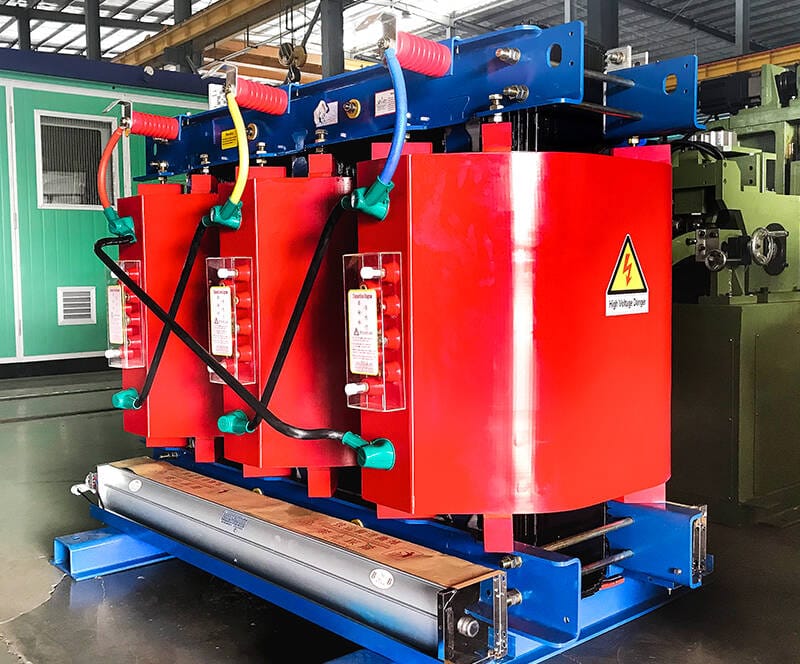
Electric power systems rely on transformers to efficiently transfer electricity between different voltage levels. Among these devices, the Step Up Transformer plays a crucial role in increasing voltage so that electrical energy can be transmitted over long distances with minimal power loss.
In modern power infrastructure, step up transformers are widely used in power plants, renewable energy systems, industrial manufacturing facilities, and high-voltage transmission networks. Without voltage transformation, electricity generated in power stations could not be delivered efficiently to cities, factories, and commercial buildings.
This complete guide explains what a step up transformer is, how it works, its components, types, advantages, and common applications in electrical power systems.
Table of Contents
- What Is a Step Up Transformer
- Why Step Up Transformers Are Used in Power Transmission
- How Does a Step Up Transformer Work
- Main Components of a Step Up Transformer
- Types of Step Up Transformers
- Advantages of Using a Step Up Transformer
- Common Applications of Step Up Transformers
- Step Up Transformer vs Step Down Transformer
- Step Up Transformer Formula and Calculation
- How to Choose the Right Step Up Transformer
- Maintenance Tips for Step Up Transformers
- Frequently Asked Questions About Step Up Transformers
1.What Is a Step Up Transformer
UN Step Up Transformer is an electrical device designed to increase voltage from the primary winding to the secondary winding while reducing current proportionally. It transfers electrical energy between circuits through electromagnetic induction and operates only with alternating current.
The essential characteristic of a step up transformer is that the secondary winding contains more turns than the primary winding. Because voltage is proportional to the number of coil turns, the output voltage becomes higher than the input voltage.
For example, a generator might produce electricity at 13.8 kV, but long-distance transmission lines often require voltages of 132 kV or higher. A step up transformer performs this voltage increase so that electricity can travel efficiently across the grid.
In large electrical systems, high-capacity transformers such as an oil-cooled power transformer are widely used due to their excellent insulation performance and heat dissipation capability. Learn more about our transformer products here.
2.Why Step Up Transformers Are Used in Power Transmission
Electricity generated at power plants is typically produced at medium voltage levels. However, transmitting electricity at relatively low voltage would lead to substantial energy loss.
Transmission loss follows the equation P = I²R, where current and resistance determine the power dissipated as heat. When current is high, energy losses increase dramatically along transmission lines.
UN Step Up Transformer solves this problem by increasing voltage and reducing current before electricity enters long-distance transmission networks. Lower current means significantly lower resistive losses in power lines.
This is why electrical power is almost always stepped up immediately after generation. High-voltage transmission systems rely on step up transformers to transport electricity efficiently over hundreds of kilometers.
For more information about modern electrical infrastructure and transmission systems, refer to this resource on power systems.
3.How Does a Step Up Transformer Work
The operation of a Step Up Transformer is based on the principle of electromagnetic induction. When alternating current flows through the primary winding, it creates a changing magnetic field inside the transformer core.
This magnetic field induces voltage in the secondary winding. Because the secondary winding contains more turns, the induced voltage becomes higher than the input voltage.
Electromagnetic Induction Principle
Transformers operate according to Faraday’s law of electromagnetic induction. When the magnetic flux in the core changes, an electromotive force is induced in the surrounding windings.
You can learn more about the electromagnetic induction principle here
Turns Ratio
The relationship between input voltage and output voltage is determined by the turns ratio of the windings.
Vs / Vp = Ns / Np
Where Vs represents secondary voltage, Vp represents primary voltage, Ns represents the number of turns in the secondary winding, and Np represents the number of turns in the primary winding.
If the secondary winding has twice as many turns as the primary winding, the output voltage will be approximately double the input voltage.
Voltage and Current Relationship
Energy conservation means that power entering the transformer is approximately equal to power leaving the transformer. Since power equals voltage multiplied by current, increasing voltage leads to a proportional reduction in current.
This relationship is what makes step up transformers ideal for high-voltage transmission systems.
4.Main Components of a Step Up Transformer
UN Step Up Transformer consists of several important components that work together to ensure efficient operation and reliable performance.
Transformer Core
The core forms the magnetic pathway that links the primary and secondary windings. It is usually made from laminated silicon steel to minimize eddy current losses and improve efficiency.
Primary Winding
The primary winding receives electrical energy from the power source. When alternating current flows through this winding, it produces the magnetic field required for voltage transformation.
Secondary Winding
The secondary winding receives the induced voltage generated by the magnetic flux. In a step up transformer, this winding has more turns than the primary winding.
Insulation System
Insulation prevents electrical faults and ensures safe operation. Common insulation materials include transformer oil, insulation paper, and pressboard materials.
Cooling System
Transformers generate heat during operation. Cooling systems help dissipate this heat and maintain safe operating temperatures. Oil-immersed transformers typically use cooling methods such as ONAN, ONAF, and OFAF.
5.Types of Step Up Transformers
Different power system applications require different types of step up transformers.
Power Plant Step Up Transformer
These large transformers are installed in generating stations and increase generator voltage to transmission voltage levels such as 132 kV, 220 kV, or 400 kV.
Distribution Step Up Transformer
Distribution networks sometimes require voltage adjustments to maintain stable electricity supply across regions.
Renewable Energy Step Up Transformer
Solar farms and wind power plants generate electricity at lower voltages. Step up transformers raise the voltage so that renewable energy systems can connect to the main electrical grid.
Industrial Step Up Transformer
Industrial applications such as electric furnaces, heavy motors, and welding equipment often require higher voltages to operate efficiently.
6.Advantages of Using a Step Up Transformer
Step up transformers provide several important advantages in electrical power systems.
Increasing voltage improves transmission efficiency and significantly reduces energy loss in long power lines. High-voltage transmission systems also require smaller conductors, which reduces infrastructure costs.
Transformers are highly reliable devices because they contain no moving parts. With proper maintenance, many transformers can operate reliably for more than thirty years.
Step up transformers also enable renewable energy integration by allowing solar and wind power systems to connect to national power grids.
7.Common Applications of Step Up Transformers
Step up transformers are widely used across multiple industries and electrical systems.
Power plants use step up transformers to increase generator voltage before electricity enters transmission lines. Renewable energy facilities such as solar farms rely on voltage transformation to deliver electricity to the grid.
Industrial manufacturing plants also use step up transformers to power heavy electrical equipment and high-energy processes.
Modern electrical networks often combine transformers with compact distribution systems such as a box type substation that integrates transformers, protection equipment, and switchgear in a single enclosure.
Indoor installations may use a dry insulation design instead of oil cooling. Engineers frequently select a dry type transformer for commercial buildings and indoor power distribution systems.
8.Step Up Transformer vs Step Down Transformer
Transformers used in electrical systems are typically classified as step up or step down transformers depending on whether they increase or decrease voltage.
UN Voltage Boosting Transformer increases voltage while reducing current, making it suitable for power transmission systems. A step down transformer performs the opposite function and reduces voltage to levels suitable for residential or commercial use.
In most electrical grids, electricity is first stepped up for long-distance transmission and then stepped down before reaching homes and businesses.
9.Step Up Transformer Formula and Calculation
Engineers often use transformer formulas to calculate voltage transformation and system performance.
The most common formula for a step up transformer is the turns ratio equation:
Vs / Vp = Ns / Np
Another important relationship relates power and current:
Vp × Ip ≈ Vs × Is
These formulas help engineers design transformers that match required voltage levels and load conditions.
10.How to Choose the Right Step Up Transformer
Selecting a suitable Voltage Boosting Transformer requires careful consideration of several technical factors.
Voltage rating must match both the input voltage and the required output voltage. Power capacity should also be selected according to system load requirements, usually expressed in kVA or MVA.
Cooling method and insulation type are important considerations for large transformers operating in demanding environments.
High-quality transformers are typically designed and tested according to the IEC 60076 transformer standard, which ensures safety and reliability in power system applications.
11.Maintenance Tips for Step Up Transformers
Regular maintenance helps extend the service life of transformers and ensures safe operation.
Temperature monitoring is important because excessive heat can damage insulation materials and reduce transformer life. Oil-filled transformers require periodic oil analysis to detect contamination or internal faults.
Operators should also avoid overloading transformers beyond their rated capacity, as this can lead to insulation failure and equipment damage.
Routine inspection, testing, and preventive maintenance allow transformers to operate reliably for several decades.
12.Frequently Asked Questions About Step Up Transformers
What is a step up transformer
A step up transformer is an electrical device that increases voltage while reducing current in an alternating current power system.
How does a step up transformer increase voltage
It increases voltage by using a secondary winding with more turns than the primary winding.
Where are step up transformers used
They are commonly used in power plants, renewable energy systems, industrial facilities, and high-voltage transmission networks.
What is the difference between step up and step down transformers
A step up transformer increases voltage, while a step down transformer reduces voltage for safe electrical consumption.
Why are step up transformers important for power transmission
They reduce current and minimize energy loss during long-distance electricity transmission.
Can transformers operate with direct current
No. Transformers require alternating current because electromagnetic induction depends on changing magnetic fields.
What materials are used in transformer cores
Transformer cores are usually made of laminated silicon steel to reduce eddy current losses.
How efficient are modern transformers
Most modern transformers operate with efficiencies greater than 95 percent.
How long does a step up transformer last
With proper maintenance, transformers can operate reliably for thirty to forty years.
How do engineers select a step up transformer
Engineers consider voltage rating, power capacity, cooling system, insulation type, and compliance with international standards.