What is a power substation and how does it work? A power substation is a critical link in the electrical grid. Its main function is to transform voltage and control electricity flow. Substations use transformers to step voltage up or down safely. This ensures efficient power delivery from plants to homes. Learn about substation types, components, and design standards here.
A substation isn’t just a fenced yard full of metal towers and cables. It’s an engineered system that plays a critical role in power generation and distribution. Substations are designed to maintain the balance, reliability, and quality of the electricity that powers our homes, industries, and cities. Essentially, substations transform voltage levels, control power flow, and ensure that electricity is delivered safely and efficiently. Let’s take a closer look at how electrical substations work, what they do, and why they’re essential for modern energy systems.
1.What Does a Power Substation Do?
UN power substation serves as the interface between different voltage levels in the electrical grid. Its main function is to transform electrical voltage and control the flow of electricity to ensure efficient transmission and safe distribution.
Here’s how it works step by step:
- Voltage Transformation – Electricity leaves the power plant at moderate voltage, which is then stepped up to very high voltage (e.g., from 11 kV to 220 kV or more) to minimize transmission losses. When it reaches a substation near consumers, the voltage is stepped down for distribution.
- Switching Operations – Substations use switches and circuit breakers to connect or isolate sections of the network. This allows engineers to perform maintenance or respond to faults without interrupting power supply across the whole system.
- System Protection – Protective devices like relays and circuit breakers detect abnormalities (e.g., overloads, short circuits) and automatically disconnect affected parts of the grid to prevent damage.
- Monitoring and Control – Modern substations use SCADA (Supervisory Control and Data Acquisition) systems to continuously monitor voltage, current, and power quality in real time.
In short, electrical substations are where electricity is adjusted, controlled, and safeguarded before reaching homes and industries.
2.The Role of Substations in the Power Network
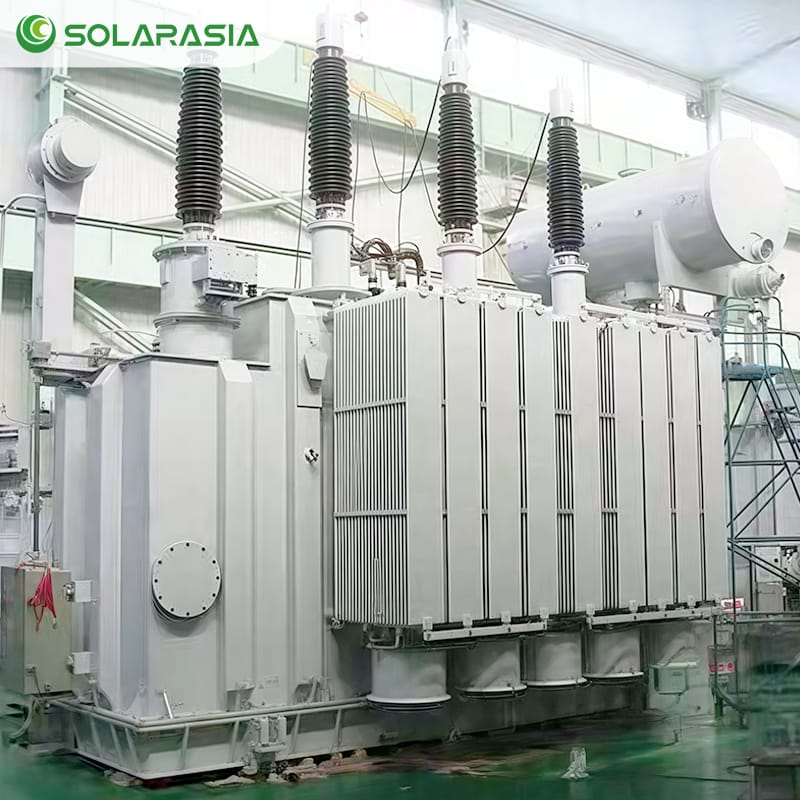
Notre high-capacity transformer plays a critical role in modern electrical generation and industrial transmission systems. Each unit integrates advanced protection devices to ensure safe and reliable operation.
This transformer supports a wide range of applications in distribution substations, utility substations, and energy substations, providing stable and efficient power to industrial, commercial, and municipal networks. Its robust design ensures minimal load loss and high reliability under demanding working conditions.
By deploying our transformer within a power substation environment, operators enhance grid stability, improve safety, and extend the life of connected assets. Every unit is engineered to optimize performance in critical transmission systems while protecting personnel and equipment with integrated protection devices.
3.Different Types of Power Substation
According to Scotech Electrical, not all substations are the same. They differ based on function, design, and voltage level.
Here are the main categories:
a. Step-Up (Transmission) Substation
- Located near generating stations
- Uses large transformers to increase voltage from generation level (e.g., 11 kV) to transmission level (e.g., 220 kV or higher)
- Essential for reducing energy losses during long-distance power transmission
These substations often feature tall structures, heavy transformers, and extensive busbars because they handle extremely high voltage levels.
b. Step-Down (Distribution) Substation
- Found closer to load centers (e.g., cities, industrial zones)
- Reduces high transmission voltage (e.g., 132 kV or 66 kV) to lower distribution voltages (e.g., 11 kV or 400 V)
- Supplies local distribution networks that feed homes and factories
Distribution substations are typically smaller and may be housed in enclosed areas for safety and space efficiency.
c. Switching Substation
- Focuses on routing and controlling power flow rather than changing voltage
- Connects or disconnects transmission lines for load balancing and maintenance
- Plays a vital role in system reliability and fault isolation
In Scotech’s classification, switching substations often handle around 10 kV in medium-voltage systems.
d. Compact or Prefabricated Substation
- Also called box-type substations
- Integrates transformer, switchgear, and protection equipment in one compact enclosure
- Widely used in urban grids, renewable projects, and temporary power setups
These units are factory-assembled, weatherproof, and easy to install — ideal for modern smart grids.
e. Power Distribution Room
- A low-voltage facility used for receiving, distributing, and controlling power within buildings or industrial complexes
- Generally doesn’t change voltage but ensures safe local operation
This type of installation is common in commercial or manufacturing facilities where power control is localized.
4.Inside the Power Substation: Main Components and Their Functions
Every power substation contains critical components working together to control and protect the power flow:
| Composant | Fonction |
|---|---|
| Power Transformer | Changes voltage levels between transmission and distribution stages |
| Circuit Breakers & Isolators | Interrupt current flow during faults or maintenance |
| Busbars | Distribute electrical current to multiple outgoing lines |
| Current & Voltage Transformers (CTs & VTs) | Provide accurate measurements for protection and control systems |
| Lightning Arresters | Protect equipment from lightning or switching surges |
| Control and Relay Panels | Monitor system status and trigger automatic protection |
| SCADA System | Enables remote monitoring, data logging, and automation |
Together, these systems ensure that electricity remains stable, clean, and safe at all times.
5.Smart Substation: The Future of Grid Technology
With the rise of renewable energy and smart grids, traditional power facilities are evolving into intelligent, digital hubs. Modern distribution substations are designed to play a key role in both power generation and efficient transmission systems, ensuring electricity is delivered safely and reliably.
Automation and Digitalization: Integration of IoT devices, smart relays, and advanced protection systems enables real-time control, predictive maintenance, and rapid fault detection.
Two-Way Power Flow: These facilities not only move electricity from power plants to consumers but also allow energy from distributed solar and wind systems to flow back into the transmission network.
Remote Monitoring: Operators can supervise and control the grid from centralized control centers using SCADA systems, maintaining optimal performance across all connected assets.
Compact and Modular Design: Modern distribution units are modular, easy to install, and adaptable for urban environments, reducing land use while supporting high-voltage operations.
Through these advancements, substations transform voltage levels, manage load efficiently, and enhance the stability of the electrical generation and transmission system, increasing reliability, minimizing downtime, and ensuring continuous energy delivery.
6.Is It Safe to Live Near a Power Substation?
TIt is generally safe to live near a power substation, provided homeowners follow proper electrical safety measures and regulations.
Why living near a substation is safe:
- EMF exposure near distribution substations and utility substations remains far below international safety limits. Studies confirm that typical exposure levels do not harm health.
- Substations include multiple safety layers. Fences, grounding systems, and shielding prevent public access and reduce electrical hazards for nearby residents.
- Government authorities and energy providers enforce strict regulations to maintain safe distances between residential areas and power substations. Setback requirements and zoning laws minimize potential risks.
- Leading organizations, including the World Health Organization (WHO) and the International Commission on Non-Ionizing Radiation Protection (ICNIRP), confirm no verified health impacts from standard substation operations.
- Modern distribution substations equip advanced monitoring systems and protection devices to maintain operational stability and prevent incidents affecting nearby communities.
- While overall risks remain low, residents should maintain the recommended distance—usually 15–30 meters for medium-voltage substations—and avoid entering restricted zones. These precautions enhance personal safety and ensure compliance with safety standards.
In summary, living near a power substation ou utility substation remains safe when operators maintain proper working conditions. Substations provide reliable operation, minimize EMF exposure, and ensure long-term safety for surrounding neighborhoods.
7.Conclusion: The Vital Role of Electrical Substations
UN power substation is far more than a technical facility — it serves as the heartbeat of the entire transmission system. It transforms voltage, routes electricity, integrates renewable energy from modern electrical generation sources, and safeguards networks using advanced protection devices. Without distribution substations and utility substations, reliable energy delivery for homes, businesses, and industries would not exist.
As the world advances toward clean energy and smart grids, electrical substations continue to evolve. Modern substations are becoming digital, decentralized, and more efficient, enabling seamless integration of renewable power and optimizing grid stability. They monitor high-voltage flows, maintain operational safety, and ensure minimal load loss across the transmission system.
Today’s power substations are, quite literally, the silent guardians keeping the lights on globally. With robust design, automated monitoring, and integrated protection devices, they maintain consistent power delivery, protect critical infrastructure, and support the evolving demands of industrial, commercial, and residential energy systems.