1.Introduction
Planning a new substation, factory expansion, commercial building, or data center project? One of the most critical budgeting questions is: how much does a 1000 kVA transformer cost? A 1000 kVA (also known as 1 MVA) transformer is a popular choice for medium-scale power distribution, bridging high-voltage transmission lines to usable low-voltage supply for industrial machinery, commercial facilities, or residential complexes.
In this comprehensive guide, we break down the 1000 kVA transformer price range, compare popular types like oil-immersed and dry-type, explore the key factors that influence costs, and provide a practical buying guide. Whether you’re an electrical engineer, project manager, or procurement specialist, understanding the 1000 kVA transformer cost helps avoid budget overruns and ensures long-term value through better total cost of ownership (TCO).
Transformer prices are not fixed—they fluctuate with raw material costs (copper, silicon steel), manufacturing standards, customization, and global supply chains. Typical market estimates place a standard 1000 kVA unit between $8,000 and $40,000 USD or more, depending on specifications. This article draws on industry benchmarks to give you actionable insights. Let’s dive in.
Need an accurate quote for your project?
➡️Get a free 1000 kVA transformer quotation tailored to your specifications today.
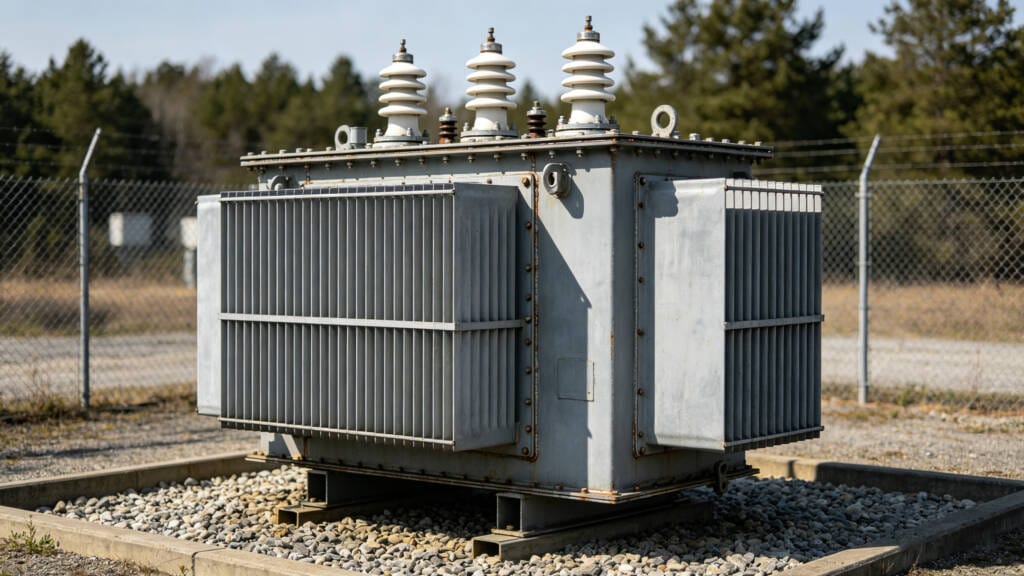
Tabla de contenidos (TOC)
- Introducción
- Understanding 1000 kVA Transformers
- 1000 kVA Transformer Price Range
- Key Factors Affecting 1000 kVA Transformer Cost
- Oil-Immersed vs Dry-Type: Which is More Cost-Effective?
- How to Get Accurate Pricing and Reduce Costs
- Buying Guide for 1000 kVA Transformers
- Conclusión
- Preguntas frecuentes
2.Understanding 1000 kVA Transformers
Before discussing 1000 kVA transformer cost, it’s essential to understand what this rating means and where these units are commonly used.
What is a 1000 kVA Transformer? kVA stands for kilovolt-ampere, a measure of apparent power. A 1000 kVA transformer can handle up to 1000 kilovolt-amperes of power. For a three-phase system at 0.8 power factor, this translates to approximately 800 kW of real power. These transformers are mid-to-large distribution or power transformers, ideal for stepping down voltages from 11 kV, 22 kV, or 33 kV to 400V/415V or 480V levels. For indoor applications where fire safety is critical, refer to our detailed dry-type transformer guide to understand the differences in insulation and cooling methods.
Common Applications
- Industrial plants and factories requiring stable power for heavy machinery
- Commercial buildings, shopping malls, and office complexes
- Data centers and hospitals (especially dry-type for indoor safety)
- Substations and renewable energy integration (solar/wind farms)
- Urban distribution networks and pad-mounted installations
Main Types of 1000 kVA Transformers
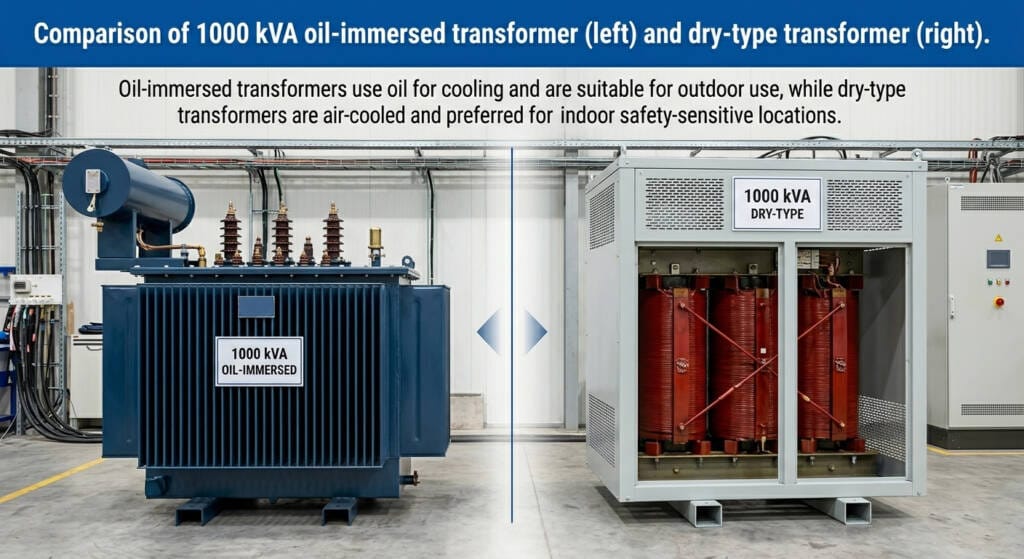
- Transformadores sumergidos en aceite (also called oil-filled or liquid-immersed): Use mineral oil or ester fluids for insulation and cooling. They are robust, cost-effective for outdoor use, and offer excellent heat dissipation.
- Transformadores de tipo seco (cast resin or VPI – Vacuum Pressure Impregnated): Air-cooled, no oil involved. Safer for indoor environments due to lower fire risk and minimal maintenance.
- Pad-Mounted Transformers: Often oil-immersed, enclosed in a tamper-proof cabinet for ground-level installation in urban areas.
- Pole-Mounted (less common at 1000 kVA, but possible in some setups).
Basic Specifications You’ll Encounter
- Voltage Class: Primary (HV) 11/22/33 kV; Secondary (LV) 0.4/0.415/0.48 kV
- Método de enfriamiento: ONAN (Oil Natural Air Natural) for oil type; AN/AF for dry type
- Grupo de vectores: Common is Dyn11
- Eficiencia: Typically 98.5% or higher; energy-efficient models meet IEC or DOE standards
- Impedancia: Around 5-6% for distribution units
- Standards: IEC 60076, ANSI/IEEE C57, IS 1180, etc.
A typical 1000 kVA oil-immersed unit might weigh 3000-5000 kg, with dimensions around 2m x 1.5m x 2m. Dry-type versions are often larger due to air-cooling needs but weigh less without oil.
Understanding these basics helps you evaluate quotes accurately when assessing 1000 kVA transformer price. For example, a standard 11/0.4 kV oil-immersed model differs significantly in cost from a customized 33 kV dry-type unit for a hospital.
All 1000 kVA transformers should comply with the IEC 60076 standard for performance and safety testing.
3.1000 kVA Transformer Price Range
So, how much does a 1000 kVA transformer cost in today’s market? Prices vary widely based on type, materials, brand, and location. Here’s a realistic overview based on industry data:
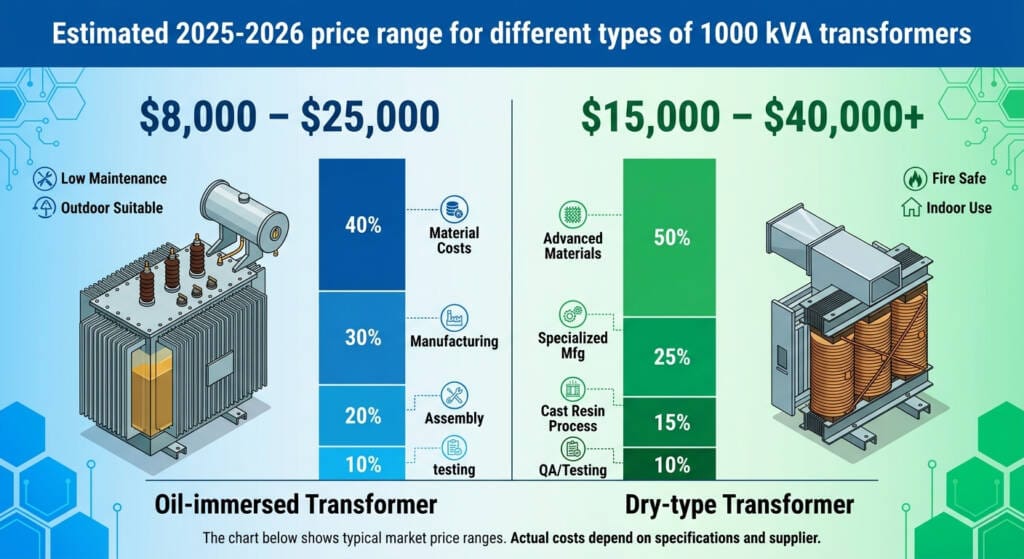
Estimated Price Ranges (USD, ex-works, approximate 2025-2026 benchmarks)
- Oil-Immersed Transformer: $8,000 – $25,000+
- Dry-Type (Cast Resin) Transformer: $15,000 – $40,000+
- Pad-Mounted Oil Type: $10,000 – $30,000+
These figures exclude shipping, taxes, duties, installation, and customization. For a basic 11/0.4 kV, three-phase, ONAN-cooled oil-immersed unit with aluminum windings, expect the lower end. Copper windings or Tier-1 brands (ABB, Siemens, Schneider) push prices toward the higher end.
Here’s a helpful comparison table:
| Tipo de transformador | Estimated Price Range (USD) | Key Characteristics | Typical Applications |
|---|---|---|---|
| Oil-Immersed (Standard) | $8,000 – $25,000 | Good cooling, lower cost, outdoor suitable | Factories, substations, outdoor grids |
| Dry-Type (Cast Resin) | $15,000 – $40,000+ | Fire-safe, low maintenance, indoor | Hospitals, data centers, buildings |
| Pad-Mounted | $10,000 – $30,000+ | Compact, tamper-proof enclosure | Urban residential/commercial areas |
Regional Variations
- In Asia (e.g., China, India suppliers): Often more competitive pricing.
- Europe/North America: Higher due to stricter standards, labor, and certifications.
- Singapore/SEA markets: Import duties and logistics can add 10-30%.
Important Disclaimer: These are indicative ranges. Actual 1000 kVA transformer cost depends on current copper prices (a major driver), exchange rates, and order volume. Always request formal quotations from multiple suppliers.
For context, a 1000 kVA unit is significantly more expensive than a 500 kVA (roughly 1.5-2x) but more economical per kVA than very large 5 MVA units due to economies of scale in manufacturing. If your project requires a smaller capacity, check our guide on 500 kVA transformer cost for a direct comparison of pricing and specifications.
Prices vary based on your exact voltage, windings, and efficiency requirements.
🔍Request a customized 1000 kVA transformer cost quote from multiple suppliers now and compare offers.
4.Key Factors Affecting 1000 kVA Transformer Cost
Understanding why 1000 kVA transformer prices differ so much is crucial for smart procurement. Here are the primary cost drivers:
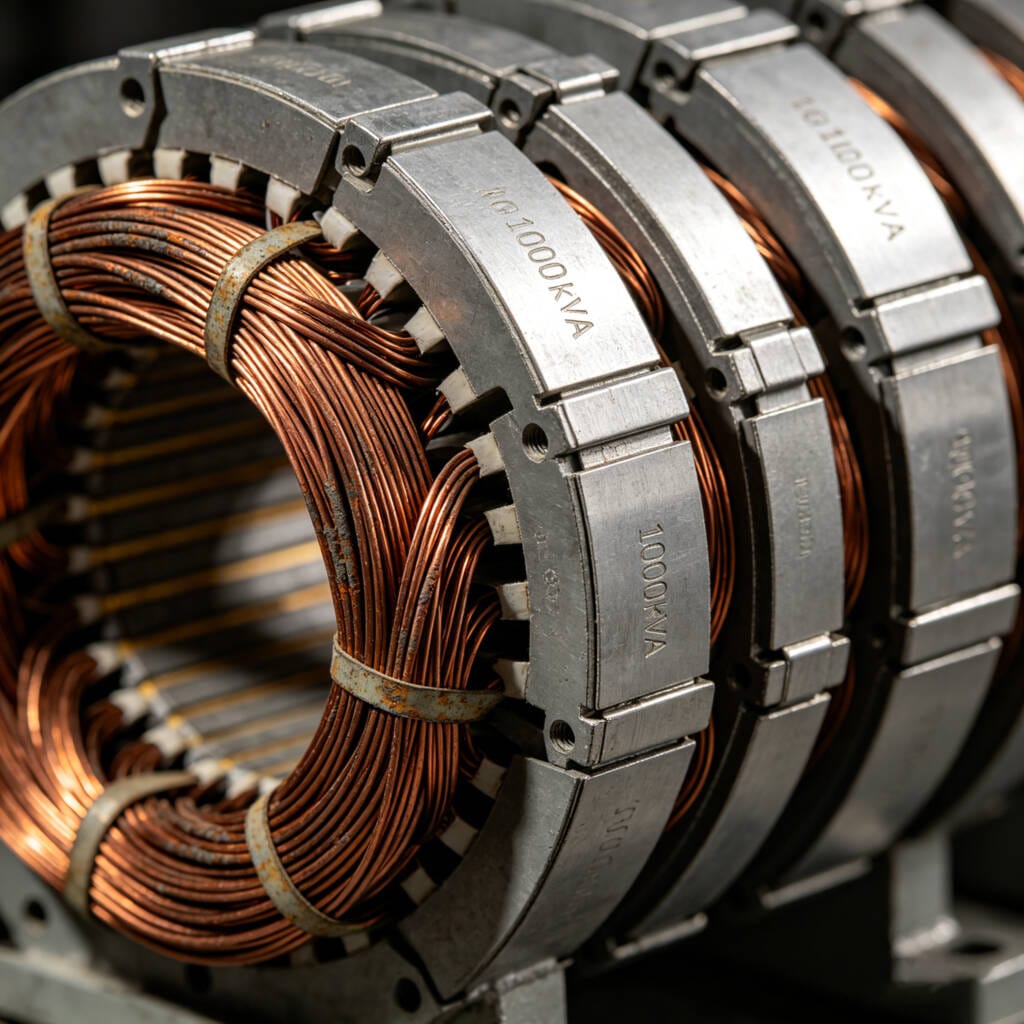
- Winding Material: Copper vs Aluminum Copper offers superior conductivity, lower losses, better heat resistance, and longer life—but it’s more expensive. Aluminum is lighter and cheaper, but requires larger cross-sections, potentially increasing overall size and oil volume. For a 1000 kVA unit, copper windings can add $2,000-$8,000 to the price but may reduce long-term energy losses.
- Core Material High-grade silicon steel or amorphous alloy cores reduce no-load losses (iron losses). Premium cores increase upfront cost but improve efficiency and lower TCO.
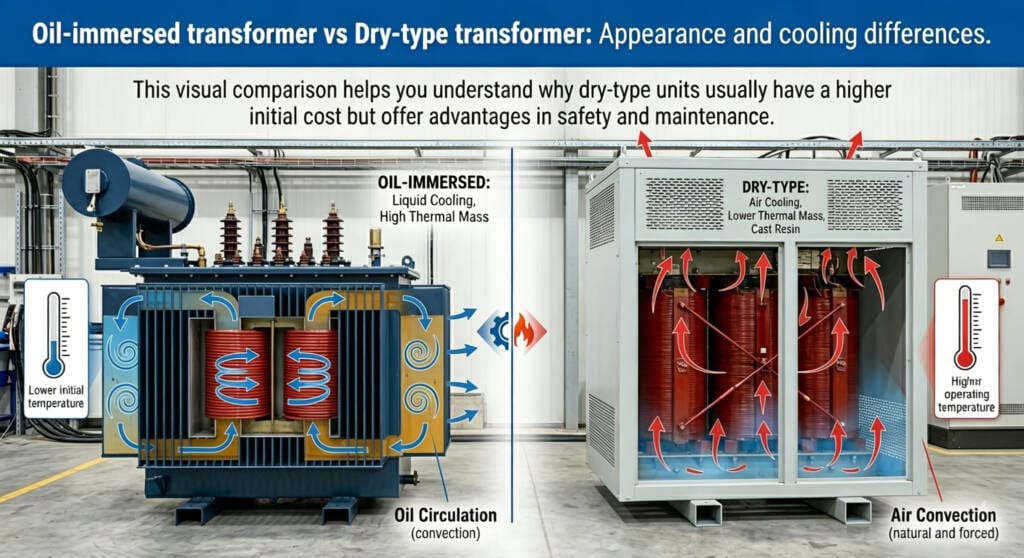
- Transformer Type and Cooling Oil-immersed units are generally 20-40% cheaper than dry-type due to simpler insulation and better thermal performance. Dry-type requires more insulation material and larger enclosures for air cooling.
- Voltage Rating and Customization Higher primary voltage demands better insulation and bushings, raising costs. Add-ons like on-load tap changers (OLTC), temperature monitors, surge arrestors, or special enclosures can add 10-50%.
- Manufacturer and Brand Tier
- Tier-1 : Premium quality, global support, higher price ($15,000-$35,000 range).
- Tier-2/3 suppliers: More affordable but verify certifications and after-sales service.
- Efficiency and Loss Levels Low-loss designs cost more initially but save on electricity bills.
- Additional Costs Beyond Unit Price
- Transportation and logistics
- Installation, civil works, oil containment
- Testing, commissioning, and certifications
- Costo total de propiedad (TCO): Includes purchase price + capitalized energy losses + maintenance over 20-30 years. Losses can exceed initial cost by 2-4 times over the transformer’s life.
Other influences include raw material market volatility (copper prices), supply chain issues, order quantity, and compliance with local regulations. Efficiency levels are often guided by NEMA transformer standards.
By prioritizing TCO over lowest upfront 1000 kVA transformer cost, many buyers save significantly in the long run.
To learn more about the trade-offs in performance and longevity, read our in-depth article on copper vs aluminum windings in transformers.
5.Oil-Immersed vs Dry-Type: Which is More Cost-Effective?
A frequent question when evaluating 1000 kVA transformer cost is: oil-immersed or dry-type—which offers better value?
Detailed Comparison Table
| Aspect | Oil-Immersed Transformer | Transformador tipo seco |
|---|---|---|
| Initial Cost | Lower ($8k-$25k) | Higher ($15k-$40k+, 20-40% more) |
| Size & Weight | More compact, heavier due to oil | Larger for cooling, lighter |
| Installation Environment | Best for outdoor/substations | Ideal for indoor (no oil leak/fire risk) |
| Maintenance | Requires oil testing, filtration ($500+/yr) | Minimal, almost maintenance-free |
| Fire Safety | Needs containment, fire barriers | Excellent (self-extinguishing resin) |
| Efficiency & Overload | Excellent cooling, good overload capacity | Good, but may need fans for high loads |
| Lifespan | 25-40 years with proper care | 20-35 years |
| TCO (20-25 years) | Often lower at high utilization | Better in sensitive indoor locations |
Pros and Cons Summary Oil-Immersed Advantages: Lower purchase price, superior heat dissipation (suitable for continuous high loads), smaller footprint per kVA. Ideal for outdoor industrial or utility applications. Oil-Immersed Disadvantages: Environmental and fire risks require extra safety measures; regular maintenance needed. For oil-immersed units, refer to the IEEE Guide for Substation Fire Protection for best practices.
Dry-Type Advantages: Safer indoors, lower environmental impact, reduced maintenance costs, quieter operation. Preferred in hospitals, schools, data centers, and high-rise buildings. Dry-Type Disadvantages: Higher initial 1000 kVA transformer cost, potentially larger size, slightly lower overload capacity without forced cooling.
Recommendation
- Choose sumergido en aceite if your project is outdoor, budget-sensitive, and has high load factors—lower upfront and often better TCO.
- Choose dry-type for indoor installations where safety, cleanliness, and minimal maintenance are priorities, even if the initial price is higher.
In many cases, the decision comes down to site constraints and risk assessment rather than pure cost.
Still unsure which type is best for your site?
📞Get expert advice on oil-immersed vs dry-type transformers for your specific application.
6.How to Get Accurate Pricing and Reduce Costs
Getting the right 1000 kVA transformer cost quote requires preparation. Here’s a step-by-step approach:
Step 1: Define Clear Specifications Prepare a detailed technical data sheet including kVA rating, voltages, vector group, losses (no-load and load), cooling method, altitude, ambient temperature, and standards.
Step 2: Request Quotes from Multiple Suppliers Contact at least 3-5 manufacturers or authorized distributors. Compare not just price but warranty, lead time (typically 8-16 weeks), and service network.
Step 3: Evaluate TCO, Not Just Purchase Price Use the IEC TCO formula: TCO = Purchase Price + (A × No-Load Losses) + (B × Load Losses) Where A and B are capitalization factors based on electricity price, discount rate, and expected lifespan. Even a slightly more expensive efficient transformer can pay back quickly.
Cost Reduction Tips
- Opt for standard designs instead of heavy customization.
- Consider aluminum windings for non-critical applications to lower material costs.
- Buy in bulk or during off-peak seasons for discounts.
- Focus on high-efficiency models to cut long-term energy bills.
- Negotiate on accessories and include training or spare parts in the package.
- Explore local or regional suppliers to reduce shipping and import duties (important in Singapore).
Common Pitfalls to Avoid
- Choosing solely on lowest price—cheap units may have higher failure rates and losses.
- Ignoring installation and containment costs for oil types.
- Overlooking after-sales support and spare parts availability.
With careful planning, you can reduce the effective 1000 kVA transformer cost by 10-25% while improving reliability.
7.Buying Guide for 1000 kVA Transformers
Follow this checklist when purchasing:
Essential Checklist
- Verify compliance with international standards (IEC 60076, ANSI).
- Check efficiency class and loss levels.
- Confirm winding material and core quality.
- Ensure proper protection features (Buchholz relay for oil type, thermal sensors for dry).
- Review warranty (typically 1-5 years) and service availability.
- Assess environmental factors: temperature, humidity, seismic activity.
Supplier Evaluation Look for manufacturers with proven track records, ISO certifications, and references from similar projects. Tier-1 brands offer peace of mind; reliable Tier-2 suppliers can provide excellent value.
Installation and Commissioning Tips
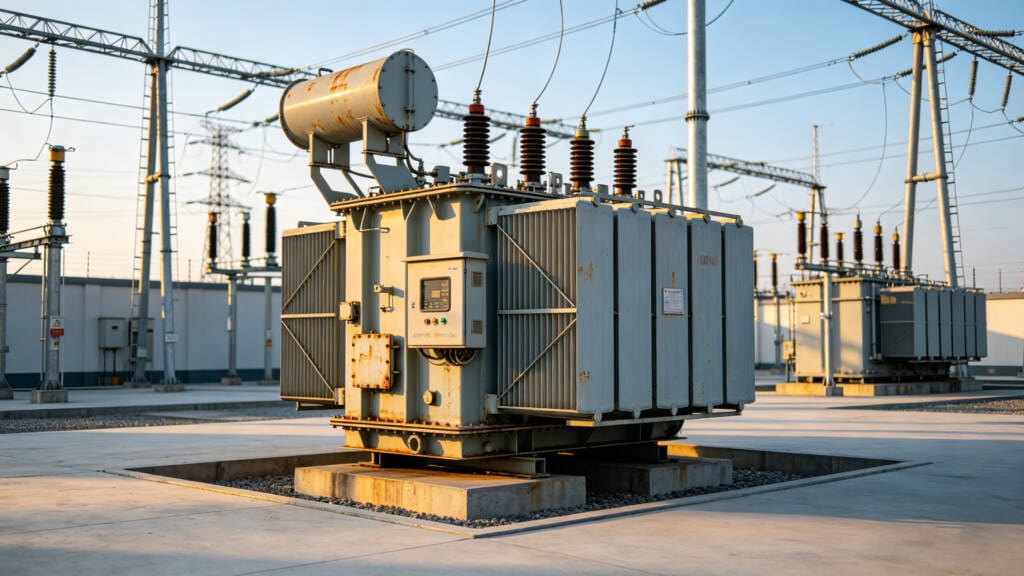
- For oil-immersed: Ensure proper foundation, oil spill containment, and fire safety.
- For dry-type: Provide adequate ventilation and clearance for cooling.
- Always conduct factory acceptance tests (FAT) and site acceptance tests (SAT).
Market Trends Demand for energy-efficient and eco-friendly transformers (e.g., with natural ester oil or high-efficiency dry-type) is growing, which may influence future pricing and availability. In North America, transformers often follow ANSI/IEEE C57 standards for design and testing.
8.Conclusion
Determining how much does a 1000 kVA transformer cost involves more than checking a single number. With typical ranges of $8,000-$40,000+ depending on type and specs, the real value lies in balancing initial investment with long-term performance, efficiency, and safety.
Oil-immersed transformers often win on upfront cost and cooling efficiency for outdoor use, while dry-type excels in indoor safety and low maintenance. By focusing on Total Cost of Ownership, clear specifications, and reputable suppliers, you can make a confident, cost-effective decision for your project.
If you’re planning a purchase, start by defining your exact requirements and requesting detailed quotations. Feel free to share your project details in the comments for more tailored advice.
Last updated: April 2026. Transformer prices can change—always verify with current suppliers.
9.Preguntas frecuentes
Q1: What is the average price of a 1000 kVA transformer?
A: For a standard oil-immersed unit, expect $10,000-$20,000 USD. Dry-type versions average $20,000-$35,000. Prices vary by specifications.
Q2: How much more expensive is a dry-type than an oil-immersed transformer?
A: Typically 20-40% higher due to advanced insulation and larger size for air cooling.
Q3: What factors should I consider before buying a 1000 kVA transformer?
A: Type (oil vs dry), winding material, efficiency, site conditions, TCO, certifications, and supplier reliability.
Q4: Is copper or aluminum better for 1000 kVA transformers?
A: Copper offers better efficiency and durability but at higher cost. Aluminum is more economical for many applications.
Q5: How long does a 1000 kVA transformer last?
A: 25-40 years with proper maintenance, depending on type and operating conditions.
Ready to move forward with your power distribution project?