1.Introduction
An isolation transformer is a critical component in electrical systems that provides electrical isolation between circuits while transferring power safely. It prevents electrical shocks, reduces voltage spikes, and improves power quality. Whether you are looking for isolation transformers for sensitive equipment, medical isolation transformers, or industrial applications, understanding its working principle, types, and benefits is crucial.
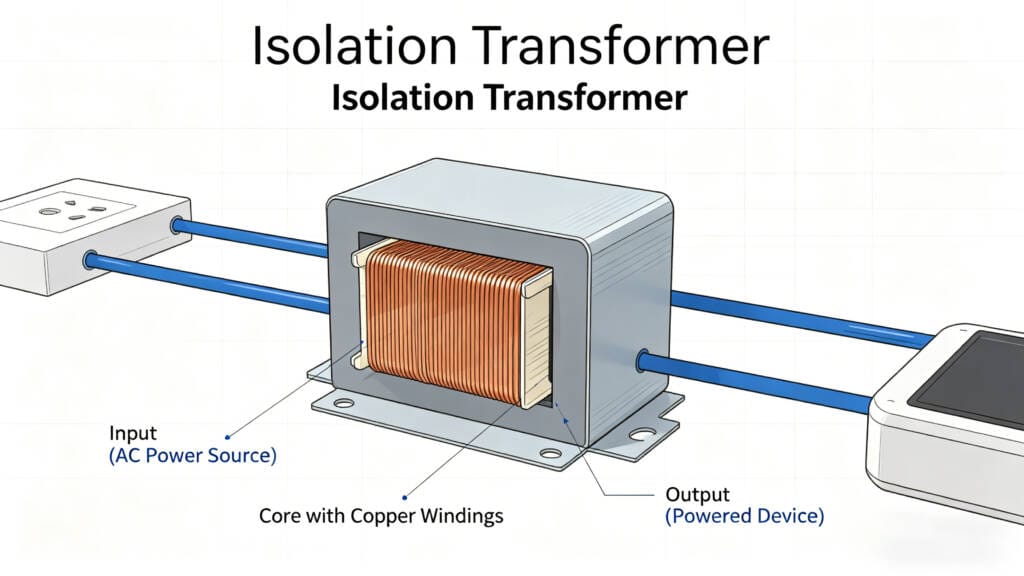
In this article, we will cover everything about isolation transformers, including their advantages, disadvantages, types, applications, and how to choose the right one. You will also learn the difference between isolation transformers vs autotransformers, and discover why they are essential for safety, noise reduction, and voltage surge protection.
Looking for a reliable isolation transformer for your project?
👉 Contact our team today for expert advice and fast quotations.
Inhaltsverzeichnis (TOC)
- Einführung
- What Is an Isolation Transformer?
- Types of Isolation Transformers
- Isolation Transformer vs Autotransformer
- Advantages of Isolation Transformers
- Disadvantages and Considerations
- Applications of Isolation Transformers
- How to Choose the Right Isolation Transformer
- FAQs
- Abschluss
2.What Is an Isolation Transformer?
An isolation transformer, also called an electrical isolation transformer oder galvanic isolation transformer, is a type of transformer designed to electrically separate two circuits while transferring electrical energy. It has two main windings: primary Und secondary. These windings are not directly connected, which provides complete electrical isolation.
Funktionsprinzip
- Electrical energy is transferred from the primary winding to the secondary winding using magnetic induction.
- There is no direct electrical connection, which protects devices and humans from potential electrical faults.
- Isolation transformers help prevent ground loops and reduce electrical noise.
If you want to understand how transformers function at a deeper level, you can also explore the transformer working principle.
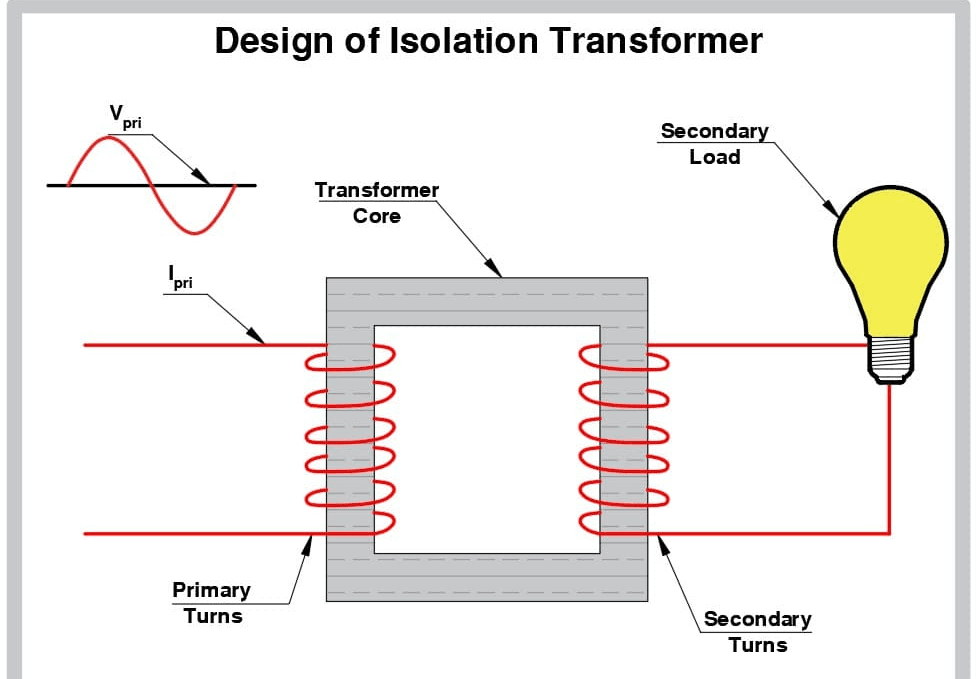
In many applications, isolation transformers are built following global engineering guidelines such as the IEEE Transformer Standards, which define performance and safety requirements.
3.Types of Isolation Transformers
There are several types of isolation transformers, each suited for specific applications.
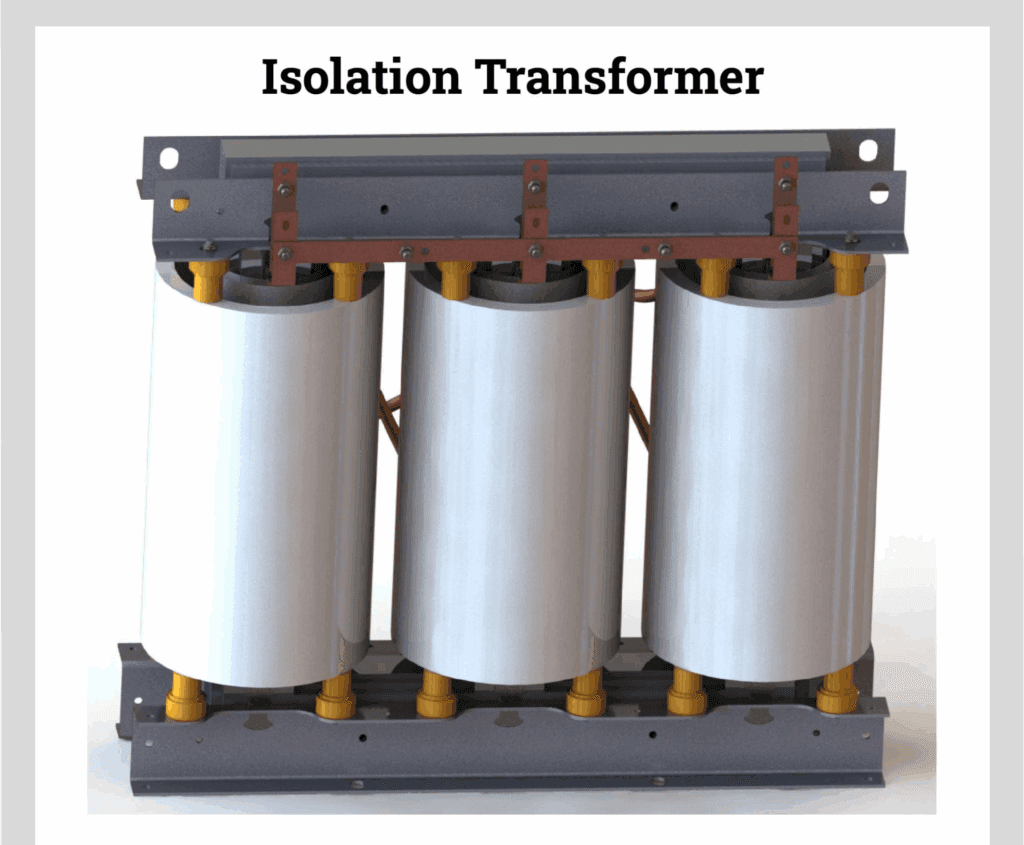
1. Standard Isolation Transformers
- Wird häufig verwendet in industrial and commercial electrical systems.
- Provide basic electrical isolation and voltage stabilization.
2. Dry-Type Isolation Transformers
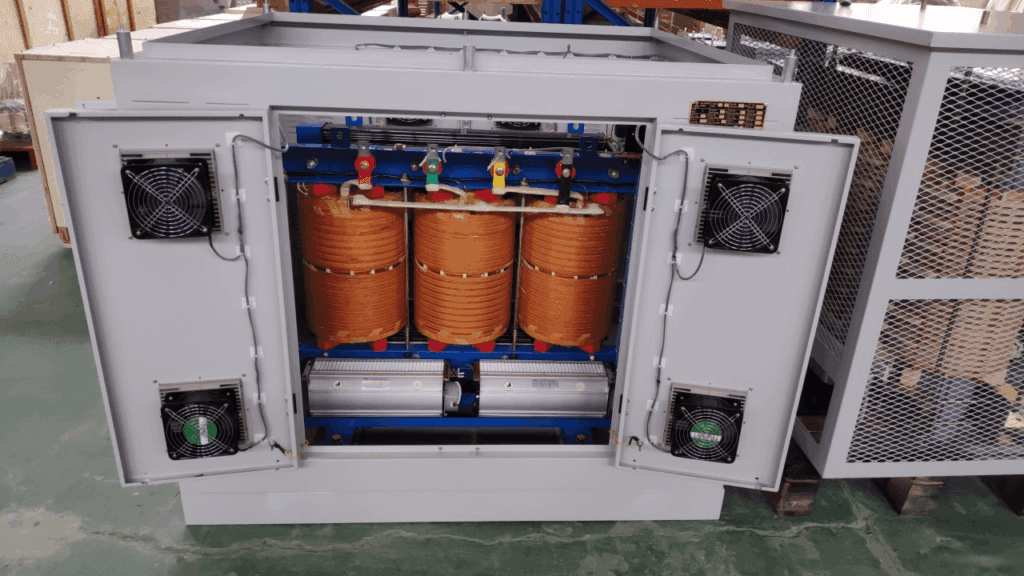
- Use air or epoxy insulation instead of oil.
- Ideal for indoor environments or where fire safety is a concern.
- Require less maintenance than oil-filled transformers.
While isolation transformers provide full electrical separation, autotransformers share windings and are mainly used for voltage conversion. For further technical reference, you can review the IEEE Transformer Standards.
3. Medical Isolation Transformers
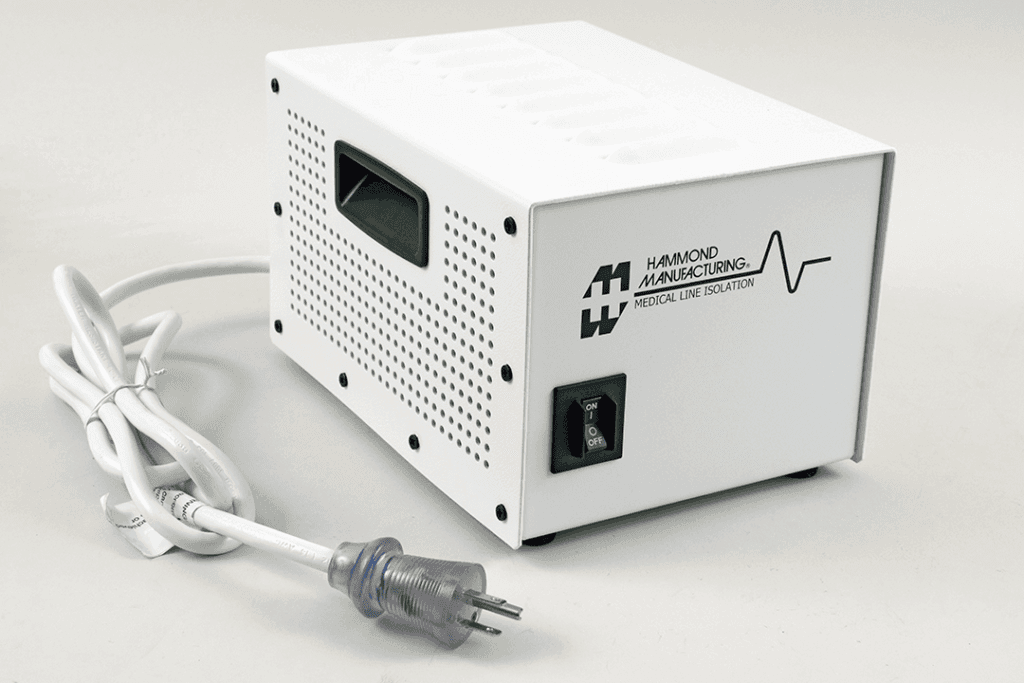
- Specifically designed for medical equipment.
- Provide maximum safety against electrical shocks.
- Must comply with medical safety standards like UL 60601.
4. Constant Voltage Transformers (CVT)
- Maintain stable voltage output despite input voltage fluctuations.
- Protect sensitive equipment from voltage surges.
5. Galvanic Isolation Transformers
- Eliminate ground loops and reduce electrical noise.
- Used in audio, data acquisition, and sensitive electronic equipment.
Table Example: Comparison of Isolation Transformer Types
| Typ | Main Use | Advantage | Typical Environment |
|---|---|---|---|
| Standard | Industrial power | Electrical isolation | Factory floor |
| Dry-Type | Indoor use | Fire safety, low maintenance | Labs, offices |
| Medical | Hospitals | Maximum safety | Medical rooms |
| CVT | Sensitive devices | Voltage stabilization | Electronics labs |
| Galvanic | Audio & data | Noise reduction | Data centers |
4.Isolation Transformer vs Autotransformer
Understanding the differences between these two is a major search intent for this keyword. A comparison table is the most effective way to capture “Featured Snippet” positions.
| Besonderheit | Isolation Transformer | Autotransformer |
| Winding Structure | Two independent windings (Primary & Secondary) | Single continuous winding shared by both sides |
| Electrical Connection | No direct physical connection (Galvanic Isolation) | Direct physical connection between input and output |
| Safety Level | Hoch: Protects users from electric shock by breaking ground loops | Lower: Risks transferring high voltage to the load if a fault occurs |
| Noise Suppression | Excellent at filtering common-mode noise and spikes | Minimal noise isolation due to the shared path |
| Size & Cost | Bulkier, heavier, and more expensive | Compact, lightweight, and cost-effective |
| Typical Use Case | Medical equipment, sensitive labs, solar systems | Motor starting, industrial voltage adjustment |
- Isolation transformers protect devices and people by providing electrical isolation.
- Autotransformers share winding and are primarily used for voltage conversion.
Not sure which type of isolation transformer fits your application?
👉 Check our detailed transformer types guide to compare options.
5.Advantages of Isolation Transformers
- Enhanced Electrical Safety
- Reduces risk of electric shock.
- Essential for medical and sensitive equipment.
- Voltage Surge Protection
- Protects devices from spikes and surges.
- Noise Reduction
- Eliminates electrical noise and interference, improving performance of electronics.
- Prevents Ground Loops
- Reduces hum and signal interference in audio/data systems.
- Protects Sensitive Equipment
- Essential for computers, industrial control systems, and lab instruments.
6.Disadvantages and Considerations
While isolation transformers offer unparalleled safety and noise filtration, they are not a universal “plug-and-play” solution for every scenario. Before integration, engineers and facility managers should consider the following drawbacks:
1. Higher Initial Investment (Cost)
Compared to standard autotransformers or simple voltage converters, isolation transformers are more expensive to manufacture.
- The Reason: They require two full sets of independent windings (primary and secondary) and significantly more copper and core material to maintain electrical separation.
- Consideration: You are paying a premium for safety and power quality. If your application only requires a simple voltage change without the need for noise suppression or shock protection, an isolation transformer might be an over-engineered and costly choice.
2. Increased Physical Footprint (Size and Weight)
Due to the dual-winding design and the need for robust internal insulation, these units are notably bulkier.
- Spatial Constraints: High-capacity models (measured in kVA) can be heavy and take up significant floor or rack space.
- Logistics: The extra weight may require reinforced mounting structures or specialized transport equipment during installation. In mobile or weight-sensitive applications, this can be a major limiting factor.
3. Limited Voltage Adjustment Capability
The primary function of an isolation transformer is isolation, not regulation.
- Fixed Ratios: While they can be designed to step voltage up or down, they are typically optimized for a fixed 1:1 ratio.
- Not a Regulator: Unlike a Voltage Stabilizer or an Automatic Voltage Regulator (AVR), a standard isolation transformer cannot compensate for fluctuating grid voltages. If your incoming power drops by 10%, your output will likely drop by 10% as well.
4. Heat Generation and Efficiency
Because they involve more material and magnetic flux transfer across an air gap or shielded core, they can generate more heat than an autotransformer of the same rating.
- Energy Loss: There is a slight efficiency trade-off (usually 2-5% loss) due to core and copper losses.
- Belüftung: Proper airflow and cooling are mandatory, especially for dry-type units installed in confined electrical closets.
5. Inrush Current Issues
Large isolation transformers can experience high inrush current when first energized.
- Impact: This momentary surge can sometimes trip sensitive circuit breakers or fuses if the system isn’t properly coordinated.
- Solution: You may need to install “slow-blow” fuses or specialized circuit breakers designed to handle the initial magnetization of the transformer core.
7.Applications of Isolation Transformers
- Medical Equipment – Prevents electrical shock in hospitals.
- Industrial Automation – Protects machines and control circuits.
- Laboratory and Sensitive Electronics – Maintains clean power for accurate measurements.
- Data Centers – Reduces electrical noise and prevents ground loops.
- UPS Systems – Ensures stable power and protection for critical loads.

8.How to Choose the Right Isolation Transformer
Selecting the ideal transformer requires a balance between technical specifications and the specific needs of your operating environment. Follow these five key criteria to make an informed decision:
1. Voltage and Current Rating
The most fundamental step is ensuring the transformer can handle your electrical load.
- Voltage Ratio: Determine if you need a standard 1:1 ratio (for pure isolation) or a step-up/step-down isolation transformer to match your local grid to your equipment’s requirements.
- KVA Rating: Calculate your total load in Volt-Amps (VA) or Kilo-Volt-Amps (kVA). It is a best practice to select a transformer with a capacity 20-25% higher than your actual load to account for future expansion and cool operation.
- Phase Configuration: Specify whether your system is Single-Phase (common for office/medical) or Three-Phase (industrial/solar).
2. Application-Specific Requirements
Different industries have unique standards that dictate transformer design:
- Medical Applications: Must feature ultra-low leakage current and high dielectric strength to meet IEC 60601-1 standards.
- Solar & Renewable Energy: Transformers used in PV systems must handle DC injection protection and be optimized for high efficiency.
- Data Centers & IT: Require high-speed response to transients and often incorporate electrostatic shielding to protect sensitive servers.
3. Noise and Surge Suppression Levels
Not all isolation transformers provide the same level of “clean” power.
- Galvanic Isolation: Standard for basic safety and ground loop breaking.
- Electrostatic Shielding: If your environment has high EMI/RFI (like near radio towers or heavy machinery), choose a model with a Faraday Shield between the windings.
- Constant Voltage Transformers (CVT): If your local grid suffers from frequent voltage sags or swells, a CVT-type isolation transformer provides active voltage regulation in addition to isolation.
4. Installation Environment and Cooling
Where the transformer lives determines its physical construction:
- Dry-Type (Air-Cooled): The gold standard for indoor installations, schools, and hospitals. They are fire-safe and require minimal maintenance.
- Oil-Filled: Typically reserved for large-scale outdoor substation use where high-power heat dissipation is the priority.
- Enclosure Rating: Ensure the IP (Ingress Protection) or NEMA rating matches the environment. For example, IP20 for clean indoor rooms or IP54/NEMA 3R for dusty or damp industrial floors.
5. Compliance and Safety Certifications
Never overlook the “seal of approval.” A certified transformer ensures that the insulation and safety clearances have been rigorously tested. Look for:
- UL/cUL Listed: Essential for the North American market.
- CE / IEC 61558: The international standard for power transformers and safety.
- IEEE Standards: For heavy-duty industrial or utility-scale applications.
9.FAQs
Q1: What is the main purpose of an isolation transformer?
A: To provide electrical isolation, improve safety, reduce noise, and protect sensitive devices.
Q2: Can isolation transformers protect sensitive electronics?
A: Yes, they reduce voltage spikes, noise, and prevent ground loop interference.
Q3: What are the main types of isolation transformers?
A: Standard, Dry-Type, Medical, CVT, and Galvanic Isolation.
Q4: How is an isolation transformer different from an autotransformer?
A: Isolation transformers provide electrical isolation; autotransformers only adjust voltage without isolation.
Q5: Are isolation transformers suitable for medical equipment?
A: Yes, specially designed medical isolation transformers meet safety standards.
10.Conclusion
Isolation transformers are essential for safety, power quality, and protection of sensitive devices. They are widely used in industrial, medical, and electronic applications. Selecting the correct type, rating, and certification is critical for reliable operation.
Get a custom isolation transformer solution for your business today
👉Talk to our experts now and receive a fast response within 24 hours.