1.Introduction
Dry type transformers have become increasingly popular in commercial buildings, data centers, hospitals, industrial facilities, and renewable energy installations. Their appeal stems from enhanced safety features, including no risk of oil leaks or fires, along with environmental benefits and suitability for indoor applications. Manufacturers often market them as “maintenance-free” or “low-maintenance” solutions, raising a common question: Are dry type transformers really maintenance-free?
The short answer is no. While dry type transformers require significantly less upkeep than oil-filled counterparts, they are not entirely maintenance-free. Proper dry type transformers maintenance is essential to ensure longevity, reliability, efficiency, and safety. Neglecting it can lead to overheating, insulation degradation, unexpected downtime, and higher long-term costs.
This comprehensive guide draws on industry standards from IEEE, IEC, and NEMA, as well as practical field experience from transformer specialists. We will explore the realities of dry type transformers maintenance, provide actionable checklists, compare them with oil-filled units, and share expert tips to maximize performance. Whether you manage a single unit or a large facility portfolio, this article will help you implement effective strategies that reduce risks and optimize total cost of ownership.
By the end, you’ll understand that “low maintenance” is a more accurate description—and that investing time in routine care pays significant dividends.
👉If you’re looking for high-quality dry type transformers, explore our full range here.
Inhaltsverzeichnis
- Einführung
- Understanding Dry Type Transformers
- Dry Type Transformers vs. Oil-Filled Transformers: Maintenance Comparison
- Why “Maintenance-Free” Is a Misleading Claim
- Factors Affecting Dry Type Transformers Maintenance Needs
- Recommended Maintenance Schedule and Best Practices
- Step-by-Step Dry Type Transformers Maintenance Checklist
- Common Issues in Dry Type Transformers and How to Prevent Them
- Advanced Testing and Diagnostic Methods
- Cost-Benefit Analysis: The Real Savings of Proper Dry Type Transformers Maintenance
- Best Practices for Installation and Environment Optimization
- h-12-conclusion-low-maintenance-not-zero-maintenance
2.Understanding Dry Type Transformers
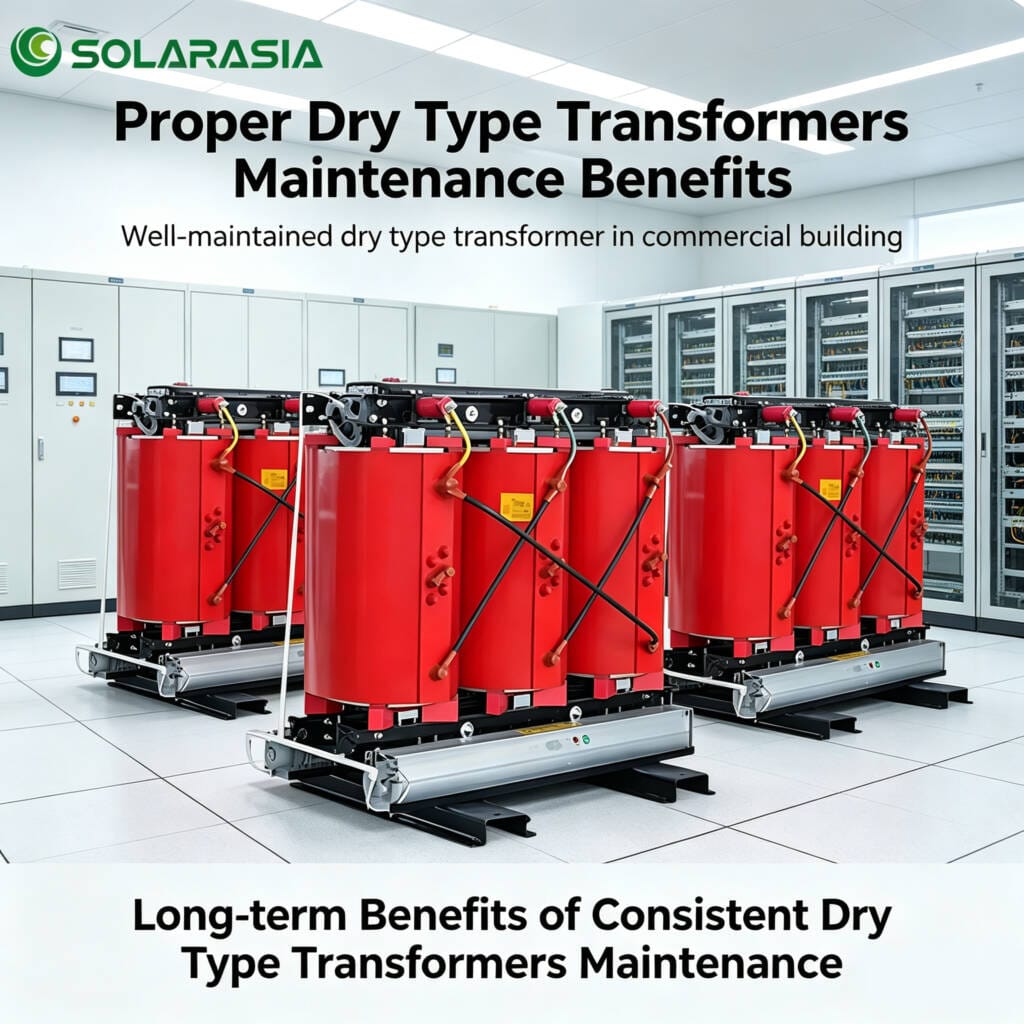
Dry type transformers, also known as cast resin or air-cooled transformers, use air or gas as the cooling medium instead of insulating oil. The windings are typically insulated with epoxy resin (in cast resin types) or other solid materials like Nomex or polyester film in ventilated designs.
Key Types Include:
- Cast Resin Dry Type Transformers — Encapsulated in epoxy for protection against moisture and dust.
- Ventilated Dry Type — Open to air circulation, suitable for cleaner environments.
- Vacuum Pressure Impregnated (VPI) — Windings impregnated under vacuum for enhanced insulation.
- Sealed or Non-Ventilated — Fully enclosed for harsh conditions.
These transformers excel in applications where fire safety, environmental compliance, and indoor installation are priorities. They produce no flammable liquids, generate lower fire risks, and align with green building standards. However, their solid insulation and exposure to ambient air make dry type transformers maintenance focused on cleanliness, connections, and thermal management rather than fluid analysis.
Properly designed and maintained units can last 25–40 years, but performance heavily depends on operating environment and care routines.
👉Our cast resin dry type transformers are designed for demanding indoor applications.
3.Dry Type Transformers vs. Oil-Filled Transformers: Maintenance Comparison
A frequent question is how dry type transformers maintenance stacks up against oil-filled (liquid-immersed) units.
| Aspect | Dry Type Transformers | Oil-Filled Transformers | Winner for Low Maintenance |
|---|---|---|---|
| Cooling Medium | Air / Solid Insulation | Mineral Oil or Ester Fluid | Dry Type |
| Oil Testing & Replacement | None | Regular DGA, moisture, dielectric testing | Dry Type |
| Fire & Environmental Risk | Very Low | Higher (leak/spill containment needed) | Dry Type |
| Cleaning Requirement | Dust removal critical | External cleaning + internal oil care | Comparable |
| Connection Checks | Critical (thermal expansion) | Critical | Tie |
| Typical Annual Cost | Lower (no fluid handling) | Higher due to oil management | Dry Type |
| Downtime for Maintenance | Shorter (no oil draining) | Longer | Dry Type |
| Lifespan with Proper Care | 25–40 years | 30–50+ years | Oil (slight edge) |
👉Learn more about the differences and when to choose oil filled transformers instead.
Dry type transformers maintenance avoids complex oil chemistry but demands vigilance against dust accumulation and loose connections caused by thermal cycling. Oil units require ongoing fluid monitoring but tolerate dirtier environments better in some cases.
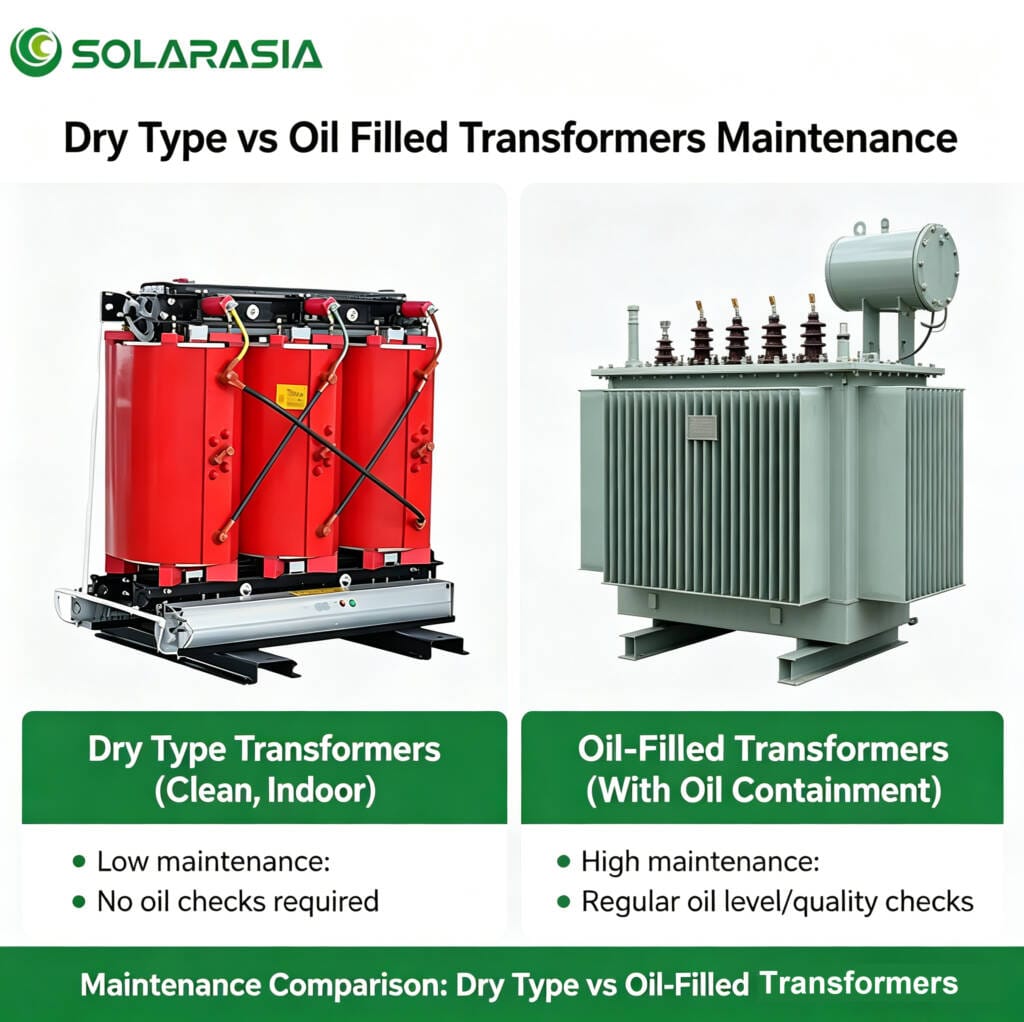
Overall, dry type units offer lower routine maintenance burdens and operating costs in suitable applications, making them ideal for indoor, medium-voltage needs up to certain capacities.
4.Why “Maintenance-Free” Is a Misleading Claim
The term “maintenance-free” is widely used in marketing materials for Trockentransformatoren. Manufacturers highlight the absence of oil-related tasks — such as oil sampling, filtration, or replacement — to position these units as simple, set-and-forget solutions. While it is true that dry type transformers eliminate many complexities associated with liquid-immersed units, calling them completely “maintenance-free” is misleading and potentially harmful.
In reality, leading industry standards organizations clearly recommend periodic inspections and ongoing care. For example, IEEE C57.94 (Recommended Practice for Installation, Application, Operation, and Maintenance of Dry-Type Distribution and Power Transformers) provides detailed guidelines on routine visual checks, cleaning, and electrical testing. Similarly, IEC 60076-11 outlines requirements for dry-type power transformers, stressing the need for regular condition monitoring to ensure long-term performance.
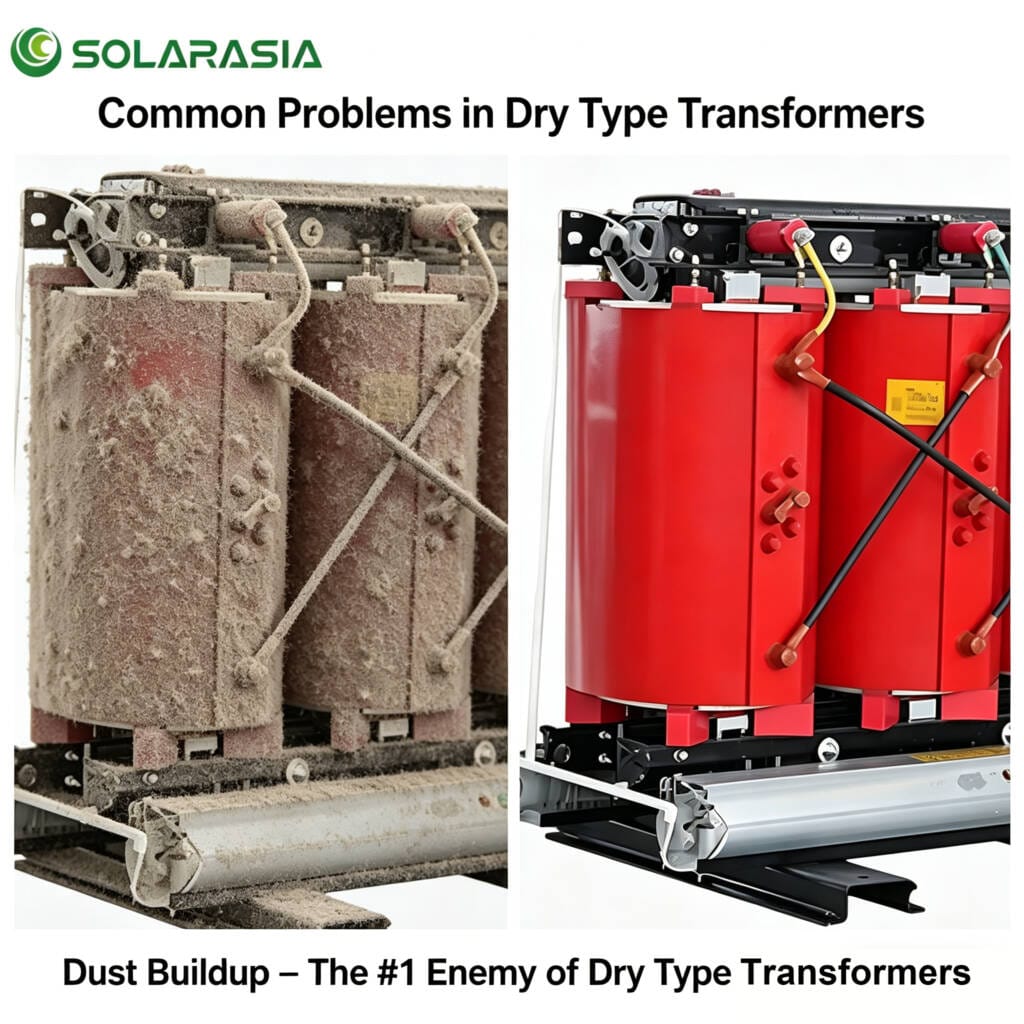
Environmental factors play a major role in degradation. Dust accumulation on windings and cooling surfaces reduces heat dissipation, leading to higher operating temperatures and hot spots. Humidity and moisture ingress can lower insulation resistance, promote tracking, and accelerate aging of the epoxy resin or other solid insulation materials. Load variations and mechanical vibration further contribute to loose connections over time. Without consistent dry type transformers maintenance, these issues compound and often result in reduced efficiency, partial discharge, insulation breakdown, or even complete failure.
Expert consensus is clear: dry type transformers are low-maintenance, not zero-maintenance. Treating them as truly hands-off can void manufacturer warranties, shorten service life (sometimes dramatically), and compromise the safety and reliability of your entire electrical system.
The good news is that a proactive dry type transformers maintenance program does not need to be complicated or expensive. Simple routines like regular cleaning and connection checks can prevent most issues and help your transformers deliver 25–40 years of dependable service.
5.Factors Affecting Dry Type Transformers Maintenance Needs
The maintenance frequency and intensity for Trockentransformatoren are not one-size-fits-all. They vary significantly depending on several operational and environmental factors. Understanding these variables is crucial for developing a tailored dry type transformers maintenance program that balances reliability with cost-effectiveness.
Here are the key factors that influence maintenance requirements:
- Environment Clean, climate-controlled indoor spaces (such as data centers or modern office buildings) typically require only annual maintenance. In contrast, dusty industrial plants, high-humidity areas, or facilities with chemical vapors demand much more frequent attention — every 3 to 6 months.
- Load Profile Transformers operating under continuous high loads or experiencing frequent start-stop cycles face greater thermal stress. This repeated heating and cooling causes expansion and contraction of components, which can loosen connections over time.
- Location and Installation Fully indoor installations with excellent ventilation require less maintenance than units in semi-exposed areas, poorly ventilated rooms, or those near doors/windows where dust ingress is higher.
- Age and Design Newer, high-quality cast resin dry type transformers are generally more resistant to environmental stress. However, older units (over 10–15 years) and those equipped with cooling fans require closer monitoring.
- Ambient Conditions High altitude (reduced air density affects cooling), extreme ambient temperatures, coastal areas with salt-laden air, or heavy pollution zones all accelerate wear on insulation and connections.
Assessing your specific conditions is the essential first step in building an effective dry type transformers maintenance program. Many facility managers conduct an initial site audit to evaluate these factors and create a customized maintenance schedule. This proactive approach helps prevent minor issues from escalating into major failures while optimizing maintenance costs.
6.Recommended Maintenance Schedule and Best Practices
Routine Schedule Recommendations (adjust based on site audit):
- Monthly/Quarterly (Visual & Operational Checks): While energized — listen for unusual noise, check temperatures, ensure ventilation is clear.
- Every 6 Months: In moderate-to-harsh environments — basic cleaning and inspection.
- Annually: Comprehensive de-energized maintenance in clean environments.
- Every 3–5 Years: Advanced diagnostic testing by qualified technicians.
Always follow lockout/tagout (LOTO) procedures and work with certified personnel for safety.
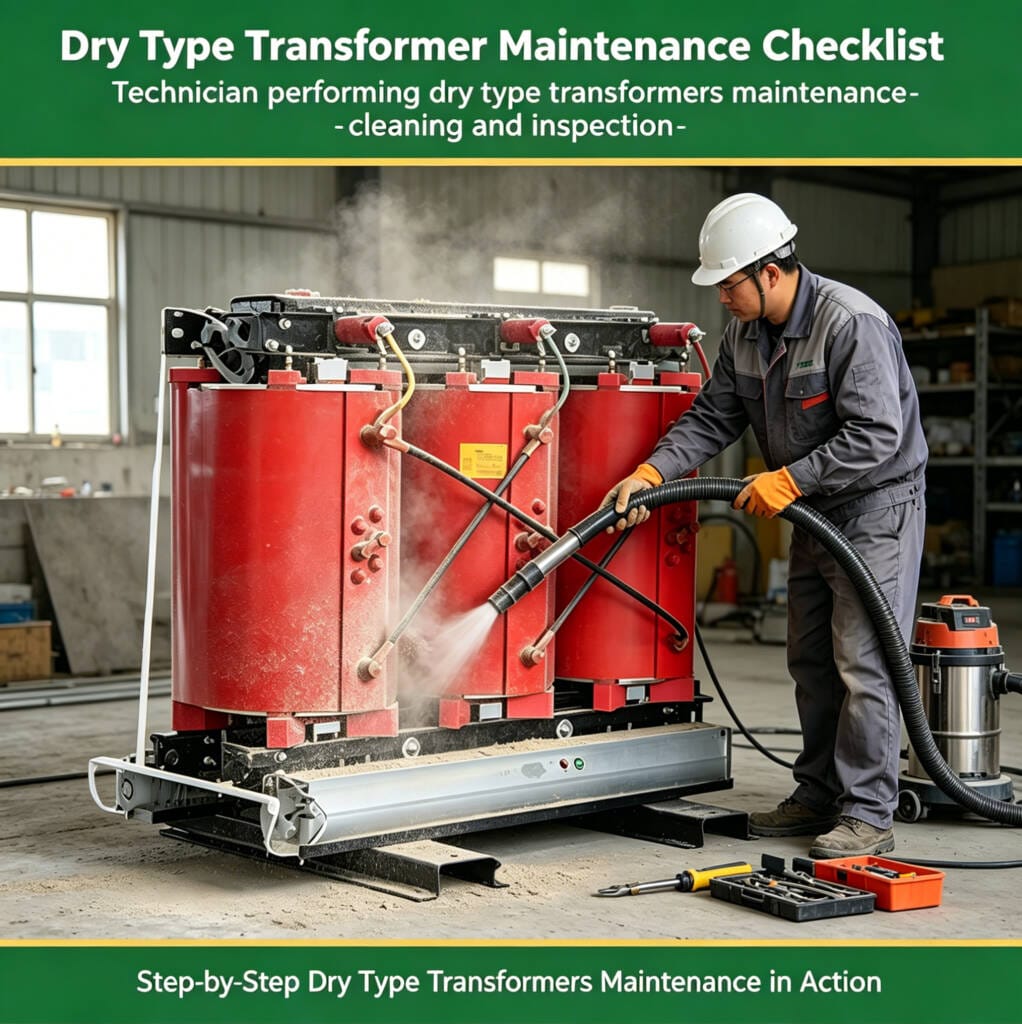
7.Step-by-Step Dry Type Transformers Maintenance Checklist
Here is a practical, field-proven dry type transformers maintenance checklist:
1. Pre-Maintenance Preparation
- Schedule during low-load periods.
- Gather tools: Vacuum with HEPA filter, compressed dry air (low pressure), torque wrench, insulation tester (Megger), infrared camera, flashlight, PPE.
- De-energize and verify isolation.
2. Visual and Mechanical Inspection
- Check enclosure for damage, corrosion, or loose panels.
- Inspect windings for dust, dirt, discoloration, cracking, or tracking marks.
- Examine connections for looseness, overheating signs (discoloration), or corrosion.
- Verify cooling fans (if present) operate correctly and are clean.
- Ensure vents and air paths are unobstructed.
3. Cleaning Procedures
- Use vacuum or low-pressure dry air to remove dust from coils, core, and insulators. Never use liquids unless specified.
- Clean insulators and lead supports with dry lint-free cloth or approved solvent.
- Remove any foreign material carefully to avoid damaging insulation.
4. Tightening and Mechanical Checks
- Torque all accessible electrical connections to manufacturer specifications.
- Check core clamping, supports, and busbars for tightness.
- Inspect for vibration-induced wear.
5. Electrical Testing (by Qualified Personnel)
- Insulation Resistance (IR) Test — Compare to baseline; Polarization Index (PI) > 2.0 is desirable.
- Turns Ratio Test.
- Winding Resistance Measurement.
- Power Factor / Dissipation Factor (where applicable).
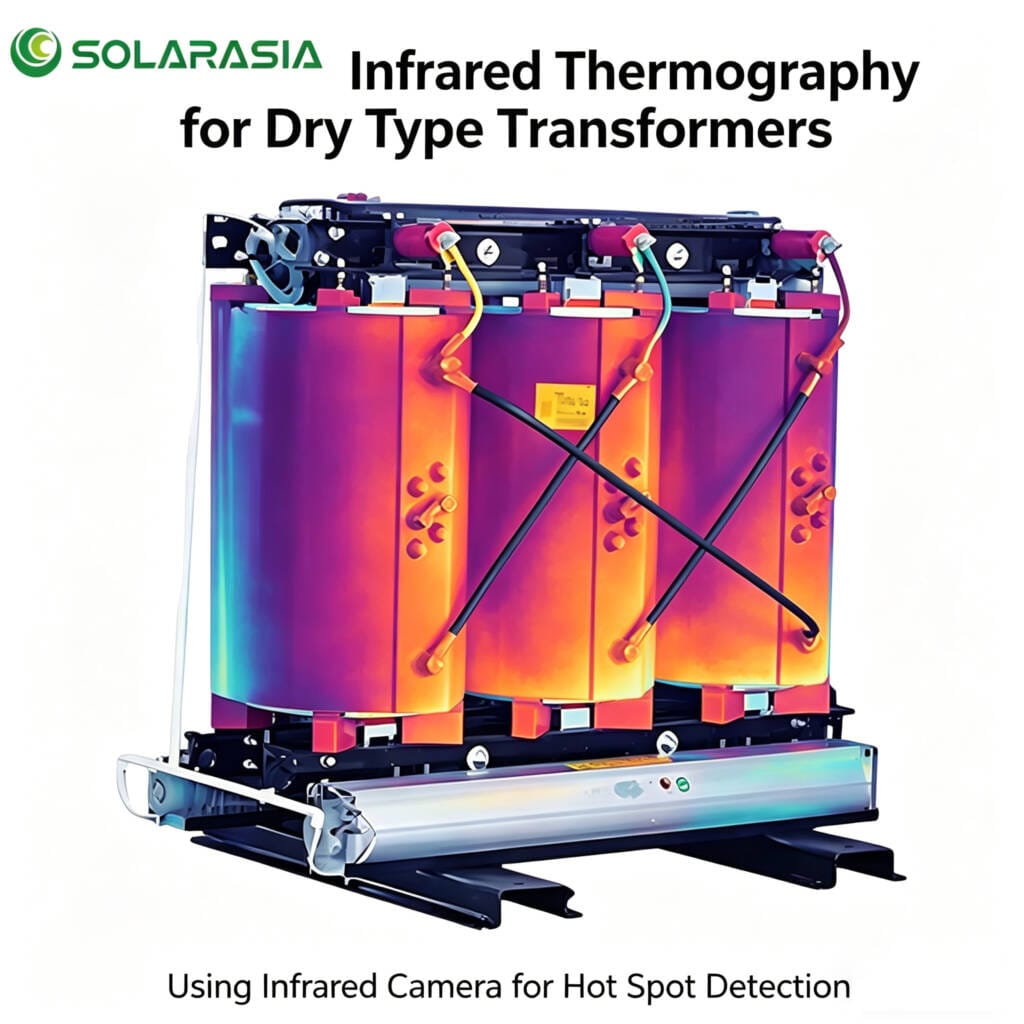
- Thermographic scanning for hot spots.
Sample Maintenance Frequency Table
| Task | Clean Environment | Dusty/Humid Environment | Tools/Notes |
|---|---|---|---|
| Visual Inspection | Quarterly | Monthly | IR Camera, Eyes/Ears |
| Dust Cleaning | Annually | Every 6 Months | Vacuum + Dry Air |
| Connection Tightening | Annually | Every 6 Months | Torque Wrench |
| Insulation Resistance Test | Annually | Annually | Megger Tester |
| Full Diagnostic Testing | Every 3 Years | Every 1–2 Years | Certified Technician |
Document all activities, including photos and test results, for trend analysis and compliance.
8.Common Issues in Dry Type Transformers and How to Prevent Them
1. Overheating — Often due to dust buildup reducing airflow or overload. Prevention: Regular cleaning and load monitoring.
2. Insulation Degradation — Caused by moisture, contamination, or thermal aging. Prevention: Proper environment control and periodic IR testing.
3. Loose Connections — Thermal expansion/contraction loosens bolts over time. Prevention: Scheduled torquing.
4. Partial Discharge — Indicates insulation voids or contamination. Prevention: Cleanliness and quality installation.
5. Excessive Noise/Vibration — Loose core or mounts. Prevention: Mechanical checks.
Early detection through consistent dry transformers maintenance prevents most failures.
9.Advanced Testing and Diagnostic Methods
Beyond basic checks, consider:
- Infrared Thermography (under load).
- Ultrasonic Partial Discharge Detection.
- Vibration Analysis.
- Dissolved Gas Analysis is not applicable, but trending electrical parameters is key.
Integrate these into a predictive maintenance program using IoT sensors for continuous monitoring in critical applications.
10.Cost-Benefit Analysis: The Real Savings of Proper Dry Type Transformers Maintenance
Proper maintenance typically costs a few hundred to a couple thousand dollars annually per unit, versus tens or hundreds of thousands in downtime, repair, or replacement costs from failures. Facilities practicing rigorous dry transformers maintenance report 20–30% longer service life and significantly lower total ownership costs compared to reactive approaches.
11.Best Practices for Installation and Environment Optimization
- Ensure adequate ventilation and cooling.
- Install in low-humidity, low-dust areas when possible.
- Use proper enclosures and filters in challenging environments.
- Follow manufacturer guidelines precisely during commissioning.
- Train staff on basic observation signs.
Partnering with experienced suppliers and service providers adds another layer of reliability.
12.Conclusion: Low Maintenance, Not Zero Maintenance
Dry type transformers offer outstanding advantages in safety, installation flexibility, and reduced environmental impact. However, the notion that they are completely maintenance-free is a myth that can lead to avoidable problems. A proactive dry transformers maintenance program—centered on cleanliness, connection integrity, and periodic testing—ensures decades of reliable service.
By implementing the schedules, checklists, and best practices outlined here, you protect your investment, minimize downtime, and maintain compliance with industry standards. For mission-critical applications, consider partnering with qualified transformer service providers for expert support.
Ready to optimize your dry type transformers maintenance program?
Download our free maintenance checklist PDF by subscribing below.