1.Introduction
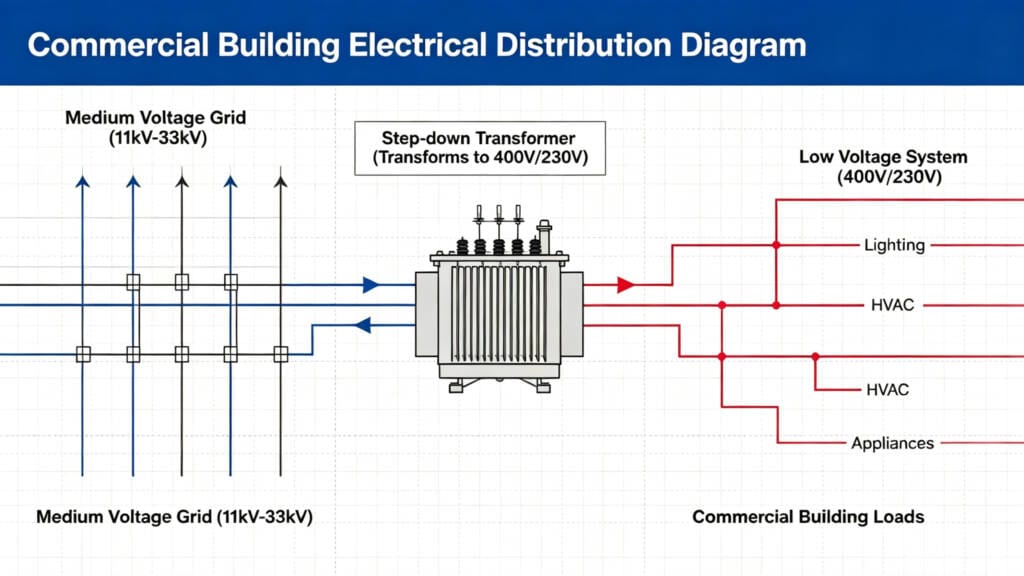
A commercial building transformer is the backbone of any modern power distribution system. Whether it’s an office tower, shopping mall, hospital, or industrial complex, transformers ensure safe and efficient voltage conversion from medium voltage (MV) to low voltage (LV) for end-use equipment.
As commercial buildings grow in complexity and energy demand, selecting the right transformer solution becomes critical—not only for operational efficiency but also for long-term cost savings and system reliability.
In this guide, we will explore how to choose, size, and deploy the best transformer solutions for commercial buildings, based on real-world engineering practices and industry standards.
Table of Contents
- Introduction
- Why Commercial Buildings Require Specialized Transformer Solutions
- Types of Commercial Building Transformer Systems
- Key Factors in Selecting the Right Commercial Building Transformer
- Transformer Sizing Guide for Commercial Applications
- Typical Transformer Configurations for Different Commercial Buildings
- Installation Best Practices for Commercial Transformer Systems
- Maintenance and Lifecycle Management
- Common Mistakes in Commercial Transformer Selection
- How to Choose a Reliable Transformer Supplier
- Conclusion
2.Why Commercial Buildings Require Specialized Transformer Solutions
Commercial buildings have significantly different electrical requirements compared to residential systems. They operate with higher loads, longer operating hours, and more complex electrical infrastructure.
Key Characteristics:
- Continuous high-load operation
- Multiple power distribution points
- Sensitive equipment (elevators, HVAC, data systems)
- Need for voltage stability and redundancy
A properly selected commercial building transformer ensures:
- Stable voltage output
- Reduced energy losses
- Protection of critical equipment
- Compliance with international standards
Without a well-designed transformer system, buildings risk power instability, increased maintenance costs, and potential downtime.
3.Types of Commercial Building Transformer Systems
Choosing the right transformer type depends on installation environment, load capacity, and safety requirements.
1.Oil Immersed Transformers
Oil immersed transformers are widely used in large commercial applications due to their excellent cooling performance and cost efficiency.
Advantages:
- High efficiency
- Better heat dissipation
- Suitable for large capacities (500kVA – 5000kVA+)
Applications:
- Shopping malls
- Industrial-commercial complexes
- Large office parks
For large-scale outdoor applications you can explore our oil immersed transformer solutions designed for commercial buildings
2.Dry Type Transformers
Dry type transformers are ideal for indoor installations where safety and environmental concerns are critical.
Advantages:
- Fire-resistant
- Low maintenance
- Environmentally friendly
Applications:
- Hospitals
- Office buildings
- Airports
- Data centers
For indoor installations with higher safety requirements check our dry type transformer for commercial buildings
3.Pad Mounted Transformers
Pad mounted transformers are enclosed units installed outdoors, commonly used in commercial distribution systems.
Advantages:
- Compact design
- Safe for public areas
- Easy installation
Applications:
- Commercial zones
- Hotels
- Urban infrastructure projects
Comparison Table: Transformer Types
| Transformer Type | Installation | Capacity Range | Safety Level | Cost Level | Typical Use Case |
|---|---|---|---|---|---|
| Oil Immersed | Outdoor | High | Medium | Low | Large buildings |
| Dry Type | Indoor | Medium | High | Medium | Offices, hospitals |
| Pad Mounted | Outdoor | Medium-High | High | Medium | Commercial zones |
4.Key Factors in Selecting the Right Commercial Building Transformer
Selecting the right transformer is not just about capacity—it involves a comprehensive evaluation of technical and environmental factors.
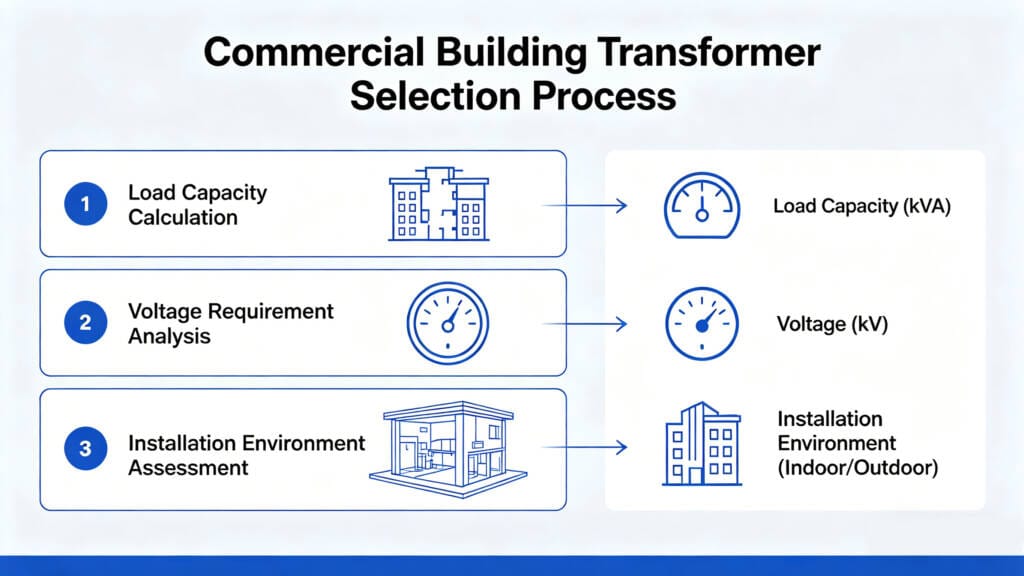
1.Load Demand and Capacity Planning
Accurate load calculation is essential. Undersized transformers can lead to overload, while oversized units increase capital costs.
Consider:
- Current load demand
- Future expansion
- Peak load conditions
2.Voltage Requirements
Typical commercial systems require conversion such as:
- 11kV to 400V
- 10kV to 415V
Matching voltage levels correctly ensures safe operation and equipment compatibility.
3.Installation Environment
Environmental conditions directly impact transformer performance:
- High temperature regions (Middle East, Africa)
- Coastal or humid environments
- Dust and sand exposure
4.Energy Efficiency and Standards
Efficiency directly affects operational costs. Understanding transformer efficiency is essential for reducing operational costs and energy loss as explained by the U.S. Department of Energy transformer efficiency guidelines
Look for compliance with:
- IEC standards
- ANSI standards
- Energy efficiency grades
5.Transformer Sizing Guide for Commercial Applications
Proper sizing is one of the most critical steps in selecting a commercial building transformer.
For more detailed calculation methods you can refer to IEEE transformer standards and technical resources
Basic Sizing Formula:
Transformer Capacity (kVA) = Total Load (kW) / Power Factor
Typical power factor: 0.8–0.9
Example Sizing Table
| Building Type | Estimated Load (kW) | Recommended Transformer |
|---|---|---|
| Small Office | 100–300 | 160–400 kVA |
| Medium Office | 300–800 | 500–1000 kVA |
| Shopping Mall | 1000–3000 | 1250–2500 kVA |
| Hospital | 800–2000 | Dual 1000–2000 kVA |
Key Tip:
Always allow 20–30% spare capacity for future expansion and load fluctuations.
If you are unsure about transformer sizing you can request a custom transformer solution for your project</a> from our engineering team
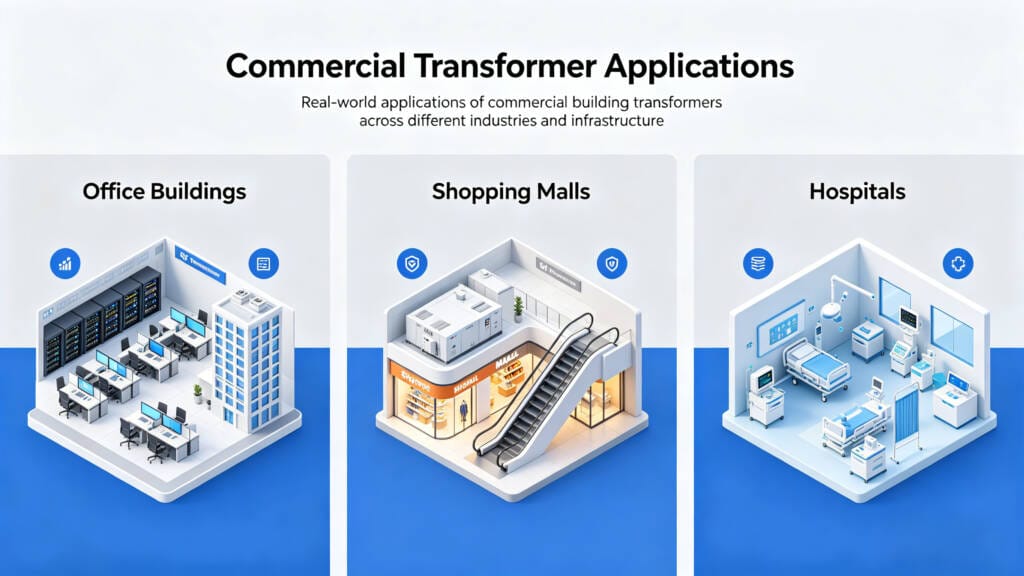
6.Typical Transformer Configurations for Different Commercial Buildings
Different building types require tailored transformer solutions.
We provide tailored commercial building transformer solutions for offices hospitals and shopping malls worldwide
Office Buildings
- Dry type transformer
- 400–1000 kVA
- Indoor installation
Shopping Malls
- Oil immersed transformer
- 1250–2500 kVA
- Outdoor substation
Hospitals
- Redundant transformer system
- Backup power integration
- High safety requirements
Data Centers
- High-efficiency transformers
- Redundancy (N+1 configuration)
- Voltage stability critical
7.Installation Best Practices for Commercial Transformer Systems
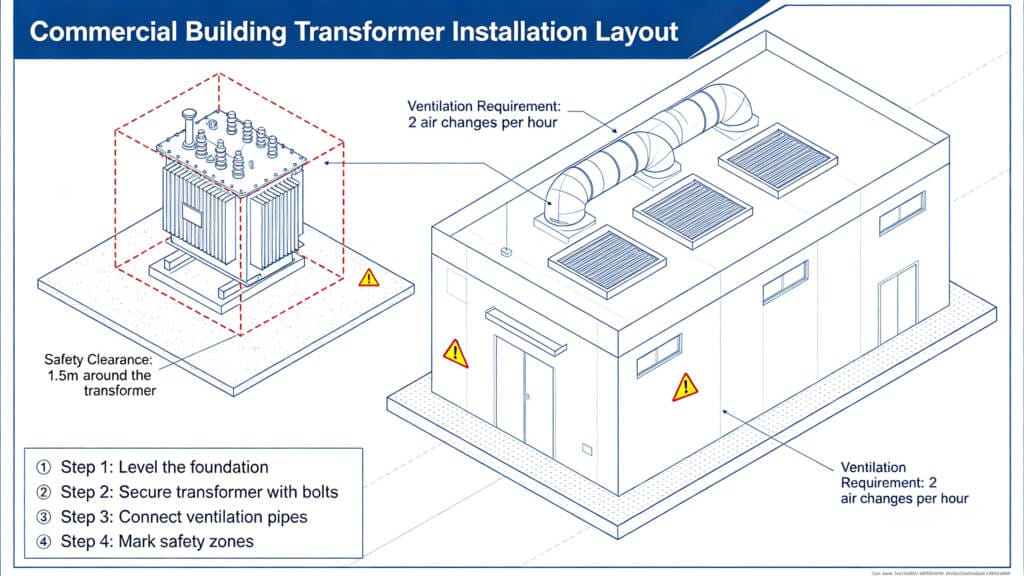
Proper installation ensures optimal performance and longevity.
Proper installation must follow global electrical safety practices outlined by NFPA electrical safety standards
Key Considerations:
- Adequate ventilation
- Safe clearance distances
- Proper grounding
- Fire protection systems
Installation Checklist Table
| Item | Requirement |
|---|---|
| Ventilation | Sufficient airflow |
| Grounding | Low resistance grounding |
| Clearance Distance | Meets safety standards |
| Protection System | Circuit breakers installed |
8.Maintenance and Lifecycle Management
Regular maintenance is essential to extend transformer lifespan and prevent failures.
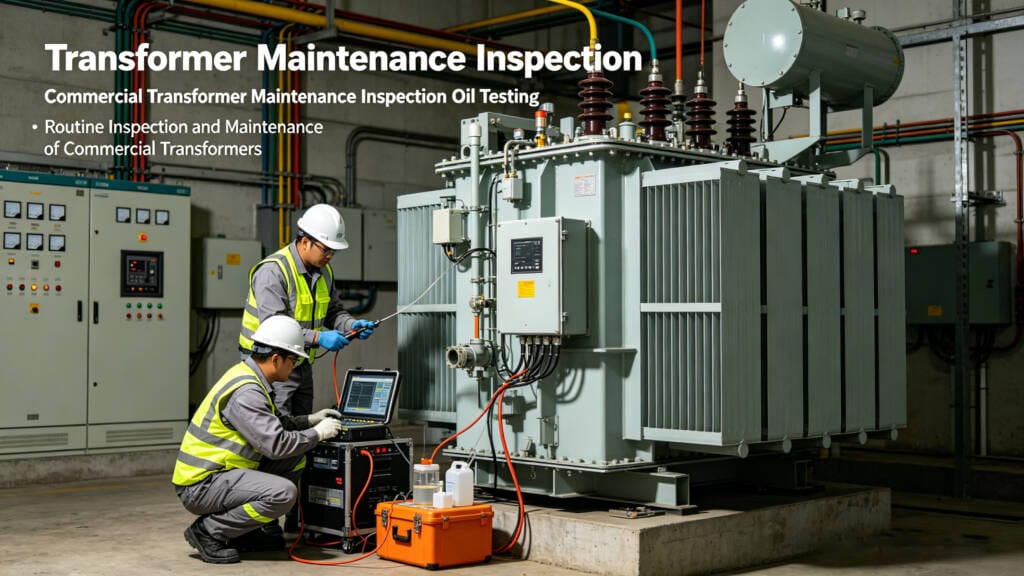
Maintenance Activities:
- Oil testing (for oil transformers)
- Temperature monitoring
- Insulation inspection
- Load monitoring
Lifecycle Insight:
A well-maintained transformer can last 20–30 years or more, significantly reducing long-term costs.
9.Common Mistakes in Commercial Transformer Selection
Avoiding these mistakes can save significant costs and operational risks.
- Incorrect capacity selection
- Ignoring environmental conditions
- Choosing low-quality suppliers
- Lack of redundancy planning
10.How to Choose a Reliable Transformer Supplier
A reliable supplier plays a critical role in project success.
Key Criteria:
- Proven project experience
- Compliance with international standards
- Custom design capability
- Strong after-sales support
Suppliers with experience in high-temperature and demanding environments can provide more reliable solutions for global projects.
11.Conclusion
Selecting the right commercial building transformer is essential for ensuring safe, efficient, and reliable power distribution.
From transformer type and capacity to installation and maintenance, every decision impacts the long-term performance of your electrical system.
🚀 Get Expert Support
If you are planning a commercial building project and need a customized transformer solution:
- Get professional load calculation support
- Receive tailored transformer recommendations
- Request a competitive quotation