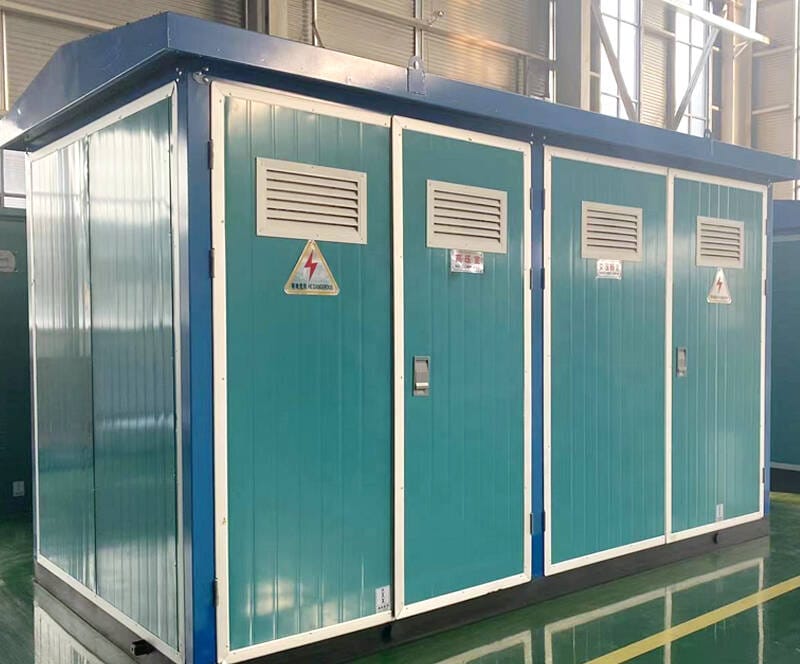
A professional transformer factory audit helps buyers verify manufacturing capability, quality control systems, and compliance with اللجنة الانتخابية المستقلة أو IEEE standards before signing a contract. Buyers who plan to procure an 11kV power transformer for industrial or utility applications should always confirm the manufacturer’s real production capability before placing an order.
1. Introduction: Why a Transformer Factory Audit Matters
أ transformer factory audit plays a critical role in international power equipment procurement. When overseas buyers source transformers from foreign manufacturers, they face multiple risks: inconsistent quality, weak testing capability, production outsourcing, delayed delivery, and non-compliance with IEC or IEEE standards. A structured transformer factory audit helps reduce these risks before contracts are signed and payments are released.
In real-world EPC projects, transformer failure rarely results from design theory. Instead, most failures originate from manufacturing defects, poor insulation drying, substandard materials, or insufficient testing. These issues often remain invisible until installation or commissioning. At that stage, replacement costs become significant and project delays may trigger penalties.
A professional transformer factory audit verifies:
- The manufacturer’s legal and operational legitimacy
- The real manufacturing capability
- The robustness of the quality control system
- The authenticity of testing facilities
- The supplier’s experience in export projects
Buyers who conduct thorough audits consistently experience lower failure rates and smoother project execution. From an engineering perspective, a transformer is not just a commodity—it is a long-term asset that operates for 20–30 years. Therefore, the audit must focus on manufacturing integrity, not only price competitiveness.
2. Understanding the Objectives of a Transformer Factory Audit
Before visiting a facility, buyers should clearly define what they expect from a transformer factory audit. The audit is not a ceremonial visit. It is a structured technical evaluation process.
The main objectives include:
| موضوعي | Why It Matters | Risk if Ignored |
|---|---|---|
| Verify legal status | Confirms manufacturer legitimacy | Fraudulent or trading companies |
| Confirm in-house production | Ensures real manufacturing capability | Heavy outsourcing |
| Evaluate quality control | Reduces defect risk | Hidden insulation or assembly issues |
| Inspect testing capability | Guarantees compliance | Incomplete or fake test reports |
| Assess export experience | Ensures logistics reliability | Shipping damage or documentation errors |
A buyer who approaches the transformer factory audit with a checklist mindset achieves more reliable results than one who conducts an informal tour.
From a procurement strategy perspective, the audit should answer one core question:
Can this manufacturer consistently produce safe, compliant, and durable transformers for my project?
3. Step 1 – Verify Legal Qualifications and Compliance
A transformer factory audit always begins with documentation verification. Paperwork alone does not guarantee quality, but incomplete or inconsistent documentation signals potential risks.
3.1 Business Registration and Export License
Start by reviewing the business license. Confirm:
- Registered company name matches factory signage
- Registered scope includes transformer manufacturing
- Factory address matches the physical location
- Export license is valid
Many buyers encounter trading companies that present themselves as manufacturers. During the audit, verify whether the entity you visit matches the legal registration documents.
You should also confirm:
- Years of operation
- Registered capital
- Ownership structure
A stable transformer manufacturer typically has consistent business history and verifiable tax records.
3.2 ISO Certification and Management Systems
An effective transformer factory audit examines whether the manufacturer operates under a certified management system. A certified ISO 9001 quality management system ensures that the manufacturer maintains structured production and documentation procedures.
Common certifications include:
- ISO 9001 – Quality Management
- ISO 14001 – Environmental Management
- ISO 45001 – Occupational Health & Safety
However, do not stop at checking the certificate. Inspect how the system operates in practice. Ask to see:
- Internal audit records
- Corrective action reports
- Supplier evaluation procedures
- Calibration logs for testing equipment
If the quality management system exists only on paper, it will not protect your project.
3.3 IEC / IEEE Compliance and Type Test Reports
Compliance with IEC or IEEE standards is essential for international transformer projects. International projects typically require compliance with the IEC 60076 standard for power transformers, which defines testing procedures, temperature rise limits, and insulation requirements. Projects in North America often follow the IEEE C57 transformer standard, which specifies performance and testing requirements for distribution and power transformers.
During the transformer factory audit, request:
- Type test reports for similar ratings (e.g., 11kV, 20kV, 33kV)
- Testing laboratory name (KEMA, CESI, etc.)
- Test report validity date
- Nameplate data consistency
Verify whether the tested transformer specifications match your project requirements. Some manufacturers show unrelated test reports that do not correspond to your voltage class or capacity.
A credible transformer manufacturer should provide traceable documentation and explain the testing parameters confidently.
Transformer Audit Documentation & Compliance Requirements
Proper documentation is critical for transformer projects to ensure regulatory compliance, minimize audit risks, and support smooth project execution. This guide provides key documentation requirements, vendor assessment methods, budgeting tips, and best practices to help electrical engineers and project managers maintain full compliance.
🔹 Tip: Comprehensive audit documentation not only satisfies regulators but also protects your project timeline and budget.
Core Audit Documentation for Transformer Projects
For electrical engineering transformer projects, buyers must request these essential documents during vendor selection and factory audits:
- Legal & Certification Files
- Business license, ISO 9001/14001 certificates.
- Type test reports from accredited labs (e.g., KEMA, CESI).
- Compliance with local regulations and international standards like IEC 60076 و IEEE C57 [web:1][web:2].
- Technical Specifications
- General Arrangement (GA) drawings, wiring diagrams, material certificates.
- Design calculations and rated capacity verification.
- Quality Records
- Manufacturing quality plan and in-process inspection logs.
- Non-conformance reports (NCRs) with corrective actions.
- Supplier quality audits and acceptance records.
These documents verify that the transformer meets project specifications and international quality standards, reducing risk during commissioning and operation.
Documentation to Minimize Audit Risks for Transformers
To reduce compliance and audit risks, focus on traceability, verification, and record-keeping:
- Vendor Compliance History
- Past project lists, customer references, NCR statistics.
- Third-party audit reports from the last 5 years.
- Production Phase Documentation
- Material traceability logs, in-process inspection sheets, and final routine test reports.
- Pre-Shipment Verification
- Factory Acceptance Test (FAT) protocols.
- Witness test records and calibration certificates for testing equipment.
Best Practices:
- Require digital copies of all documentation for faster auditing.
- Maintain a vendor scorecard for ongoing compliance tracking.
- Conduct periodic review of historical compliance data to detect potential risks [web:1][web:5].
Assessing Transformer Vendors’ Compliance Track Record
A structured evaluation ensures you select reliable manufacturers:
- Review Historical Compliance Data
- Check recalls, rework rates, and CAPA (Corrective and Preventive Actions) processes.
- Request Third-Party Validations
- Independent factory audits and compliance questionnaires.
- Cross-check against industry certifications and local standards.
- Score Vendors on Key Metrics
- 80%+ pass rate on past audits.
- Zero major non-conformities in recent projects.
- Include risk weighting for critical components (e.g., transformer bushings, tap changers).
This structured approach helps avoid costly project delays and ensures long-term operational reliability.
Budgeting for Transformer Compliance Documentation
Allocate 5–10% of your transformer project budget to documentation and compliance management:
| Item | Typical Cost Driver | Budget Tip |
|---|---|---|
| Third-Party Factory Audit | Travel + Inspector fees | Bundle with FAT to reduce costs |
| Type/Routine Test Reports | Lab accreditation | Negotiate inclusion in vendor quote |
| Document Translation/Certification | Multi-language projects | Use digital formats to reduce printing costs |
| Compliance Software/Tools | Traceability systems | Start with Excel templates, scale to ERP |
Pro Tip: Discuss the documentation scope in your RFQ to avoid surprises and ensure vendor accountability
Need Expert Help with Transformer Factory Audits?
4. Step 2 – Evaluate the Transformer Manufacturing Process
After documentation review, shift focus to the production workshop. This step forms the technical core of a transformer factory audit. For projects involving medium-voltage applications, selecting a reliable 33kV power transformer manufacturer requires careful evaluation of workshop facilities and engineering expertise.
A factory may present a modern office environment, but the workshop reveals the real capability.
4.1 Core Cutting and Stacking Workshop
The transformer core significantly influences no-load losses and overall efficiency. During the audit, inspect:
- Core cutting machines
- Step-lap cutting capability
- Core stacking environment
- Silicon steel storage conditions
Check whether the factory uses reputable silicon steel brands. Poor-quality steel increases losses and operating costs over the transformer’s lifetime.
A well-organized core workshop demonstrates production discipline and technical maturity.
4.2 Coil Winding and Insulation Process
The winding process determines mechanical strength and insulation reliability.
Observe:
- Automatic or semi-automatic winding machines
- Conductor storage conditions
- Insulation paper handling
- Inter-layer insulation control
Improper winding tension can lead to deformation under short-circuit stress. During the transformer factory audit, ask engineers how they calculate short-circuit forces and design mechanical reinforcement.
Experienced manufacturers can explain:
- Axial force control
- Radial compression methods
- Clamping structure design
This discussion quickly reveals whether the factory possesses real engineering depth.
4.3 Vacuum Drying System (VPD / VPI)
Vacuum drying represents one of the most critical processes in transformer manufacturing.
Moisture inside insulation drastically reduces dielectric strength. Therefore, the transformer factory audit must confirm:
- Presence of vacuum drying equipment
- Tank size compatibility with transformer rating
- Temperature and pressure monitoring system
- Drying cycle records
Factories without proper vacuum drying equipment often outsource this step or use simplified heating methods. These shortcuts directly affect transformer lifespan.
A professional manufacturer maintains documented drying curves and process parameters.
4.4 Oil Filling and Degassing Equipment
For oil-immersed transformers, oil filling quality determines insulation performance.
Inspect:
- Oil filtration machine
- Vacuum oil filling system
- Oil storage tanks
- Oil testing instruments
Ask whether the factory tests oil for:
- Breakdown voltage
- Moisture content
- Dissolved gas analysis (if applicable)
The transformer factory audit should confirm that oil filling occurs under controlled vacuum conditions to prevent air pockets.
Summary of Manufacturing Inspection Focus
| Production Stage | What to Inspect | Key Risk |
|---|---|---|
| Core assembly | Cutting accuracy, stacking process | High no-load loss |
| Coil winding | Tension control, insulation | Short-circuit failure |
| Vacuum drying | Equipment and records | Insulation breakdown |
| Oil filling | Vacuum process, oil test | Partial discharge risk |
At this point in the transformer factory audit, buyers usually gain a clear impression of whether the manufacturer operates as a serious industrial facility or as a light assembly workshop.
Planning a Transformer Project?
5. Step 3 – Inspect the Testing Laboratory and FAT Capability
A transformer may look well-assembled on the production floor, but only testing can confirm its electrical integrity. For this reason, the testing laboratory represents one of the most critical checkpoints during a transformer factory audit.
A reliable transformer manufacturer does not treat testing as a formality. Instead, they view it as a controlled verification process that ensures every unit meets contractual and international standards. If the project requires a cast resin unit, buyers should verify whether the dry type transformer factory maintains the same level of testing discipline as oil-immersed production lines.
During the audit, you should allocate sufficient time to inspect the testing laboratory in detail.
5.1 Verify the Testing Laboratory Infrastructure
Begin by reviewing the physical condition of the testing area. Look for:
- Clearly separated high-voltage test zones
- Safety grounding systems
- Shielded control panels
- Calibration certificates for testing instruments
- Adequate space for transformers of your required rating
A professional laboratory should operate under strict safety and procedural controls. Disorganized cable layouts, missing safety barriers, or outdated equipment often indicate weak testing discipline.
You should also verify:
- Annual calibration records
- Equipment supplier brands
- Maximum testing capacity (kV and MVA rating)
If your project requires a 33kV transformer, the factory must demonstrate the ability to test at or above that voltage class.
5.2 Routine Test vs Type Test – Understanding the Difference
Many overseas buyers confuse routine tests with type tests. A structured transformer factory audit should clearly distinguish between them.
| Test Type | غاية | تكرار | Conducted On |
|---|---|---|---|
| Routine Test | Verify each manufactured unit | Every transformer | Factory |
| Type Test | Validate design performance | Once per design | Independent lab |
| Special Test | Additional project requirements | Upon request | Factory or external lab |
Routine Tests Typically Include:
- Measurement of winding resistance
- Voltage ratio and vector group check
- No-load loss and current
- Load loss and impedance voltage
- Applied voltage test
- Induced voltage test
Routine tests confirm that the specific transformer you purchase complies with the contract.
Type Tests Typically Include:
- Temperature rise test
- Lightning impulse test
- Short-circuit withstand test
Type tests validate the design structure under extreme conditions.
During the transformer factory audit, request to see:
- Sample routine test reports
- Type test certificates for similar ratings
- Report traceability and serial numbers
A reliable manufacturer maintains systematic digital or physical archives of test records.
5.3 Evaluating the Transformer FAT Test Procedure
Factory Acceptance Testing (FAT) represents a structured verification step before shipment. Many EPC contractors send third-party inspectors to witness FAT.
A thorough transformer factory audit should include:
- Review of FAT procedures
- Observation of an actual FAT (if production schedule allows)
- Confirmation of documentation workflow
A proper FAT process includes:
- Pre-test checklist
- Instrument calibration verification
- Controlled test sequence
- Immediate recording of results
- Authorized sign-off
You should verify whether FAT data is manually written or digitally recorded. Digital data acquisition systems typically reduce human error.
5.4 Key Questions to Ask During Laboratory Inspection
Experienced buyers often ask targeted technical questions during a transformer factory audit:
- How do you measure load loss accuracy?
- What is your maximum short-circuit test experience?
- How do you handle test failure cases?
- How do you ensure instrument calibration traceability?
The engineer’s ability to answer clearly reflects the depth of technical knowledge inside the factory.
If responses remain vague or overly simplified, this may indicate limited real testing experience.
6. Step 4 – Review the Quality Control System
A transformer factory audit does not end with production observation and testing capability. The internal quality control system determines whether the factory can maintain consistency across multiple orders.
Even excellent equipment cannot compensate for weak quality discipline.
6.1 Incoming Raw Material Inspection
Transformer performance strongly depends on material quality. During the audit, inspect how the manufacturer verifies incoming materials.
Key materials include:
- Silicon steel
- Copper or aluminum conductors
- Insulation paper
- Transformer oil
- البطانات
- Tap changers
Ask to review:
- Supplier qualification list
- Material inspection reports
- Batch traceability system
A strong quality control system tracks materials from supplier delivery to final assembly.
For example, silicon steel grade directly impacts no-load loss. If the factory cannot trace material batch numbers, they cannot guarantee performance consistency.
6.2 In-Process Quality Control
In-process control reduces defect accumulation.
During your transformer factory audit, check whether the manufacturer conducts inspections at critical stages:
| Production Stage | Inspection Focus | Documentation Required |
|---|---|---|
| Core assembly | Lamination alignment | Core inspection report |
| لف | Insulation thickness | Winding inspection form |
| Drying | Temperature curve | Drying record |
| Assembly | Bolt torque verification | Assembly checklist |
Ask whether supervisors sign off each stage before moving to the next.
A structured approval system indicates production discipline.
6.3 Final Inspection Before Shipment
Before packaging, the transformer should undergo:
- Visual inspection
- Nameplate verification
- Accessory check
- Oil level confirmation
- Leakage inspection
During the transformer factory audit, verify whether the factory uses a standardized final inspection checklist.
Inconsistent nameplate information often creates customs clearance or installation confusion. Confirm that voltage, capacity, impedance, and vector group match your contract.
6.4 Documentation and Traceability System
Traceability protects both buyer and manufacturer.
A mature transformer manufacturer maintains:
- Unique serial numbers
- Digital archiving system
- Production batch tracking
- FAT record linking
Ask whether you can retrieve all records five years later. Long-term document retention demonstrates professionalism.
7. Evaluating Process Consistency and Risk Control
A transformer factory audit should also assess how the manufacturer handles risk and non-conformities.
Key areas include:
- Non-conformance reporting system
- Corrective action process
- Root cause analysis procedures
- Continuous improvement initiatives
If a transformer fails testing, what happens next?
Professional factories:
- Conduct root cause analysis
- Document corrective measures
- Prevent recurrence through process adjustment
Factories that simply rework without documentation expose buyers to repeated defects.
8. Quality Control Maturity Assessment Framework
You can evaluate quality maturity using a simplified model:
| Level | Characteristics | Risk Level |
|---|---|---|
| Basic | Minimal documentation, reactive control | عالي |
| Structured | Defined procedures, partial records | واسطة |
| Integrated | Digital tracking, preventive approach | قليل |
During the transformer factory audit, aim to determine where the manufacturer stands within this framework.
9. Real-World Experience Insight
From practical EPC project experience, the majority of transformer failures originate from:
- Insufficient insulation drying
- Inadequate clamping force
- Oil contamination
- Poor short-circuit design margin
These problems often remain invisible during visual inspection but become detectable when reviewing process control and testing documentation.
Therefore, a transformer factory audit should prioritize process verification over superficial facility appearance.
10. Step 5 – Assess Engineering and Customization Capability
A transformer factory audit must evaluate not only manufacturing and testing, but also engineering capability. Transformers are rarely standard products in large infrastructure projects. Voltage levels, impedance, cooling methods, tap changers, and protection requirements often vary by country and application.
A manufacturer without strong engineering support may produce basic distribution transformers but struggle with complex project requirements.
10.1 Design Team Structure and Experience
During the transformer factory audit, request to meet the engineering team. Ask:
- How many electrical engineers are on staff?
- Do they specialize in distribution, power, or both?
- What design software do they use?
- How do they calculate short-circuit forces?
Professional transformer manufacturers typically use:
- Electromagnetic simulation tools
- Thermal calculation software
- Mechanical stress analysis
If engineers rely solely on past drawings without recalculating design parameters, risk increases when specifications change.
An experienced design team should confidently explain:
- Loss optimization strategies
- Impedance control methods
- Temperature rise calculation
- Dielectric margin safety factors
Their technical clarity reflects the depth of expertise within the company.
10.2 Customization Capability
Many overseas projects require customized transformers. During the transformer factory audit, verify whether the manufacturer can handle:
- Non-standard voltage combinations
- Special impedance values
- On-load tap changers
- Special cooling systems (ONAN, ONAF)
- High ambient temperature design
- Corrosion-resistant treatment
Ask for previous examples of customized projects.
| Customization Type | Why It Matters | Risk if Inexperienced |
|---|---|---|
| Special impedance | Grid stability | Protection miscoordination |
| High ambient design | Desert projects | ارتفاع درجة الحرارة |
| Marine coating | Coastal projects | Corrosion failure |
| On-load tap changer | Voltage regulation | Operational instability |
A reliable manufacturer integrates engineering adjustments into both design and production planning.
10.3 Experience with International Standards
Different regions follow different standards:
- IEC (Europe, Asia, Africa)
- IEEE / ANSI (North America)
- GOST (Russia and CIS)
During the transformer factory audit, verify whether the engineering team understands these standards in practice, not just in theory.
Ask:
- Can you explain IEC temperature rise limits?
- How do you design for IEEE impulse levels?
- What are the differences in test requirements?
A knowledgeable engineering team should answer without hesitation.
11. Step 6 – Review Project References and Export Experience
A transformer may perform well in domestic markets but encounter issues in international logistics and documentation.
A comprehensive transformer factory audit includes export capability verification.
11.1 Project References
Request a list of:
- Countries exported to
- Voltage classes supplied
- Project types (solar, wind, industrial, substation)
- EPC clients
Ask for:
- Photos of installed transformers
- Commissioning reports
- Client reference letters
Experienced exporters often maintain structured project portfolios.
If the factory cannot provide verifiable export records, proceed cautiously.
11.2 Packaging and Protection Standards
Improper packaging causes significant transformer damage during sea transport.
During the transformer factory audit, inspect:
- Wooden crate quality
- Anti-rust treatment
- Moisture protection measures
- Shock protection design
For oil-immersed transformers, confirm:
- Whether oil is filled or transported separately
- Nitrogen pressure maintenance
- Breather protection
| Packaging Element | Inspection Focus | Risk if Neglected |
|---|---|---|
| Wooden base | Load-bearing strength | Structural damage |
| Sealing | حماية الرطوبة | Insulation degradation |
| Metal surface coating | Corrosion resistance | Rust formation |
| Container lashing | Securing method | Transit movement |
Factories with strong export experience often follow international packaging standards and provide loading photos.
11.3 Shipping Documentation and Compliance
A transformer factory audit should confirm whether the manufacturer understands:
- Bill of Lading requirements
- Certificate of Origin
- Commercial Invoice accuracy
- Packing list consistency
- HS code classification
Documentation errors frequently delay customs clearance and increase project cost.
Reliable exporters maintain internal documentation review procedures before shipment.
12. Common Red Flags Identified During a Transformer Factory Audit
Even modern-looking facilities may hide operational weaknesses. Experienced buyers watch for subtle warning signs.
Below are common red flags observed during transformer factory audits.
12.1 No In-House Testing Laboratory
If the factory outsources all testing:
- Delivery timelines become unstable
- Quality traceability weakens
- Test authenticity becomes harder to verify
A manufacturer without testing capability should not position itself as a full-scale transformer factory.
12.2 Lack of Vacuum Drying Equipment
Vacuum drying equipment is essential for insulation reliability. If the factory uses only hot air ovens without vacuum systems, long-term insulation strength may suffer.
This is one of the most serious red flags in a transformer factory audit.
12.3 Excessive Outsourcing of Core Components
Some factories:
- Purchase semi-finished cores
- Outsource winding
- Outsource tank fabrication
Outsourcing is not inherently negative, but lack of process control over outsourced components increases risk.
Ask:
- Which components are produced in-house?
- How do you inspect outsourced parts?
Transparency indicates professionalism.
12.4 Inconsistent Nameplate or Documentation Data
Check whether:
- Nameplate voltage matches contract
- Test report data matches serial number
- Impedance values align with specifications
Inconsistency signals weak document control.
12.5 Poor Workshop Organization
A disorganized workshop may indicate:
- Weak process control
- Safety risks
- Inconsistent production standards
While appearance alone does not determine quality, systematic order often correlates with operational discipline.
13. Risk Evaluation Summary
You can summarize findings using a simple risk evaluation matrix:
| Audit Area | Evaluation | Risk Level |
|---|---|---|
| Legal compliance | Verified | قليل |
| Manufacturing capability | Strong | قليل |
| Testing capacity | Adequate | واسطة |
| Engineering support | Strong | قليل |
| Export experience | Limited | واسطة |
This structured assessment helps internal decision-makers justify supplier selection.
14. Why a Transformer Factory Audit Protects Long-Term Investment
Transformers operate for decades. Their lifecycle cost far exceeds initial procurement cost.
A poorly manufactured transformer may lead to:
- Unexpected downtime
- Expensive replacement
- Grid instability
- Reputation damage
A structured transformer factory audit reduces these risks significantly.
In real infrastructure projects, the cost of one transformer failure often exceeds the cost of conducting multiple audits.
Therefore, experienced buyers treat factory audits as preventive investment rather than administrative procedure.
15. Practical Transformer Factory Audit Checklist
After reviewing documentation, production processes, testing capability, engineering strength, and export experience, buyers should consolidate findings into a structured checklist.
Below is a comprehensive transformer factory audit checklist designed for overseas procurement teams.
15.1 Legal and Certification Verification
| Item | Verified (Yes/No) | Notes |
|---|---|---|
| Business license matches factory entity | ||
| Export license valid | ||
| ISO 9001 certification | ||
| ISO 14001 certification | ||
| ISO 45001 certification | ||
| IEC / IEEE compliance capability | ||
| Valid type test reports available |
15.2 Manufacturing Capability
| Item | Verified (Yes/No) | Notes |
|---|---|---|
| In-house core cutting | ||
| In-house winding process | ||
| Vacuum drying equipment available | ||
| Oil filtration and vacuum filling system | ||
| Controlled workshop environment |
15.3 Testing Laboratory
| Item | Verified (Yes/No) | Notes |
|---|---|---|
| Routine testing equipment complete | ||
| FAT procedure documented | ||
| Calibration certificates available | ||
| Digital test data recording | ||
| High-voltage test capability meets project requirement |
15.4 Quality Control and Documentation
| Item | Verified (Yes/No) | Notes |
|---|---|---|
| Incoming material inspection system | ||
| In-process inspection records | ||
| Final inspection checklist | ||
| Traceability system | ||
| Corrective action procedure |
15.5 Engineering and Export Experience
| Item | Verified (Yes/No) | Notes |
|---|---|---|
| Dedicated engineering team | ||
| Experience with similar voltage class | ||
| Customization capability | ||
| Export references | ||
| International packaging standards |
This checklist transforms a general factory visit into a structured transformer factory audit process. It also helps procurement managers document findings and justify supplier selection decisions internally.
16. How to Conduct an Effective Transformer Factory Audit
Conducting a transformer factory audit requires preparation and technical clarity. Below are practical implementation steps used by experienced EPC teams.
16.1 Prepare Technical Specifications in Advance
Before visiting the factory, provide:
- Rated capacity
- Voltage level
- Impedance requirement
- Cooling method
- Applicable standard (IEC or IEEE)
Clear specifications allow engineers to demonstrate real design capability during discussions.
16.2 Involve Technical Experts
Procurement staff alone may not identify technical weaknesses. Involve:
- Electrical engineers
- Third-party inspectors
- Commissioning specialists
A cross-functional audit team increases evaluation accuracy.
16.3 Allocate Sufficient Time
A serious transformer factory audit cannot be completed in two hours. Plan at least:
- Half day for documentation review
- Half day for workshop inspection
- Additional time for testing lab evaluation
Rushed audits miss critical details.
16.4 Document Everything
Take:
- Photos (with permission)
- Copies of certificates
- Serial numbers of tested units
- Notes from engineering discussions
Comprehensive documentation strengthens your internal risk assessment.
17. Frequently Asked Questions
Below are structured FAQ sections optimized for search visibility and practical clarity.
17.1 How do you conduct a transformer factory audit?
To conduct a transformer factory audit, buyers should verify legal qualifications, inspect the manufacturing process, review testing laboratory capability, evaluate quality control systems, and assess engineering and export experience. A structured checklist ensures consistency.
17.2 What should be checked during a transformer factory visit?
During a transformer factory visit, buyers should examine core production, winding processes, vacuum drying systems, FAT testing procedures, material traceability, and packaging standards. Observing in-house capabilities is critical.
What is a transformer FAT test?
A transformer FAT (Factory Acceptance Test) verifies electrical performance before shipment. It includes routine tests such as winding resistance, no-load loss, load loss, applied voltage test, and induced voltage test. FAT ensures compliance with project specifications.
Why is vacuum drying important in transformer manufacturing?
Vacuum drying removes moisture from insulation materials. Moisture reduces dielectric strength and shortens transformer lifespan. Proper vacuum drying significantly improves long-term reliability.
How can overseas buyers verify a transformer manufacturer?
Overseas buyers can verify a transformer manufacturer by reviewing business registration documents, confirming in-house production capability, checking valid type test reports, inspecting testing laboratories, and evaluating project references.
What are the main risks of skipping a transformer factory audit?
Skipping a transformer factory audit may lead to quality defects, delayed delivery, non-compliance with standards, insulation failure, and increased lifecycle cost. Early verification reduces long-term operational risk.
What audit documentation do we need for our transformer project?
Key docs include type test reports, GA drawings, quality plans, FAT records, and compliance certificates (ISO, IEC). Request them during RFQ and verify during factory audit
How do we assess transformer vendors for compliance track records?
Review NCR history, third-party audits, customer references, and CAPA processes from the past 5 years. Use a vendor scorecard for objective evaluation.
What documentation minimizes audit risks for our transformers?
Prioritize material traceability, in-process inspections, routine test reports, and FAT witness records. Digital archiving ensures easy access for audits.
How do we budget for transformer compliance documentation?
Reserve 5–10% for audits, tests, and certifications. Negotiate doc inclusion in vendor pricing and bundle services like FAT witnessing.
18. Final Conclusion: Making Informed Procurement Decisions
A transformer factory audit represents more than a compliance exercise. It protects long-term infrastructure investment. Overseas buyers who wish to schedule a visit to our transformer manufacturing facility can contact our engineering team for detailed documentation and factory tour arrangements.
Transformers operate at the heart of power distribution networks. Their reliability directly affects industrial production, renewable energy projects, substations, and grid stability.
By conducting a structured transformer factory audit, overseas buyers can:
- Verify manufacturing integrity
- Confirm testing authenticity
- Assess engineering competence
- Identify operational red flags
- Reduce long-term project risk
Professional transformer manufacturers welcome audits. They understand that transparency builds trust and strengthens long-term cooperation.
In international procurement, price alone does not determine value. Manufacturing capability, process discipline, and technical expertise define true reliability.
A well-executed transformer factory audit ensures that your selected supplier can deliver safe, compliant, and durable transformers for decades of operation.