
Table of Contents (TOC)
- Introduction: Why 33kV Transformer Selection Matters
- Understanding 33kV Power Distribution in Commercial Buildings
- Typical Applications of 33kV Transformers in Commercial Projects
- Load Analysis and Capacity Planning for 33kV Transformer Selection
- Oil-Immersed vs Dry-Type Transformers at 33kV
- Installation Environment and Site Planning Considerations
- Cooling Methods, Efficiency, and Loss Evaluation
- Standards, Certifications, and Utility Compliance
- Common Mistakes in 33kV Transformer Selection
- Conclusion and Engineering Recommendations
- التعليمات
1. Introduction: Why 33kV Transformer Selection Matters
As commercial buildings grow larger and more energy-intensive, the demand for reliable medium-voltage power distribution has become increasingly critical. Office complexes, hospitals, shopping malls, industrial facilities, and data centers all require stable electricity to support continuous operation. In this context, 33kV transformer selection plays a decisive role in ensuring power reliability, safety, and long-term operational efficiency.
Unlike low-voltage distribution, medium-voltage systems involve higher technical complexity, stricter safety requirements, and closer coordination with utility grids. Proper transformer selection for commercial buildings at the 33kV level is critical, as choosing the wrong transformer can lead to frequent outages, overheating, reduced service life, or costly system upgrades.
This guide provides a comprehensive and practical framework for 33kV transformer selection in commercial buildings, combining engineering principles, real-world application experience, and internationally recognized standards. It is designed for electrical engineers, EPC contractors, developers, and procurement teams who require both technical accuracy and decision-making clarity.
2. Understanding 33kV Power Distribution in Commercial Buildings
2.1 What Is a 33kV Distribution System?
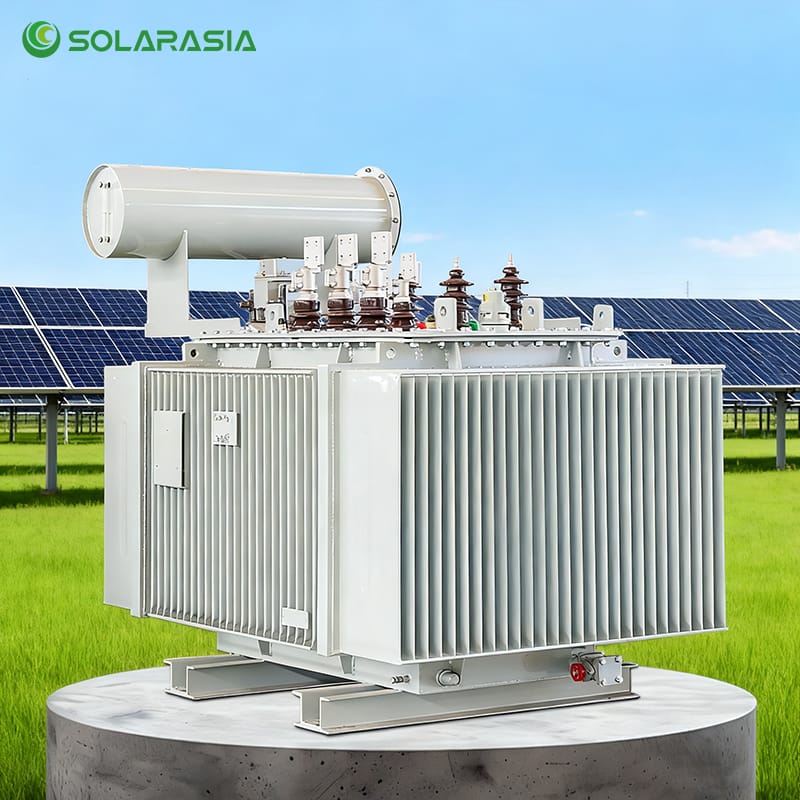
A 33kV system belongs to the medium-voltage (MV) category, commonly used for power transmission between utility substations and large end users. In commercial buildings, 33kV transformers typically act as step-down units, reducing voltage to 11kV or directly to low voltage (0.4kV), depending on system design.
Using 33kV distribution allows:
- Lower current levels during transmission
- Reduced cable size and power losses
- Improved voltage stability over long distances
These advantages make 33kV systems ideal for large commercial developments with high load density.
2.2 Why Commercial Buildings Use 33kV Instead of Lower Voltages
For small facilities, 11kV or even low-voltage distribution may be sufficient. However, as load demand increases, lower voltage systems become inefficient and impractical.
Key reasons commercial projects adopt 33kV systems:
- Total load exceeds several MVA
- Long-distance power transmission from utility connection points
- Need for scalable infrastructure to support future expansion
- High reliability requirements (e.g., hospitals and data centers)
Proper 33kV transformer selection ensures that these systems operate safely and efficiently throughout the project lifecycle.
3. Typical Applications of 33kV Transformers in Commercial Projects
3The widespread use of 33kV transformers in commercial sectors highlights the importance of transformer selection for commercial buildings, as it directly affects their reliability and suitability for indoor or outdoor substations.
3.1 Common Commercial Use Cases
| Commercial Sector | Typical Power Demand | Role of 33kV Transformer |
|---|---|---|
| Office Parks | Medium to High | Central power distribution |
| Shopping Malls | High | Load balancing and redundancy |
| Hospitals | High, Critical | Reliable and stable power supply |
| Data Centers | Very High | Continuous, high-density load |
| Industrial Facilities | High | Support for heavy equipment |
In all these scenarios, 33kV transformer selection must account for load profile, redundancy requirements, and operational continuity.
3.2 Indoor vs Outdoor Commercial Substations
Commercial projects may use:
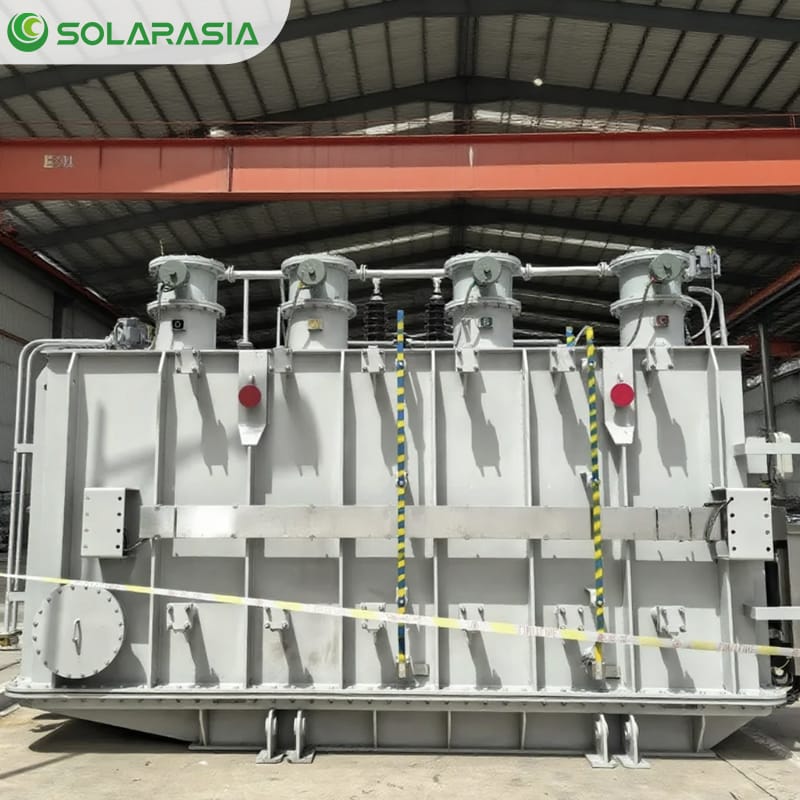
- Outdoor substations: Common in industrial parks and large campuses
- Indoor substations: Typical for urban commercial buildings
Each configuration influences transformer type, cooling method, and safety design, reinforcing the need for site-specific selection criteria.
4. Load Analysis and Capacity Planning for 33kV Transformer Selection
4.1 Importance of Accurate Load Calculation
Accurate load analysis is the cornerstone of effective 33kV transformer selection. Commercial buildings often experience fluctuating demand due to HVAC systems, elevators, lighting, and IT infrastructure.
Key parameters include:
- Connected load (kVA)
- Demand factor
- Diversity factor
- Power factor
Failure to consider these elements can result in under-sized transformers or unnecessary capital expenditure.
4.2 Practical Capacity Selection Method
Engineers typically calculate transformer capacity using the following approach:
- Estimate total connected load
- Apply demand and diversity factors
- Convert kW to kVA using power factor
- Add margin for future expansion
Recommended spare capacity: 10–20%
4.3 Example Capacity Planning Table
| Parameter | Value |
|---|---|
| Connected Load | 1,800 kW |
| Demand Factor | 0.8 |
| Power Factor | 0.9 |
| Calculated Load | 1,600 kVA |
| Recommended Transformer | 2,000 kVA |
This method ensures reliable operation while supporting future growth.
5. Oil-Immersed vs Dry-Type Transformers at 33kV
When selecting medium-voltage equipment for commercial or industrial applications, understanding the differences between oil-immersed vs dry-type transformers is essential. Each type offers distinct advantages in terms of cooling, maintenance, installation, and safety, and choosing the right one can significantly impact system reliability and operational costs.
5.1 Why Oil-Immersed Transformers Dominate at 33kV
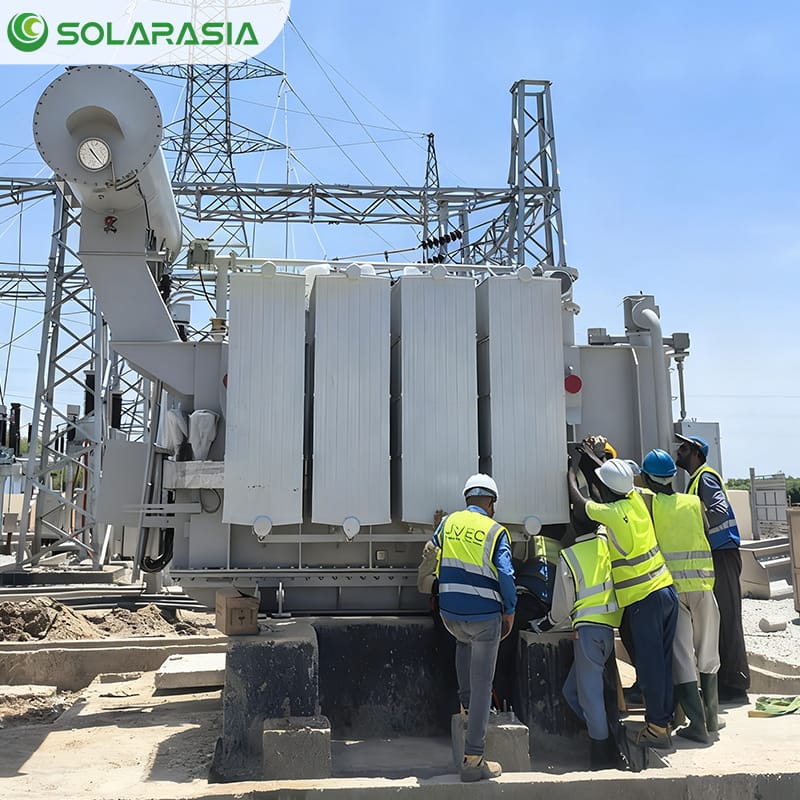
At the 33kV voltage level, oil-immersed transformers are the preferred choice for most commercial projects due to their superior thermal and electrical performance.
Key advantages of 33kV oil immersed transformers:
- Efficient heat dissipation
- Higher overload tolerance
- Longer insulation life
- Lower cost per kVA
For outdoor substations and high-capacity indoor installations, oil-filled designs provide unmatched reliability.
5.2 Limitations of Dry-Type Transformers at 33kV
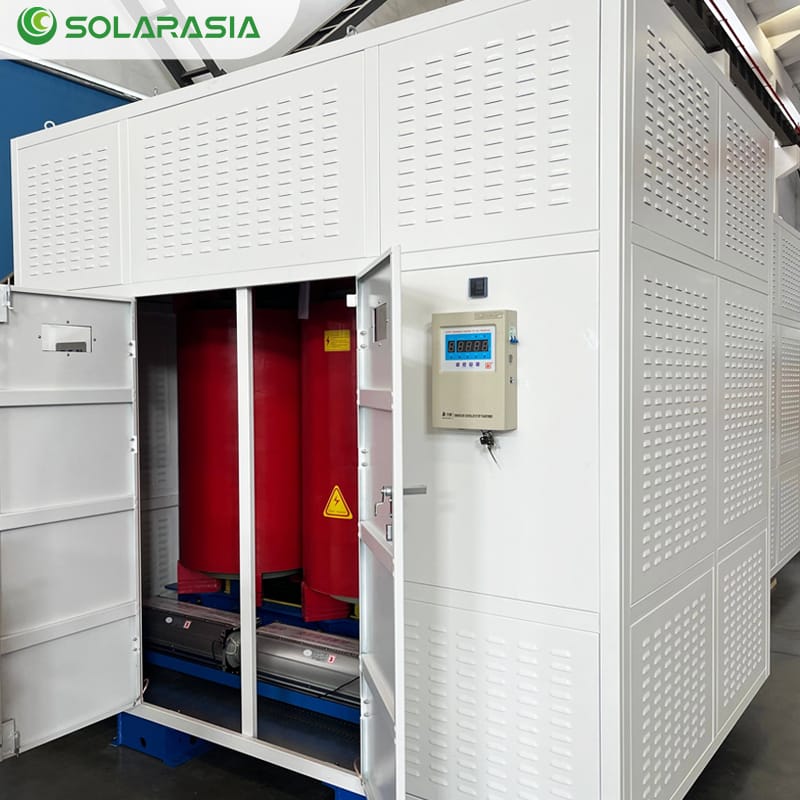
Dry-type transformers are valued for fire safety and indoor installation convenience. However, at 33kV:
- Insulation stress increases significantly
- Cooling efficiency is limited
- Size and cost increase rapidly
As a result, dry-type units are typically restricted to lower voltage levels or special applications.
5.3 Comparison Table
| Factor | Oil-Immersed | Dry-Type |
|---|---|---|
| Cooling Efficiency | High | Moderate |
| Overload Capability | Excellent | Limited |
| Cost per kVA | Lower | Higher |
| Typical Application | Outdoor / MV | Indoor / LV–MV |
This comparison highlights why oil-filled units dominate 33kV transformer selection.
6. Installation Environment and Site Planning Considerations
6.1 Why Installation Conditions Are Critical in 33kV Transformer Selection
Installation environment is often underestimated during 33kV transformer selection, yet it has a direct impact on safety, reliability, maintenance cost, and regulatory approval. Commercial buildings are typically located in urban or semi-urban areas, where space constraints, environmental regulations, and safety codes are stricter than in utility-only substations.
A transformer that is technically suitable but poorly matched to its installation environment can lead to:
- Overheating and derating
- Fire safety non-compliance
- Noise complaints
- Restricted maintenance access
Therefore, installation planning must be integrated into the transformer selection process from the early design stage.
6.2 Indoor vs Outdoor Installation for 33kV Transformers
One of the first decisions in 33kV transformer selection is whether the transformer will be installed indoors or outdoors.
Outdoor Installation
Outdoor substations are common in:
- Industrial parks
- Logistics hubs
- Large commercial campuses
Advantages:
- Better heat dissipation
- Easier oil containment design
- Lower building construction cost
Considerations:
- Weather protection
- Anti-corrosion treatment
- Noise control near residential areas
Indoor Installation
Indoor transformer rooms are widely used in:
- Urban commercial buildings
- Hospitals
- High-rise office towers
Key requirements:
- Dedicated transformer room
- Fire-rated walls and doors
- Forced ventilation or cooling
- Oil containment pits
6.3 Space, Clearance, and Maintenance Access
Adequate clearance is essential for safe operation and maintenance. During 33kV transformer selection, engineers must confirm that the transformer dimensions align with the available space.
Typical clearance requirements include:
- Minimum side and rear clearance for heat dissipation
- Front clearance for inspection and oil sampling
- Overhead clearance for lifting and replacement
| Item | Typical Requirement |
|---|---|
| Side Clearance | ≥ 1.0 m |
| Front Clearance | ≥ 1.5 m |
| Overhead Clearance | Crane or lifting path required |
| Oil Pit Capacity | 100% of oil volume |
Failing to meet these requirements can result in operational restrictions or safety violations.
7. Cooling Methods, Efficiency, and Loss Evaluation
7.1 Cooling Systems Used in 33kV Oil-Immersed Transformers
Cooling performance is a core technical factor in 33kV transformer selection. Most commercial applications rely on oil-immersed transformers with standardized cooling methods.
The most common cooling types are:
| Cooling Type | Description | Typical Application |
|---|---|---|
| ONAN | Oil Natural Air Natural | Standard commercial loads |
| ONAF | Oil Natural Air Forced | Higher load or limited space |
| OFAF | Oil Forced Air Forced | Special high-demand cases |
ONAN cooling is sufficient for most commercial buildings, while ONAF is used when higher capacity or compact design is required.
7.2 Transformer Losses and Energy Efficiency
Transformer losses directly affect operating costs, especially in commercial buildings with continuous operation.
Losses are divided into:
- No-load losses (core losses): Occur whenever the transformer is energized
- Load losses (copper losses): Increase with load current
High-efficiency transformers are designed to minimize both loss types.
| Loss Type | Impact | Optimization Method |
|---|---|---|
| No-load Loss | Constant energy cost | High-grade silicon steel |
| Load Loss | Increases with load | Optimized winding design |
Selecting a low-loss transformer improves lifecycle economics and supports energy efficiency targets.
7.3 Total Cost of Ownership (TCO) Perspective
A common mistake in 33kV transformer selection is focusing only on purchase price. In reality, energy losses over 20–30 years often exceed the initial cost of the transformer.
TCO includes:
- Purchase cost
- Energy loss cost
- Maintenance cost
- Downtime risk
From an EEAT perspective, professional selection prioritizes long-term operational value, not short-term savings.
8. Standards, Certifications, and Utility Compliance
8.1 International Standards for 33kV Transformers
Compliance with recognized standards is a non-negotiable aspect of 33kV transformer selection for commercial projects.
Commonly applied standards include:
- IEC 60076 – International standard for power transformers
- ANSI / IEEE C57 – North American standard
- EN standards – European market requirements
These standards define:
- Electrical performance
- Insulation levels
- Temperature rise limits
- Testing procedures
8.2 Utility Grid and Local Authority Requirements
In addition to international standards, local utilities often impose project-specific requirements such as:
- Short-circuit impedance limits
- Protection coordination rules
- Metering and monitoring interfaces
Early coordination with utility providers helps prevent redesign delays during commissioning.
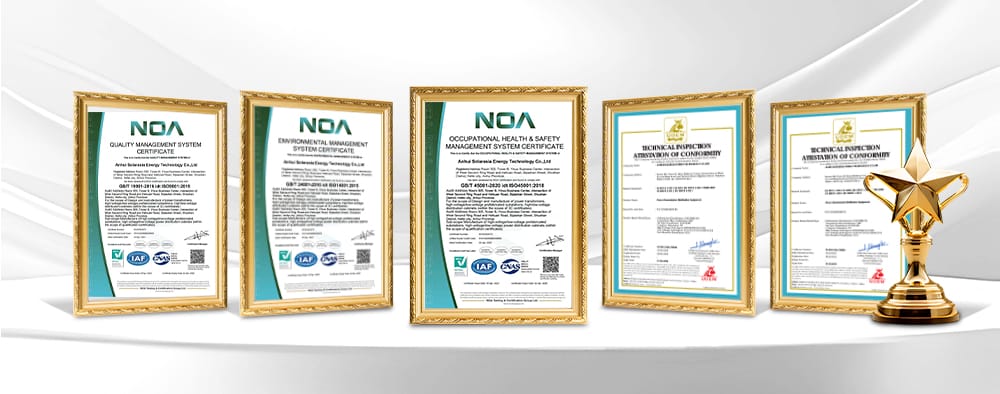
8.3 Certification and Documentation
For commercial buildings, transformer documentation is essential for approval and future operation.
Typical documents include:
- Type test reports
- Routine test certificates
- Compliance declarations
- Installation and operation manuals
Providing complete documentation strengthens trust and demonstrates supplier credibility—an important EEAT signal.
9. Common Mistakes in 33kV Transformer Selection
Despite careful planning, many commercial projects encounter issues due to avoidable selection errors.
9.1 Frequent Selection Errors
- Undersized transformer capacity
- Ignoring future load expansion
- Choosing dry-type transformers where oil-immersed designs are required
- Inadequate cooling or ventilation
- Non-compliance with local codes
Each of these mistakes can lead to operational inefficiencies or safety risks.
9.2 How to Avoid These Issues
Professional 33kV transformer selection follows a structured process:
- Accurate load assessment
- Site-specific installation planning
- Compliance verification
- Lifecycle cost evaluation
This approach ensures both technical reliability and commercial feasibility.
10. Conclusion: Engineering Best Practices for 33kV Transformer Selection
Effective 33kV transformer selection is a multidisciplinary process that combines electrical engineering, safety planning, regulatory compliance, and lifecycle cost analysis. For most large commercial buildings, 33kV oil immersed transformers provide the optimal balance of reliability, efficiency, and cost-effectiveness.
By evaluating load demand, installation conditions, cooling performance, and compliance requirements at an early stage, project stakeholders can ensure stable power distribution and long-term operational success.
Need professional support for 33kV transformer selection in your commercial project?
11.FAQ
Q1: What is a 33kV transformer used for in commercial buildings?
A: A 33kV transformer is used to step down medium-voltage electricity from the utility grid to lower distribution levels, typically 11kV or low voltage (0.4kV), ensuring reliable power supply for large commercial buildings such as malls, hospitals, data centers, and office complexes. It provides efficient voltage conversion and stability for high-demand electrical loads.
Q2: How do I select the right 33kV transformer capacity?
A: Selecting the correct capacity involves evaluating the total connected load, applying demand and diversity factors, and considering the power factor. Engineers usually add a 10–20% margin to account for future load growth and prevent overloading. Accurate load calculations are essential for long-term operational reliability.
Q3: What is the difference between oil-immersed and dry-type 33kV transformers?
A: Oil-immersed transformers use mineral or synthetic oil for insulation and cooling, offering higher overload tolerance, better thermal performance, and longer lifespan, making them ideal for outdoor and high-capacity commercial installations. Dry-type transformers are safer indoors, easier to maintain, but at 33kV they are less efficient, more expensive per kVA, and have limited overload capability.
| Feature | Oil-Immersed | Dry-Type |
|---|---|---|
| Cooling | Excellent (Oil) | Moderate (Air) |
| Overload Capacity | High | Limited |
| Cost per kVA | Lower | Higher |
| Typical Application | Outdoor / High Load | Indoor / Special Cases |
Q4: Can a 33kV transformer be installed indoors?
A: Yes, indoor installation is possible but requires a dedicated transformer room with proper ventilation, fire-rated walls, and oil containment systems for oil-immersed types. Indoor installation is common in urban commercial buildings, hospitals, and high-rise offices, where space and noise restrictions exist.
Q5: How do cooling methods affect 33kV transformer performance?
A: Cooling methods directly impact efficiency, load capacity, and lifespan. Common cooling methods for oil-immersed 33kV transformers include:
- ONAN (Oil Natural Air Natural): Suitable for standard commercial loads.
- ONAF (Oil Natural Air Forced): Used for higher loads or limited space.
- OFAF (Oil Forced Air Forced): For special high-demand applications.
Efficient cooling reduces losses, lowers operating temperature, and improves reliability.
Q6: What standards and certifications should a 33kV transformer comply with?
A: A compliant 33kV transformer should meet international and local standards such as:
- IEC 60076 (International)
- ANSI / IEEE C57 (North America)
- EN standards (Europe)
Additionally, utility-specific requirements may include short-circuit impedance, metering compatibility, and protection coordination. Certificates typically include type test reports, routine tests, and compliance documentation.
Q7: How can I ensure long-term efficiency and reliability of a 33kV transformer?
A: Key factors include:
- Proper load assessment and capacity planning
- Selecting the right transformer type (oil-immersed or dry-type)
- Ensuring installation meets clearance, ventilation, and fire protection standards
- Using high-efficiency designs to minimize no-load and load losses
- Regular maintenance and monitoring as recommended by the manufacturer
Q8: Where can I get a 33kV oil-immersed transformer for my project?
A: Our engineering team provides high-quality 33kV oil-immersed transformers for commercial buildings, offering fast shipping, CE certification, OEM/ODM support, and full technical guidance for installation, capacity selection, and lifecycle management. [Request a Quote]

2 Comments