11kV Transformer Selection is a critical decision that directly impacts the safety, efficiency, and long-term operating costs of any medium-voltage power distribution project. Whether you are planning an industrial plant, commercial building, data center, or utility substation, choosing the right 11kV distribution transformer ensures reliable voltage step-down from 11kV to 400V/415V while minimizing energy losses and preventing costly downtime.
1.Introduction
Selecting the right 11kV transformer is one of the most critical decisions in any medium-voltage power distribution project. Whether you are powering an industrial facility, a commercial building, a data center, a renewable energy installation, or a utility substation, the transformer serves as the heart of your electrical system. It steps down 11kV primary voltage to usable low voltage (typically 400V/415V or 0.4kV) while ensuring efficiency, safety, and long-term reliability.
Improper 11kV transformer selection can lead to serious consequences: overloaded units that overheat and fail prematurely, excessive energy losses that inflate operational costs, non-compliance with international standards, or safety risks such as fire hazards in sensitive environments. In 2026, with rising energy prices, stricter efficiency regulations, and increasing demand for sustainable infrastructure, making an informed choice has never been more important.
This comprehensive 11kV Transformer Selection Guide walks you through every essential step. You will learn the fundamentals, key technical parameters, accurate capacity calculation methods, comparisons between oil-immersed and dry-type designs, environmental and operational factors, and a practical checklist you can use immediately.
By the end of this guide, you will have the knowledge to confidently evaluate options and select a transformer that matches your project’s load, environment, budget, and future expansion needs. Correct selection not only reduces total cost of ownership (TCO) but also minimizes downtime and enhances system safety.
If you need personalized assistance with 11kV transformer selection for your specific project parameters, our team of engineers is ready to provide free consultations and tailored recommendations.
For detailed product options, explore our range of 11kV oil-immersed transformers suitable for industrial applications.
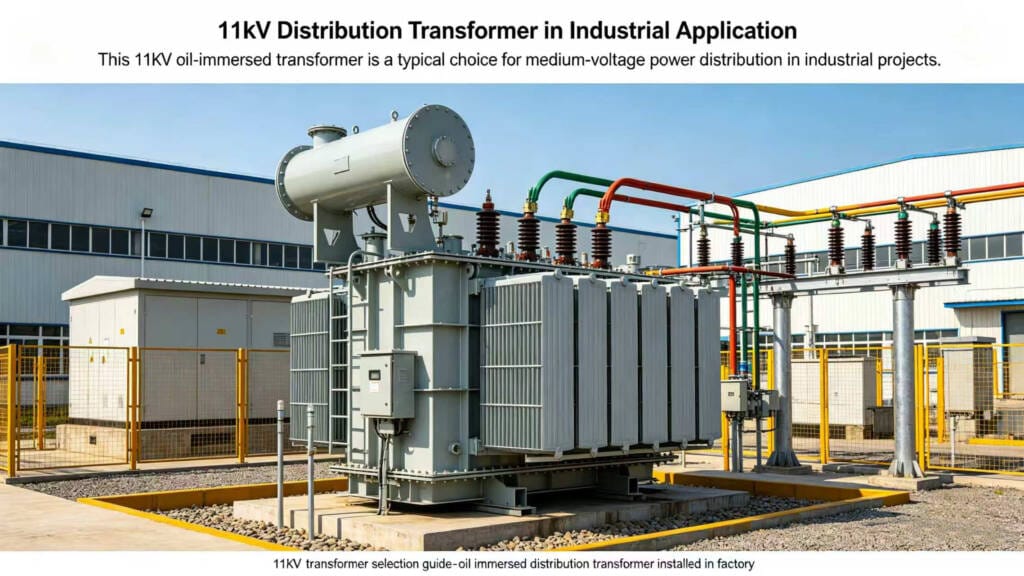
Table of Contents (TOC)
- Introduction
- Understanding 11kV Transformers: Basics and Applications
- Key Specifications and Parameters of 11kV Transformers
- How to Calculate 11kV Transformer Capacity (Sizing Guide)
- Oil-Immersed vs Dry-Type 11kV Transformers: Which One to Choose?
- Critical Factors to Consider in 11kV Transformer Selection
- Common Mistakes in 11kV Transformer Selection and How to Avoid Them
- 11kV Transformer Selection Checklist
- Conclusion: Make the Right Choice for Reliability and Efficiency
11kV Transformer Selection Guide: How to Choose the Right One for Your Project in 2026
2.Understanding 11kV Transformers: Basics and Applications
An 11kV transformer, also known as an 11kV distribution transformer, is a medium-voltage unit designed primarily for stepping down voltage from 11kV (or similar medium voltage levels) to low voltage suitable for end-user equipment. It is widely used in secondary distribution networks where power must be delivered efficiently over moderate distances.
Key characteristics include:
- Primary voltage: Typically 11kV (common in many IEC regions such as Asia, Africa, Middle East, and parts of Europe)
- Secondary voltage: Usually 400V/415V three-phase or 230V single-phase
- Phases: Almost always three-phase for industrial and commercial applications
- Frequency: 50Hz (standard in most countries) or 60Hz in specific regions
Common types of 11kV transformers:
- Oil-immersed transformers: Use mineral oil or eco-friendly ester fluids for insulation and cooling. Ideal for outdoor installations and higher capacities.
- Dry-type transformers: Use cast resin or air as insulation and cooling medium. Preferred for indoor or fire-sensitive locations.
- Other variations: Hermetically sealed, conservator type, ONAN (Oil Natural Air Natural), ONAF (Oil Natural Air Forced), or with forced cooling.
Typical applications for 11kV distribution transformers:
- Industrial plants and manufacturing facilities
- Commercial buildings, shopping malls, and office complexes
- Data centers and hospitals (especially dry-type for safety)
- Renewable energy projects (solar and wind farms for step-up or step-down)
- Utility substations and rural electrification
- Mining operations and heavy infrastructure
In many projects across Southeast Asia, Africa, and the Middle East, 11kV systems offer a good balance between transmission efficiency and distribution flexibility. For example, a 500kVA or 1000kVA 11kV transformer can reliably serve a medium-sized factory or a residential township.
If your project requires indoor installation with high fire safety, consider our 11kV dry-type transformers.
Understanding these basics is the foundation of effective 11kV transformer selection. Next, we dive deeper into the technical specifications that define performance.
3.Key Specifications and Parameters of 11kV Transformers
When performing 11kV transformer selection, you must carefully review the nameplate specifications. These parameters determine whether the unit meets your electrical, mechanical, and environmental requirements.
Essential parameters include:
- Rated Capacity (kVA): Ranges from 25kVA up to 5000kVA or more for 11kV class. Common standard sizes: 100, 250, 500, 630, 800, 1000, 1250, 1600, 2000, 2500 kVA.
- Voltage Ratings: Primary 11kV (± variations), Secondary 0.4kV. Tap changer (usually off-circuit or on-load) allows voltage adjustment, often ±2.5% or ±5% in 5 steps.
- Vector Group: Common configurations are Dyn11 or Yyn0. Dyn11 is popular because it provides a neutral on the LV side and handles unbalanced loads well.
- Impedance Voltage (%): Typically 4% to 6% for distribution transformers. Higher impedance limits short-circuit current but increases voltage regulation issues.
- Losses:
- No-load losses (iron losses): Fixed, occur even at no load.
- Load losses (copper losses): Vary with load squared.
- Total losses affect efficiency and long-term energy costs.
- Temperature Rise: Standard limits are 60K or 65K for oil-immersed (top oil/winding) and 100K or 120K for dry-type, depending on insulation class (A, F, H).
- Cooling Method: ONAN (self-cooled), ONAF (fan-assisted), or AN/AF for dry-type.
- Standards Compliance: IEC 60076 series (most common internationally), ANSI/IEEE C57, or local equivalents like GB/T in China.
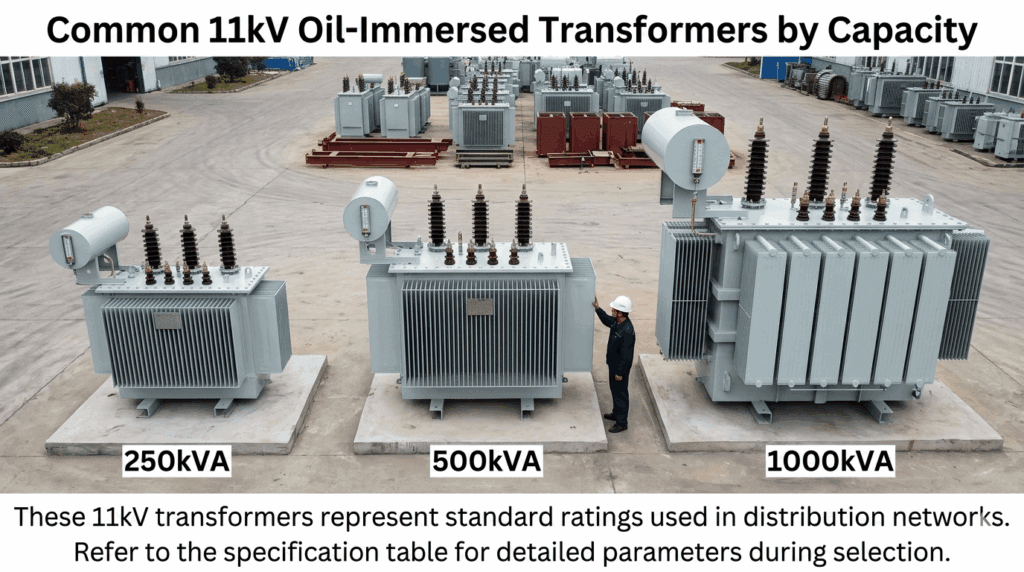
Here is a sample comparison table of common 11kV oil-immersed transformer specifications:
Table 1: Typical Specifications for 11kV Oil-Immersed Distribution Transformers
| kVA Rating | Primary Voltage | Secondary Voltage | No-Load Loss (W) Approx. | Load Loss at 75°C (W) Approx. | Impedance (%) | Cooling Method | Weight (kg) Approx. |
|---|---|---|---|---|---|---|---|
| 250 | 11kV | 0.4kV | 400-600 | 3,000-3,500 | 4.5-5.5 | ONAN | 800-1,200 |
| 500 | 11kV | 0.4kV | 700-900 | 5,000-6,000 | 4.5-6.0 | ONAN | 1,500-2,000 |
| 1000 | 11kV | 0.4kV | 1,100-1,400 | 9,000-11,000 | 5.5-6.5 | ONAN/ONAF | 2,800-3,500 |
| 1600 | 11kV | 0.4kV | 1,600-2,000 | 14,000-16,000 | 6.0-7.0 | ONAN/ONAF | 4,000-5,000 |
Note: Actual values vary by manufacturer, efficiency class (e.g., Tier 2 or higher), and design. Always request detailed test reports.
Winding Material: Copper offers better conductivity and lower losses but higher cost; aluminum is lighter and more economical for certain applications.
Insulation and Dielectric Strength: Must withstand impulse voltages (e.g., 75kV or 95kV BIL for 11kV class) and power frequency tests.
Understanding these parameters ensures your chosen 11kV transformer will operate safely within its rated conditions and comply with project specifications.
4.How to Calculate 11kV Transformer Capacity (Sizing Guide)
Accurate 11kV transformer sizing prevents under- or over-sizing, both of which are costly. Undersizing causes overheating and failure; oversizing wastes capital and reduces efficiency at low loads.
Basic kVA Calculation Formulas:
For Three-Phase Systems (most common): kVA = (√3 × Voltage × Current) / 1000 or kVA = (kW Load) / (Power Factor × Efficiency)
Step-by-Step Sizing Process:
- Determine Total Connected Load (kW): Sum all equipment ratings (motors, lighting, HVAC, etc.).
- Apply Demand Factor: Not all loads run simultaneously. Typical demand factors: 0.7–0.9 for industrial, 0.6–0.8 for commercial.
- Account for Power Factor (PF): Usually 0.8–0.95. Improve with capacitors if needed.
- Add Future Expansion Margin: Add 15–25% or more depending on project growth expectations.
- Consider Special Loads: Motors with high inrush (6–8× full load), harmonics from VFDs, or continuous duty.
Example Calculation:
A factory has:
- Motors: 300 kW total
- Lighting & other: 80 kW
- Demand factor: 0.75
- Power factor: 0.85
- Efficiency: 0.98
- Future margin: 20%
Step 1: Calculated load = (300 + 80) × 0.75 = 285 kW
Step 2: Apparent power = 285 / 0.85 ≈ 335.3 kVA
Step 3: Adjusted for efficiency ≈ 342 kVA Step 4: With 20% margin ≈ 410 kVA
Recommended standard size: Select next higher standard rating, e.g., 500 kVA.
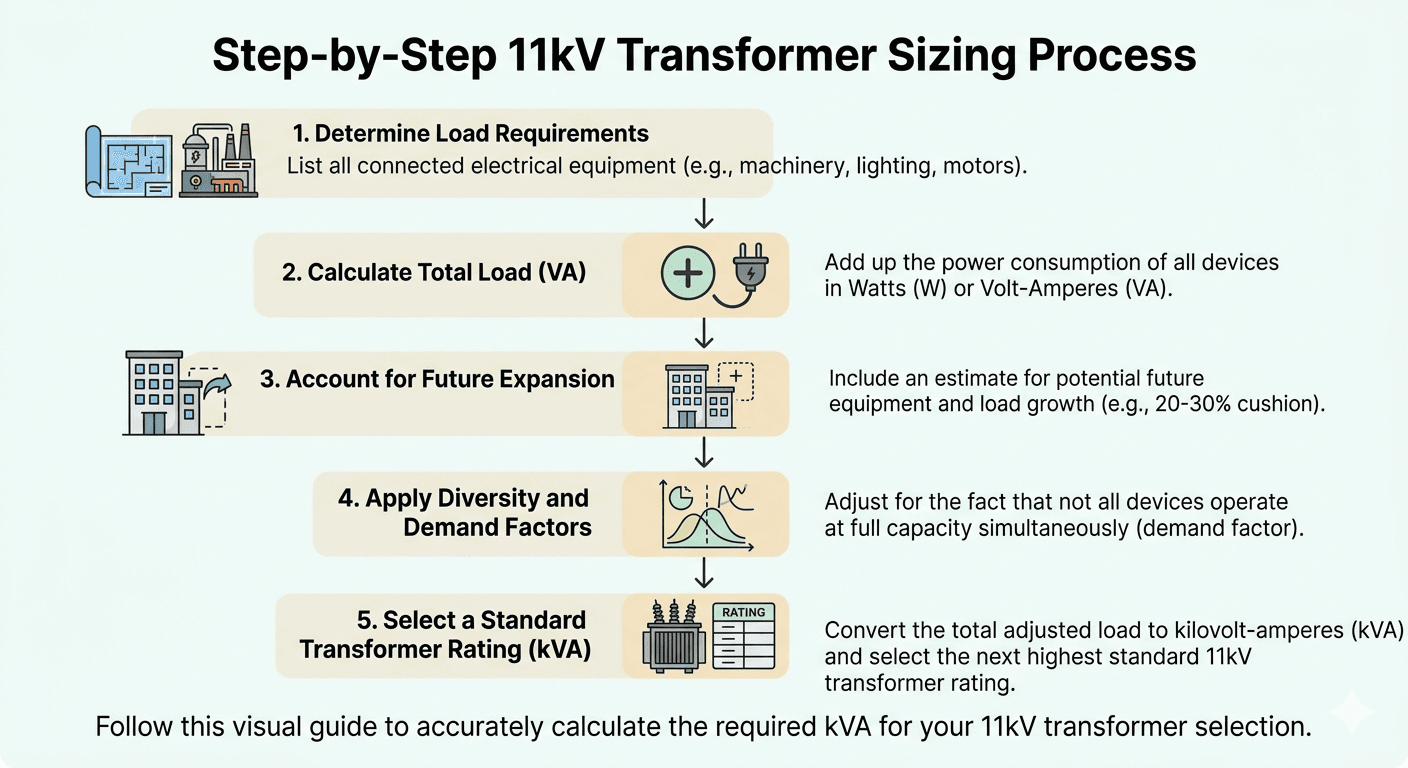
Table 2: Common Load Types and Recommended Sizing Multipliers
| Load Type | Demand Factor | Additional Considerations | Suggested Margin |
|---|---|---|---|
| General Industrial | 0.7–0.85 | High motor inrush | 20–30% |
| Commercial Building | 0.6–0.8 | HVAC peaks | 15–25% |
| Data Center | 0.8–0.95 | Continuous + redundancy | 25–40% |
| Solar Farm Step-Up | 0.9–1.0 | Inverter harmonics | 10–20% |
Always verify calculations with actual measured data when possible. For complex projects, use software or consult a professional engineer.
Proper 11kV transformer capacity calculation ensures optimal performance and cost efficiency throughout the asset’s 25–30+ year lifespan.
5.Oil-Immersed vs Dry-Type 11kV Transformers: Which One to Choose?
One of the most important decisions in 11kV transformer selection is choosing between oil-immersed and dry-type designs.
Oil-Immersed Transformers:
- Advantages: Excellent cooling efficiency, lower initial cost for higher kVA ratings, proven long life (30+ years with proper maintenance), better for outdoor and high-load applications.
- Disadvantages: Fire risk (though modern ester fluids reduce this), requires oil containment and regular maintenance (oil testing, leaks), not ideal for indoor or densely populated areas.
- Best for: Outdoor substations, industrial plants, utility distribution, renewable energy sites.
Dry-Type Transformers (Cast Resin or Air-Cooled):
- Advantages: No oil – lower fire and environmental risk, minimal maintenance, suitable for indoor installation near loads, quieter operation, environmentally friendly.
- Disadvantages: Higher upfront cost, limited capacity in very high ratings, poorer heat dissipation in extreme ambient conditions without forced cooling.
- Best for: Hospitals, schools, data centers, high-rise buildings, areas with strict fire codes.
Table 3: Oil-Immersed vs Dry-Type 11kV Transformer Comparison
| Factor | Oil-Immersed | Dry-Type | Winner (Typical) |
|---|---|---|---|
| Initial Cost | Lower | Higher | Oil |
| Maintenance | Medium (oil checks) | Low | Dry |
| Fire Safety | Moderate (with precautions) | High | Dry |
| Efficiency/Losses | Generally better at high load | Good, but higher no-load in some | Oil (high load) |
| Installation Location | Outdoor preferred | Indoor excellent | Depends on site |
| Lifespan | 25–40 years | 20–35 years | Oil |
| Environmental Impact | Oil spill risk | None | Dry |
| Typical Max kVA (11kV) | Up to 10MVA+ | Up to 3–5MVA comfortably | Oil |
In practice, many projects in urban or sensitive environments now favor dry-type due to safety regulations, while outdoor utility and heavy industrial applications still prefer oil-immersed for economics and performance.
Consider your project’s risk profile, maintenance capabilities, and local codes when deciding.
6.Critical Factors to Consider in 11kV Transformer Selection
Beyond type and size, several additional factors influence successful 11kV transformer selection:
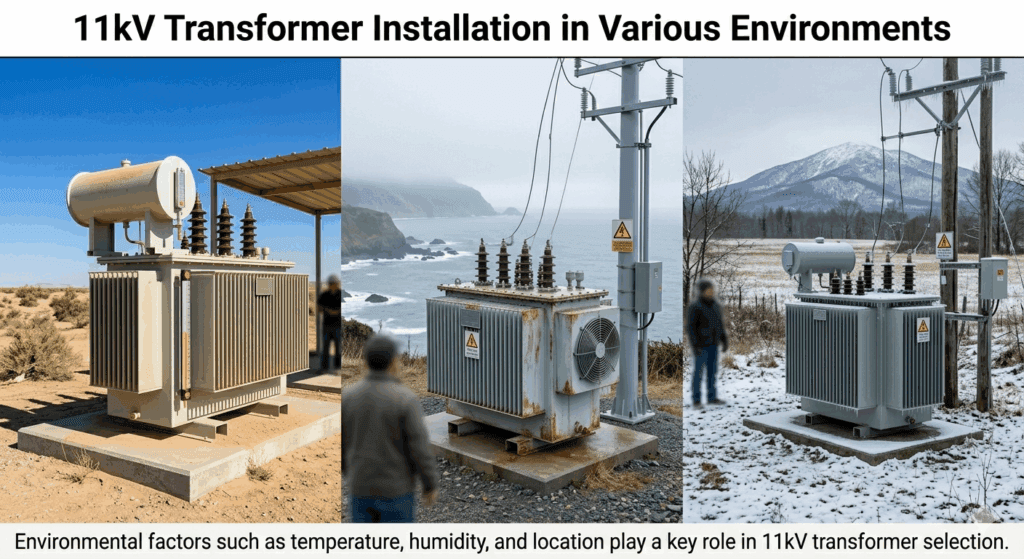
1. Environmental Conditions:
- Ambient temperature (standard 40°C max; derate for hotter climates)
- Altitude (above 1000m reduces cooling and dielectric strength)
- Humidity, dust, pollution, or coastal salt spray (requires special coatings or enclosures)
- Seismic zones or vibration-prone areas
2. Efficiency and Losses: Focus on Total Cost of Ownership (TCO). A transformer with 10–15% lower losses can pay back its premium cost within 3–5 years through energy savings.
3. Cooling and Overload Capability: Choose ONAN for normal duty or ONAF for peak loads. Ensure the unit can handle short-term overloads per IEC 60076-7.
4. Short-Circuit Withstand and Impedance: Higher impedance protects downstream equipment but may affect voltage stability.
5. Accessories and Features:
- Buchholz relay, pressure relief device, temperature indicators (for oil)
- Fans, enclosures (IP ratings), winding temperature sensors
- Smart monitoring options (IoT-enabled for predictive maintenance)
6. Budget vs Long-Term Value: Never choose based on price alone. Evaluate warranty, after-sales support, and manufacturer reputation.
7. Compliance and Certification: Ensure IEC 60076 compliance, plus any local authority approvals. Request type test and routine test reports.
8. Installation and Maintenance Access: Consider space for radiators, cable connections, and future servicing.
By systematically evaluating these factors, you minimize risks and optimize performance for your specific application.
7.Common Mistakes in 11kV Transformer Selection and How to Avoid Them
Even experienced engineers make errors. Here are frequent pitfalls:
- Ignoring Future Load Growth: Sizing only for current needs leads to early replacement. Solution: Always include 15–30% margin.
- Focusing Only on Initial Price: Cheap units often have higher losses and poorer quality. Solution: Calculate TCO over 10–15 years.
- Mismatching Environment: Installing oil-immersed indoors without proper fire protection. Solution: Match type to location and codes.
- Neglecting Harmonics and Power Quality: VFDs and inverters increase losses. Solution: Specify K-factor rated or harmonic-resistant designs when needed.
- Overlooking Standards and Testing: Accepting unverified units. Solution: Demand full test certificates and third-party verification.
- Poor Supplier Selection: Choosing unproven manufacturers. Solution: Verify experience with similar 11kV projects and request references.
Avoiding these mistakes through thorough planning and professional review saves significant time and money.
8.11kV Transformer Selection Checklist
Use this practical checklist during your 11kV transformer selection process:
- Define project voltage levels and vector group requirements
- Calculate peak and average load; apply demand factor and margin
- Decide oil-immersed or dry-type based on location and safety needs
- Specify efficiency class and acceptable loss levels
- Assess environmental conditions (temp, altitude, pollution)
- Choose cooling method and overload requirements
- Confirm compliance with IEC 60076 or equivalent standards
- Evaluate TCO including losses, maintenance, and energy costs
- Review manufacturer experience, warranty, and support
- Request detailed drawings, test reports, and delivery timeline
- Plan for installation, protection, and monitoring accessories
Print or download this checklist and review it with your electrical consultant before finalizing the order.
9.Conclusion: Make the Right Choice for Reliability and Efficiency
Selecting the optimal 11kV transformer requires balancing technical specifications, environmental realities, safety considerations, and economic factors. This guide has covered the essential knowledge—from understanding basics and calculating capacity to comparing oil vs dry-type and evaluating all critical selection factors.
A well-chosen 11kV distribution transformer delivers decades of reliable service, lowers energy bills, reduces maintenance headaches, and supports your project’s safety and sustainability goals. In 2026 and beyond, prioritizing quality, efficiency, and compliance will differentiate successful installations from problematic ones.
Ready to move forward with your 11kV transformer selection? Provide your project details—load profile, location, application type, and any special requirements—and our experienced team will deliver a free technical proposal with accurate sizing recommendations, options comparison, and competitive pricing.
Contact us today via the form below, email, or WhatsApp for expert assistance. We specialize in high-quality 11kV oil-immersed and dry-type transformers that meet international standards and deliver real value to projects worldwide.
Don’t leave such an important decision to chance. Let us help you choose the right 11kV transformer for long-term success.
Related Resources:
- Download our free 11kV Transformer Sizing Spreadsheet
- View our 11kV transformer product catalog
- Read case studies from similar projects