İçindekiler
- Introduction: Why 2026 Is a Turning Point for Transformer & Substation Buyers
- Key Transformer Technology Innovations Shaping the Market by 2026
- Substation Design Trends Export Buyers Must Track
- International Standards and Compliance Challenges
- Global Market Shifts Affecting Transformer and Substation Exports
- What Export Buyers Should Prepare for Before 2026
- Common Buyer Mistakes When Planning Future Transformer Projects
- Conclusion: Turning 2026 Trends into Competitive Advantage
- Sıkça Sorulan Sorular (SSS)
1. Introduction: Why 2026 Is a Turning Point for Transformer & Substation Buyers
The global power industry is entering a decisive transition period. Between now and 2026, transformer and substation export buyers will face a market shaped by energy transition policies, grid modernization programs, and rising electrification demand across both developed and emerging economies.
From utility-scale renewable integration to industrial expansion and urban infrastructure upgrades, transformers and substations remain foundational equipment. However, buying behavior is changing. Export buyers are no longer focused solely on upfront price; instead, efficiency performance, compliance with international standards, delivery reliability, and long-term operational value are becoming decisive factors.
For transformer export buyers sourcing transformers and substations for overseas projects, planning for 2026 requires a forward-looking approach. Technology choices, specification decisions, and supplier selection made today will directly impact project risk, compliance, and lifecycle cost tomorrow.
This article draws on practical export project experience, industry standards, and global market observations to highlight what transformer and substation buyers should watch as 2026 approaches.
2. Key Transformer Technology Innovations Shaping the Market by 2026
2.1 Higher Efficiency and Lower Loss Transformer Designs
Energy efficiency is no longer optional. Across global markets, utilities and regulators are tightening loss limits for distribution and power transformers. By 2026, low-loss transformer design will be a baseline requirement rather than a competitive advantage.
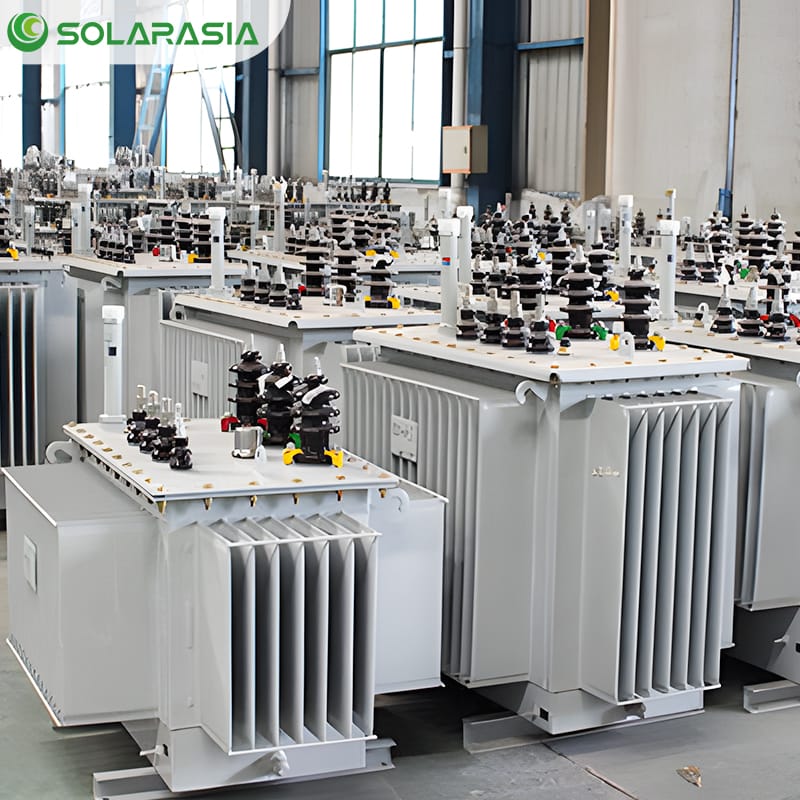
Manufacturers are increasingly adopting amorf alaşım çekirdekleri and optimized laminated silicon steel to reduce no-load losses. These materials significantly lower energy waste during continuous operation, which is critical for distribution transformers operating 24/7.
At the same time, advances in winding design and insulation coordination are improving load loss performance without increasing transformer size excessively.
Why this matters to export buyers:
Lower losses translate directly into reduced operating costs and improved compliance with IEC energy efficiency standards. For long-term utility or industrial projects, efficiency performance often outweighs initial procurement cost.
Typical efficiency improvement trends
| Transformer Type | Traditional Design | New-Generation Design |
|---|---|---|
| Distribution Transformer | Higher no-load losses | Reduced no-load losses using amorphous core |
| Power Transformer | Standard winding layout | Optimized winding geometry for lower load loss |
2.2 Dry Type vs Oil Immersed Transformers: Application Shifts
By 2026, the application boundary between dry type and oil immersed transformers will become clearer rather than narrower.
Dry type transformers are increasingly preferred for:
- Indoor installations
- Ticari binalar
- Veri merkezleri
- Hospitals and public infrastructure
Their oil-free, fire-resistant, and low-maintenance characteristics align with stricter safety and environmental requirements, especially in urban environments.
Oil immersed transformers, however, remain dominant in:
- Utility substations
- Renewable energy plants
- Heavy industrial facilities
Their superior thermal performance and cost efficiency at higher ratings make them indispensable for large-capacity applications.
Buyer insight:
Export buyers should avoid selecting transformer types based solely on trends. Instead, application environment, safety regulations, and total cost of ownership must guide the decision.
2.3 Smart and Digital Transformers
Digitalization is reshaping transformer monitoring and asset management. Smart transformers equipped with online temperature monitoring, load analysis, and fault diagnostics are becoming more common in export projects.
While full digital transformers may not be necessary for every market, basic smart features offer significant value:
- Reduced unplanned downtime
- Improved maintenance planning
- Remote operation support for overseas projects
For buyers managing assets across multiple regions, smart transformer technology enhances visibility and operational control.
3. Substation Design Trends Export Buyers Must Track
As power infrastructure projects become more time-sensitive and space-constrained, substation design is evolving rapidly. For export buyers planning projects toward 2026, understanding modern substation configurations is essential to controlling cost, reducing risk, and improving long-term operational flexibility.
Two design trends stand out: compact and prefabricated substations, Ve modular, scalable architectures. Both trends respond directly to real-world challenges faced in international projects.
3.1 Compact and Prefabricated Substations
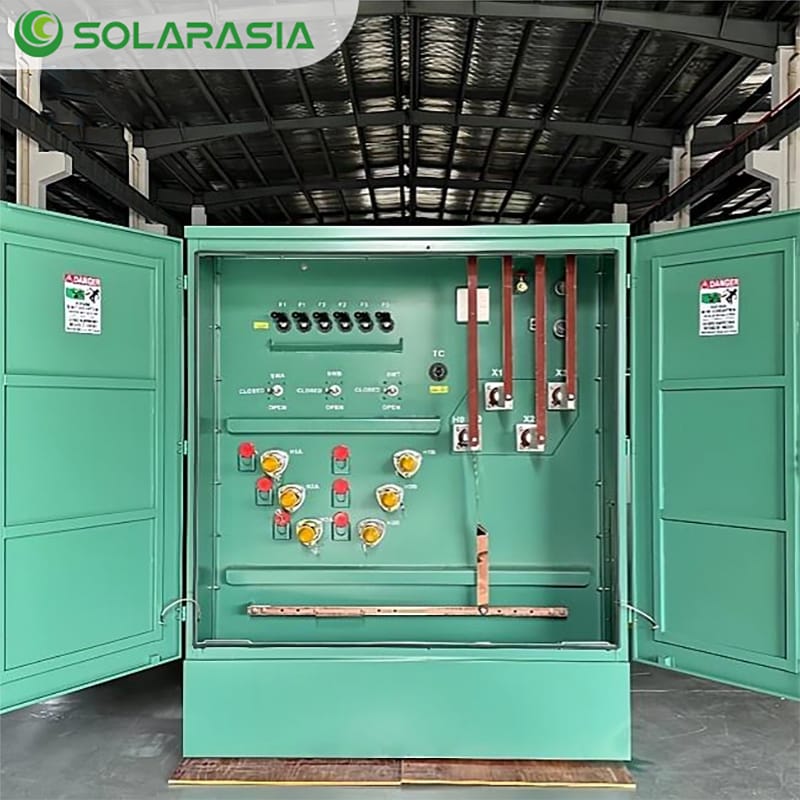
Compact and prefabricated substations are gaining strong momentum in global export markets, particularly in regions where traditional substation construction faces practical constraints.
These solutions are especially attractive when:
- Land availability is limited, such as in urban areas, industrial parks, and coastal regions
- Construction timelines are tight, driven by EPC schedules or government deadlines
- Skilled on-site labor is costly or scarce, a common issue in overseas projects
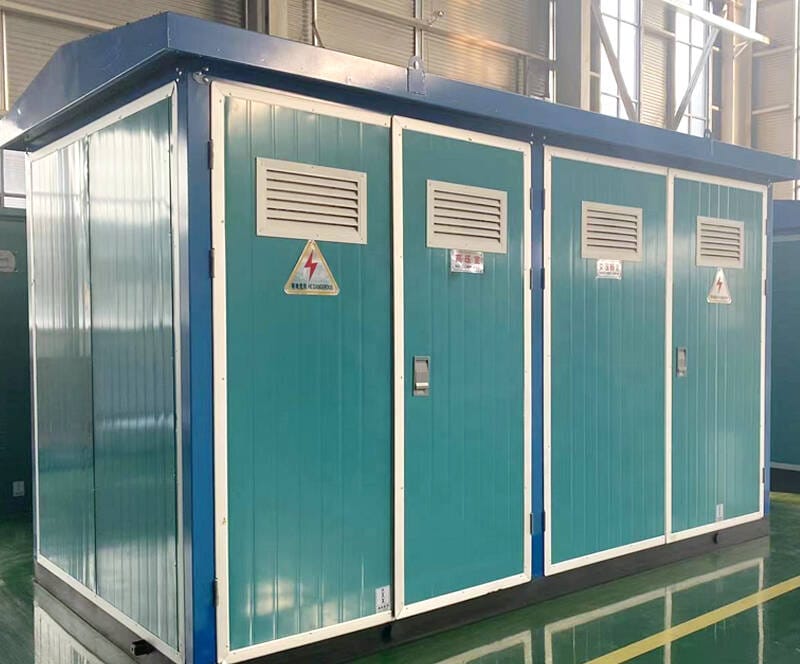
Unlike conventional substations built largely on-site, prefabricated substations integrate key components—including transformers, medium- and low-voltage switchgear, protection systems, and auxiliary equipment—into factory-assembled and factory-tested units.
This factory-centric approach significantly improves quality control. Equipment alignment, wiring accuracy, and functional testing are completed in a controlled environment before shipment, reducing the likelihood of installation errors at the project site.
From an export buyer’s perspective, compact substation solutions also help standardize project execution across different countries and contractors, improving predictability and reducing coordination risk.
Key benefits for export buyers include:
- Shorter project schedules
Factory pre-assembly allows parallel progress between civil works and equipment manufacturing, accelerating overall project completion. - Reduced on-site commissioning complexity
Pre-tested systems minimize commissioning time and lower the risk of functional issues during energization. - Easier transportation and logistics planning
Standardized containerized or skid-mounted designs simplify international shipping, customs handling, and inland transportation.
Typical comparison of substation approaches
| Aspect | Conventional Substation | Prefabricated Substation |
|---|---|---|
| On-site construction | Extensive | Minimal |
| Quality consistency | Contractor-dependent | Factory-controlled |
| Installation time | Long | Short |
| Export logistics | Complex | Standardized |
For buyers managing multiple overseas projects, prefabricated substations provide a repeatable, scalable solution that aligns well with modern EPC and utility requirements.
3.2 Modular and Scalable Substation Architecture
Looking ahead to 2026, modular substation architecture is shifting from a niche option to a mainstream expectation in international projects.
Modular design divides a substation into functional units—such as transformer modules, switchgear modules, protection modules, and control modules—that can be independently manufactured, transported, installed, and expanded.
This approach allows export buyers to design substations that are not only fit for today’s load requirements, but also adaptable to future demand growth.
Modular and scalable substations support:
- Future capacity expansion
Additional transformer or feeder modules can be added without redesigning the entire substation. - Flexible configuration for different voltage levels
Modular layouts accommodate various system voltages and grid standards, supporting IEC-based export projects across regions. - Simplified maintenance and upgrades
Individual modules can be isolated, serviced, or upgraded with minimal impact on the rest of the system.
For buyers operating in fast-growing markets, such as renewable energy hubs or industrial expansion zones, scalability is critical. Load forecasts often change, and fixed-capacity substations risk becoming undersized long before the end of their service life.
By adopting modular substation solutions, export buyers reduce the risk of premature asset replacement while improving long-term investment efficiency.
Why modularity matters for export projects
| Challenge | Modular Design Advantage |
|---|---|
| Uncertain load growth | Easy future expansion |
| Changing grid requirements | Flexible reconfiguration |
| Maintenance downtime | Module-level isolation |
| Long-term asset planning | Extended service life |
In practice, modular substations align closely with modern utility planning philosophies, where adaptability and lifecycle value are prioritized over rigid, one-time designs.
4. International Standards and Compliance Challenges
For transformer export buyers, as well as substation buyers, technical compliance is often a greater risk than pricing or delivery. International projects routinely involve multiple stakeholders—utilities, EPC contractors, consultants, and regulators—each with specific expectations around standards and documentation.
As global regulations tighten toward 2026, early alignment on applicable standards and compliance requirements has become a critical success factor in export projects.
4.1 IEC vs ANSI: Practical Implications for Export Projects
One of the most common—and costly—risks in transformer export projects is standard mismatch. While both IEC and ANSI standards are internationally recognized, they differ significantly in design philosophy, testing methodology, and performance evaluation.
These differences are not merely technical details; they directly affect transformer design, manufacturing cost, testing scope, and project acceptance.
Key areas where IEC and ANSI differ include:
- Testing methods
IEC standards emphasize type testing and routine testing based on international harmonization, while ANSI standards often rely on design-based verification and application-specific testing. - Insulation levels and clearances
IEC insulation coordination typically follows different impulse and power-frequency withstand levels compared to ANSI, affecting internal clearances and bushing selection. - Temperature rise limits
Allowable temperature rise values vary between standards, influencing cooling design, insulation aging, and expected service life. - Design philosophy
IEC designs often prioritize efficiency and compactness, while ANSI designs may emphasize robustness and conservative thermal margins.
For export buyers, these differences mean that a transformer designed under one standard cannot simply be “converted” to another without engineering changes.
To avoid compliance issues, export buyers must clearly define the following at the specification stage:
- Applicable standard (IEC or ANSI)
- Rated voltage, insulation class, and BIL levels
- Required type tests, routine tests, and special tests
- Documentation format and acceptance criteria
Failure to align these parameters early often results in:
- Redesign and reengineering delays
- Additional type testing and certification costs
- Project approval delays or outright rejection by utilities or consultants
Common standard-related risks in export projects
| Risk Area | Impact on Project |
|---|---|
| Undefined applicable standard | Design rework and approval delays |
| Incorrect insulation level | Failed testing or non-compliance |
| Missing test documentation | Delayed acceptance and payment |
| Mixed IEC/ANSI requirements | Increased cost and lead time |
Experienced export buyers treat standards definition as a front-end engineering task, not an afterthought.
4.2 Energy Efficiency and Environmental Regulations
Beyond electrical standards, energy efficiency and environmental compliance are becoming central to transformer procurement decisions worldwide.
Many countries are introducing or tightening regulations that affect both transformer design and material selection. By 2026, buyers should expect these requirements to play a decisive role during technical evaluation and project approval.
Key regulatory trends include:
- Stricter transformer efficiency requirements
Governments and utilities increasingly mandate minimum efficiency classes for distribution and power transformers. Loss evaluation is often incorporated into tender scoring, not just compliance checking. - Safer and more environmentally friendly transformer oil specifications
There is growing preference for high-quality mineral oils with improved safety characteristics, as well as alternative insulating fluids in environmentally sensitive applications. - Enhanced documentation and traceability
Buyers are expected to provide full traceability for materials, test results, and manufacturing processes, especially for utility and public infrastructure projects.
Environmental compliance is no longer limited to product performance. It now extends to:
- Manufacturing quality systems
- Test records and certification
- Long-term environmental impact
By 2026, export buyers should anticipate increased scrutiny during project approval, factory inspection, and acceptance testing, particularly for government-funded or utility-owned projects.
Environmental compliance focus areas
| Compliance Area | Buyer Expectation |
|---|---|
| Efficiency performance | Verified loss values and test reports |
| Insulating materials | Compliance with safety and environmental norms |
| Documentation | Complete and auditable records |
| Lifecycle impact | Consideration of long-term efficiency and reliability |
For export buyers, selecting manufacturers with proven experience in international compliance and regulatory navigation significantly reduces project risk and improves long-term asset value.
5. Global Market Shifts Affecting Transformer and Substation Exports
The global transformer and substation export market is undergoing structural changes. Demand is no longer driven solely by replacement of aging infrastructure in mature economies, but increasingly by new grid construction and rapid capacity expansion in emerging regions.
At the same time, supply-side dynamics—such as material availability, manufacturing localization, and logistics reliability—are reshaping how transformer export buyers evaluate suppliers. Understanding these market shifts is essential for these buyers when planning projects through 2026 and beyond.

5.1 Emerging Markets Driving Infrastructure Demand
Emerging economies across the Middle East, Africa, and Southeast Asia continue to be the primary growth engines for transformer and substation exports. Large-scale investment in power infrastructure is being driven by long-term economic development goals, population growth, and energy transition strategies.
Unlike mature markets, where demand is often linked to asset replacement, emerging markets are characterized by new capacity installation and grid extension, creating sustained demand for transformers and substations across multiple voltage levels.
Key demand drivers include:
- Renewable energy integration
Utility-scale solar and wind projects require new substations, step-up transformers, and grid connection points. Intermittent generation also increases the need for reliable transformer performance under fluctuating load conditions. - Urbanization and industrial park development
Rapid urban growth and the establishment of industrial zones drive demand for distribution substations, compact substations, and medium-voltage transformers capable of supporting mixed commercial and industrial loads. - Grid reliability improvement programs
Many countries are upgrading outdated networks to reduce outages, technical losses, and operational inefficiencies. This creates demand for modern transformers with improved efficiency, insulation systems, and monitoring capability.
For export buyers targeting these regions, procurement decisions are often shaped by budget constraints and financing structures, while still needing to meet international technical standards.
The challenge lies in balancing:
- Cost sensitivity, particularly for publicly funded projects
- Reliability and durability, given harsh environmental conditions
- Compliance with IEC or local grid standards, which are becoming more strictly enforced
Buyers who underestimate environmental factors—such as high ambient temperature, humidity, or dust—often face premature equipment aging or operational issues. As a result, suppliers with experience in emerging market applications provide significant value beyond basic pricing.
5.2 Supply Chain, Manufacturing, and Lead Time Trends
On the supply side, the transformer and substation industry is experiencing a shift toward regionalized and resilient supply chains. Recent disruptions have made export buyers more cautious about long lead times and single-source dependency.
By 2026, buyers increasingly prioritize:
- Shorter and more predictable lead times
Project schedules are tighter, and delayed equipment delivery can halt entire construction sequences. Buyers value manufacturers with streamlined production planning and realistic delivery commitments. - Stable raw material sourcing
Core steel, copper, insulation materials, and transformer oil availability directly impact manufacturing timelines and cost stability. Buyers prefer suppliers with diversified and secure sourcing channels. - Local or regional assembly and support capability
In some regions, partial localization helps reduce transportation costs, simplify customs clearance, and meet local content requirements. Regional service support also improves commissioning efficiency and after-sales responsiveness.
As a result, delivery reliability has become as important as price competitiveness in supplier evaluation. A low-priced offer loses its appeal if lead time uncertainty introduces project risk or penalty exposure.
Buyer evaluation priorities are shifting
| Evaluation Factor | Past Focus | Current Trend |
|---|---|---|
| Unit price | Primary driver | Balanced with delivery and risk |
| Lead time | Secondary concern | Critical decision factor |
| Supply chain stability | Often overlooked | Closely evaluated |
| Regional support | Optional | Increasingly expected |
For export buyers, these trends reinforce the importance of long-term supplier relationships rather than transactional purchasing. Manufacturers with proven export experience, stable production capacity, and transparent communication are better positioned to support complex international projects.
6. What Export Buyers Should Prepare for Before 2026
As transformer and substation projects become more complex and capital-intensive, export buyers can no longer rely on traditional procurement models focused primarily on upfront pricing. Looking toward 2026, prepared buyers will distinguish themselves through smarter planning, clearer specifications, and more rigorous supplier evaluation.
Success in future projects for transformer export buyers depends not only on what equipment is purchased, but also on how procurement decisions are made.
6.1 Smarter Procurement and Specification Strategies
Future-ready export buyers are shifting their focus from short-term savings to long-term performance and risk control. This transition reflects growing awareness that transformers and substations are long-life assets with operational impacts extending decades beyond initial installation.
Key procurement priorities include:
- Total cost of ownership (TCO)
Buyers increasingly evaluate energy losses, maintenance requirements, expected service life, and potential downtime costs alongside the initial purchase price. A slightly higher upfront investment often delivers significantly lower lifetime operating expenses. - Lifecycle efficiency and reliability
Efficiency performance, thermal margins, and insulation system quality directly affect long-term reliability. Buyers are prioritizing designs that maintain stable performance under real-world operating conditions rather than theoretical ratings. - Expansion capability and future readiness
Grid demand forecasts are becoming more uncertain. Specifying transformers and substations with expansion potential—such as modular layouts or spare capacity—helps avoid premature upgrades or replacements.
Clear and comprehensive technical specifications play a central role in achieving these objectives. Well-defined specifications reduce ambiguity, prevent misinterpretation, and improve collaboration between buyers, consultants, and manufacturers.
Effective specifications typically include:
- Clearly stated applicable standards
- Defined environmental and operating conditions
- Explicit testing and documentation requirements
When specifications are incomplete or inconsistent, buyers face higher risks of design revisions, approval delays, and disputes during project execution.
Specification clarity vs project risk
| Specification Quality | Typical Outcome |
|---|---|
| Vague or incomplete | Redesign, delays, cost overruns |
| Clearly defined | Predictable delivery and acceptance |
6.2 Supplier Evaluation and Risk Management
As technical and regulatory requirements increase, supplier selection criteria are becoming more stringent. Export buyers are placing greater emphasis on long-term reliability and risk mitigation rather than short-term pricing advantages.
Key supplier evaluation factors include:
- Export project experience
Manufacturers with proven international project experience understand documentation standards, inspection processes, and communication expectations. This experience reduces friction during engineering review, factory inspection, and commissioning. - Type test records and compliance history
Verified type test reports demonstrate that products meet international standards under controlled conditions. Buyers increasingly request recent and relevant test records as part of technical evaluation. - Engineering and customization capability
Export projects often involve unique voltage levels, environmental conditions, or application requirements. Suppliers with strong engineering teams can adapt designs without compromising compliance or reliability.
Beyond technical capability, buyers are also assessing:
- Quality management systems
- Production capacity and scheduling discipline
- Responsiveness during project execution
A reliable supplier is not simply a product vendor, but a long-term partner who supports buyers through design coordination, manufacturing, delivery, and after-sales service.
Supplier risk management priorities
| Risk Area | Buyer Mitigation Strategy |
|---|---|
| Design non-compliance | Early technical review and approval |
| Delivery delays | Realistic lead time commitment |
| Quality inconsistency | Factory audits and inspections |
| Limited support | Defined after-sales responsibilities |
Export buyers who invest time in supplier evaluation and relationship building are better positioned to manage complex projects and achieve consistent outcomes across multiple markets.
7. Common Buyer Mistakes When Planning Future Transformer Projects
Even experienced export buyers frequently make mistakes that increase cost, delay schedules, or compromise long-term reliability. Recognizing these pitfalls before procurement begins is essential for mitigating project risk.
1. Underspecifying Future Load Growth
Many buyers focus on current capacity requirements without considering future demand growth. This is especially common in emerging markets where urbanization, industrial expansion, and renewable energy integration are rapidly increasing load on distribution and power networks.
Consequences of underspecification:
- Premature equipment replacement or expansion
- Increased lifecycle costs due to retrofit or additional procurement
- Operational disruptions during capacity upgrades
Mitigation strategy:
- Conduct thorough load forecasting using realistic growth scenarios
- Specify transformer and substation designs with modular or expandable configurations
- Include spare capacity for critical feeders or transformers
2. Overlooking Standard Compatibility
Mismatch between international standards—such as IEC vs ANSI—or local grid codes is a common and costly mistake. Buyers sometimes assume that compliance with one set of standards guarantees acceptance in all export markets.
Consequences:
- Redesign and reengineering costs
- Delays in type testing or factory acceptance testing
- Rejection during utility inspection or project handover
Mitigation strategy:
- Define standards clearly in technical specifications from the outset
- Engage suppliers familiar with both international and local grid standards
- Verify documentation, type tests, and compliance certificates during evaluation
3. Ignoring Shipping and Installation Constraints
Transformers and substations are heavy, bulky equipment. Buyers often underestimate logistics complexity, local infrastructure limitations, or site-specific restrictions.
Consequences:
- Transportation delays or extra cost due to oversized loads
- On-site assembly and installation challenges
- Safety and regulatory issues during shipment or commissioning
Mitigation strategy:
- Include detailed logistics planning early in procurement
- Prefer prefabricated or containerized solutions【Anchor Text: prefabricated substation solutions】 for remote or difficult-to-access sites
- Coordinate with local EPCs or logistics providers to ensure smooth delivery
Summary Table: Common Buyer Mistakes vs Mitigation
| Mistake | Potential Impact | Recommended Action |
|---|---|---|
| Underspecifying future load | Premature replacement, higher costs | Modular designs, realistic load forecasts |
| Overlooking standards | Redesign, project delays | Early standard alignment, type test verification |
| Ignoring logistics | Shipment delays, installation issues | Prefabricated modules, early logistics planning |
Avoiding these mistakes requires early technical planning, proactive supplier engagement, and a strategic perspective on lifecycle management. Buyers who integrate these considerations into procurement achieve more predictable project outcomes and long-term cost efficiency.
8. Conclusion: Turning 2026 Trends into Competitive Advantage
Looking ahead to 2026, transformer and substation export buyers who adopt a proactive and strategic approach will secure a competitive advantage. The market is evolving rapidly due to technology innovation, stricter international standards, and dynamic growth in emerging markets. Buyers who anticipate these trends and align their procurement strategies accordingly will benefit from:
- Smarter procurement decisions that balance cost, efficiency, and lifecycle value
- Reduced project risk through careful specification, standard compliance, and supplier selection
- Operational resilience by selecting scalable, future-ready transformers and substation designs
Future-ready transformer export buyers treat transformers and substations not as commodities, but as strategic infrastructure assets that support long-term reliability, energy efficiency, and regulatory compliance. By integrating technology awareness, market insights, and robust supplier partnerships into their procurement processes, these buyers can turn evolving trends into actionable advantages.
If you are planning transformer or substation export projects for the coming years, early technical consultation is essential.
Work with experienced manufacturers who understand international standards, export logistics, and application-specific requirements to ensure your project’s long-term success.
10. Sıkça Sorulan Sorular (SSS)
Q1: What transformer type is best for export projects in 2026?
The best choice depends on application, environment, and regulations. Dry type transformers suit indoor and safety-critical sites, while oil immersed transformers remain ideal for high-capacity and utility applications.
Q2: How can buyers ensure IEC compliance when sourcing transformers overseas?
Buyers should verify type test reports, factory quality systems, and past IEC-compliant export experience before placing orders.
Q3: Are smart transformers necessary for developing markets?
Basic monitoring features offer strong value by improving reliability and reducing maintenance risk, even in developing regions.