1.Introduction: Why Transformer Troubleshooting Matters
Transformer troubleshooting is a critical process in ensuring the safe and efficient operation of electrical systems. Whether you are dealing with a distribution transformer, power transformer, o transformador tipo seco, unexpected failures can lead to costly downtime, equipment damage, and safety risks.
Understanding how to troubleshoot a transformer, identify transformer problems, and perform accurate transformer fault diagnosis helps engineers and buyers minimize operational risks and extend equipment lifespan.
In this complete guide, we will cover:
- Common transformer problems and symptoms
- Transformer failure causes
- Step-by-step troubleshooting methods
- Practical repair and maintenance solutions
Transformer troubleshooting is essential for ensuring safe and efficient operation, especially when aligned with international standards such as CEI 60076.
👉 Explore our oil immersed transformer solutions for reliable industrial applications.
Table of Contents(TOC)
- Introduction: Why Transformer Troubleshooting Matters
- Transformer Troubleshooting: Common Problems and Symptoms
- Transformer Failure Causes and Root Cause Analysis
- Step-by-Step Transformer Troubleshooting Process
- Transformer Fault Diagnosis Methods and Testing Techniques
- Troubleshooting by Transformer Type
- Transformer Troubleshooting Checklist
- Preventive Maintenance to Avoid Transformer Failures
- FAQ: Transformer Troubleshooting
- Conclusion
2.Transformer Troubleshooting: Common Problems and Symptoms
When you’re doing transformer troubleshooting, spotting early symptoms matters. A lot. Most problems don’t just pop up overnight. They build up over time. Electrical stress. Thermal. Mechanical. One thing leads to another.
Learn to read those warning signs. Then you’re looking at solid transformer fault diagnosis. Less downtime. And you get to skip those expensive failures.
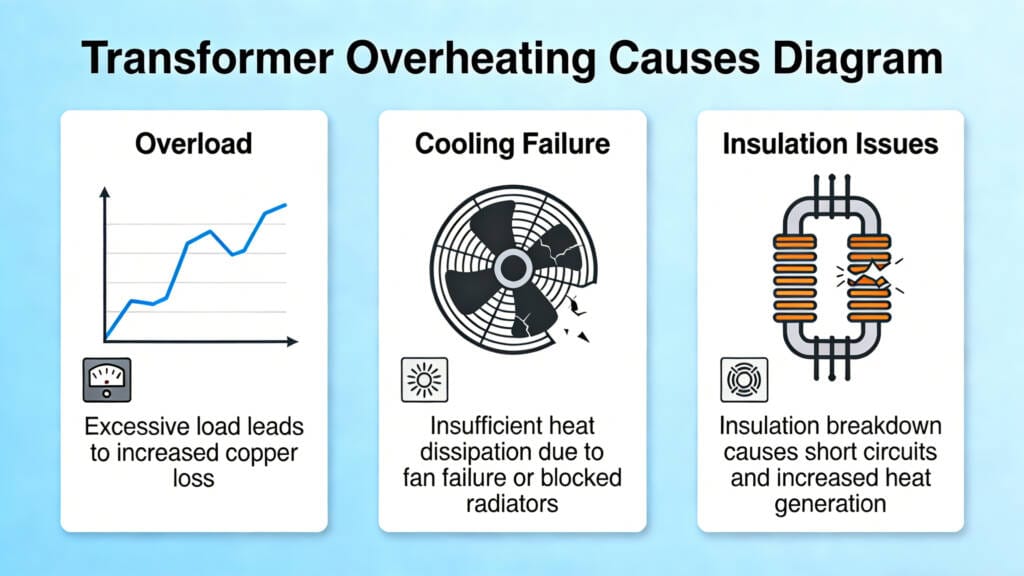
1. Transformer Overheating
Transformer overheating is one of the most common and critical issues in transformer troubleshooting. If not addressed in time, it can lead to insulation breakdown and permanent damage.
Typical Symptoms:
- Rapid increase in oil temperature or winding temperature
- Thermal alarms or protection trips
- Unusual smell caused by insulation degradation
- Reduced efficiency and increased losses
Common Causes:
- Overload operation beyond rated capacity
- Cooling system failure (fans, radiators, oil circulation)
- Poor ventilation (especially in dry type transformers)
- Aging or damaged insulation
How to Diagnose:
- Measure load current and compare with rated values
- Check cooling system operation
- Monitor temperature trends over time
Recommended Solutions:
- Reduce load or redistribute load
- Repair or replace cooling components
- Improve ventilation conditions
2. Transformer Making Noise
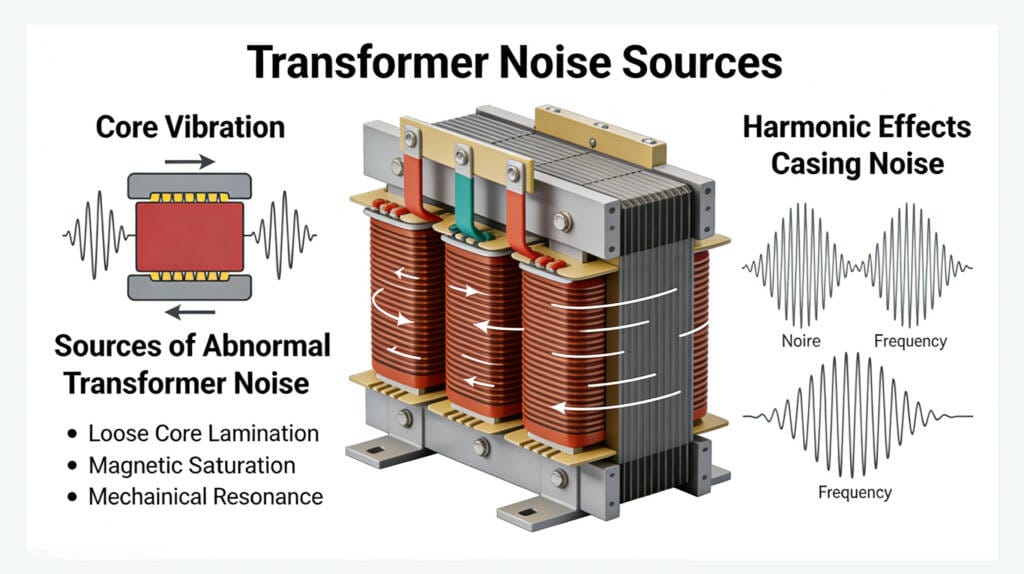
Abnormal noise? That’s a big one. Usually means something’s off inside—mechanical or electrical. A low hum? Totally normal. But if it gets louder? Or starts sounding weird? That’s a problem. No question.
Typical Symptoms:
- Loud or unusual humming
- Buzzing or rattling sounds
- Noticeable vibration
Common Causes:
- Loose core laminations or structural components
- Harmonic distortion from non-linear loads
- Voltage imbalance or overvoltage
- Magnetostriction effects under abnormal conditions
How to Diagnose:
- Perform acoustic inspection
- Check load type (linear vs non-linear)
- Inspect internal structure (if possible)
Recommended Solutions:
- Tighten core and structural parts
- Install harmonic filters
- Stabilize input voltage
3. Voltage Instability
Voltage instability is a frequent issue in transformer troubleshooting and can directly affect downstream equipment performance.
Typical Symptoms:
- Fluctuating output voltage
- Voltage drop under load
- Overvoltage or undervoltage conditions
Common Causes:
- Tap changer malfunction or incorrect setting
- Sudden load variations
- Internal winding faults
- Poor connection or contact resistance
How to Diagnose:
- Measure voltage at different load conditions
- Inspect tap changer operation
- Check winding resistance
Recommended Solutions:
- Adjust or repair tap changer
- Stabilize load conditions
- Repair or replace faulty windings
4. Transformer Keeps Tripping
Frequent tripping is a serious warning sign that indicates underlying electrical faults or protection issues.
Typical Symptoms:
- Circuit breaker trips repeatedly
- Protection relays activate frequently
- System instability or shutdown
Common Causes:
- Short circuit in the system
- Overcurrent or overload conditions
- Ground faults
- Incorrect protection settings
How to Diagnose:
- Review protection relay records
- Measure current and fault levels
- Inspect wiring and connections
Recommended Solutions:
- Fix short circuit or grounding issues
- Adjust protection relay settings
- Reduce system load
5. Transformer Not Working / No Output
A transformer that is not working or has no output is a critical failure that requires immediate troubleshooting.
Typical Symptoms:
- No voltage output at secondary side
- Complete system shutdown
- No load response
Common Causes:
- Input power supply failure
- Open circuit in winding
- Blown fuse or protection device
- Severe internal transformer damage
How to Diagnose:
- Check input power supply
- Test winding continuity
- Inspect protection devices
Recommended Solutions:
- Restore power supply
- Replace damaged components
- Replace transformer if necessary
Summary Table of Common Transformer Problems
| Problem | Key Symptom | Main Cause | Solution |
|---|---|---|---|
| Calentamiento excesivo | High temperature | Overload | Reduce load |
| Ruido | Loud humming | Core looseness | Tighten core |
| Voltage issue | Output fluctuation | Tap changer fault | Adjust tap |
| Tripping | Frequent shutdown | Short circuit | Inspect system |
| No output | No voltage | Power failure | Check supply |
3.Transformer Failure Causes and Root Cause Analysis
Understanding transformer failure causes is essential for accurate troubleshooting.
Electrical Faults
- Short circuits
- Overcurrent conditions
- Winding failure
Thermal Faults
- Calentamiento excesivo
- Cooling system breakdown
Mechanical Faults
- Core displacement
- Structural vibration
Insulation Failure
- Aging
- Moisture contamination
- Oil degradation
Root Cause Summary Table
| Failure Type | Typical Cause | Impact |
|---|---|---|
| Electrical | Short circuit | Immediate shutdown |
| Thermal | Overload | Insulation damage |
| Mechanical | Loose core | Noise & vibration |
| Aislamiento | Aging/moisture | Vida útil reducida |
4.Step-by-Step Transformer Troubleshooting Process
A structured transformer troubleshooting process ensures efficient fault diagnosis.
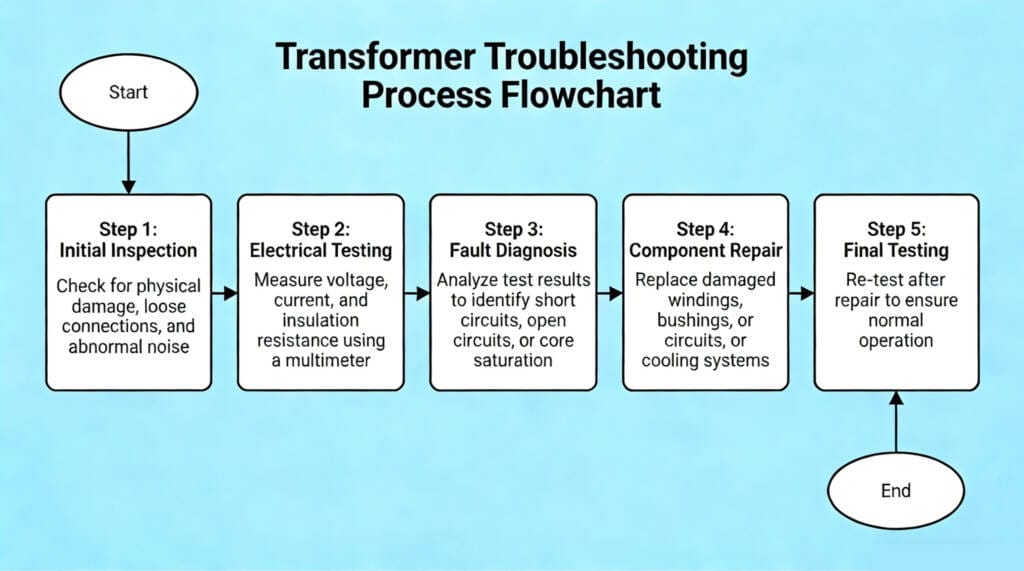
Step 1: Visual Inspection
- Check for oil leakage
- Inspect burn marks
- Look for physical damage
Step 2: Basic Electrical Testing
- Measure input/output voltage
- Check current levels
- Verify connections
Step 3: Advanced Diagnostics
- Insulation resistance test
- Winding resistance test
- Transformer turns ratio test
Step 4: Data Comparison
- Compare with historical data
- Compare with standard values
Step 5: Fault Isolation
- Isolate faulty sections
- Identify root cause
Step 6: Corrective Actions
- Repair damaged components
- Replace faulty transformer
- Adjust load conditions
👉 This step-by-step method is widely used in transformer fault finding and transformer failure analysis.
5.Transformer Fault Diagnosis Methods and Testing Techniques
Accurate transformer fault diagnosis relies on proper testing techniques. Advanced diagnostics such as insulation testing and oil analysis are widely recommended in industry guides like IEEE transformer testing standards.
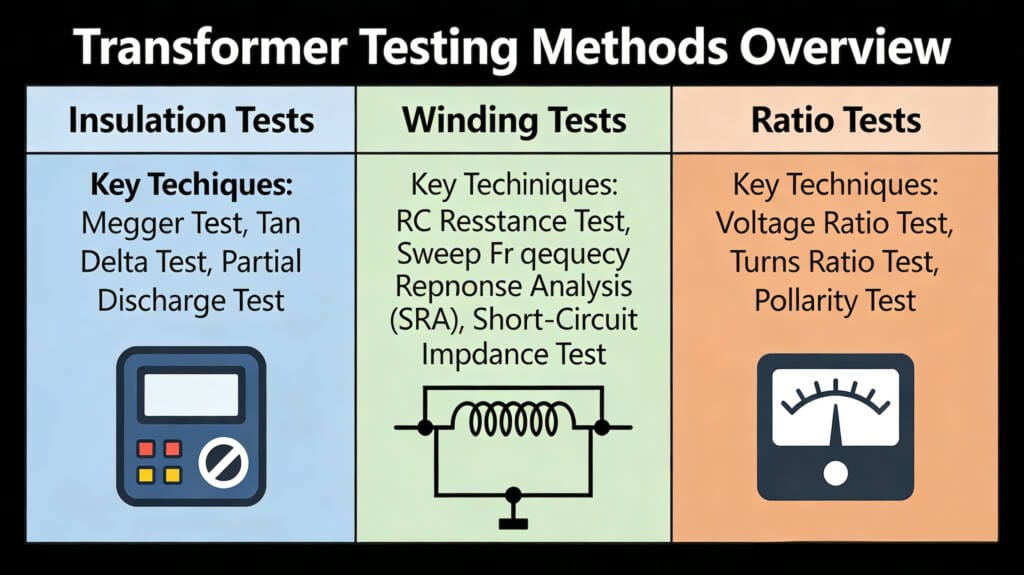
Key Testing Methods
| Test Method | Purpose | Detects |
|---|---|---|
| Insulation Resistance | Check insulation health | Moisture, degradation |
| Winding Resistance | Measure winding condition | Open/short circuits |
| Turns Ratio Test | Verify voltage ratio | Winding faults |
| Oil Test (DGA) | Gas analysis | Internal faults |
Key Parameters to Monitor
- Voltage
- Current
- Temperature
- Oil condition
👉 These methods are essential for how to test a transformer for faults.
6.Troubleshooting by Transformer Type
Different transformer types have unique troubleshooting requirements.
Distribution Transformer Troubleshooting
- Common issue: overload
- Voltage fluctuation
Power Transformer Fault Analysis
- Insulation failure
- Cooling system issues
Dry Type Transformer Problems
- Dust accumulation
- Poor ventilation
Oil Filled Transformer Troubleshooting
- Fuga de aceite
- Oil contamination
7.Transformer Troubleshooting Checklist
| Issue | Possible Cause | Solution |
|---|---|---|
| Calentamiento excesivo | Overload | Reduce load |
| Ruido | Core looseness | Tighten core |
| Voltage drop | Tap changer issue | Adjust tap |
| Tripping | Short circuit | Inspect wiring |
| No output | Power failure | Check supply |
8.Preventive Maintenance to Avoid Transformer Failures
Preventive maintenance reduces transformer failure risks.
Best Practices:
- Regular inspection
- Load monitoring
- Oil testing
- Temperature control
- Cleaning and ventilation
👉 Preventive care is key to reducing transformer malfunction and transformer breakdown.
9.FAQ: Transformer Troubleshooting
Q1: How to troubleshoot a transformer?
A:
To troubleshoot a transformer effectively, follow these steps:
- Perform visual inspection (oil leaks, burn marks, damage)
- Check input and output voltage
- Measure current and load conditions
- Conduct insulation resistance and winding tests
- Compare results with standard or historical data
- Identify the root cause and apply corrective actions
👉 This structured approach is widely used in transformer troubleshooting y transformer fault diagnosis.
Q2: What causes transformer failure?
A:
Common causes include overheating, insulation failure, and electrical faults.
Q3: Why is my transformer overheating?
A:
Transformer overheating is typically caused by:
- Overloading beyond rated capacity
- Cooling system failure
- Poor ventilation (especially in dry type transformers)
- Insulation aging or degradation
Overheating is one of the leading causes of transformer failure and should be addressed immediately.
Q4: How to test a faulty transformer?
A:
To test a transformer for faults, use the following methods:
- Insulation resistance test (Megger)
- Winding resistance test
- Transformer turns ratio (TTR) test
- Oil testing (DGA for oil-filled transformers)
These tests help detect internal faults and are essential for accurate transformer fault diagnosis.
Q5: Can a transformer be repaired?
A:
Yes, many transformer faults can be repaired, such as:
- Loose connections
- Minor insulation issues
- Cooling system failures
However, severe internal damage or insulation breakdown may require full replacement.
10.Conclusion
Transformer troubleshooting matters. It helps keep your electrical system running reliably. You want to know the common problems. Figure out what causes failures. And follow a process—nothing too fancy, just structured. Do that, and you’ll cut downtime. A lot. Plus, your equipment lasts longer.
👉Looking for reliable solutions?