1.Introduction
In modern power systems, the electric power transformer plays a critical role in ensuring efficient electricity transmission and distribution. From large-scale power plants to industrial facilities, electric power transformadores enable voltage conversion, reduce energy losses, and ensure stable power supply across long distances.
Whether you are an engineer, project contractor, or industrial buyer, understanding how transformers work—and how to select the right one—is essential for system efficiency and cost control.
This guide covers everything you need to know, including:
- Working principles
- Types of transformers
- Transformer sizing and calculation
- Maintenance and cooling systems
- Real-world applications
- How to choose reliable transformer manufacturers
Looking for a reliable power transformer supplier?
👉Contact us now for a fast quotation.
Tabla de contenido
- Introducción
- What is a Electric Power Transformer
- How Does a Electric Power Transformer Work
- Types of Electric Transformers
- Applications of Electric Power Transformers
- Transformer Sizing Guide (How to Size a Transformer)
- Transformer Calculation and Formula
- Common Transformer Ratings (75 kVA Transformer Example)
- Transformer Fluid and Cooling System
- Transformer Maintenance Guide
- Electric Power Transformer vs Voltage Transformer
- How to Choose a Electric Power Transformer
- Electric Power Transformer Manufacturer and Supplier
- Conclusion
- Preguntas frecuentes
2.What is a Electric Power Transformer
A electric power transformer is a static electrical device used to transfer electrical energy between circuits through electromagnetic induction. It plays a vital role in modern power systems by enabling efficient transmission and distribution of electricity over long distances. The main purpose of a transformer is to increase or decrease voltage levels according to system requirements, while maintaining the same frequency of the electrical supply.
In practical applications, electric power transformers are widely used in power plants, substations, industrial facilities, and commercial buildings. By stepping up voltage for transmission and stepping down voltage for safe usage, transformers help minimize energy losses and improve overall system efficiency. This makes them an essential component in both high-voltage transmission networks and low-voltage distribution systems.
Key Characteristics:
- Operates on AC power
Electric power transformers function only with alternating current (AC), as electromagnetic induction requires a changing magnetic field. - Transfers energy via magnetic coupling
Energy transfer occurs through a magnetic field within the transformer core, ensuring electrical isolation between primary and secondary circuits. - No moving parts
As a static device, a transformer has no mechanical motion, resulting in low maintenance requirements and high reliability. - High efficiency (typically above 98%)
Most power transformers are designed for maximum efficiency, reducing energy losses during transmission and ensuring cost-effective operation over long periods.
3.How Does a Electric Power Transformer Work
The working principle of a transformer is based on Ley de inducción electromagnética de Faraday.
Step-by-Step Process:
- AC voltage is applied to the primary winding
- A magnetic field is generated in the core
- Magnetic flux links to the secondary winding
- Voltage is induced in the secondary coil
- Electrical energy is transferred to the load
Basic Transformer Formula:
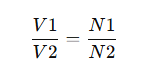
Where:
- V1 = Primary voltage
- V2 = Secondary voltage
- N1 = Primary turns
- N2 = Secondary turns
This ratio determines whether the transformer is step-up or step-down.
4.Types of Electric Transformers
Understanding different types of electric transformers is essential for selecting the right solution for your specific application. Transformers can be classified based on phase configuration, function, construction, and cooling method. Each type is designed to meet particular voltage levels, load requirements, and operating environments.
Choosing the correct transformer type not only improves system efficiency but also reduces energy losses and long-term operational costs.
Three Phase Transformer vs Single Phase Power Transformer
One of the most common classifications is based on the number of phases.
Three Phase Transformer
A three phase transformer is widely used in industrial and utility power systems where large amounts of electrical power are required.
Key Features:
- Used in industrial plants, substations, and power grids
- Higher efficiency compared to single-phase systems
- Capable of handling heavy and continuous loads
- Provides stable and balanced power supply
Three phase transformers are ideal for applications such as manufacturing equipment, large motors, and high-capacity electrical distribution systems. They are the preferred choice for most commercial and industrial projects due to their performance and scalability.
Single Phase Power Transformer
A single phase power transformer is typically used in residential and small commercial applications where power demand is relatively low.
Key Features:
- Suitable for homes, small offices, and lighting systems
- Lower capacity compared to three phase transformers
- Simpler design and easier installation
- Cost-effective for light loads
Single phase transformers are commonly used for domestic appliances, small machinery, and localized power distribution where three-phase power is not required.
Voltage Transformer vs Power Transformer
Another important classification is based on function and application.
Voltage Transformer
A voltage transformer (also known as a potential transformer) is mainly used in measurement and protection systems.
Applications include:
- Voltage monitoring
- Metering systems
- Protective relays
These transformers step down high voltage to a safe and measurable level, ensuring accuracy and safety in electrical systems.
Power Transformer
A power transformer, on the other hand, is designed for bulk power transfer in transmission and distribution networks.
Applications include:
- Power generation stations
- Transmission substations
- Grid voltage conversion
Power transformers operate at high voltage levels and are optimized for maximum efficiency under full-load conditions.
By understanding these types of electric transformers, users can make more informed decisions based on load requirements, installation environment, and system design. Selecting the right transformer type is a key step toward achieving efficient and reliable power distribution.
5.Applications of Electric Power Transformers
lectric power transformers are essential components in modern electrical infrastructure and are widely used across the entire power value chain—from generation to end-use consumption. Their ability to efficiently adjust voltage levels makes them indispensable for ensuring stable, safe, and cost-effective electricity delivery.
Below are the key application areas where electric power transformers play a critical role:
1. Power Generation Plants
In power generation facilities, electric power transformers are primarily used to step up voltage for transmission.
After electricity is generated (typically at low or medium voltage levels), step-up transformers increase the voltage to high or ultra-high levels before it is transmitted over long distances.
Why this is important:
- Higher voltage reduces current
- Lower current minimizes transmission losses
- Improves overall energy efficiency
Typical use cases:
- Thermal power plants
- Hydropower stations
- Solar and wind energy systems
2. Transmission Networks
In transmission systems, electric power transformers are used to regulate voltage and reduce energy losses over long distances.
High-voltage transmission lines rely on transformers to maintain optimal voltage levels as electricity travels from generation sources to load centers.
Key roles:
- Voltage regulation across grid networks
- Interconnection between different voltage levels
- Ensuring grid stability and reliability
Without transformers, long-distance power transmission would result in significant energy loss and inefficiency.
3. Industrial Facilities
In industrial environments, electric power transformers are used to supply power to heavy machinery and large-scale equipment.
Industries often require stable and high-capacity power systems, making transformers critical for operational continuity.
Common applications:
- Manufacturing plants
- Mining operations
- Oil and gas facilities
- Steel and chemical industries
Benefits:
- Supports high-load equipment
- Ensures voltage stability
- Protects sensitive machinery
4. Commercial Buildings
In commercial and institutional buildings, electric power transformers are responsible for safe voltage distribution.
They step down high transmission voltage to usable levels for building systems.
Typical applications:
- Office buildings
- Shopping malls
- Hospitals
- Centros de datos
Key functions:
- Power distribution for lighting and HVAC systems
- Ensuring safe voltage levels for equipment
- Supporting backup and emergency power systems
6.Transformer Sizing Guide (How to Size a Transformer)
One of the most critical steps in selecting a transformer is proper sizing.
Key Factors:
- Load demand (kW or kVA)
- Voltage level
- Phase (single or three phase)
- Power factor
Basic Sizing Formula
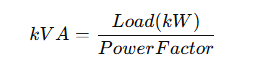
Ejemplo:
If load = 60kW, power factor = 0.8:
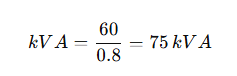
👉 This is why transformer 75 kVA is a common rating.
7.Transformer Calculation and Formula
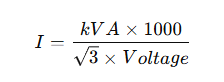
Accurate electric transformer calculation is essential for system design.
Current Calculation (Three Phase)
Example (75 kVA Transformer)
Voltage = 400V
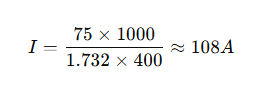
Transformer Calculation Table
| kVA | Voltage | Current (A) |
|---|---|---|
| 50 kVA | 400V | 72 A |
| 75 kVA | 400V | 108 A |
| 100 kVA | 400V | 144 A |
8.Common Transformer Ratings (75 kVA Transformer Example)
El 75 kVA electric transformer is one of the most commonly used ratings in low- to medium-capacity power distribution systems. Thanks to its balanced capacity, flexibility, and cost efficiency, the transformer 75 kVA is widely adopted across a variety of commercial and light industrial applications.
This rating is especially suitable for users who require stable power supply without the need for large-scale transformer installations.
Typical Applications
The transformer 75 kVA is ideal for environments with moderate load requirements, including:
- Small industrial plants
Used to power light manufacturing equipment, small production lines, and workshop machinery. - Commercial buildings
Commonly installed in offices, retail stores, and small business facilities for general power distribution. - HVAC systems
Provides reliable power for heating, ventilation, and air conditioning systems, ensuring stable operation. - Construction sites
Temporary power supply for tools, lighting, and small equipment.
Technical Characteristics
A 75 kVA electric transformer typically operates under the following conditions:
- Voltage levels: e.g., 11kV / 400V or 10kV / 0.4kV
- Frequency: 50Hz or 60Hz
- Phase: Single-phase or three-phase (more commonly three-phase)
- Cooling type: Oil-immersed or dry-type
These parameters can be customized depending on the specific project requirements.
Benefits of a 75 kVA Electric Transformer
- Cost-effective
Lower initial investment compared to higher-capacity transformers, making it ideal for budget-conscious projects. - Easy installation
Compact size and lighter weight allow for simpler transportation and installation. - Balanced capacity
Provides sufficient power for medium loads without oversizing, improving energy efficiency. - Flexible application
Suitable for both indoor and outdoor installations, depending on transformer type. - Reliable performance
Designed for stable operation under varying load conditions, ensuring long service life.
Why Choose a 75 kVA Transformer
For many commercial and light industrial users, selecting a transformer 75 kVA offers the perfect balance between performance and cost. It avoids the inefficiency of oversizing while still meeting operational power demands.
If your load calculation falls within the 60–70 kW range (depending on power factor), a 75 kVA electric transformer is often the optimal choice.
Need help selecting the right transformer rating?
👉Contact us for a customized solution and quotation.
9.Transformer Fluid and Cooling System
El transformer fluid and cooling system are critical components that directly affect the performance, safety, and lifespan of an electric power transformer. Proper insulation and efficient heat dissipation are essential for maintaining stable operation, especially under high load conditions.
During operation, transformers generate heat due to electrical losses in the core and windings. Without an effective cooling system, excessive temperature can lead to insulation failure, reduced efficiency, and even equipment damage. This is why selecting the right transformer fluid and cooling method is crucial.
Types of Transformer Fluid:
Different types of transformer fluid are used depending on application, safety requirements, and environmental conditions:
Mineral Oil
- Most commonly used transformer fluid
- Excellent insulation and cooling properties
- Cost-effective and widely available
- Suitable for outdoor and high-capacity transformers
Silicone Fluid
- High thermal stability
- Fire-resistant properties
- Suitable for high-temperature environments
- Often used in indoor or fire-sensitive installations
Natural Ester Fluid
- Biodegradable and environmentally friendly
- Higher fire point compared to mineral oil
- Suitable for green energy projects and urban areas
- Increasingly popular in modern transformer designs
Cooling Methods
Transformer cooling systems are classified based on how heat is transferred from the transformer to the surrounding environment.
ONAN (Oil Natural Air Natural)
- Oil circulates naturally without pumps
- Heat is dissipated through natural air convection
- Simple design and low maintenance
- Suitable for small to medium capacity transformers
ONAF (Oil Natural Air Forced)
- Oil circulates naturally, but air is forced using fans
- Improved cooling efficiency compared to ONAN
- Suitable for higher load conditions
- Allows transformers to operate at higher capacities
👉 Get a free quote for your project today.
10.Transformer Maintenance Guide
Regular transformer maintenance ensures safety and reliability.
Routine Checks:
- Oil level inspection
- Temperature monitoring
- Insulation resistance testing
Preventive Maintenance:
- Oil testing (DGA analysis)
- Cleaning bushings
- Checking connections
Common Issues:
- Calentamiento excesivo
- Fuga de aceite
- Insulation failure
11.Electric Power Transformer vs Voltage Transformer
Understanding the difference between an electric power transformer vs voltage transformer is essential for engineers, system designers, and buyers. Although both devices are types of transformers, they serve completely different purposes in electrical systems.
An electric power transformer is primarily used for transferring electrical energy between circuits and adjusting voltage levels for efficient transmission and distribution. In contrast, a voltage transformer is mainly used for measurement and protection, ensuring that electrical parameters can be safely monitored and controlled.
Key Differences
| Feature | Power Transformer | Voltage Transformer |
|---|---|---|
| Function | Power transfer | Measurement |
| Voltage Level | Alto | Bajo |
| Solicitud | Transmission | Protection |
Function
- Power Transformer
Designed to transfer large amounts of electrical energy efficiently between circuits. It is used to step up or step down voltage in power systems. - Voltage Transformer
Designed to provide an accurate scaled-down voltage for instruments such as meters and relays.
Design and Operation Differences
- Transformadores de potencia are designed for maximum efficiency at full load and continuous operation.
- Voltage transformers prioritize accuracy and stability rather than power handling capacity.
12.How to Choose a Electric Power Transformer
Selecting the right electric power transformer is a critical step for ensuring system efficiency, safety, and long-term cost effectiveness. An improperly selected transformer can lead to energy losses, overheating, or insufficient power supply.
When choosing a transformer, it is important to evaluate several key factors based on your specific application, load requirements, and operating conditions.
1. Capacity Selection
The first and most important step is to determine the required transformer capacity based on your load demand.
- Calculate total load in kW or kVA
- Consider power factor when converting kW to kVA
- Include a safety margin (typically 10%–25%) for future expansion
👉 Tip: Oversizing increases cost and reduces efficiency, while undersizing can lead to overload and equipment failure.
2. Voltage Level
Choosing the correct voltage level is essential for compatibility with your power system.
- Identify input (primary) voltage from the grid
- Determine required output (secondary) voltage for your equipment
- Ensure compliance with local standards (e.g., 400V, 480V, 11kV, etc.)
👉 Proper voltage matching ensures stable operation and prevents damage to connected equipment.
3. Cooling Type
The cooling method directly affects transformer performance, installation environment, and maintenance requirements.
- Oil-immersed transformer
- Better heat dissipation
- Suitable for outdoor and high-capacity applications
- Dry-type transformer
- Safer for indoor use
- Lower fire risk
- Minimal maintenance
👉 Choose based on installation location, safety requirements, and environmental conditions.
4. Application Scenario
Different applications require different transformer configurations.
- Industrial applications
- Heavy loads and continuous operation
- Prefer three phase and oil-immersed transformers
- Utility / grid systems
- High voltage transmission
- Large-capacity power transformers
- Commercial buildings
- Stable and safe power distribution
- Often use dry-type transformers
When selecting a transformer, it is important to ensure compliance with international standards such as IEC 60076 transformer standard y IEEE transformer standards to guarantee quality, safety, and performance.
👉 Need help selecting the right transformer?
13.Electric Power Transformer Manufacturer and Supplier
Choosing a reliable transformer manufacturer is crucial.
What to Look For:
- Certifications (IEC, IEEE)
- Manufacturing experience
- Customization capability
- Export experience
Our Advantages:
- Factory direct supply
- Custom transformer solutions
- Fast delivery
- Competitive pricing
14.Conclusion
A power transformer is an essential component in modern electrical systems, enabling efficient energy transmission and distribution. From understanding working principles to performing accurate transformer sizing and calculation, selecting the right transformer can significantly impact system performance and cost efficiency.
By combining technical knowledge with practical selection strategies, you can ensure optimal transformer performance for your application.
15.FAQ
What is a power transformer?
A power transformer transfers electrical energy between circuits while changing voltage levels through electromagnetic induction. Engineers and utilities use power transformers to step up voltage for efficient long-distance transmission and step down voltage for safe end-use applications.
Power transformers play a key role in power plants, substations, and industrial systems by improving energy efficiency and reducing transmission losses.
How to size a transformer?
To size a transformer, you first calculate the total load and then convert it into kVA using the formula:
kVA = Load (kW) / Power Factor
You should also:
- Add a safety margin (typically 10%–25%)
- Consider future load expansion
- Account for starting currents of equipment
By accurately sizing a transformer, you ensure stable operation and avoid overload or unnecessary energy loss.
What is a 75 kVA transformer used for?
A 75 kVA transformer supplies power to small industrial facilities, commercial buildings, and equipment such as HVAC systems. Engineers often select this rating because it offers a good balance between capacity, cost, and efficiency.
You can use a 75 kVA transformer in:
- Workshops and light manufacturing
- Retail and office buildings
- Temporary construction power systems
What is transformer fluid?
Transformer fluid provides insulation and removes heat from the transformer core and windings. It helps maintain safe operation by preventing electrical faults and overheating.
Common types of transformer fluid include:
- Mineral oil
- Silicone fluid
- Natural ester fluid
By selecting the right transformer fluid, you can improve cooling performance, extend equipment life, and enhance safety.
How often should a transformer be maintained?
You should perform transformer maintenance regularly to ensure reliability and extend service life.
Recommended schedule:
- Conduct visual inspections monthly
- Monitor temperature and load conditions continuously
- Perform oil testing and electrical testing annually
By following a proactive maintenance plan, you can detect potential issues early, reduce downtime, and improve overall system performance.