The global distribution transformers market forecast indicates the industry is on the brink of significant change. From 2025 to 2030, demand is expected to surge, driven primarily by accelerating urbanization and industrialization worldwide.
Technological advancements are reshaping the landscape. Smart grids and energy-efficient transformers are at the forefront. These innovations are crucial for meeting rising electricity needs.
Asia-Pacific is set to lead the market. Rapid infrastructure development and increasing electricity demand are key factors. Exporters should pay close attention to this region.
Renewable energy sources are gaining traction. This shift is boosting the need for distribution transformers. Governments are investing heavily in upgrading power infrastructure.
Environmental regulations are influencing market trends. There’s a push for eco-friendly and sustainable transformer solutions. Exporters must adapt to these changes.
The market is highly competitive. Key players are focusing on mergers and strategic partnerships. Exporters should be aware of regional regulatory standards.
Digitalization and automation are transforming the industry. IoT and AI integration enhance operational efficiency. Exporters should focus on innovation and customization.
The rise in electric vehicle adoption is another factor. It is expected to increase the demand for distribution transformers. Exporters should prepare for this growing market segment.
Understanding these trends is crucial for exporters. They must navigate challenges and seize opportunities. The future holds both risks and rewards.
Global Distribution Transformers Market: 2025-2030 Forecast & Analysis
The global distribution transformers market is poised for substantial growth between 2025 and 2030. This is largely due to increased electricity consumption and infrastructure advancements. Urbanization is driving the demand for efficient transformers.

The need for reliable power supplies is growing. Governments worldwide are investing in power grid upgrades. This ensures steady electricity and addresses rising consumer expectations.
Key factors influencing the market include digital transformation and the push for renewable energy. Smart grid technology is revolutionizing power distribution. Enhanced operational efficiency is now a critical goal for many industries.
Several regions are significant in the market’s expansion, particularly Asia-Pacific. Infrastructure development and urbanization rate are highest in this area. North America and Europe also play vital roles due to ongoing grid modernization.
The following elements are crucial to the market:
- Technological advancements
- Increasing reliance on renewable energy
- Government policies and investments
Understanding these elements is vital for exporters and stakeholders. They provide insights into potential market shifts and opportunities.
Moreover, environmental concerns are driving changes in transformer designs. The focus is on energy-efficient and eco-friendly solutions, reducing carbon footprints.
Exporters should monitor these trends for strategic planning. Awareness of regional differences and economic policies will influence success. The market’s competitive landscape is evolving, offering both challenges and opportunities for growth.
Key Market Drivers Shaping 2025-2030
The coming years will see transformative shifts in the distribution transformers market. Several key drivers will shape this trajectory. A significant driver is the global shift toward smart, sustainable energy solutions.

Urban centers are expanding rapidly. This growth increases the demand for efficient energy distribution systems. As cities grow, the pressure on power infrastructure mounts, necessitating upgrades.
Another vital factor is the growing use of renewable energy. Solar, wind, and other renewable sources are gaining traction worldwide. These sources require specialized transformers for effective integration into power grids.
Digital technologies, especially IoT and AI, are revolutionizing transformer operations. They offer improved efficiency and predictive maintenance. These advancements reduce operational costs and downtime, crucial for competitiveness.
Consumer preferences are also evolving. There’s a distinct shift towards energy-efficient and environmentally friendly products. This demand influences how manufacturers design and market their transformers.
The list of market drivers includes:
- Urbanization
- Renewable energy growth
- Technological advancements
- Consumer demand for sustainability
Government policies and regulations are also instrumental. They often incentivize grid modernization and eco-friendly technologies. Supportive policies can significantly impact market dynamics.
Increased global competition is another driver. Manufacturers are continually innovating to gain market share, pushing the industry forward. Understanding these dynamics is essential for navigating the future landscape.
Urbanization and Industrialization
Urbanization continues to surge worldwide. As cities expand, energy demand increases. This underscores the need for robust transformers.
Industrial growth complements urban development. Factories require reliable energy to function optimally. This places additional demand on distribution infrastructure.
Rural electrification projects are also significant. Developing regions aim to provide universal energy access. This objective enhances the need for efficient distribution transformers.
Renewable Energy Integration
Renewable energy is transforming the power landscape. Solar and wind energy are now mainstream. These sources necessitate compatible distribution systems.
Transformers play a crucial role in efficient energy integration. They ensure smooth power transmission from renewable plants to homes. This enhances system reliability and efficiency.
Governments are advocating green energy initiatives. Supportive policies promote renewable adoption, accelerating transformer market growth. This is a significant driver for future trends.
Smart Grids and Digitalization
Smart grid technology is reshaping the energy sector. It allows for real-time management and efficient energy distribution. This technology is critical in reducing power losses.
Digitalization fosters improved operational efficiency. IoT and AI in transformers enable proactive maintenance. They predict failures, reducing downtime and costs.
Consumers now expect smarter systems. Enhanced demand for digital solutions propels transformer innovations. Companies are investing heavily in digital capabilities to meet these expectations.
Market Restraints and Challenges
The global distribution transformers market faces multiple challenges. While growth prospects are promising, certain factors act as restraints. Navigating these challenges is crucial for industry participants.

Key challenges include:
- Supply chain disruptions
- Volatility in raw material prices
- Stringent regulatory requirements
- Environmental compliance
Supply chain disruptions present a significant issue. Global events can interrupt the flow of critical materials, affecting production timelines. As supply chains are complex, even minor hiccups can have major repercussions.
Raw material price volatility adds financial strain. Materials like copper and steel are essential for transformers. Price fluctuations can inflate costs and squeeze profit margins.
Regulatory requirements are becoming more demanding. Compliance with environmental standards is crucial yet costly. Companies must continually adapt to changing legal landscapes.
Environmental concerns are increasingly prominent. Sustainable practices are now a consumer expectation. This necessitates investment in eco-friendly technologies.
Another challenge is increasing competition. Companies are compelled to innovate to remain competitive. Failing to do so could lead to market loss.
While these challenges are daunting, they also drive innovation. Overcoming these hurdles can pave the way for industry advancements. Strategic planning and adaptive approaches are essential for success.
Supply Chain Disruptions and Raw Material Volatility
Supply chains are critical to transformer manufacturing. Disruptions can severely impact operations. Unforeseen events like pandemics exacerbate these issues.
Raw material prices fluctuate due to market conditions. Key materials like copper face pricing volatility. Such instability affects budgeting and financial planning.
Mitigating these risks requires strategic sourcing. Diversifying suppliers can shield against disruptions. Companies also explore alternative materials to offset cost volatility.
Regulatory and Environmental Hurdles
Regulatory compliance is increasingly stringent. Environmental laws mandate sustainable manufacturing practices. Adhering to these regulations incurs additional costs.
Governments are pushing for greener energy solutions. This adds pressure on manufacturers to innovate. Aligning with these goals is essential for market access.
Staying informed is crucial. Laws and regulations can shift unexpectedly. Being proactive and adapting quickly ensures compliance and competitiveness.
Global Distribution Transformer Market Growth Forecast 2025-2030
The global transformer market is poised for growth between 2025 and 2030. Several factors drive this growth, fueling industry expansion. A key element is rising electricity demand worldwide.

Technological advancements play a pivotal role. Innovations in smart grids and IoT are revolutionizing the transformer sector. Energy-efficient transformers are becoming essential components of modern infrastructure.
The market is expected to grow at a CAGR exceeding 5%. This growth rate reflects increasing investments in infrastructure and renewable energy. Urbanization continues to escalate, driving demand further.
Government initiatives bolster this expansion. Policies supporting green energy and grid modernization are pivotal. Many countries offer incentives to promote sustainable practices.
Challenges persist, yet they inspire innovation. Companies are investing heavily in research and development. Advancements will likely include more eco-friendly and efficient transformers.
The market’s future lies in adaptation and innovation. Businesses must stay ahead by embracing new technologies. Addressing global trends and customer needs will be crucial to maintaining momentum.
Regional Market Outlooks
Transformer markets vary significantly across regions. Each region presents unique opportunities and challenges. Understanding these is key to strategic planning and investment decisions.

Regional Outlooks:
- Asia-Pacific: Rapid development and urban growth
- North America: Innovation and grid modernization
- Europe: Regulations driving eco-friendly technology
- Middle East, Africa, Latin America: Emerging markets with potential
Each region is witnessing distinct growth trends. Asia-Pacific is a clear leader due to infrastructure investments. North America focuses on modernizing its aging grid networks.
Europe’s market is heavily influenced by regulations. It promotes sustainable and environmentally friendly practices. The market here is shaped by stringent compliance requirements.
In the Middle East, Africa, and Latin America, opportunities abound. Economic growth sparks infrastructure development. These regions offer vast potential for market expansion.
Strategic targeting of these regions can enhance business growth. Adapting to local demands and regulatory conditions is crucial. Businesses must align with regional expectations to succeed.
Asia-Pacific: Growth Engine of the Market
Asia-Pacific is a powerhouse in the transformer market. Rapid urbanization drives unprecedented demand. Infrastructure developments are abundant in countries like China and India.
Electricity demand is surging due to industrialization. As populations grow, urban centers require modernized energy solutions. This results in increased demand for distribution transformers.
Governments support this growth through favorable policies. Investments in renewable energy sources are central strategies. Exporters targeting Asia-Pacific should focus on sustainability and compliance.
North America: Grid Modernization and Innovation
North America prioritizes grid modernization. Many parts of the infrastructure are aging. Upgrading efforts involve integrating smart technologies.
Innovation in energy solutions is a focal point. The adoption of IoT and AI in transformers enhances grid efficiency. These advancements cater to increasing energy consumption patterns.
Government incentives support modernization projects. Policies encourage the transition to cleaner energy. Exporters can benefit by providing innovative and adaptable solutions.
Europe: Regulatory-Driven Expansion
Europe’s transformer market is heavily regulated. Environmental compliance is a significant driver. Initiatives focus on reducing carbon emissions and enhancing energy efficiency.
Regulations promote the use of eco-friendly transformers. Renewable energy integration into grid systems is a priority. These directives lead to increased demand for innovative technologies.
Strategic planning must account for compliance. Exporters should align products with European standards. This requires ongoing adaptation to stringent regulatory environments.
Middle East, Africa, and Latin America: Emerging Opportunities
These regions present untapped potential for transformer markets. Economic development fuels energy infrastructure expansion. Industrial growth necessitates modern energy solutions.
Renewable energy projects are gaining momentum. Solar and wind initiatives are particularly prominent. This trend creates opportunities for new market entries.
Government investments support infrastructure improvements. Policies encourage foreign investments and technological innovation. Exporters should seize this chance to enter emerging markets with competitive offerings.
Technological Innovations and Product Trends
The transformer industry is undergoing remarkable transformations. Emphasis on efficiency and sustainability drives these changes. This evolution stems from the quest for greener, more adaptive technologies.
Recent innovations center on energy conservation. Companies are developing transformers that consume less power. These efforts are aligned with global goals for carbon reduction.

The integration of smart technology has gained momentum. Advancements in IoT and AI streamline operations. Automation improves reliability and reduces human intervention.
Key product trends include compact designs. Smaller transformers fit urban landscapes better. They also reduce material usage, aligning with eco-conscious strategies.
In addition to design improvements, functionality is evolving. Features such as real-time monitoring increase operational efficiency. This allows for quick responses to system malfunctions.
Innovation isn’t just about products; it’s about approach. Companies are leveraging technology to meet diverse needs. Custom solutions cater to specific regional or customer requirements.
Product Trends to Watch:
- Compact and efficient designs
- Integration of IoT and AI
- Enhanced real-time monitoring capabilities
Energy-Efficient and Eco-Friendly Transformers
Energy efficiency is a primary focus in product development. New transformers feature advanced materials to minimize losses. These innovations aim to cut operational costs and enhance performance.
Eco-friendly designs are gaining popularity. Manufacturers prioritize reducing environmental impact. This includes using recyclable materials and minimizing emissions during production.
Sustainability initiatives align with regulatory standards. Compliance with environmental laws is essential. Companies adopting green solutions often gain a competitive advantage.
IoT, AI, and Automation in Transformers
The incorporation of IoT in transformers marks a new era. These technologies enable smart grid solutions. Data collection and analysis allow for predictive maintenance and optimization.
AI further advances operational capabilities. Automated decision-making processes enhance grid reliability. This technology reduces downtime and increases service quality.
Automation is transforming installation and maintenance practices. Remote monitoring and control streamline operations. This shift enhances safety and reduces human error risks.
Switchgear Market Trends and Their Impact
Switchgear technology is rapidly evolving. New developments are shaping the power industry landscape. This evolution impacts the distribution transformers market significantly.
A trend towards digital switchgear is emerging. This technology offers real-time monitoring capabilities. Enhanced safety features and reduced maintenance needs are key benefits.

Utility companies are increasingly adopting modular switchgear. Flexibility and ease of installation make it appealing. It is ideal for both new setups and retrofits.
Energy storage integration is another crucial trend. Switchgear designs now support battery systems. This development facilitates seamless renewable energy use.
Switchgear innovations influence transformer designs, too. Compatibility with smart grid systems is vital. Transformers must adapt to new standards and technologies.
Environmental regulations drive the switchgear market forward. Sustainable and recyclable materials are now preferred. These components align with global ecological goals.
Key Trends in the Switchgear Market:
- Digital and intelligent switchgear
- Modular design for flexibility
- Integration with energy storage systems
These trends have far-reaching implications. They affect production costs and market competitiveness. Exporters must stay informed to seize emerging opportunities.
Competitive Landscape and Key Players
The global distribution transformers market is fiercely competitive. Numerous players vie for market dominance. This dynamic landscape shapes market strategies and innovations.
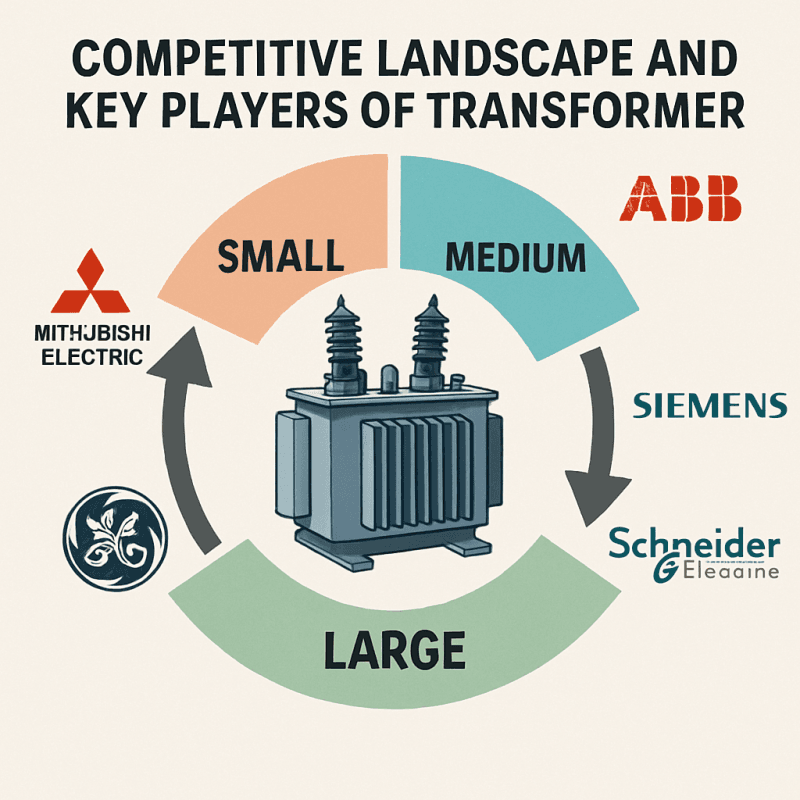
Top companies are investing heavily in research and development. These investments drive technological advancements. New and improved transformer solutions are a result.
Key players pursue mergers and acquisitions. This strategy helps expand market reach. It also facilitates access to new technologies and resources.
- Siemens AG
- ABB Ltd
- General Electric Company
- Schneider Electric
- Eaton Corporation
These companies lead the industry. They continually push innovation boundaries. Their focus includes energy efficiency, digitalization, and sustainability.
Regional markets influence competitive strategies. Companies tailor products to local needs. This customization enhances customer satisfaction and loyalty.
Partnerships with local firms are increasingly common. Such alliances foster entry into emerging markets. They ensure compliance with regional regulatory standards.
Global competition fosters pricing pressures. Players seek cost-effective production methods. This approach ensures profit margins are maintained despite pricing challenges.
The presence of new entrants stimulates diversity. Innovative newcomers introduce fresh ideas. Their participation enriches the market landscape, benefiting all stakeholders.
Understanding the competitive landscape is crucial for exporters. Staying informed enables strategic positioning. Awareness of key players and trends ensures exporters remain competitive in this vibrant market.
Regulatory Environment and Compliance for Exporters
Navigating the regulatory environment is crucial for exporters. Each region imposes unique standards. Compliance ensures smooth market entry and operation.
International standards often influence local regulations. Organizations like the International Electrotechnical Commission (IEC) play a vital role. Their guidelines help standardize transformer specifications globally.
Regional policies vary significantly. Exporters face different certification requirements. Familiarity with these requirements reduces compliance risks.
In Europe, RoHS and REACH directives are critical. They regulate hazardous substances and chemical safety, respectively. Adhering to these standards is mandatory.
In the United States, the Department of Energy sets efficiency standards. Transformers must meet specific energy performance criteria. Compliance ensures legal market participation.
Key regulatory considerations include:
- Environmental compliance
- Energy efficiency standards
- Safety and performance certifications
Regulations evolve frequently. Exporters must stay updated on legal changes. Proactive monitoring aids in anticipating and meeting new demands.
Non-compliance can have severe repercussions. Penalties and market bans can result. Thus, exporters must prioritize regulatory adherence.
Collaborating with local experts aids compliance. Their insights help navigate complex regulatory landscapes. Understanding these intricacies ensures exporters avoid potential pitfalls and seize emerging opportunities.
Export Strategies: What Exporters Should Know
For successful expansion, exporters need robust strategies. Tailored approaches can address diverse market dynamics. Understanding local demands is crucial for establishing a strong foothold.

Export strategies should prioritize differentiation. Offering value beyond the product itself is key. This can include innovative features and cost-effective solutions.
Partnerships often enhance market entry. Collaborating with local distributors or agents boosts visibility. It also helps navigate local business landscapes.
Leverage technology and data analytics for market insights. This aids in identifying trends and consumer preferences. Adaptation to these trends can improve competitive advantage.
Address logistical challenges promptly. Efficient supply chain management ensures timely delivery and reduces costs. Reliability strengthens customer trust and loyalty.
Market-specific promotion tactics are essential. Tailor marketing campaigns to regional cultural nuances. Effective communication resonates with local audiences.
Key elements to consider in export strategies include:
- Understanding regulatory demands
- Establishing local partnerships
- Tailoring marketing efforts
Success hinges on adaptability and responsiveness. Exporters must be agile to respond to shifting market conditions. This flexibility can drive growth and market penetration.
Regional Standards and Certification Requirements
Regional standards are pivotal to market access. They dictate product specifications and quality benchmarks. Understanding and meeting these is non-negotiable for exporters.
Compliance with local certifications is mandatory. Failing to adhere can result in market rejections. It can also incur significant penalties.
Knowledge of regional regulatory ecosystems is vital. Standards differ significantly across regions. Exporters must stay informed to avoid compliance pitfalls.
Meeting certification requirements involves rigorous testing. Products must match stringent safety and environmental standards. This process ensures product acceptance across target markets.
For example, some regions require energy-efficiency labels. Others demand certification for environmental impact. Each requirement safeguards various regional priorities.
Engaging with certification bodies early eases the process. It offers guidance on meeting all necessary standards. Exporters gain a roadmap to successful market entry.
Customization and After-Sales Services
Customization fulfills diverse market needs. It enhances product appeal and relevance. Offering tailored solutions can capture unique consumer requirements.
Crafting customized products requires flexibility. It may involve altering specifications or designs. This responsiveness differentiates a brand in competitive markets.
After-sales services enhance customer satisfaction. Support and maintenance are vital components. They are crucial for long-term customer relationships.
Effective services include timely repairs and updates. They ensure products remain in top condition. This support bolsters brand reputation and loyalty.
Customizing and maintaining strong after-sales services foster trust. They show commitment to consumer satisfaction. This strengthens brand credibility and encourages repeat business.
Investing in training for local service teams is beneficial. It ensures consistent service quality across regions. High-quality support maintains product integrity and performance.
Future Outlook: Opportunities and Risks for 2025-2030
Looking ahead, the distribution transformers market forecast reveals a future of both significant promise and notable challenges. Technological innovations are poised to drive significant growth. Exporters should leverage these advancements to capitalize on emerging opportunities.

Urban expansion is a major growth driver. Increasing electricity demand will boost transformer sales. Exporters should prepare for heightened infrastructure investments.
However, market saturation in developed regions presents a risk. Exporters must innovate to maintain competitive edges. Differentiation will be key in saturated markets.
Geo-political instability may impact trade policies. This can create barriers and affect market dynamics. Exporters need strategies to mitigate such risks.
Environmental regulations are becoming more stringent. This shift drives the need for sustainable solutions. Exporters must align products with green standards.
Key opportunities and risks include:
- Urbanization and infrastructure growth
- Market saturation challenges
- Geo-political trade barriers
- Environmental compliance demands
Exporters navigating these aspects can achieve substantial growth. Proactive management of risks combined with seizing opportunities is crucial. This approach will ensure sustained success in a dynamic global market.
Key Takeaways for Exporters and Industry Stakeholders
Environmental concerns require attention. Exporters must prioritize sustainability. Eco-friendly products align with regulatory demands and consumer preferences.
Investing in technology can provide an edge. Innovations in automation and digitalization offer efficiencies. Embracing tech advancements is essential for market relevance.
Adapting to regional market nuances is vital. Exporters should consider geographical differences in demand. Customizing products for local requirements can boost market penetration.
Key takeaways include:
- Prioritize sustainability and eco-friendly solutions
- Leverage technology for operational efficiencies
- Tailor offerings to regional market needs
- Monitor regulatory landscapes for compliance
- Innovate continuously to maintain a competitive position
By focusing on these key areas, exporters and stakeholders can navigate the evolving global market effectively.