Introduction
Understanding 33kV oil transformer applications helps engineers, planners, and operators work more effectively within medium-voltage power systems. These transformers serve clearly defined roles, where voltage level, thermal performance, and long-term reliability directly shape system design and operational decisions.
In medium-voltage networks, 33kV oil immersed transformers occupy a clearly defined position. They do not function as small distribution transformers installed near end users, nor do they operate as large extra-high-voltage units for bulk power transmission. Instead, they operate at the boundary between regional transmission and local distribution or industrial power systems.
Many technical articles focus on how to select or size a 33kV transformer. This article intentionally does not. Instead, it explains where 33kV oil transformer applications are most common, why oil immersed designs are used in these scenarios, and where such transformers are not suitable.
What Defines a 33kV Oil Immersed Transformer?
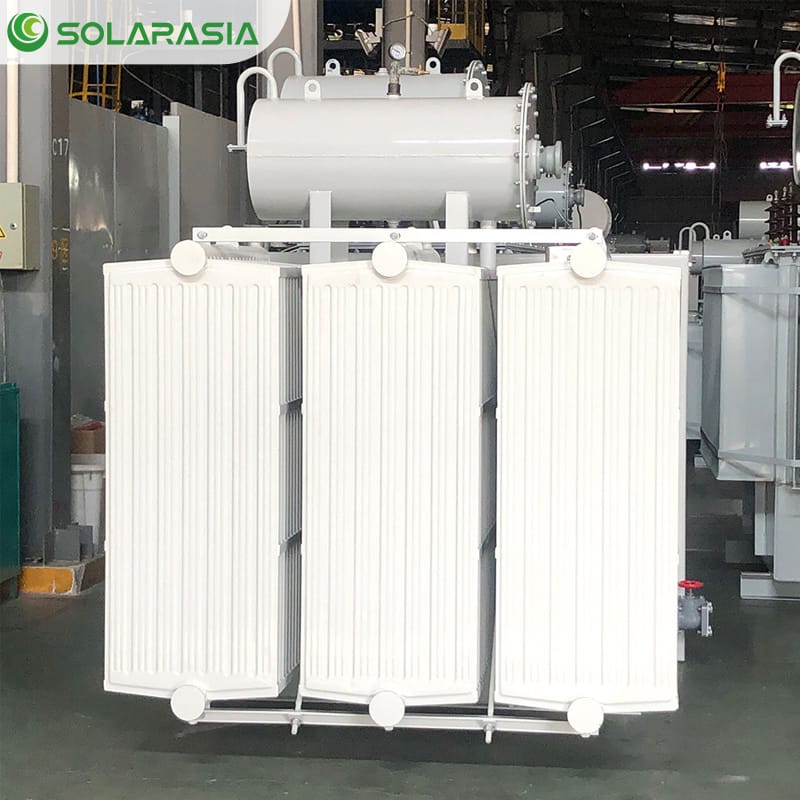
A 33kV oil immersed transformer operates as a medium-voltage power transformer with a primary voltage of approximately 33 kilovolts. It uses mineral oil or insulating oil to provide dielectric insulation and to dissipate heat generated in the windings. The oil transfers this heat to external radiators or cooling fins, allowing the transformer to maintain stable operating temperatures under load.
From a system perspective, power networks recognize 33kV as a sub-transmission voltage level. Utilities commonly use this voltage to transmit power efficiently over medium distances before stepping it down to 11kV, 6.6kV, or 0.4kV. According to industry technical reference on 33kV substations and voltage levels, this voltage supports efficient medium-distance power delivery before being stepped down for local distribution. Reference on 33kV substation and voltage classification
The oil-immersed design allows:
- Higher thermal capacity
- Better overload tolerance
- Longer continuous operating life
These characteristics strongly influence where these transformers are deployed.
Where Are 33kV Oil Transformer Applications Most Common?
1. Regional Power Distribution Substations
One of the most common applications of a 33kV oil immersed transformer is in regional or area distribution substations.
In many countries, 33kV serves as the incoming voltage from the regional grid. The transformer steps this voltage down to:
- 11kV for urban distribution
- 6.6kV for industrial feeders
- Occasionally 3.3kV for legacy systems
Why 33kV here?
- It balances transmission efficiency and infrastructure cost
- It reduces line losses compared to lower-voltage distribution
- It allows fewer substations over wide geographic areas
Oil immersed transformers are preferred in these substations because they can handle:
- Continuous load cycles
- Seasonal peak demand
- Long service intervals with minimal performance degradation
2. Industrial Power Supply Systems
Large industrial facilities often receive power at 33kV, especially when their total load exceeds several megawatts.
Typical industries include:
- Steel and metal processing plants
- Cement and mining operations
- Chemical and petrochemical facilities
- Large manufacturing parks
In these environments, a 33kV oil immersed transformer functions as the primary intake transformer, stepping down power to internal distribution levels such as 11kV or 6.6kV.
Why oil immersed in industry?
- High short-term overload tolerance
- Strong insulation performance in harsh electrical conditions
- Proven reliability under continuous heavy load
Industrial users often value operational stability over compact size, making oil immersion a logical choice.
3. Utility-Scale Renewable Energy Integration
As renewable energy projects scale up, 33kV has become a standard collector voltage, particularly in:
- Large solar photovoltaic (PV) plants
- Onshore wind farms
- Hybrid renewable power stations
In these systems:
- Individual inverters or turbines typically output at lower voltages
- Power is collected and stepped up to 33kV
- A central oil immersed transformer then connects to the grid or a higher-voltage substation
Oil immersed transformers are used because renewable generation:
- Produces fluctuating loads
- Requires thermal resilience
- Often operates in outdoor, remote environments
Their oil-based cooling system handles variable power flow more effectively than many dry-type alternatives.
4. Rural and Long-Distance Distribution Networks
In rural or sparsely populated regions, 33kV is commonly used to distribute power over long distances before local step-down.
A 33kV oil immersed transformer may be installed at:
- Rural substations
- Agricultural power hubs
- Regional feeder endpoints
Why this configuration works:
- Higher voltage reduces current and line losses
- Oil immersed designs tolerate environmental stress
- Maintenance intervals are longer, reducing service visits
For utilities operating in remote areas, durability often outweighs compactness.
5. Infrastructure and Utility Support Facilities
Large infrastructure systems may also rely on 33kV oil immersed transformers, including:
- Water treatment and pumping stations
- Metro and railway substations
- Ports and logistics hubs
- Large data-adjacent utility facilities (non-indoor)
In these cases, the transformer acts as a grid interface unit, ensuring stable medium-voltage supply to downstream systems.
Why 33kV Oil Transformer Applications Are Preferred in These Systems
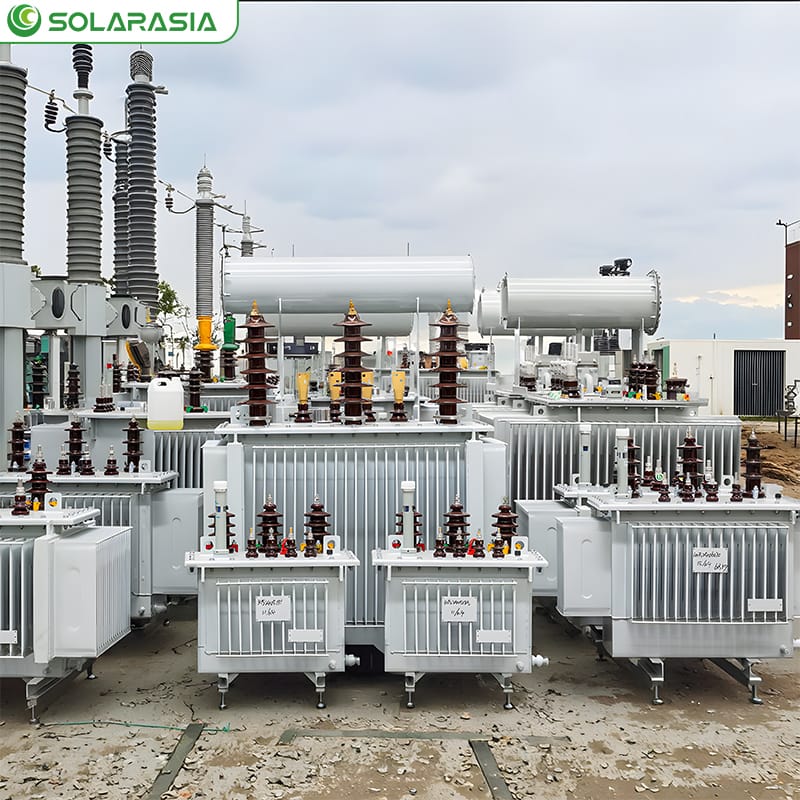
International transformer standards define the design, insulation performance, and thermal limits of oil immersed power transformers operating at medium-voltage levels. The IEC standard IEC 60076 Power Transformers provides the technical framework that governs oil immersed transformer construction, testing, and operational performance in 33kV systems.
Thermal Performance and Load Endurance
Oil immersion allows superior heat dissipation compared to air-cooled systems. This makes 33kV oil immersed transformers suitable for:
- Continuous full-load operation
- Temporary overload conditions
- Environments with high ambient temperatures
This thermal stability directly supports grid reliability.
Electrical Insulation Strength
Oil provides excellent dielectric properties, which is critical at 33kV. This ensures:
- Reduced partial discharge risk
- Higher impulse withstand capability
- Long-term insulation integrity
These factors are especially important in outdoor and industrial environments.
Long Service Life and Proven Design
Oil immersed transformers have decades of operational history. Utilities and industries continue to rely on them because:
- Failure modes are well understood
- Maintenance practices are standardized
- Spare parts and expertise are widely available
For infrastructure expected to operate for 25–40 years, this predictability matters.
System-Level Compatibility
At 33kV, system designers already optimize protection schemes, switchgear, and feeder designs around the operating behavior of oil immersed transformers. This ecosystem compatibility reinforces their continued use.
Where 33kV Oil Transformer Applications Are Not Suitable
Understanding limitations is as important as knowing applications.
1. Dense Urban Indoor Installations
Engineers generally avoid using oil immersed transformers in indoor installations within densely populated urban areas.
Reasons include:
- Fire safety concerns
- Oil leakage risk
- Larger footprint compared to dry-type units
Engineers typically prefer dry-type transformers in commercial buildings and underground substations.
2. Space-Constrained Facilities
Where installation space is extremely limited, oil immersed transformers may be impractical due to:
- Radiator requirements
- Oil conservators
- Clearance and safety distances
Compact substations often require alternative designs.
3. Environments with Strict Environmental Regulations
In regions with stringent environmental protection rules, oil usage can be restricted.
Potential issues include:
- Soil contamination risk
- Complex oil containment systems
- Higher compliance costs
In such cases, non-oil or sealed alternatives may be mandated.
4. Small-Capacity or Low-Voltage Applications
Using a 33kV oil immersed transformer for small loads or low-voltage systems is inefficient. The cost, size, and complexity outweigh any technical benefit.
Conclusion
System-level requirements define 33kV oil transformer applications, rather than product preference. These transformers are purpose-built for environments where medium-voltage operation, thermal endurance, and electrical insulation reliability are critical.
They are most commonly applied in:
- Regional and area distribution substations
- Heavy industrial power intake systems
- Utility-scale renewable energy projects
- Rural and long-distance distribution networks
In these roles, oil immersed designs provide stable performance under continuous load, fluctuating demand, and outdoor operating conditions.
At the same time, 33kV oil transformer applications are not universal. They are generally unsuitable for dense indoor installations, space-constrained facilities, environmentally restricted zones, and low-capacity systems where their size and oil-based design create unnecessary complexity.
By clearly understanding where 33kV oil transformer applications make sense—and where they do not—engineers and system planners can design power networks that remain reliable, compliant, and sustainable over decades of operation.